

The burgeoning artificial intelligence sector, characterized by rapid innovation and widespread adoption, is on the cusp of a significant financial recalibration. A growing body of evidence and expert analysis suggests that the price of AI tools and services is set to skyrocket, a development that promises to reshape how businesses and consumers interact with this transformative technology. This anticipated price increase is not merely a market fluctuation; it is deeply rooted in the immense and escalating costs associated with building and maintaining the underlying infrastructure that powers AI.
The fundamental driver behind this projected price hike is the sheer expense of delivering advanced AI capabilities. The infrastructure required for AI, particularly the vast data centers and specialized hardware, represents an unprecedented investment. To put this into perspective, global spending on data centers, even after adjusting for inflation, has already surpassed the historical cost of constructing the entire 47,000-mile U.S. highway network over four decades, a figure estimated at $670 billion. This comparison highlights the scale of the financial commitment involved in the current AI boom.
The Colossal Investment in AI Infrastructure
Recent investment figures paint a stark picture of the capital pouring into AI infrastructure. The "big four" hyperscalers – Amazon, Alphabet (Google), Microsoft, and Meta – collectively invested an estimated $370 billion to $410 billion in 2025. Projections indicate this figure is expected to climb substantially, with an estimated $650 billion anticipated for 2026, according to a Reuters report citing Bridgewater’s estimates.

When expanding the scope to include other significant players in the AI data center construction and operation ecosystem, such as Oracle, CoreWeave, and emerging entities like xAI/SpaceX, the recent annualized investment in AI infrastructure surges to approximately $500 billion. This figure is on track to exceed $700 billion to $750 billion in annualized spending by 2026. While broader market figures, including multi-year commitments, suggest even larger sums, these are often considered contracted capacity rather than immediately deployed capital.
Furthermore, the extended AI supply chain, encompassing chip manufacturers like Nvidia and TSMC, memory producers such as Micron and SK Hynix, and component suppliers like Intel and Seagate, adds another layer of immense expenditure. This broader ecosystem contributes an estimated $200 billion to $300 billion annually, pushing the total projected run-rate spending for AI infrastructure in 2026 close to a staggering $1 trillion.
Looking further ahead, industry analysts like Gartner forecast that global spending on AI infrastructure could reach an astonishing $6.3 trillion by 2030, underscoring the sustained and accelerating investment required to meet the growing demand for AI services.
The Pressure to Monetize and the Rise of Premium AI
The current landscape sees many AI companies, including prominent startups like Anthropic and OpenAI, preparing for or undergoing public offerings. This transition to public markets invariably brings increased pressure to demonstrate profitability and positive gross margins to shareholders. For companies like Anthropic, which is reportedly close to achieving positive gross margins, the imperative to maximize revenue becomes paramount.
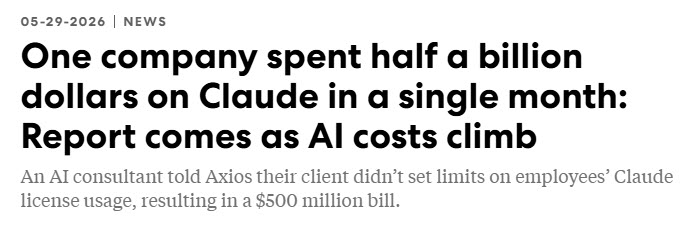
This financial reality directly translates into pricing strategies. As these AI providers face the need to justify their valuations and investor expectations, a logical consequence is the upward adjustment of their service fees. Reports indicate that companies are already flexing their pricing power. For instance, Anthropic has revised its pricing model for enterprise customers, shifting from flat fees to usage-based billing for its Claude products. This means businesses that heavily leverage AI tools for tasks such as accelerating software development or enhancing sales productivity can expect significantly higher bills. The adoption of new technologies like advanced tokenizers, reportedly used in Anthropic’s latest models, can also contribute to increased operational costs, which are then passed on to customers.
Many technology firms and large enterprise clients, while anticipating these rising costs, are reportedly willing to absorb them. This acceptance stems from a belief in the substantial productivity gains and competitive advantages that AI offers, particularly in areas like software engineering and sales automation. However, this willingness to "eat the cost" is a temporary buffer and signals a market readiness for a new pricing paradigm.
Emerging Price Wars and the Quest for Value
The competitive landscape is also evolving, with a new phase of pricing strategies emerging. In a recent development, Google announced its Gemini 3.5 Flash model, reportedly offering a cost reduction of up to 10 times compared to previous premium models like Opus 4.7. This move signals the beginning of a price-performance battle, where providers will strive to balance advanced capabilities with accessible pricing to capture market share. This competitive pressure, however, exists within the overarching context of the high infrastructure costs.
The Economic Implications: Productivity or Price Hike?
The question of how much prices will ultimately increase is complex, but the underlying economic necessity is clear. To justify the multi-trillion-dollar investments in AI infrastructure, companies need to generate commensurate revenue. Analysis suggests that to achieve a 15% compound annual return on investment, assuming a conservative five-year depreciation cycle for AI assets, the industry may need to generate upwards of $1 trillion in new annual revenue.
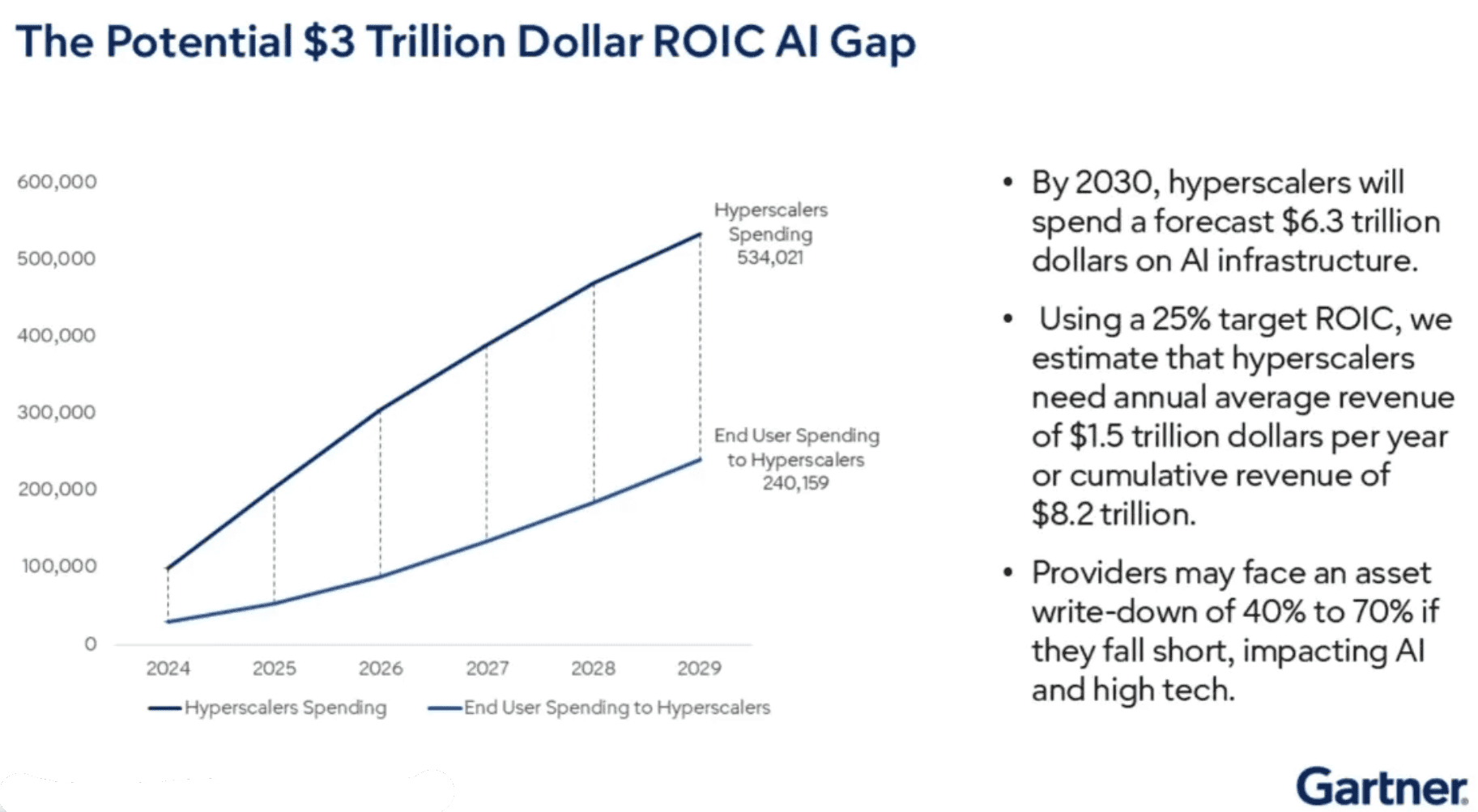
This revenue is anticipated to come from various sources, including consumers and businesses. While some of this could be absorbed by increased advertising spending – potentially doubling current global internet ad revenues of approximately $750 billion – a more significant portion is expected to be borne by enterprises. Global enterprise software spending currently stands at around $1.2 trillion, according to Gartner. The scale of AI investment suggests that enterprises might face a doubling of their software expenditures.
Beyond direct enterprise and consumer markets, AI is also poised to drive significant revenue from government spending on defense and research initiatives in fields like bio-research and energy. However, the core economic challenge remains: the notion that computing costs consistently decrease, akin to Moore’s Law, is unlikely to hold true for AI in the immediate future.
A Historical Perspective on Computing Costs
To understand the current situation, it’s useful to consider the historical trajectory of computing costs. The original IBM PC, launched in 1981 for $1,565 (without a hard disk), would cost approximately $5,700 in today’s inflation-adjusted dollars. In contrast, modern personal computers, like Lenovo or Apple laptops, typically range around $3,000. While this might seem like a price reduction, it doesn’t account for the additional computing power and integrated devices like smartphones that consumers now possess. Over 45 years, the "cost of computing" for an individual has not seen a dramatic decrease when viewed holistically.
This historical context suggests that while AI offers immense potential benefits, its implementation comes with a significant price tag. Unless AI leads to substantial productivity gains that offset its cost, or replaces other expensive technologies, consumers and businesses will likely face higher overall expenses. The economic imperative for AI providers, including established tech giants like Microsoft, Google, Meta, Amazon, and Apple, as well as hardware manufacturers like Nvidia, is not merely to replace existing revenue streams but to achieve significant growth. As Nvidia CEO Jensen Huang has articulated, "AI compute is revenue," signaling a shift away from traditional seat-based licensing models towards a model where compute power itself is the monetized commodity.

Broader Implications and Strategic Responses
The impending price increases for AI tools and services will undoubtedly prompt strategic shifts across industries. Organizations that are heavily reliant on AI for core operations will need to carefully evaluate their return on investment and explore cost-optimization strategies. This could include a more discerning approach to AI adoption, focusing on applications with the clearest and most immediate ROI.
For some businesses, the rising costs may accelerate a reconsideration of outsourcing models. As noted in recent client interactions, Chief Information Officers (CIOs) are already contemplating whether to offshore AI-related tasks to regions with lower labor costs, such as India, as a response to escalating expenses for tools like Claude Code. This trend highlights the potential for a bifurcated market, where high-cost, cutting-edge AI solutions are accessible to larger enterprises, while cost-sensitive organizations explore alternative, more economical approaches.
The competitive response from major tech players, such as Google’s introduction of more cost-effective Gemini models, indicates a recognition of the need to cater to a wider range of customer needs and budgets. This price-performance competition will likely be a defining feature of the AI market in the coming years, pushing innovation not only in capability but also in affordability.
Ultimately, the trajectory of AI pricing will depend on a delicate balance between the immense cost of infrastructure, the drive for profitability, and the market’s capacity to absorb these costs. The promise of AI lies in its ability to drive unprecedented productivity, efficiency, and innovation. However, realizing this promise will require navigating a period of significant financial adjustment, where the true cost of artificial intelligence becomes a central consideration for businesses and consumers alike. The era of cheap, readily available AI may be drawing to a close, ushering in a new phase where value, efficiency, and strategic cost management will be paramount.







