The manufacturing sector is grappling with a persistent challenge: retaining skilled employees. With lengthy hiring processes and substantial investments in training, employee turnover poses a significant threat to productivity, safety protocols, and overall morale. A concerning statistic from the Achievers Workforce Institute (AWI) reveals that only 32% of manufacturing employees envision a long-term future with their current employers. When experienced workers depart, the repercussions extend far beyond the immediate need to fill vacant positions, disrupting established teams and impeding operational progress on the factory floor.
The critical role of well-designed incentive programs in mitigating these challenges cannot be overstated. When these programs are crafted with a keen understanding of the realities faced by frontline workers, they transcend mere performance rewards. They cultivate a sense of value and appreciation for the daily contributions of the workforce. By integrating frequent and meaningful recognition, incentives transform into a potent strategy for fostering pride, reinforcing safe and dependable work practices, and instilling a sense of ownership in the quality of work produced.
Understanding the Drivers of Factory Worker Motivation
Motivating factory workers hinges on ensuring their engagement, prioritizing their safety, and nurturing a sense of pride in their labor. This begins with consistent, meaningful recognition for commendable work. While seemingly straightforward, the impact is profound. The Achievers Workforce Institute reports that manufacturing employees who receive meaningful recognition at least monthly are 50% less likely to seek employment elsewhere.
To effectively cultivate a motivated workforce, manufacturers can implement several proven strategies:
- Regular, Specific Praise: Acknowledging individual or team achievements, whether it’s meeting a tight production deadline, identifying a potential safety hazard, or going the extra mile to assist a colleague.
- Peer-to-Peer Recognition: Empowering employees to acknowledge and appreciate the contributions of their coworkers, fostering a collaborative and supportive environment.
- Timely Feedback: Providing constructive and positive feedback on a consistent basis, allowing employees to understand their performance and areas for improvement.
- Tangible Rewards: Offering incentives such as bonuses, gift cards, or extra time off for achieving specific performance milestones, maintaining excellent safety records, or demonstrating exceptional teamwork.
- Skill Development Opportunities: Investing in training programs that enhance employee skills and offer pathways for career advancement within the company.
By integrating these elements, companies can move beyond a superficial incentive program to cultivate a workforce that is motivated to stay, prioritize safety, and consistently deliver their best performance during every shift.
A Spectrum of Incentive Programs for Manufacturing Professionals
The effectiveness of incentive programs can vary, as different approaches resonate with different individuals and address distinct organizational goals. In the manufacturing environment, the most impactful programs are those that tap into fundamental human drivers: recognition, reward, and the trust to perform at one’s best.
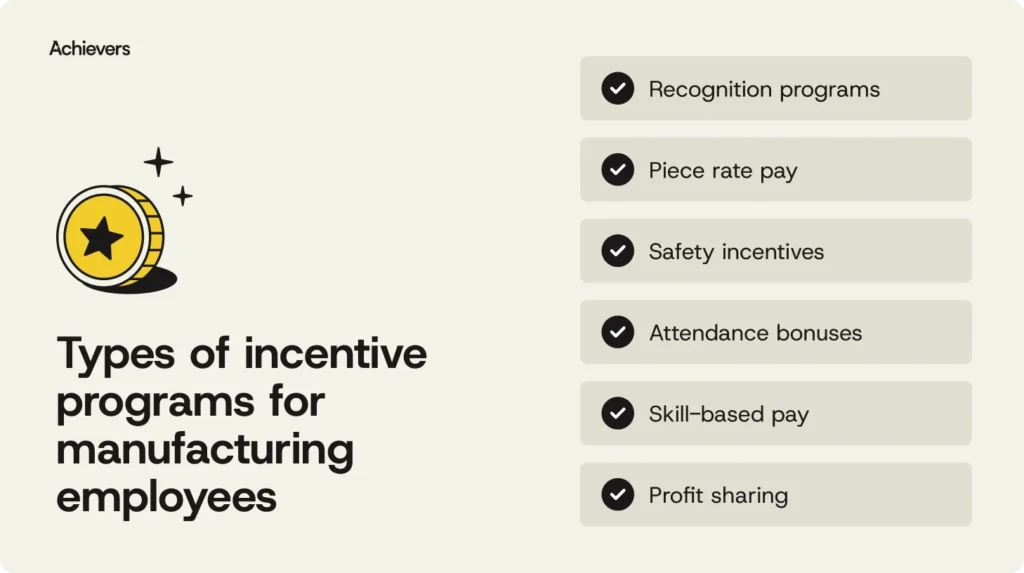
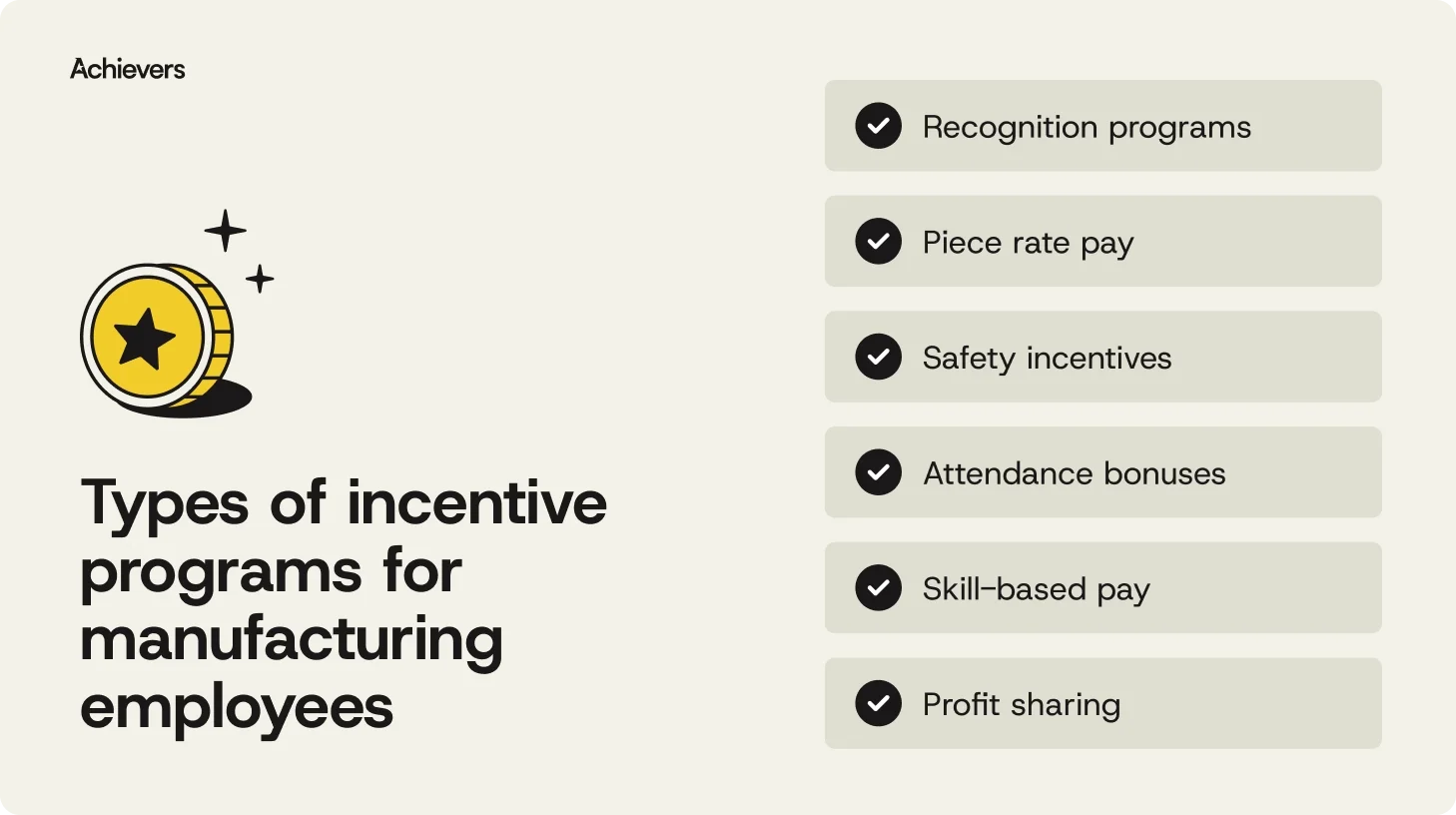
Several types of incentive programs have proven particularly effective in manufacturing settings:
Recognition Programs: Building a Culture of Appreciation
Formal recognition programs provide a structured method for consistently acknowledging employees for specific accomplishments, positive behaviors, and valuable contributions. In manufacturing, this translates to celebrating achievements such as meeting quality targets, minimizing equipment downtime, or proactively assisting team members. Publicly acknowledging these successes serves as powerful positive reinforcement, shaping desired behaviors and making high productivity the norm rather than the exception.
Piece Rate Pay: Linking Earnings to Output
Piece rate pay systems compensate workers based on the number of units they produce rather than a fixed hourly wage. This model can transform a "steady pace" into a drive for efficiency, directly linking earnings to output. In manufacturing, this can lead to increased production rates and potentially optimized labor costs. However, it is imperative to implement robust quality control measures to ensure that the pursuit of quantity does not compromise product integrity.
Safety Incentives: Prioritizing Well-being
Safety incentives reward employees for adhering to established protocols, reporting potential hazards, and actively contributing to a secure work environment. In manufacturing, everyday actions like consistent use of personal protective equipment (PPE), flagging loose machinery guards, or halting faulty equipment are crucial for employee well-being. Recognizing these habits not only reduces accidents and associated costs but also sends a powerful message that employee safety is as important as production output.
Attendance Bonuses: Ensuring Operational Continuity
Attendance bonuses are designed to reward employees for maintaining consistent and reliable presence over a defined period. In manufacturing, an absent worker can disrupt an entire shift, impacting schedules and production flow. This incentive helps maintain operational continuity and subtly communicates appreciation for an employee’s reliable contribution.

Skill-Based Pay: Valuing Expertise and Growth
Skill-based pay systems increase compensation as employees acquire and master valuable, job-related skills. In manufacturing, this can include learning to operate complex machinery, handling specialized materials, or mastering advanced safety procedures. For organizations, this builds workforce flexibility and resilience. For employees, it signifies that their growing expertise is recognized and valued beyond simple acknowledgment.
Profit Sharing: Aligning Employee and Company Success
Profit-sharing programs distribute a portion of the company’s profits to employees, typically on a quarterly or annual basis. In manufacturing, this directly connects efficient operations and strong performance to a healthier bottom line. When employees share in the company’s financial success, it fosters a sense of collective ownership, boosting teamwork, commitment, and pride in their work.
Recognition: The Cornerstone of Effective Manufacturing Incentive Programs
Within the manufacturing sector, recognition acts as the vital fuel that keeps teams energized, focused, and committed for the long term. While incentive programs can offer bonuses and perks, it is recognition that often leaves a lasting impact. It transforms safety from a mere compliance requirement into ingrained behavior, loyalty into a given, and solid performance into the daily standard.
The tangible benefits of prioritizing recognition include:
Heightened Engagement: Connecting Employees to the Bigger Picture
In industries like manufacturing, employee engagement can be the decisive factor between satisfactory work and exceptional performance that meets every objective. However, connecting with every employee in a large, often shift-based workforce presents a significant challenge. Recognition serves to bridge this gap, providing employees with a compelling reason to remain engaged and connected to the broader organizational goals.
According to the AWI, a remarkable 91% of employees would exert greater effort if they felt genuinely valued. In manufacturing, this increased effort can translate directly into achieving output targets, maintaining high quality standards, and avoiding costly errors, all without necessitating extended work hours.
Strengthened Retention with Younger Generations: Bridging the Generational Divide
With a significant portion of the manufacturing workforce approaching retirement age, attracting and retaining younger talent, particularly Millennials and Gen Z, is paramount. These generations often expect to feel valued and to see a clear path for career advancement within their organizations.
Recognition is precisely the tool needed to bridge this generational gap. The AWI also indicates that employees who receive monthly recognition are four times more likely to envision a long-term career at their company, a figure that increases to six times for those recognized weekly. This is a significant advantage in an industry where retaining trained talent is invaluable, directly impacting reduced turnover costs and more consistent production.
An Increase in Skilled Workers: Attracting and Developing Talent
Attracting skilled workers in manufacturing can feel akin to searching for a needle in a haystack. The demand for STEM talent often outstrips supply, and younger candidates may still perceive the industry as outdated or inherently unsafe. Recognition plays a crucial role in reshaping this narrative.
When employees consistently feel appreciated, they not only become more engaged but also are more motivated to develop and utilize their skills. Research from Great Place to Work suggests that recognized employees are 2.6 times more likely to believe promotions are fair, 2.2 times more likely to propose innovative ideas, and twice as likely to report that their colleagues consistently go above and beyond. This cultivates the type of organizational culture that not only retains existing skilled workers but also attracts new talent.
Established Sense of Belonging: Fostering a Team-Oriented Environment
Recognition serves as a swift and effective reminder to employees that they are more than just a cog in the machinery. It signals that their work is meaningful, their contributions are observed, and they are an integral part of a larger collective.
A high sense of belonging has been linked to a 56% increase in job performance. In manufacturing, this enhancement can lead to fewer errors, more seamless collaboration across shifts, and a more robust safety culture. In an industry where teamwork is fundamental to success, belonging transcends being a mere perk; it is a powerful driver of productivity.
Improved Workplace Safety: Embedding Safety as a Core Value
Safety is an absolute non-negotiable in manufacturing. However, the methods employed to reinforce safety practices are critical. Recognition programs that specifically acknowledge safe behaviors – from proper PPE usage to proactive hazard reporting – transform safety from a mere compliance checklist into a shared organizational priority.
When employees feel valued for their contributions to a safer workplace, they are more inclined to sustain these behaviors. Over time, this translates into fewer accidents, reduced downtime, and a workforce that is not only engaged with production goals but also committed to protecting one another.
Practical Strategies for Recognizing Employees in Manufacturing
Recognition is more than just a feeling of appreciation; it is a strategic tool for reinforcing the actions that drive desired business outcomes. Here are practical, proven methods for implementing recognition on the factory floor:
- Performance-Based Bonuses: Aligning incentives with specific performance metrics or company profits can effectively motivate employees to exceed expectations and directly contribute to business success.
- Merit-Based Salary Increases: Utilizing scheduled raises tied to performance and experience rewards skilled talent, reflecting their true value to the organization and aiding in retention.
- Profit-Sharing Programs: Distributing a share of company profits aligns employee interests with overall financial performance, fostering a stronger sense of ownership and shared success.
- Additional Vacation Days: Offering extra paid time off can significantly contribute to work-life balance, reduce burnout, and maintain high levels of employee morale.
- Flexible Working Hours: Where feasible, allowing for shift swaps or flexible start times can enhance productivity, boost job satisfaction, and signal a level of trust from the employer.
- Professional Development Opportunities: Investing in training and upskilling demonstrates a long-term commitment to employee growth, equipping them with valuable skills that benefit both the individual and the company.
- Awards and Public Acknowledgment: Celebrating achievements through formal awards or public recognition reinforces positive behaviors, boosts morale, and sustains engagement. For instance, General Motors successfully transformed its employee recognition strategy by consolidating 23 disparate local service award programs into a unified global Service Milestones Program, establishing a more consistent and impactful approach to acknowledging employee careers.
For organizations seeking more data-driven insights, specialized resources such as manufacturing recognition playbooks offer in-depth analysis of how leading manufacturers are reducing turnover, enhancing engagement, and improving safety through targeted recognition strategies, complete with real-world examples and actionable approaches for the factory floor.
National Safety Month: Reinforcing Safe Behaviors Through Recognition
Observed annually in June and spearheaded by the National Safety Council (NSC), National Safety Month focuses on mitigating the leading causes of injuries and fatalities across various environments, including the workplace, roads, and daily life. Since its inception in 1996, this campaign has provided invaluable resources to organizations aiming to cultivate safer habits and stronger safety cultures.
For HR leaders, National Safety Month offers a significant opportunity to drive behavioral change. Safety improvements are directly correlated with employees consistently adhering to procedures, proactively reporting hazards, and looking out for one another. Incentive programs and recognition strategies are instrumental in reinforcing these behaviors by clearly communicating expectations and visibly demonstrating appreciation. This approach elevates safety from a mere compliance obligation to an integrated aspect of daily operations.
Actionable steps to enhance safety through incentives and recognition during National Safety Month include:
- Hazard Reporting Incentives: Awarding employees for identifying and reporting potential safety hazards before they lead to incidents.
- PPE Compliance Recognition: Acknowledging individuals and teams who consistently demonstrate proper use of personal protective equipment.
- Safety Suggestion Programs: Implementing systems where employees can submit safety improvement ideas, with recognition or rewards for valuable contributions.
- Near-Miss Reporting Awards: Encouraging the reporting of near-miss incidents by recognizing the individuals who report them, fostering a culture of learning from potential dangers.
- Safety Champion Awards: Establishing an award for an employee who consistently exemplifies a commitment to safety, serving as a role model for others.
When National Safety Month initiatives are strategically aligned with a company’s incentive framework, safety becomes an integral component of performance recognition, and awareness seamlessly integrates into the daily execution of work.
Recognition: The Indispensable Core of Employee Incentive Programs
The most successful incentive programs do more than simply dispense rewards; they set the benchmark for operational excellence. Recognition is the critical differentiator that transforms work that simply gets done into work that employees are genuinely proud to associate their names with. It cultivates engaged teams, reinforces safe practices, and serves as the secret ingredient for enhancing the overall culture within the manufacturing industry, thereby retaining top talent even when competing offers arise.
Companies like Achievers offer comprehensive platforms that embed recognition into the daily workflow, making the acknowledgment of great work as natural as clocking in. Whether it’s achieving a production target, identifying a safety hazard, or assisting a colleague to keep the production line moving, these platforms ensure that such vital contributions do not go unnoticed, fostering a culture of continuous improvement and appreciation.