The price of advanced artificial intelligence (AI) tools is poised for a significant surge, a development that promises to reshape industries and challenge established business models. This escalating cost, driven by monumental investments in infrastructure and an evolving market dynamic, is prompting businesses to re-evaluate their AI strategies and explore new operational paradigms. The era of cheap and widely accessible AI may be drawing to a close, ushering in a period of potentially disruptive economic shifts.
The Immense Financial Underpinnings of AI
The core of the burgeoning AI cost lies in the sheer scale of investment required to build and maintain the necessary technological backbone. Data center expenditures, even when adjusted for inflation, have already dramatically outpaced historical infrastructure projects. For instance, the cumulative spending on data centers has far surpassed the cost of constructing the entire 47,000-mile U.S. highway network over four decades, which amounted to approximately $670 billion.
In the last twelve months alone, the financial landscape of AI infrastructure has seen unprecedented growth. The four major hyperscale cloud providers – Amazon, Alphabet (Google), Microsoft, and Meta – collectively invested an estimated $370 billion to $410 billion in 2025. Projections indicate this figure is set to climb to approximately $650 billion in 2026, according to estimates cited by Reuters, referencing Bridgewater’s analysis.
When factoring in other significant players in the AI data center construction arena, such as Oracle, CoreWeave, and Elon Musk’s xAI and SpaceX ventures, the annualized investment in recent times approaches $500 billion. This figure is anticipated to trend towards an astonishing $700 billion to $750 billion-plus run rate spending by 2026. While broader market commitments, including multi-year "Stargate-style" contracts, represent a larger financial picture, these figures primarily denote contracted or announced capacity rather than outright capital expenditure.

Adding to this monumental outlay are the substantial investments by hardware manufacturers and component suppliers critical to the AI ecosystem. Companies like Nvidia, TSMC, Micron, Intel, SK Hynix, and Seagate are collectively injecting an additional $200 billion to $300 billion into the sector. This cumulative investment pushes the projected 2026 run-rate spending for AI infrastructure close to the $1 trillion mark.
The trajectory of these investments suggests a continued upward trend. Research firm Gartner forecasts that global spending on AI infrastructure could reach an astronomical $6.3 trillion by 2030, underscoring the accelerating pace of development and deployment in the field.
The Emerging Pricing Pressures: From Infrastructure to Application
The escalating infrastructure costs are inevitably translating into higher prices for AI tools and services. As new AI companies, such as Anthropic and OpenAI, prepare for or undertake public offerings, they face intense pressure to demonstrate profitability and positive gross margins. Anthropic, for example, is reported to be nearing this crucial financial milestone. This imperative to show financial health is a direct driver for price increases.
Similarly, established enterprise software giants, often referred to as "SaaSapocalypse" companies like SAP, Workday, Oracle, Salesforce, and Adobe, are also looking to leverage AI advancements to enhance their offerings and, consequently, their profitability. These companies will aim to present strong financial performance to Wall Street, further contributing to the upward pressure on pricing for their AI-infused products.
Customer Reactions and the Search for Value
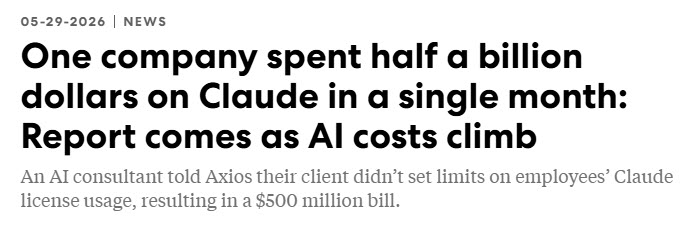
The impact of these rising costs is already being felt by businesses integrating AI into their operations. During recent client engagements in New York, several Chief Information Officers (CIOs) and Chief Human Resources Officers (CHROs) expressed concerns about the escalating expenses associated with AI tools. One notable anecdote involved CIOs considering outsourcing AI development and implementation to engineers in India due to the high costs of platforms like Claude Code.
Eric Johnson, CIO at PagerDuty, a company that assists software engineers in managing technical outages, articulated this growing apprehension. He noted that his organization, with its 1,200 employees, is bracing for volatile and potentially higher costs as they begin to deploy Anthropic’s AI coding and other productivity-enhancing tools. "I am preparing myself to be surprised by the bills," Johnson stated, acknowledging the inherent uncertainties associated with such nascent technology. "We believe that there’s a lot of value here. Unfortunately, it’s fairly new technology, so there’s some open questions that we’re gonna be working through around its costs and getting a return on the investment."
Anthropic, in particular, has signaled a shift in its pricing strategy. The company has begun to implement a model that charges enterprise customers based on their actual AI usage rather than relying solely on flat fees. This move, driven in part by the development of new AI models and technologies like advanced tokenizers, is expected to lead to significantly higher bills for businesses with heavy AI adoption. Many of these firms, however, plan to absorb these increased costs, prioritizing the potential gains in productivity among their software engineers and sales teams through task automation.
The Shifting Landscape of AI Pricing: Competition and Value Proposition
Amidst this trend of rising costs, a new competitive dynamic is emerging. The recent announcement of Google’s Gemini 3.5 Flash, positioned as being ten times less expensive than Anthropic’s Opus 4.7, signals the commencement of a price-performance battle in the AI market. This competition, driven by the need to capture market share and provide accessible solutions, could offer some relief to businesses seeking cost-effective AI tools.
Quantifying the Price Increase: A Trillion-Dollar Question
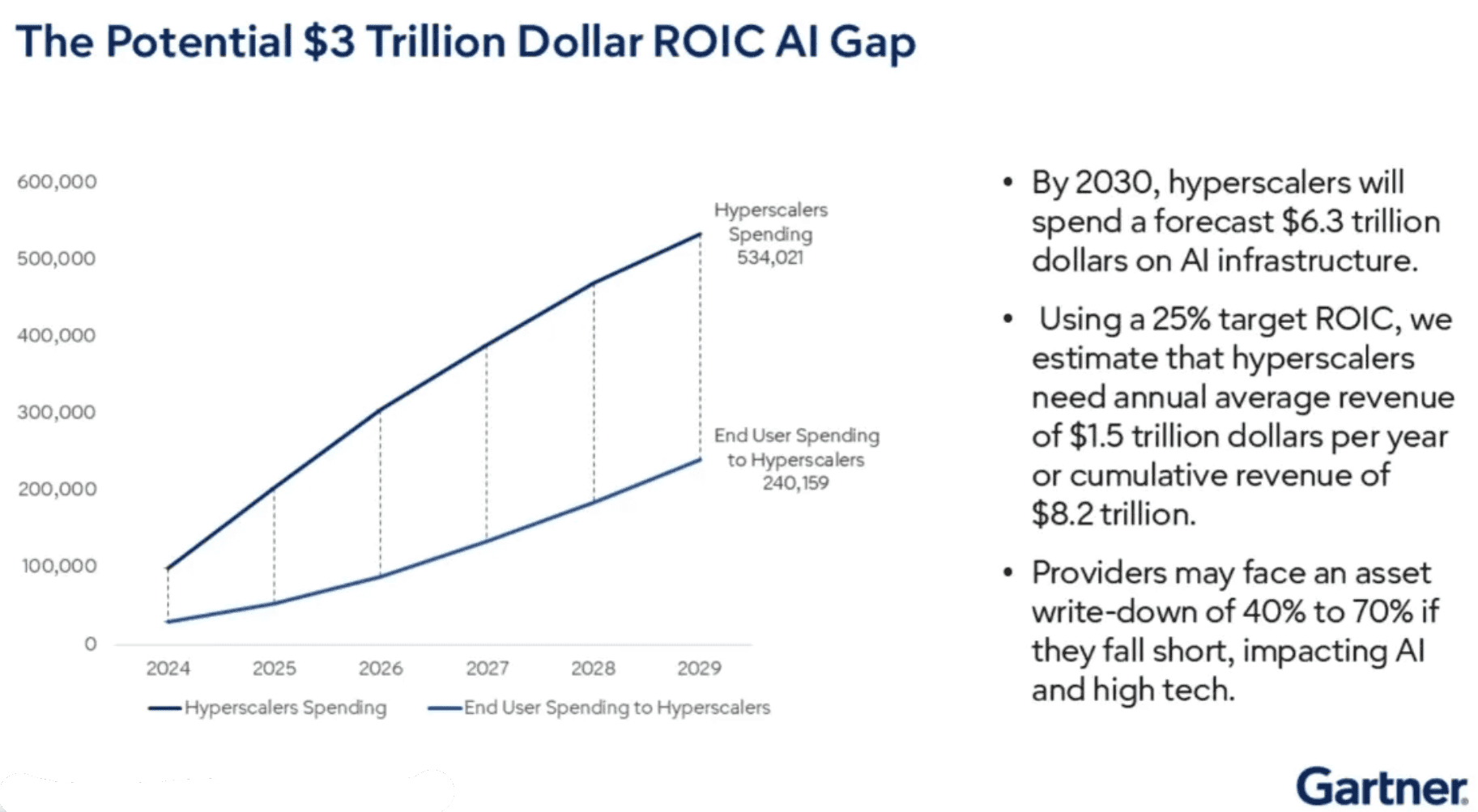
The central question for many businesses is the magnitude of these potential price hikes. The financial models supporting AI development and deployment suggest a substantial increase in the cost of these technologies. To achieve a modest 15% compound annual return on investment, assuming a generous five-year depreciation period for AI infrastructure, the industry needs to generate over a trillion dollars in annual "new revenue." This figure is likely to be even higher, considering the profit margins inherent in AI services.
This required revenue will need to be sourced from various channels, including consumers and advertising, as well as businesses. On the consumer front, global internet advertising spending currently stands at approximately $750 billion. Doubling or more the volume of digital advertisements could contribute to offsetting these costs, though this scenario is considered unlikely due to potential market saturation and user fatigue.
On the enterprise side, global spending on enterprise software is estimated by Gartner to be around $1.2 trillion. The prospect of doubling this expenditure to accommodate AI services represents a significant potential increase in business IT budgets.
Therefore, it is plausible that businesses will face either a doubling of their enterprise software costs or a substantial increase in advertising expenses to fund the ongoing AI revolution. While other revenue streams, such as government contracts for military and research applications, and emerging markets in bio-research and energy, will contribute, the core economic pressure points for widespread AI adoption remain consumer and enterprise spending.
The notion of computing costs perpetually decreasing, akin to the historical trend of Moore’s Law, appears to be a distant prospect for AI in the near term. The original IBM PC, priced at $1,565 in 1981 (equivalent to roughly $5,700 today), highlights a historical context where computing was a significant investment. While modern PCs and smartphones offer vastly more power at a comparable or lower inflation-adjusted price point, the computational demands of advanced AI are introducing a new economic paradigm. The "cost of computing" for an individual, when factoring in personal devices, has seen a relative decrease over decades, but the current AI boom is reversing this trend for many business applications.
The advent of sophisticated AI technologies necessitates a re-evaluation of economic benefits. Unless AI delivers substantial productivity gains, health improvements, or other tangible societal advantages that offset its considerable cost, businesses and consumers will likely bear significantly higher expenses. Companies like Nvidia, Oracle, Microsoft, and Workday, alongside tech giants such as Google, Meta, SpaceX, Amazon, and Apple, are not merely aiming to replace existing revenue streams with AI; they are pursuing aggressive growth. Jensen Huang, CEO of Nvidia, succinctly captured this sentiment, stating, "AI compute is revenue," implying a fundamental shift away from traditional seat-based licensing models towards usage-based pricing.

Broader Implications and Future Outlook
The escalating costs of AI present a multifaceted challenge. For businesses, it necessitates strategic planning around AI adoption, focusing on demonstrable return on investment and exploring cost-optimization strategies. This may involve a more judicious selection of AI tools, a greater emphasis on in-house AI expertise, or even a reconsideration of outsourcing models.
For consumers, the implications could manifest as higher prices for goods and services that rely heavily on AI for their development or delivery. The potential for increased advertising on digital platforms also looms, impacting the user experience.
The long-term impact of these rising costs will depend on the industry’s ability to innovate and deliver on the promise of AI-driven productivity and societal benefits. The competitive landscape, particularly with new, more cost-effective models emerging, will play a crucial role in shaping market dynamics. Ultimately, the current surge in AI investment underscores a pivotal moment, one that demands careful consideration of economic realities and a clear understanding of the value proposition offered by this transformative technology. The era of accessible AI is evolving, and the coming years will reveal the true cost and the ultimate impact of this technological revolution.