In an increasingly competitive global talent landscape, a robust diversity page has emerged as a fundamental cornerstone of an effective diversity recruiting strategy, serving as a critical touchpoint for prospective employees and a transparent declaration of corporate values. A comprehensive review of over 200 corporate diversity pages has identified 12 exemplary models that transcend mere compliance to actively articulate a commitment to diversity, equity, and inclusion (DEI), providing invaluable insights for organizations seeking to enhance their talent acquisition and employer branding efforts.
Defining the Diversity Page in the Digital Age
At its core, a diversity page is a dedicated section on a company’s corporate or career website specifically designed to highlight its initiatives, policies, and commitment to diversity and inclusion. Functioning akin to a specialized recruiting microsite, it serves as a central hub where potential candidates, current employees, and other stakeholders can explore how the organization fosters an inclusive workplace culture. These pages often feature data on workforce demographics, employee resource groups (ERGs), inclusive benefits, leadership statements, and testimonials from diverse employees. The primary objective is to attract a broader pool of talent by demonstrating that the company values and actively supports individuals from all backgrounds, including but not limited to gender, race, ethnicity, sexual orientation, disability, age, and veteran status.
The benefits of a well-crafted diversity page are multi-faceted, extending beyond simple recruitment to impact overall corporate health. Firstly, it significantly enhances employer branding by showcasing a progressive and socially responsible image, which is increasingly important for younger generations entering the workforce. Secondly, it directly aids in talent acquisition by providing a transparent window into the company’s culture, enabling diverse candidates to self-select into environments where they feel they can thrive. Thirdly, it can contribute to employee retention by reinforcing an internal culture of belonging and demonstrating ongoing commitment to DEI initiatives. Finally, such pages serve as a public accountability mechanism, signaling to investors, customers, and regulatory bodies that the organization is actively working towards a more equitable workplace.
The Evolution of Corporate DEI and the Rise of Dedicated Platforms
The prominence of diversity pages is a direct reflection of a broader, decades-long evolution in corporate thinking regarding diversity and inclusion. What began as a focus on affirmative action and equal employment opportunity in the mid-20th century has matured into a strategic imperative that recognizes diversity as a driver of innovation, market relevance, and financial performance. Research by McKinsey & Company, among others, consistently demonstrates a correlation between diverse leadership teams and superior financial returns. This understanding has propelled DEI from a peripheral HR function to a central component of business strategy.
The digital revolution further amplified the need for dedicated online spaces. In an era where information is readily accessible and job seekers conduct extensive research before applying, a company’s public stance on DEI is scrutinized. Social movements and a heightened awareness of systemic inequalities have also placed immense pressure on corporations to not only do better but also to demonstrate their efforts transparently. Consequently, the last decade has seen a rapid proliferation and sophistication of diversity pages, with companies continuously updating and refining their content to reflect evolving best practices and stakeholder expectations. The "2021 Updates" highlighted in the initial review underscore this ongoing dynamic, indicating that these are not static pages but living documents that require continuous attention and investment.
Key Themes and Best Practices from Leading Diversity Pages
The analysis of leading diversity pages reveals several recurring themes and best practices that contribute to their effectiveness:
- Transparency and Data-Driven Reporting: Many top-tier diversity pages now prominently feature diversity metrics, often broken down by gender, race, ethnicity, and leadership levels. This commitment to data transparency, even when acknowledging areas for improvement, builds trust and demonstrates accountability.
- Authentic Storytelling and Employee Voices: Moving beyond generic stock photos, effective pages integrate real employee testimonials, profiles, and videos. This humanizes the DEI effort, allowing prospective candidates to envision themselves within the organization and understand the lived experiences of diverse employees.
- Comprehensive Program Outlines: Detailing specific initiatives, such as Employee Resource Groups (ERGs), mentorship programs, unconscious bias training, and community partnerships, provides tangible evidence of commitment rather than mere platitudes.
- Clear Leadership Commitment: Prominent statements from CEOs and other senior leaders reaffirm the organization’s top-down dedication to DEI, signaling that these values are embedded at the highest levels.
- Visual Appeal and Accessibility: High-quality design, intuitive navigation, and inclusive imagery are crucial for engagement. Pages that are easy to navigate and visually compelling are more likely to retain visitor interest.
In-Depth Analysis of Exemplary Diversity Pages
The 12 pages identified in the review offer distinct models for best practices:
- Adidas Diversity Page: Leveraging its global brand identity, Adidas integrates diversity into its "Life Here" section, presenting an image of dynamic inclusion that reflects its diverse customer base. The page likely emphasizes global initiatives and cultural representation, aligning with its international workforce.
- AT&T Diversity Page: AT&T’s commitment is evident in its evolution. The 2021 update, specifically highlighting "real employee faces to underrepresented groups" and dedicated landing pages for each, signifies a powerful move towards personalization and authentic representation. This approach moves beyond abstract statistics to concrete individual stories, fostering a stronger connection with diverse candidates.
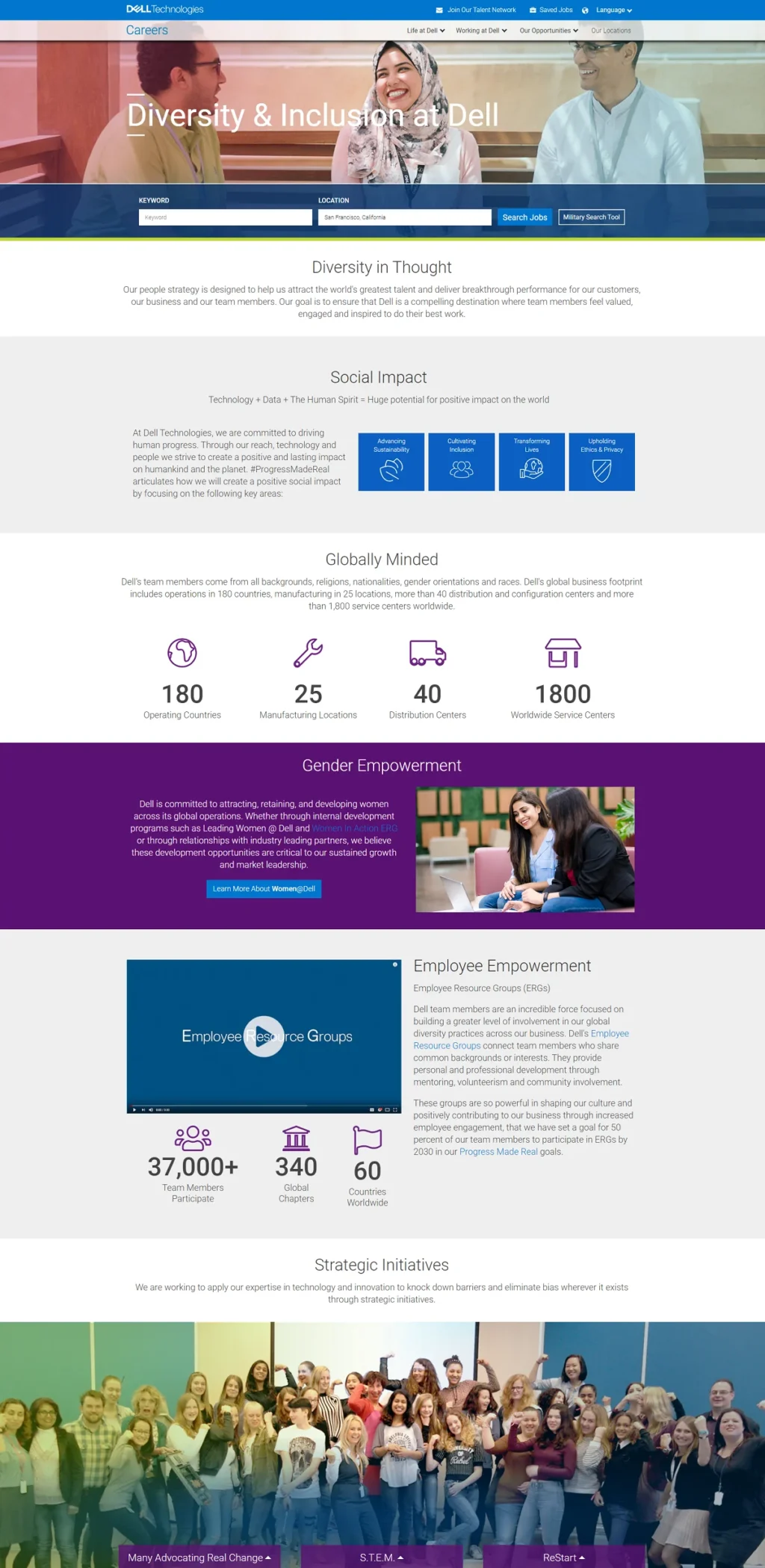
- Dell Diversity Page: Dell effectively utilizes multimedia, including embedded videos, to convey its DEI message. This approach allows for a richer, more engaging narrative that can capture attention and communicate complex ideas more effectively than text alone. The page likely details specific programs and partnerships aimed at fostering a diverse talent pipeline.
- Netflix Diversity Page: Netflix stands out for its transparency, particularly with its "2020 Inclusion Report" featured prominently. This commitment to publicly sharing detailed progress and challenges positions Netflix as a leader in accountability. Their approach to inclusion, as detailed in the report, likely offers unique strategies for fostering a sense of belonging within a creative and innovative culture.
- HubSpot Diversity Web Site: HubSpot’s page, titled "Inclusion & Belonging at HubSpot," signals a focus not just on diversity metrics but on the qualitative experience of employees. This emphasis on belonging—the feeling of being accepted and valued—is critical for retention and overall employee well-being, suggesting a holistic approach to DEI.
- IBM Diversity Page: IBM’s recent overhaul is a testament to the dynamic nature of effective diversity pages. The "Be Equal" tagline, vibrant visuals, and creative presentation of underrepresented groups demonstrate an innovative approach to communicating its inclusive mission. The sections starting with "Be…" followed by a message, provide a creative and memorable way to articulate different facets of inclusion, making the information highly digestible and impactful.
- Procter & Gamble Diversity Page: P&G excels in data transparency, presenting "2020 diversity statistics" broken down by gender, race & ethnicity, and board composition. The "colorful and clean" layout makes complex data accessible and engaging, reflecting a deliberate effort to make their DEI commitment easily understood and appreciated.
- ViacomCBS Diversity Website: ViacomCBS, as a media giant, likely showcases its commitment to inclusion not only in its workforce but also in its content and representation across its various brands. The page’s focus on "creating an inclusive workplace" suggests an emphasis on cultural transformation and a safe environment for all employees.
- Apple Diversity Page: Apple’s approach is characterized by its frankness. By presenting "hard data on their diversity hiring" and openly admitting "they have a ways to go," Apple demonstrates a rare blend of transparency and humility. This candidness can resonate strongly with candidates who value authenticity over polished, but potentially misleading, portrayals.
- Google Diversity Page: Given Google’s scale and global reach, its diversity page is expected to be comprehensive, detailing extensive programs, global initiatives, and commitments across various dimensions of diversity. Its size allows for significant investment in a wide array of DEI efforts, which are likely showcased through data and stories.
- Accenture Diversity Page: As a global professional services firm, Accenture’s diversity page emphasizes its worldwide commitment to inclusion. The page likely highlights initiatives that foster a diverse talent pool across different geographies and practice areas, reflecting its diverse client base and global workforce.
- GoPro Diversity Page: For a brand like GoPro, which thrives on lifestyle and adventure, its diversity page would likely integrate its brand ethos with its DEI commitment. It would likely focus on showcasing a diverse range of employees engaging in various activities, illustrating that adventure and creativity are accessible to all, regardless of background.
Broader Impact and Implications for Corporate Strategy
The sophistication of these diversity pages underscores a profound shift in corporate strategy. They are no longer merely compliance documents but strategic assets integral to talent management, brand reputation, and business growth. In an era where 76% of job seekers consider diversity a critical factor when evaluating companies and job offers (according to a Glassdoor survey), a compelling diversity page is not just good practice, but a business imperative.
These pages serve as a powerful signal to the market, indicating that a company is forward-thinking, socially responsible, and committed to creating an equitable environment. This commitment, when genuinely reflected in corporate culture, can lead to numerous benefits, including:
- Enhanced Innovation: Diverse teams bring a wider range of perspectives, leading to more innovative solutions and better problem-solving.
- Improved Decision-Making: Diverse groups tend to make better decisions, outperforming homogeneous groups by a significant margin.
- Stronger Financial Performance: As noted earlier, studies consistently link diversity to increased profitability.
- Increased Employee Engagement and Morale: Employees in inclusive environments report higher levels of satisfaction, engagement, and loyalty.
The ongoing updates seen in pages like AT&T, Netflix, IBM, and P&G further illustrate that DEI is a continuous journey, not a destination. Companies are constantly refining their messaging, data presentation, and programmatic offerings to reflect societal changes and internal progress. Tools like Ongig, mentioned in the original context, play a crucial role in enabling organizations to create and manage these dynamic, impactful landing pages and microsites, ensuring their diversity recruiting strategies remain agile and effective.
The Future Outlook for Diversity and Inclusion Platforms
Looking ahead, diversity pages are likely to become even more interactive, personalized, and data-rich. We can anticipate greater integration with social media, personalized content delivery based on user demographics or interests, and perhaps even AI-driven tools that allow prospective candidates to explore how their unique backgrounds align with a company’s DEI initiatives. The focus will continue to shift from simply stating diversity metrics to demonstrating tangible impact and fostering a deep sense of belonging for every employee.
Ultimately, the best diversity pages are those that authentically reflect an organization’s values and actions. They are powerful instruments in the ongoing effort to build more equitable workplaces, serving as beacons for talent and tangible proof of corporate responsibility. As companies vie for the best and brightest, investing in a robust, transparent, and engaging diversity page will remain a critical strategic advantage.
By Nick Misa, September 12, 2026.