Recognition is far more than a mere courtesy; it is a fundamental pillar of successful business strategy, particularly for large organizations. When employees feel genuinely seen, valued, and appreciated, their tenure, performance, and overall commitment to their work significantly improve. This understanding is driving an increasing number of enterprise leaders to invest in sophisticated employee recognition software designed for large companies, recognizing that the principles of appreciation should not diminish with scale, even when a workforce exceeds 10,000 individuals. The challenge lies in effectively scaling these sentiments across diverse teams, time zones, and technological infrastructures, where even the best intentions can falter. This is precisely where robust software solutions become indispensable, acting as crucial connectors, ensuring real-time visibility of recognition, and guaranteeing that outstanding contributions are never overlooked. This analysis explores the leading recognition platforms that are demonstrating the power of effective recognition to not only elevate individual employees but also to drive collective performance.
The Evolving Landscape of Employee Recognition in Large Organizations
The modern workplace, especially within large enterprises, is characterized by complexity. Geographically dispersed teams, varied departmental functions, and diverse technological ecosystems present significant hurdles to implementing consistent and impactful employee recognition programs. Historically, recognition efforts often relied on annual reviews or infrequent milestone celebrations, which failed to capture the day-to-day contributions that fuel an organization’s success. This has prompted a strategic shift towards a more continuous and integrated approach.

Employee recognition best practices for large organizations now emphasize a structured, consistent, and accessible framework that reaches every corner of the workforce. Effective programs are designed with several core objectives in mind: driving widespread participation, reinforcing organizational culture, and delivering measurable business outcomes. To achieve this, companies are adopting a multi-faceted strategy that includes:
- Making Recognition Frequent and Accessible: The most impactful programs enable employees to recognize each other in real-time, moving beyond the confines of traditional performance reviews. Frequent recognition serves as a constant reinforcement of desired behaviors and sustains high levels of employee engagement.
- Aligning Recognition with Company Values and Goals: Every act of recognition should be deliberately linked to the organization’s core values and strategic objectives. This ensures that appreciation is not just a feel-good exercise but a strategic tool that drives behaviors contributing to enhanced performance and a stronger culture.
- Empowering Peer-to-Peer Recognition: In large organizations, managers alone cannot effectively scale recognition. Granting every employee the ability to recognize their colleagues through peer-to-peer systems dramatically expands the reach, participation, and authenticity of appreciation initiatives. This fosters a more inclusive and collaborative environment.
- Leveraging a Mix of Social and Rewards-Based Recognition: Public recognition builds camaraderie, visibility, and a sense of belonging. Simultaneously, meaningful rewards serve as tangible acknowledgments of impact and potent motivators, reinforcing the value of an employee’s contributions.
- Utilizing Data and Insights for Continuous Improvement: The effectiveness of recognition programs can be significantly enhanced by tracking participation rates, frequency of recognition, and associated business outcomes. Data-driven insights allow organizations to identify what is working, pinpoint areas for optimization, and demonstrably link recognition efforts to key metrics like engagement and retention.
- Integrating Recognition into the Flow of Work: For recognition to be truly embedded, it must seamlessly integrate into the tools and platforms employees already use daily. This makes appreciation a natural part of the workflow rather than an additional, burdensome task.
By embracing these best practices and leveraging the right technology, large organizations can transcend fragmented recognition efforts and cultivate a pervasive culture where every employee feels seen, heard, and genuinely appreciated.
Key Features to Consider in Employee Recognition Software
Selecting the right employee recognition software is critical, especially when managing a large, diverse workforce spanning multiple offices, time zones, and job roles. Even minor usability or support gaps can have widespread negative repercussions. The ideal platforms are designed to make recognition effortless for everyone, everywhere. When evaluating these solutions, several key attributes stand out:
- Scalability: The software must be capable of handling thousands, or even hundreds of thousands, of users across various regions without experiencing performance degradation. Global fulfillment capabilities, multilingual support, and a consistent user experience across all locations are paramount, alongside core features.
- Ease of Use: A platform’s adoption hinges on its intuitiveness. If the software is difficult to navigate or implement, employees will not use it. The best solutions integrate naturally into existing workflows and tools, making recognition a seamless part of the workday.
- Frequency and Visibility: Effective recognition is timely and visible. The system should facilitate public, rapid, and frequent expressions of appreciation, enabling employees to clearly see how their contributions align with company objectives.
- Integration Capabilities: Seamless integration with existing HRIS, communication, and productivity tools is essential for a connected tech stack. This ensures recognition can be delivered within the platforms where employees already spend their time.
- Robust Reporting and Analytics: While recognition inherently feels good, its true business value is unlocked through data. Comprehensive reporting that tracks participation, engagement levels, and the ability to calculate ROI is crucial for demonstrating the direct impact of appreciation on performance outcomes.
- Dedicated Support: Large-scale recognition programs require strong partnerships. Vendors should offer more than just initial setup, providing dedicated customer success teams, hands-on implementation support, and ongoing guidance to foster the growth of a strong recognition culture as the company evolves.
Leading Employee Recognition Platforms for Large Enterprises
The market offers a growing number of sophisticated platforms designed to meet the complex needs of large organizations. Here’s an overview of some of the top contenders, highlighting their strengths, ideal use cases, and key features:
1. Achievers
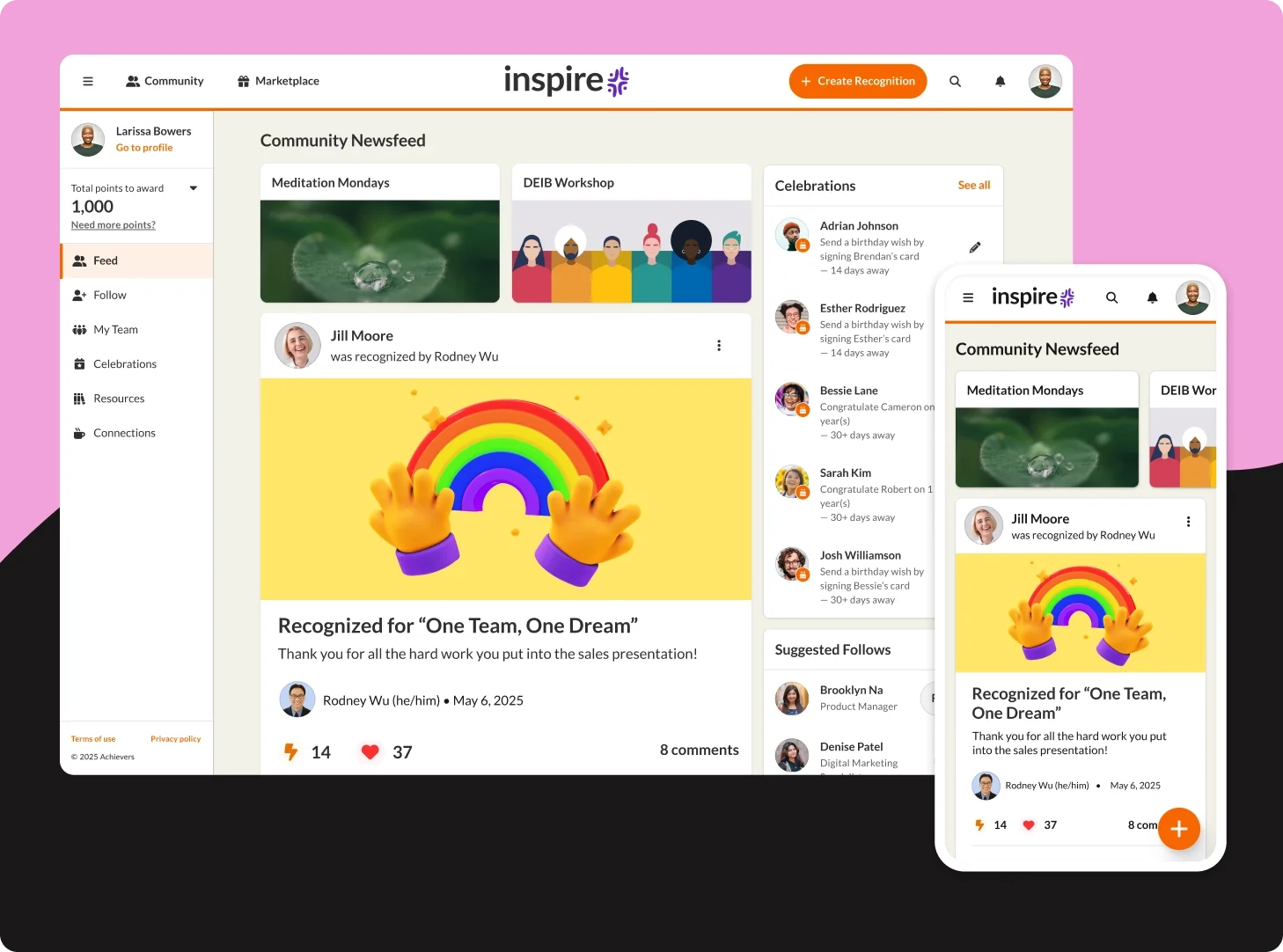
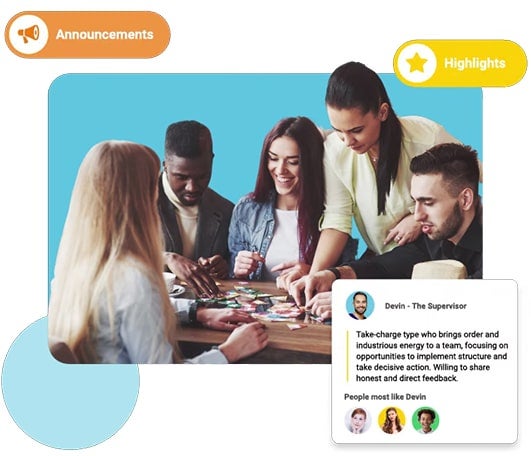
Achievers is a frontrunner in transforming recognition into a significant business driver for large enterprises. It boasts an impressive user base of over 4.3 million global users, with adoption rates reaching as high as 93% in some organizations. The platform’s design prioritizes ease of recognition and reward for employees across all locations, accessible via desktop, mobile, or integrated into popular workforce tools.
A key differentiator for Achievers is its strong emphasis on connecting recognition to measurable outcomes. Its platform is grounded in behavioral science principles developed by the Achievers Workforce Institute, actively helping leaders cultivate habits that enhance engagement, retention, and overall performance. With flexible global rewards available in 190 countries, AI-driven insights, and 24/7 support in over 200 languages, Achievers equips large companies with the tools necessary for consistent, inclusive, and measurable recognition, irrespective of workforce complexity.
- Best for: Enterprise and global organizations aiming to scale recognition, boost employee engagement, and gain actionable insights into cultural impact.
- Key Strengths: AI-driven analytics, real-time global recognition, behavioral science foundation, extensive global rewards network, 24/7 multilingual support.
- Potential Weakness: Its advanced analytics and configuration options are tailored for enterprise scale, which might be more than smaller businesses require.
- G2 Rating: 4.7/5
2. Motivosity
Motivosity offers a recognition and rewards platform specifically designed to enhance connection and appreciation among employees. The system supports both peer and manager recognition, facilitates milestone celebrations, and allows for spot bonuses. Furthermore, it integrates communication tools, employee profiles, and broader engagement features, encouraging sustained participation across the organization.
- Best for: Organizations seeking a unified platform that combines recognition with social and engagement features, particularly mid-sized companies.
- Key Strengths: Integrated social and engagement tools, peer and manager recognition, milestone celebrations, spot bonuses.
- Potential Weakness: While robust for mid-sized teams, larger enterprises might desire more in-depth analytics and customization options.
- G2 Rating: 4.7/5
3. Guusto
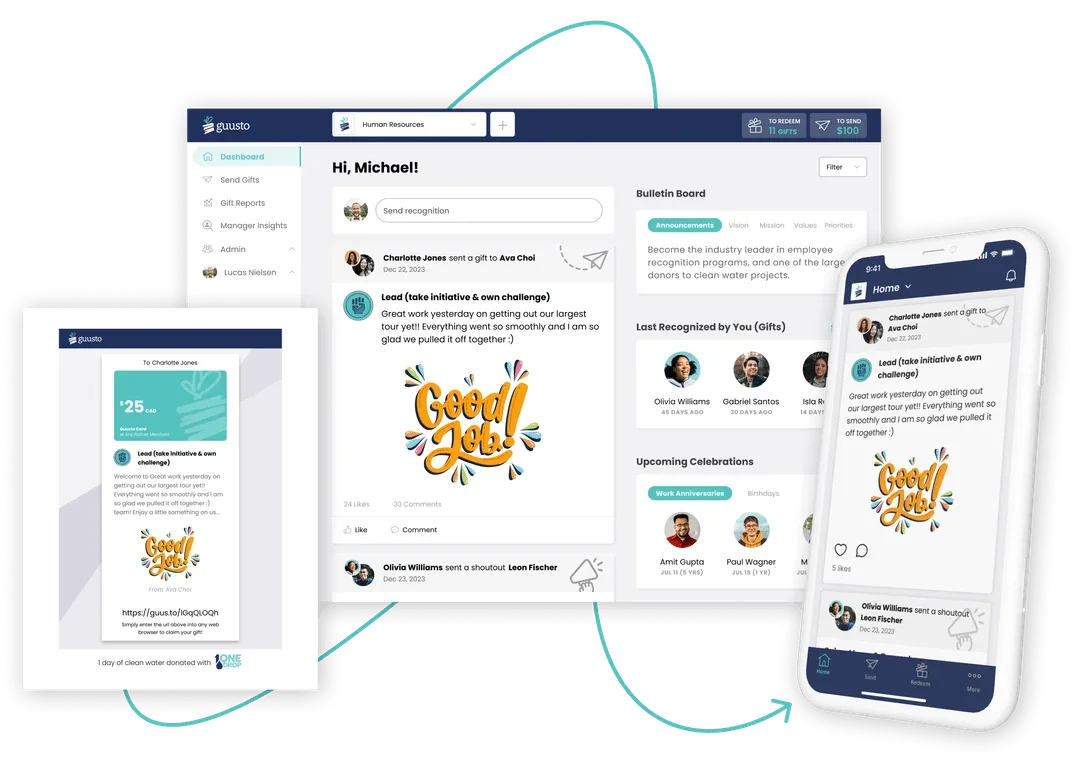
Guusto is engineered to engage both office-based and frontline employees effectively. The platform allows users to send digital or printed rewards, automate milestone programs, and manage budgets within a single interface. It also supports non-monetary recognition through peer nominations and shout-outs, making it a versatile solution for teams of all sizes and roles.
- Best for: Companies with a blend of office and frontline workers requiring an intuitive platform for delivering rewards and recognition.
- Key Strengths: Easy-to-use reward delivery (digital/print), automated milestones, budget management, peer nominations.
- Potential Weakness: Its simplified setup and reporting tools are ideal for smaller to mid-sized teams, but global enterprises may require more advanced analytics and extensive integration capabilities.
- G2 Rating: 4.9/5
4. Mo
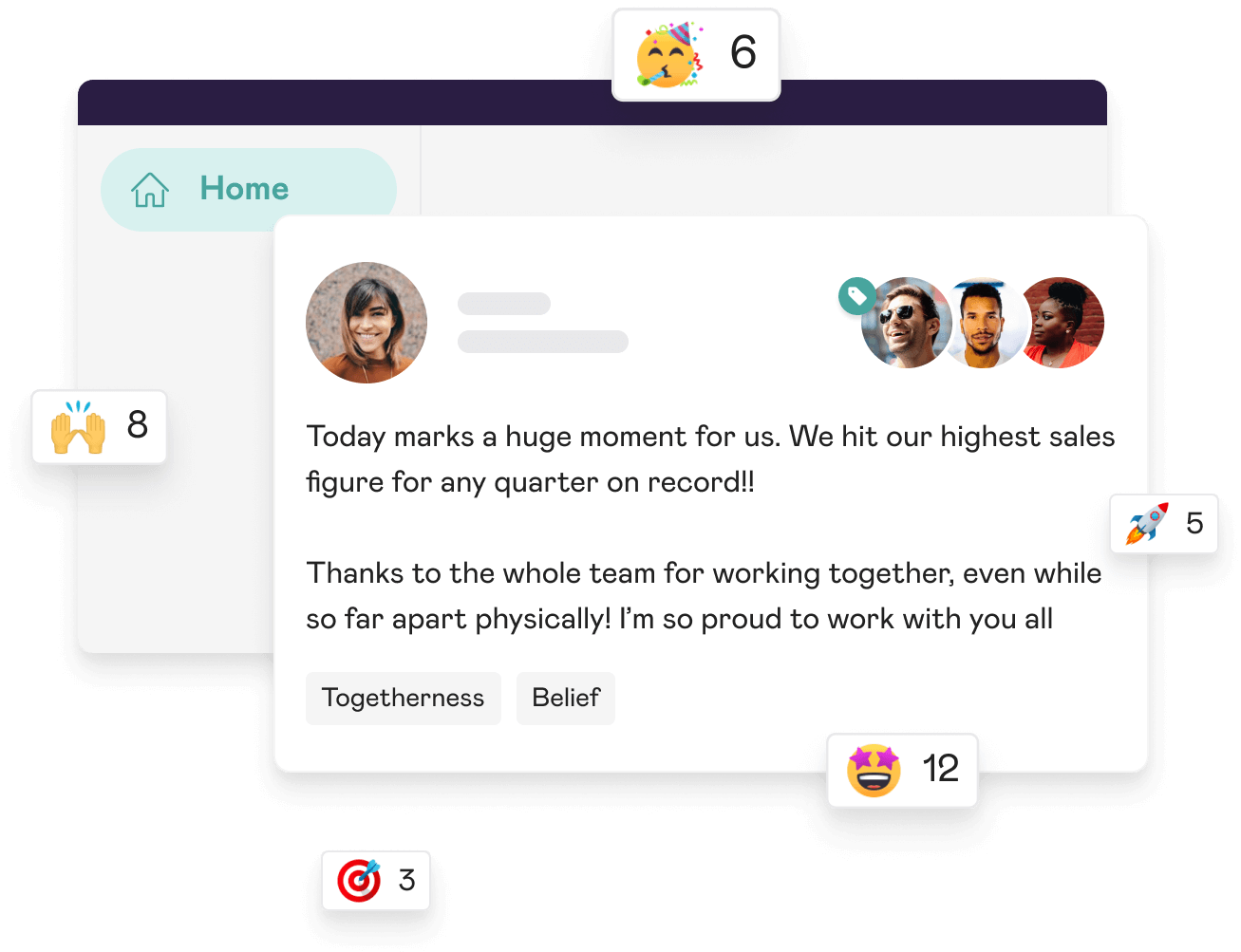
Mo provides a recognition and engagement platform focused on making company culture visible through everyday moments of appreciation. It assists managers and employees in sharing recognition, celebrating milestones, and directly linking contributions to company values. The system incorporates automated prompts and integrations to embed recognition into daily routines, fostering improved communication and consistency.
- Best for: Companies that prioritize ease of use and everyday recognition over extensive reporting or complex configurations.
- Key Strengths: Focus on everyday appreciation, automated prompts, integration into daily routines, culture visibility.
- Potential Weakness: While strong in culture-building and ease of use, it may lack the advanced analytics and customization depth sought by larger enterprises.
- G2 Rating: 4.6/5
5. Terryberry
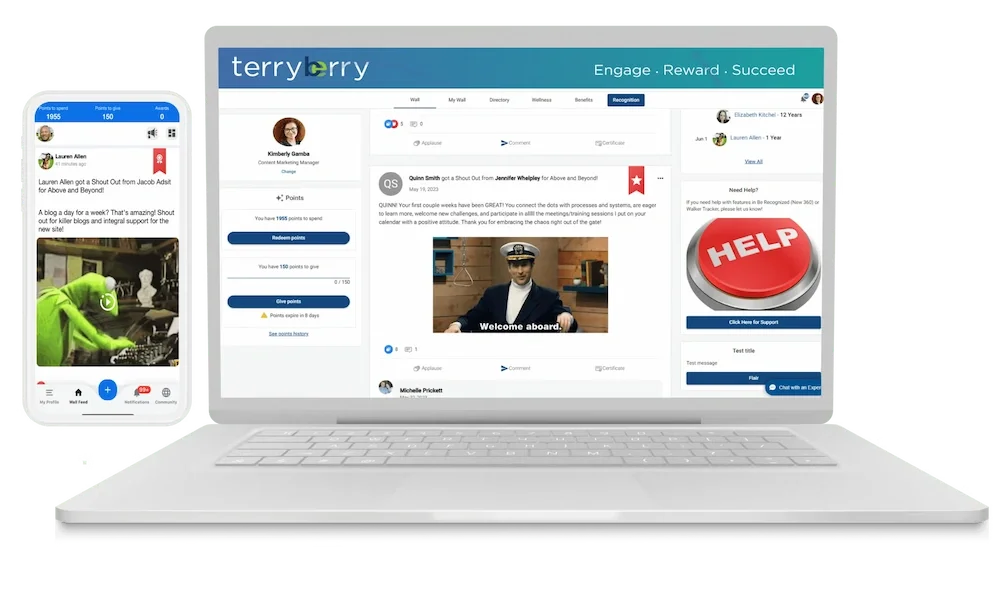
Terryberry offers a unified engagement platform that integrates employee recognition, wellness initiatives, and survey tools. The platform emphasizes measuring cultural and engagement outcomes, such as eNPS, sentiment, and retention risk, through its built-in analytics. It also provides global fulfillment options for milestone awards and comprehensive reward programs.
- Best for: Teams looking for a comprehensive employee engagement system that includes robust recognition capabilities.
- Key Strengths: All-in-one engagement suite, recognition, wellness, surveys, sentiment analytics, global fulfillment.
- Potential Weakness: Its broad scope as an all-in-one platform might offer less flexibility for organizations with a primary focus solely on recognition and deep analytics.
- G2 Rating: 4.6/5
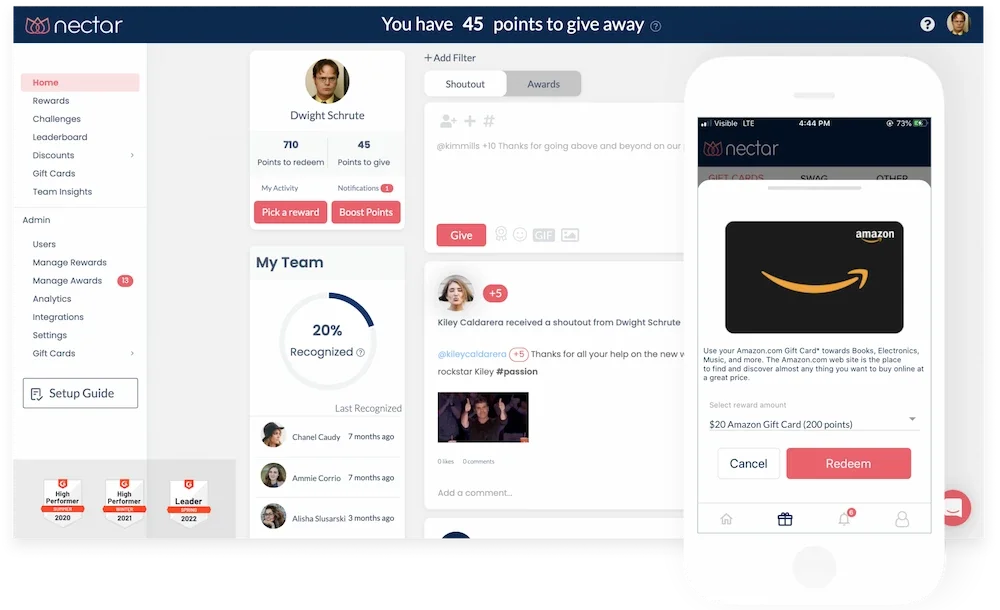
6. Nectar
Nectar presents a straightforward recognition and rewards platform designed to help companies celebrate employee achievements, manage nominations, and communicate internal updates cohesively. The system emphasizes user-friendliness and automation, simplifying the process for teams to recognize milestones, launch challenges, and distribute rewards without significant administrative overhead.
- Best for: Organizations seeking a simple, automated recognition platform that avoids overly advanced analytics or enterprise-level complexity.
- Key Strengths: Ease of use, automation, peer-to-peer recognition, milestone celebrations, challenges.
- Potential Weakness: Its user-friendly design, while an advantage, may not offer the advanced analytics or extensive global reward options required by larger, more complex enterprises.
- G2 Rating: 4.7/5
7. Kudos
Kudos offers a recognition and rewards platform built to reinforce company values through both peer-to-peer and top-down recognition. Its "Performance Recognition" framework strategically links recognition messages to impact levels and company values, enabling organizations to better align appreciation with business objectives. The platform also features milestone automation, awards, and a broad catalog of global rewards.
- Best for: Organizations prioritizing a value-based recognition system with accessible analytics and core engagement functionalities.
- Key Strengths: Value-based recognition, peer-to-peer and top-down recognition, impact-level linking, milestone automation.
- Potential Weakness: While strong in recognition and rewards, its data insights and reporting depth may be less extensive than dedicated enterprise platforms.
- G2 Rating: 4.8/5
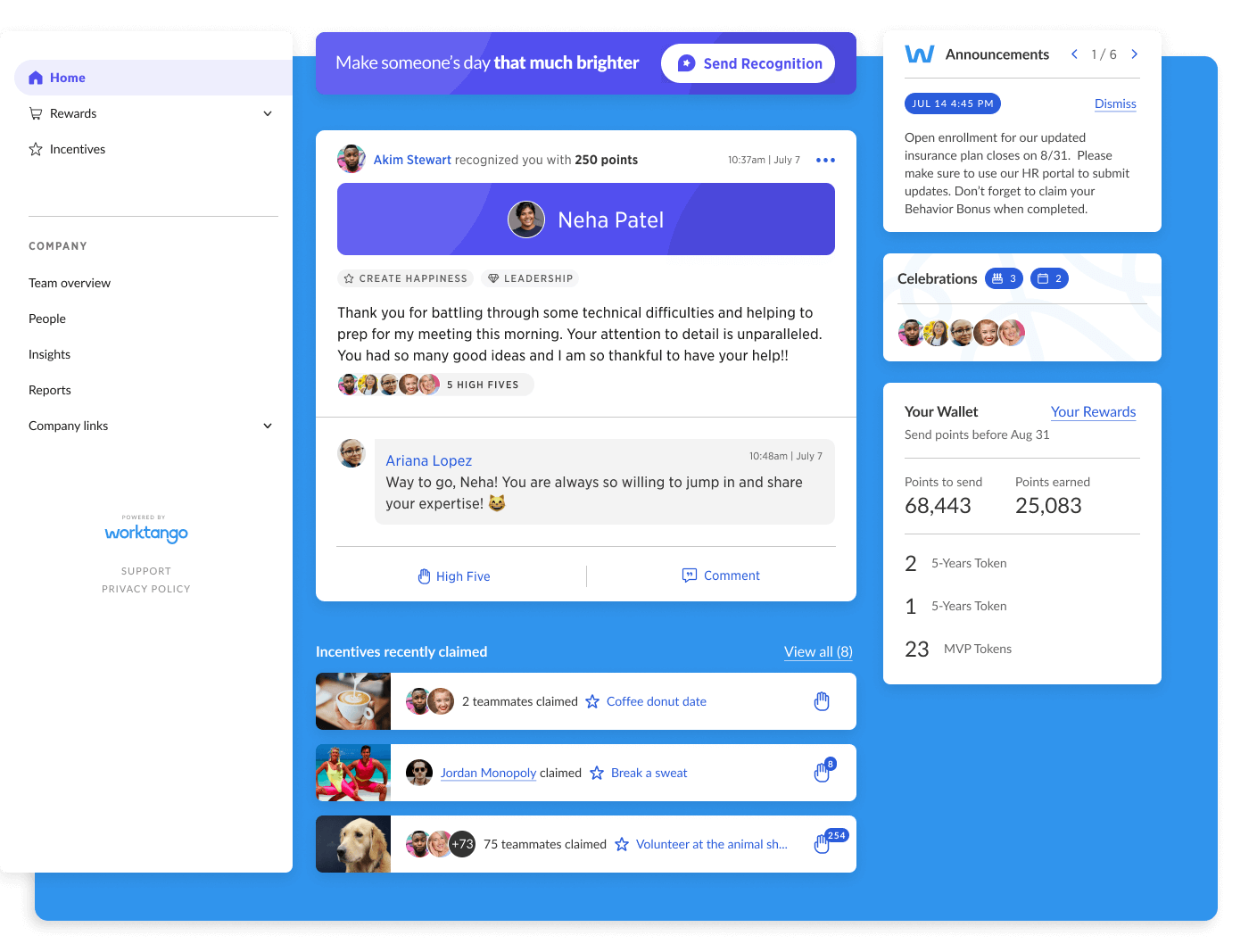
8. WorkTango
WorkTango merges recognition and rewards with survey and insights tools within a single employee experience platform. It empowers organizations to measure engagement, gather feedback, and reinforce key behaviors through automated recognition, milestone celebrations, and incentive programs. The platform includes a vast global rewards marketplace and reporting dashboards to help leaders monitor participation and impact.
- Best for: Teams desiring a broader HR platform where recognition is integrated into a larger employee engagement strategy.
- Key Strengths: Integrated recognition, surveys, incentives, global rewards marketplace, reporting dashboards.
- Potential Weakness: As a platform covering multiple HR functions, its recognition features might be less specialized or customizable than platforms solely dedicated to recognition and engagement.
- G2 Rating: 4.7/5
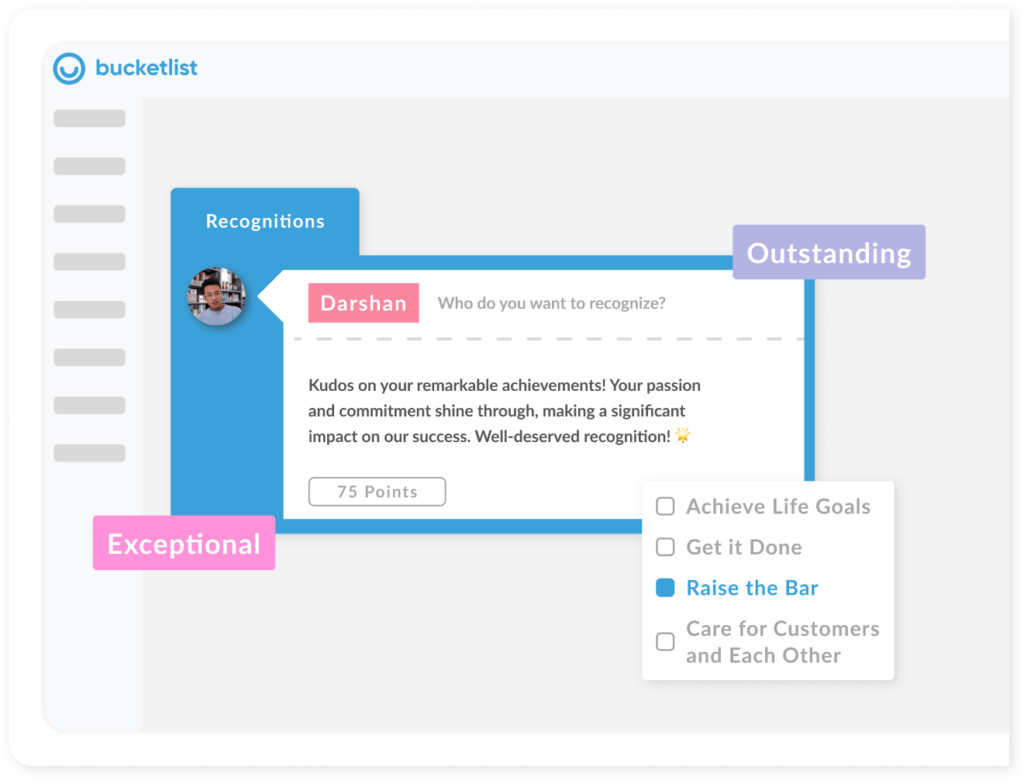
9. Bucketlist
Bucketlist focuses on automation, accessibility, and real-time engagement for its recognition and rewards platform. It supports peer and manager recognition, milestone celebrations, and goal-based incentives through a social-style feed and a mobile app. With integrations across Slack, Teams, and major HRIS systems, it’s designed to serve both office and frontline employees effectively.
- Best for: Organizations prioritizing everyday engagement and seamless recognition delivery over in-depth analytics and measurement.
- Key Strengths: Automation, accessibility, real-time engagement, social-style feed, mobile app.
- Potential Weakness: Its user-friendly recognition tools might be perceived as limited for organizations requiring deeper analytics or more robust global support.
- G2 Rating: 4.8/5
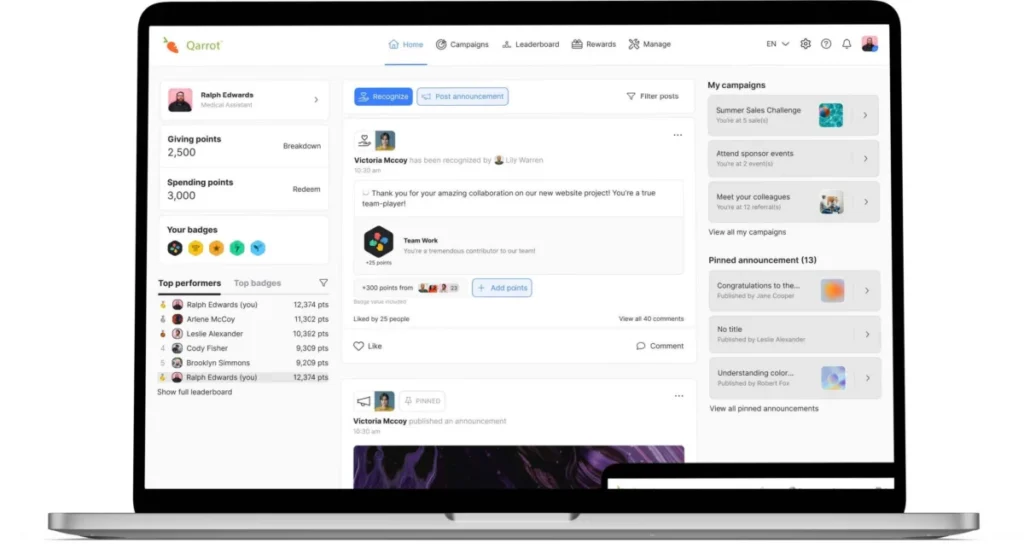
10. Qarrot
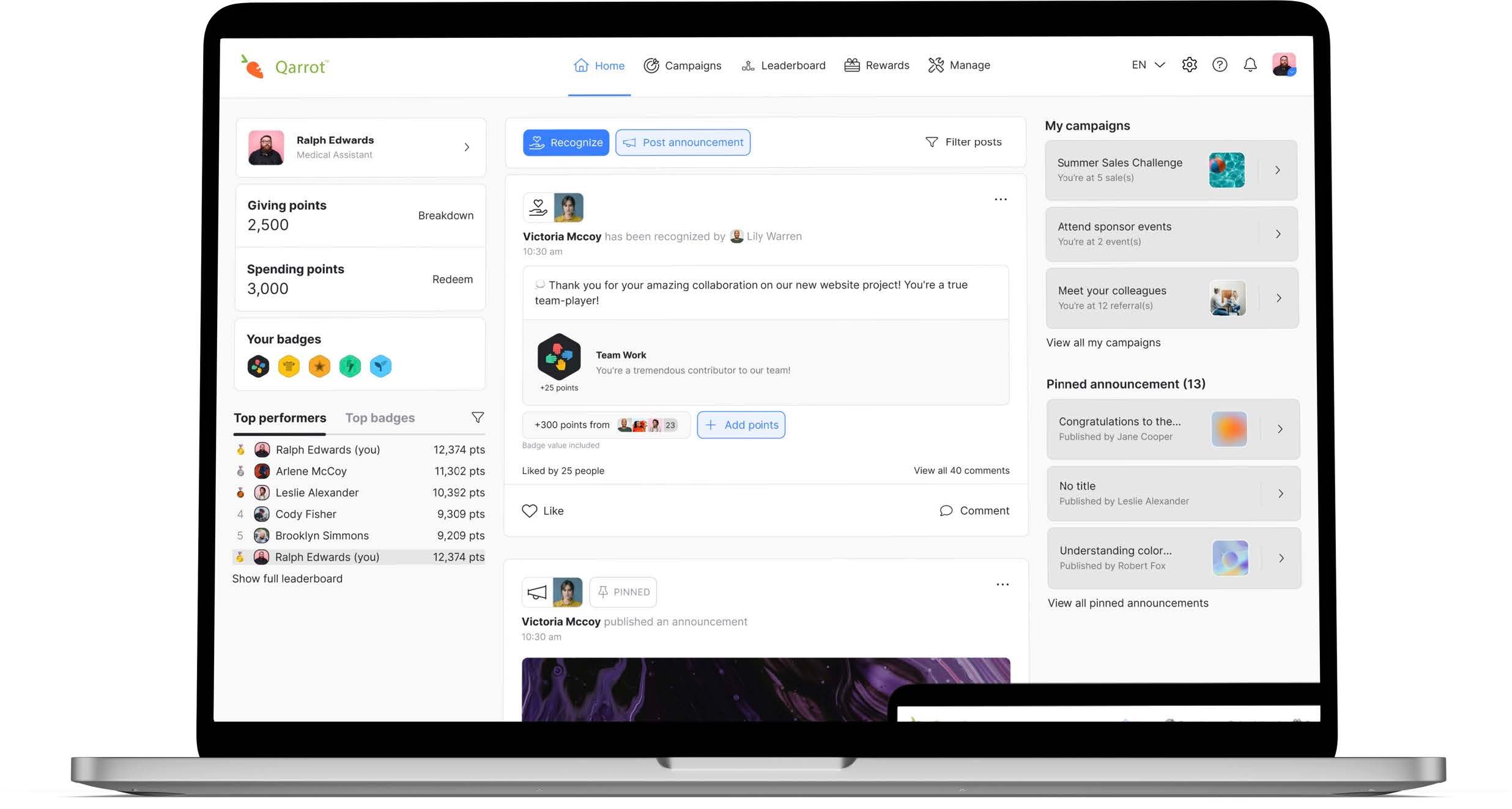
Qarrot provides an employee recognition and rewards platform supporting peer recognition, milestone celebrations, and goal-based campaigns. The platform features custom badges aligned with company values, gamified challenges, and team announcements to boost engagement. Integrations with Slack and Microsoft Teams help embed recognition directly into daily workflows.
- Best for: Companies seeking a straightforward recognition solution for small to mid-sized teams that is easy to manage.
- Key Strengths: Peer recognition, custom value-based badges, gamified challenges, team announcements.
- Potential Weakness: It may not offer the same depth of analytics or configuration options that larger organizations typically seek in recognition software.
- G2 Rating: 4.6/5
11. Workvivo
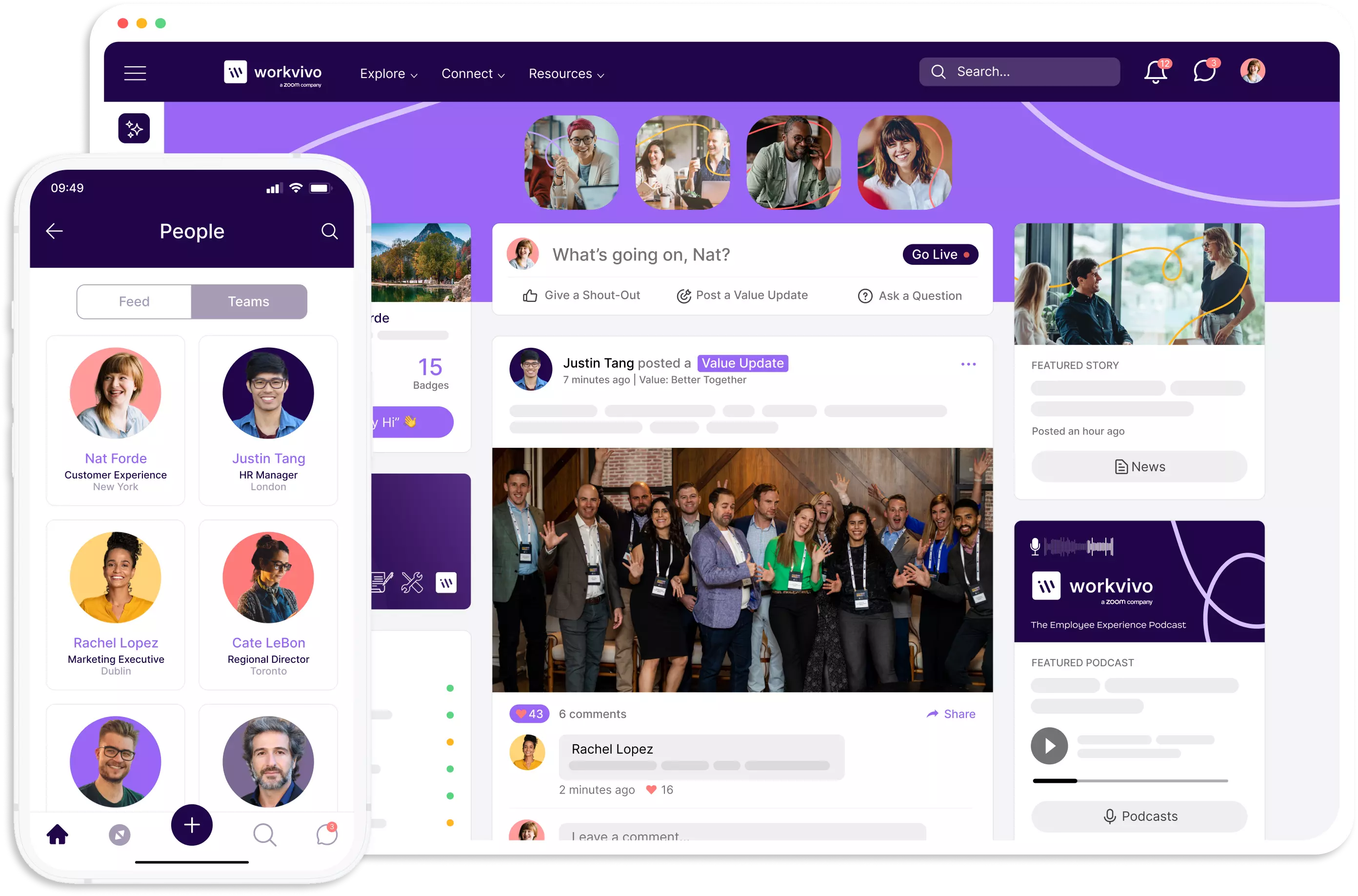
Workvivo is an employee experience platform that consolidates internal communications, engagement tools, recognition features, and intranet functionalities into a single, mobile-first solution. It aims to connect desk-based and frontline employees through a social-style interface, offering dedicated spaces for news, shout-outs, surveys, and collaboration. Workvivo integrates with popular tools like Zoom, Microsoft 365, and Slack, demonstrating strong adoption rates and providing analytics to track engagement and communication effectiveness.
- Best for: Organizations that place a high priority on communication and fostering connection across dispersed or hybrid teams.
- Key Strengths: Mobile-first design, integrated communications and recognition, social-style interface, broad integrations.
- Potential Weakness: While it includes recognition tools, its primary focus is on communication and overall engagement. Teams requiring highly specialized reward functionalities or deep behavioral analytics might find it less specialized in those specific areas.
- G2 Rating: 4.8/5
12. Empuls (by Xoxoday)
Empuls brings together recognition, rewards, surveys, and communication into a single, cohesive platform. It offers a structured approach to appreciation through peer-to-peer recognition, milestone acknowledgments, and a global rewards catalog. The platform also supports engagement surveys and feedback tools, enabling organizations to monitor employee sentiment and align cultural initiatives.
- Best for: Companies looking for a comprehensive engagement platform that integrates recognition with surveys and communication tools.
- Key Strengths: Unified recognition, rewards, surveys, and communication; structured appreciation; global rewards catalog.
- Potential Weakness: Empuls provides a wide array of features, but organizations seeking deeper behavioral insights or more advanced analytical capabilities might find its reporting more functional than strategic.
- G2 Rating: 4.6/5
13. Matter
Matter is specifically designed to operate directly within Slack or Microsoft Teams, enabling peer-to-peer kudos, automated celebrations, and simple pulse surveys without the need for separate software. Built for rapid implementation and ease of use, Matter helps embed recognition habits through features like "Feedback Friday" and customizable kudos templates.
- Best for: Companies seeking a simple, integrated recognition solution that works directly within their existing Slack or Teams environments.
- Key Strengths: Direct Slack/Teams integration, peer-to-peer kudos, automated celebrations, pulse surveys.
- Potential Weakness: Its emphasis on simplicity and ease of use means it may lack the advanced analytics or extensive customization options found in larger, more comprehensive recognition platforms.
- G2 Rating: 4.7/5
14. Assembly
Assembly helps teams establish appreciation as a regular component of their work culture. It combines peer-to-peer shout-outs, automated celebrations, and built-in rewards to enhance engagement and morale. The platform includes culture insights and manager enablement tools, assisting organizations in tracking recognition activity and promoting consistent appreciation.
- Best for: Companies looking for an uncomplicated method to engage employees without requiring detailed reporting or deep analytical insights.
- Key Strengths: Peer-to-peer shout-outs, automated celebrations, built-in rewards, culture insights.
- Potential Weakness: Assembly may not offer the same level of global reach or advanced reward options as platforms geared more towards enterprise-level deployment.
- G2 Rating: 4.9/5
15. Profit.co
Profit.co offers a unified platform integrating OKRs (Objectives and Key Results), performance management, and employee engagement tools. It supports goal alignment, continuous feedback, and peer recognition through features like leaderboards, pulse surveys, and 1:1 meeting functionalities. The platform helps organizations connect business performance with employee engagement in a structured, data-driven manner.
- Best for: Companies focused on aligning performance, portfolio management, and task management with employee engagement initiatives.
- Key Strengths: Integrated OKRs, performance management, peer recognition, leaderboards, pulse surveys.
- Potential Weakness: With a primary focus on OKRs and performance management, its recognition capabilities may be less developed compared to platforms dedicated exclusively to recognition and rewards at scale.
- G2 Rating: 4.7/5
The Enduring Significance of Recognition for Large Corporations
In the context of large, often globally dispersed organizations, recognition serves as a critical element in unifying company culture. It ensures that values remain consistent and that employees are aligned around a shared purpose, even as the business expands and evolves. The importance of recognition for these entities is multifaceted:
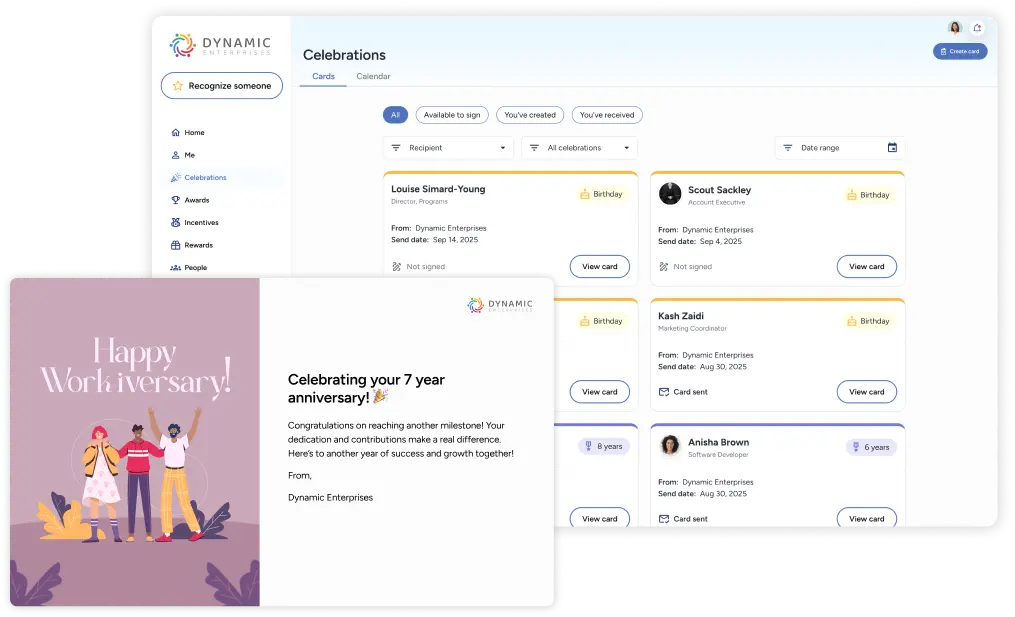
- Fostering a Unified Culture: Recognition acts as a powerful mechanism for embedding and reinforcing core company values across diverse teams and locations. It ensures that regardless of an employee’s role or department, they understand and connect with what the organization stands for.
- Driving Engagement and Retention: Employees who feel valued are more likely to be engaged and committed to their roles, leading to lower turnover rates. In large companies, where the cost of replacing talent is substantial, effective recognition programs can yield significant ROI through improved retention.
- Enhancing Productivity and Performance: When employees are recognized for their contributions, it motivates them to perform at higher levels. This positive reinforcement loop can lead to increased productivity, innovation, and overall business success.
- Attracting Top Talent: A strong culture of recognition can be a significant differentiator in the competitive talent market. Prospective employees are increasingly looking for organizations where their contributions will be acknowledged and appreciated.
- Boosting Morale and Well-being: Regular appreciation contributes to a positive work environment, improving employee morale and overall well-being. This can translate into a more resilient and adaptable workforce, better equipped to handle challenges.
Why Achievers is a Preferred Choice for Enterprise Recognition
Achievers stands out as a preferred solution for large organizations looking to implement recognition programs that are not only impactful but also measurable and human-centric. Recognizing that at scale, recognition can either become a disconnected "noise" or a powerful force for shaping culture, Achievers offers a strategic approach.
The platform’s ability to make recognition meaningful, measurable, and human is built upon several key pillars:
- Global Scalability and Accessibility: Achievers is designed to support workforces across continents, ensuring that recognition efforts are consistent and accessible regardless of location or time zone. Its platform is available on any device and integrates with existing communication tools, meeting employees where they are.
- Behavioral Science Foundation: By grounding its features in behavioral science, Achievers helps organizations cultivate specific employee habits that drive desired outcomes like increased engagement and retention. This scientific approach ensures recognition is strategic and effective.
- Actionable Insights and Analytics: The platform provides AI-driven insights that allow leaders to understand the impact of recognition, track engagement trends, and make data-informed decisions to optimize their programs. This moves recognition beyond anecdotal evidence to demonstrable business impact.
- Human-Centric Approach: Despite its scale and technological sophistication, Achievers maintains a focus on the human element of recognition, ensuring that appreciation feels genuine and personal, fostering stronger connections within the workforce.
- Comprehensive Reward Network: With a vast global rewards catalog, employees can redeem their recognition points for items and experiences relevant to them, further enhancing the perceived value of the recognition received.
Navigating the Software Landscape to Find the Right Fit
For large companies, maintaining a personal touch within a vast organization becomes increasingly challenging, yet it is precisely in these moments that recognition truly shines. It serves to bridge geographical distances, strengthen interpersonal connections, and consistently remind every employee of their individual importance and their integral role within the larger organizational mission.
The right software solution is the catalyst that makes this vital connection effortless. It ensures that recognition remains visible, quantifiable, and impossible to overlook. This is the core mission of platforms like Achievers: to empower large organizations to remain human, interconnected, and inspired, regardless of their growth trajectory or geographical reach. By carefully evaluating the diverse range of platforms available, businesses can identify the solution that best aligns with their specific workforce needs, strategic goals, and cultural aspirations, ultimately fostering a more engaged, productive, and appreciated workforce.
Recognition Software for Large Companies FAQs
What are the primary benefits of using employee recognition software for large companies?
Employee recognition software helps large companies foster a positive work culture, increase employee engagement and retention, boost productivity, and align employees with company values and goals. It provides a structured and scalable way to acknowledge contributions across a diverse workforce.
How does employee recognition software differ for large companies compared to small businesses?
For large companies, recognition software needs to offer robust scalability to handle thousands of users, advanced analytics for measuring ROI and impact across the organization, global reward fulfillment capabilities, multilingual support, and seamless integration with complex enterprise HR systems. Small businesses may prioritize simpler features and more direct, less data-intensive approaches.
What is the role of peer-to-peer recognition in large organizations?
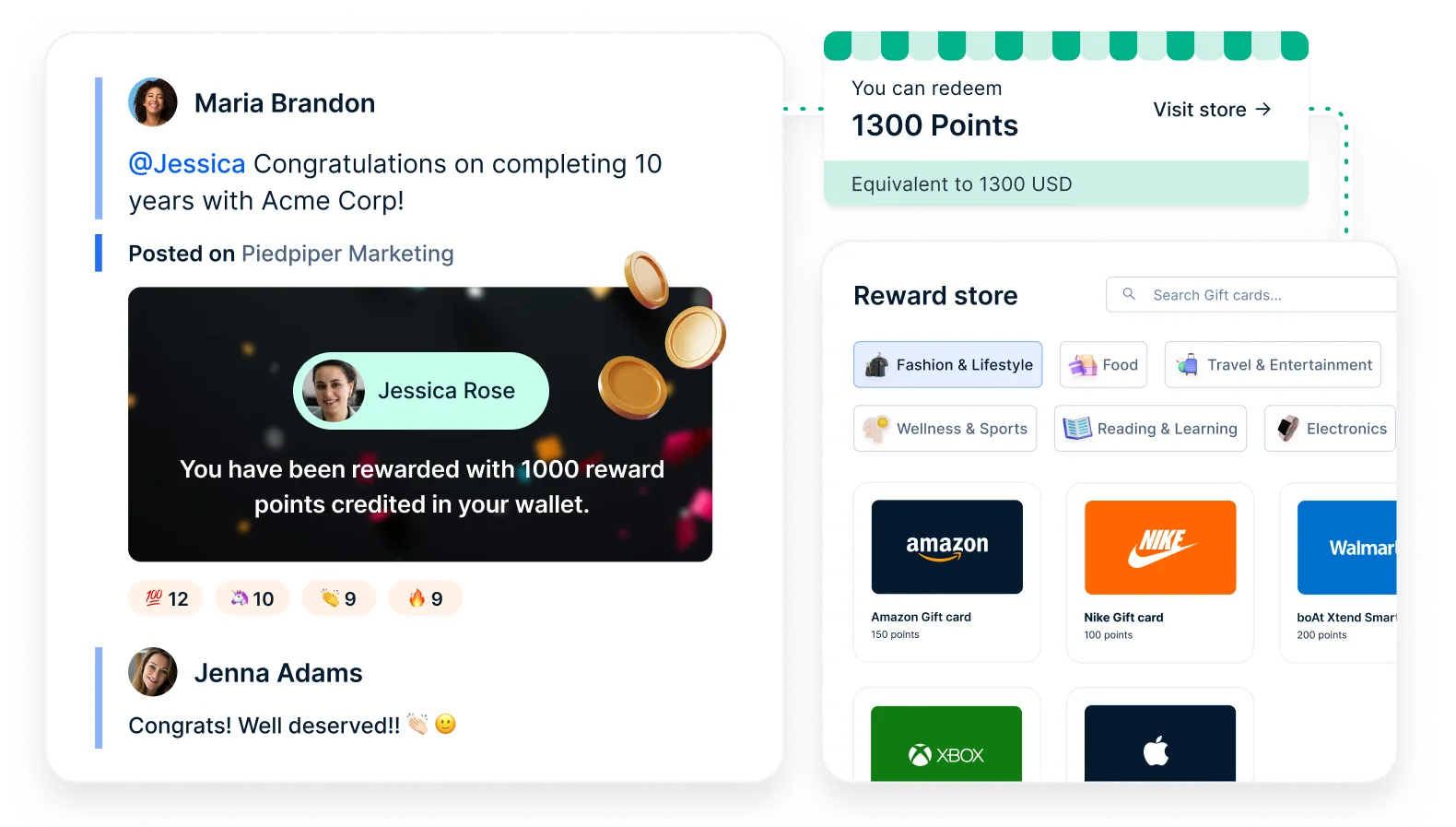
Peer-to-peer recognition is crucial for large organizations as it democratizes appreciation, extending its reach beyond managers. It empowers all employees to acknowledge and celebrate each other’s contributions, fostering a more inclusive and collaborative culture, and ensuring that daily efforts are recognized.
How can employee recognition software help in a globalized workforce?
For global companies, recognition software is vital for overcoming geographical barriers. It allows for real-time recognition across different time zones, supports multiple languages, and offers a global rewards catalog that caters to diverse cultural preferences and local availability, ensuring a consistent and inclusive recognition experience worldwide.
What is the typical ROI for investing in employee recognition software?
While specific ROI can vary, studies consistently show that effective recognition programs significantly reduce employee turnover, increase productivity, and improve overall engagement. Companies often report a positive ROI through increased retention rates, higher employee output, and enhanced employer branding, which aids in talent acquisition.
Can employee recognition software be integrated with existing HR systems?
Yes, most reputable employee recognition software platforms offer robust integration capabilities with common HRIS (Human Resources Information Systems), payroll systems, and communication tools like Slack and Microsoft Teams. This integration streamlines processes, ensures data accuracy, and embeds recognition into existing workflows.