Well-designed employee rewards and recognition programs are no longer mere perks but fundamental strategic tools for organizations navigating the complexities of modern workforces, whether scaling rapidly or managing established global teams. These initiatives offer a practical, measurable pathway to enhance engagement, elevate performance, and bolster retention in an increasingly competitive talent landscape. However, the efficacy of such programs is not inherent; it hinges critically on the frequency, meaning, and behavioral alignment of the recognition delivered.
Research from the acclaimed State of Recognition Report, which synthesized insights from 2,500 employees across eight diverse regions, provides compelling evidence: employees who receive weekly recognition are 2.6 times more likely to be performing at their peak. This finding underscores a critical truth for contemporary human resources and business leaders: effective recognition is consistent, deeply meaningful, and explicitly linked to the organizational behaviors and values leaders seek to cultivate.
The Evolving Landscape of Employee Appreciation
The concept of acknowledging employee contributions has undergone a significant transformation. Historically, recognition often manifested as annual awards, service milestones, or occasional bonuses, largely disconnected from day-to-day efforts. However, the demands of the 21st-century workforce—characterized by rapid technological change, the rise of remote and hybrid work models, and shifting generational expectations—have necessitated a more dynamic approach. The "Great Resignation" and persistent talent shortages have further amplified the need for strategies that genuinely connect employees to their work and their workplace. Industry analysts observe that companies are increasingly recognizing that an engaged workforce is not an outcome of mandated directives but a carefully constructed environment nurtured through continuous appreciation.
At its core, employee recognition involves acknowledging and valuing the specific contributions, positive behaviors, and achievements that propel an organization forward. This can range from a simple, timely "thank you" to a highly visible, company-wide celebration. When executed with consistency and genuine intent, recognition transcends a polite gesture, becoming a potent catalyst for engagement.
This shift matters profoundly because recognition directly shapes how employees perceive their work and their organizational affiliation. Data from the Achievers Workforce Institute (AWI) reveals a stark reality: only 25% of employees report feeling genuinely appreciated and engaged. This statistic suggests a significant untapped potential for most organizations. Conversely, when employees do feel appreciated, the ripple effect is profound: they are 12 times more likely to find their work meaningful and an astonishing 17 times more likely to envision a long-term career path within their current company.

The distinction lies in consistency. Recognition is not a singular event; it is a habitual practice that frames the daily work experience. AWI research further substantiates that employees receiving frequent, meaningful recognition are 2.6 times more productive and six times more likely to remain with their company long-term. This demonstrates that recognition is not merely a "feel-good" initiative but a powerful strategic lever that reinforces a sense of belonging, clarifies performance expectations, and connects individuals to a broader, shared purpose. When effectively implemented, recognition drives engagement, performance, and retention at scale. This strategic importance is precisely where structured employee rewards and recognition programs become indispensable.
Key Trends Shaping Modern Employee Recognition
The trajectory of employee recognition is evolving from a standalone HR function into a critical driver of engagement, retention, and performance. For executives, prevailing trends indicate a definitive move toward more frequent, data-driven, and culturally integrated programs. Leading organizations are transitioning beyond traditional milestone-based awards to embrace continuous recognition that reinforces desired behaviors in real time. This expansion extends recognition beyond the managerial hierarchy, fostering peer-to-peer appreciation that enhances authenticity and engagement across diverse workforces.
Crucially, organizations are increasingly aligning recognition with core company values and strategic objectives, directly influencing performance and shaping culture. The fragmentation of recognition, rewards, and feedback systems is giving way to unified platforms that offer greater scalability and measurability. Leaders are leveraging recognition data to track participation, identify gaps, and establish clear correlations between engagement efforts and tangible business outcomes like retention and productivity. Ultimately, employees today expect timely, personalized recognition that genuinely reflects their contributions and connects them to a larger purpose. These interwoven trends highlight a fundamental shift: recognition is no longer merely an act of appreciation but a strategic mechanism for shaping workforce behavior and driving measurable results. Platforms such as Achievers, which integrate recognition, rewards, and actionable insights, empower organizations to operationalize these trends, transforming everyday interactions into significant business impact.
Defining Employee Rewards and Recognition Programs
Employee rewards and recognition programs constitute a structured framework designed for organizations to formally acknowledge and reinforce exemplary work. They combine the act of recognizing employee contributions with the provision of meaningful rewards. Most contemporary programs are delivered via scalable, integrated systems, offering a consistent method to acknowledge outstanding work while accommodating organizational growth and increasing complexity over time. This approach ensures recognition is visible across teams, reinforcing shared values, while rewards, often points-based, provide employees with flexibility and offer HR leaders critical budget control and administrative simplicity. This model proves effective for both mid-market teams and organizations operating on a global scale. The overarching goal is both simple and strategic: to elevate morale, incentivize strong performance, and significantly improve employee retention. When executed proficiently, employee recognition initiatives demonstrably move the needle on engagement, productivity, and retention. The good news is that building effective recognition programs is achievable through the right structure, clear objectives, and an unwavering commitment to consistent appreciation as the organization expands.
Budgeting for Impact: The 2026 Outlook
A common question for organizations is the benchmark for an employee rewards budget per employee in 2026. The reality is that no universal benchmark exists; the optimal budget is highly dependent on factors such as workforce size, specific recognition goals, anticipated participation rates, and overarching business objectives. A practical starting point involves conceptualizing rewards budgets on a per-employee, annual basis rather than as a fixed, company-wide sum. High-performing recognition and rewards programs typically align budget decisions with desired recognition frequency, ensuring employees receive meaningful acknowledgment throughout the year, rather than concentrating rewards around a few isolated annual events.
When establishing an employee rewards budget, key considerations include the nature of the workforce (e.g., salaried, hourly, remote), industry benchmarks, the desired frequency and value of recognition, and the overall strategic objectives. However, the most effective programs prioritize creating frequent, meaningful recognition experiences supported by rewards that employees genuinely value, rather than focusing solely on expenditure. A substantial budget with low participation yields minimal impact, whereas a meticulously designed program that encourages regular recognition can significantly strengthen engagement and retention without excessive spending. Before finalizing a budget, it is imperative to establish clear success metrics, such as participation rates, recognition activity levels, employee engagement scores, retention rates, and productivity measures. This data enables leaders to ascertain whether their investment in rewards is generating measurable business value and ensures that budgets can scale proportionally with program adoption. A crucial "pro tip" for leaders is to reframe the question from "How much should we spend per employee?" to "What specific outcomes are we trying to achieve?" The most robust employee rewards programs integrate budget decisions with culture, engagement, and retention goals, making it far easier to demonstrate return on investment (ROI) and secure long-term executive support.
Real-World Recognition: Simple Yet Profound Gestures
Effective employee recognition need not be overly complex; its power lies in its authenticity. What truly resonates is recognition that is timely, meaningful, and clearly connected to an individual’s contributions. Practical and proven examples of how organizations can recognize and reward employees include:
- Intentional Work Anniversaries: Beyond a generic "Congrats on five years!", personalized messages, public acknowledgment, or a thoughtful, experience-based reward communicate that an employee’s time and commitment are genuinely valued. Celebrating service milestones, from year one to year ten, reinforces loyalty and signals long-term appreciation.
- Beyond-the-Basics Appreciation Events: Team lunches, virtual celebrations, or company-wide appreciation events create dedicated opportunities to recognize employees without being rushed. These moments allow organizations to pause, express gratitude, and build interpersonal connections, often with the added bonus of shared meals or treats.
- Achievement Recognition Reinforcing Desired Behaviors: Highlighting accomplishments—such as the successful completion of a major project, achieving a challenging performance goal, or skillfully navigating a tight deadline—serves to reinforce the specific behaviors an organization wishes to see more of. Recognition shared in team meetings, formal awards programs, or internal communication platforms makes success visible and provides models for others to emulate.
- Consistent Employee Spotlights: Implementing weekly or monthly employee spotlights offers a simple, consistent method to recognize individuals regularly, rather than solely during major milestones. A brief feature in a company newsletter or a shout-out on collaboration tools like Slack helps employees feel seen and showcases examples of excellent work in action.
Recognition vs. Rewards: A Critical Distinction
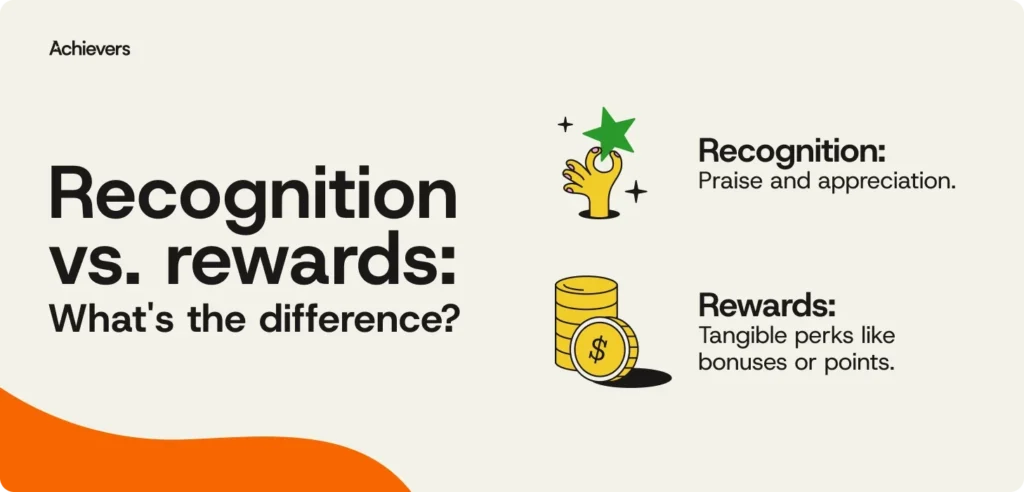
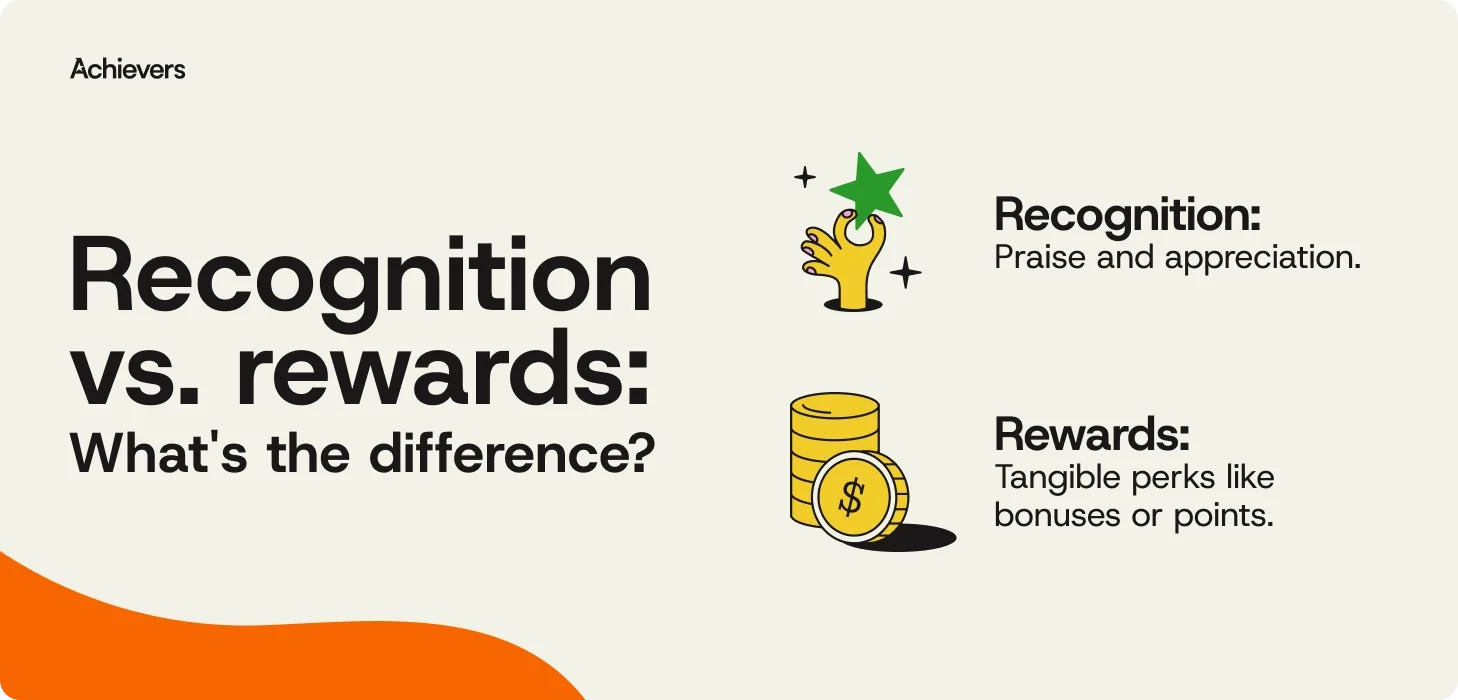
The fundamental difference between employee recognition and rewards lies in their primary function: recognition acknowledges a contribution or behavior, while rewards provide a tangible means to reinforce it. Recognition is typically social, highly visible, and immediate. It can manifest as a manager’s heartfelt thank-you, a peer-to-peer shout-out on an internal platform, or a public acknowledgment directly tied to company values. The core purpose of recognition is to make great work visible and help employees understand why their contribution was significant.
Rewards, on the other hand, include tangible items such as points redeemable for merchandise, gift cards, monetary bonuses, unique experiences, company swag, or other incentives employees receive for a specific contribution or achievement. While rewards effectively reinforce desired behaviors, their impact is maximized when coupled with meaningful recognition that provides context and purpose. Recognition explains why someone’s work matters; rewards reinforce the value of that contribution. Without the accompanying recognition, a reward can feel transactional, potentially diminishing its long-term motivational effect.
The Business Value Proposition: Why Invest?
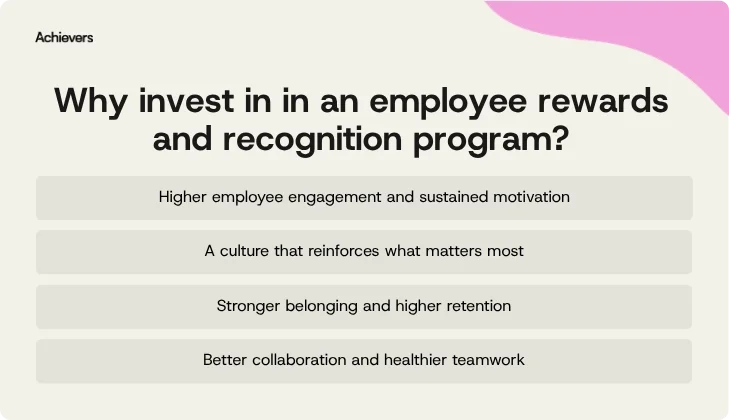
Beyond the intrinsic benefit of making people feel appreciated, investing in comprehensive rewards and recognition programs cultivates a workforce that is more engaged, deeply connected, and significantly more likely to remain with the organization. The business case is compelling:
- Higher Employee Engagement and Sustained Motivation: When employees feel seen and valued, they approach their work with greater energy and commitment. Regular recognition, particularly through points-based programs, ensures that appreciation flows in real-time, rather than being deferred to infrequent annual reviews, which often arrive long after the moment of contribution has passed.
- A Culture That Reinforces Core Values: Recognition is among the most effective mechanisms for reinforcing company values and strategic priorities. By consistently highlighting behaviors that align with the organizational mission, recognition helps these behaviors proliferate across teams, transforming abstract values from wall posters into observable, repeatable actions.
- Stronger Belonging and Higher Retention: Feeling valued inherently builds connection. When employees understand that their work matters, they experience greater inclusion, enhanced motivation, and are more likely to envision a long-term future within the organization. Recognition shifts the perception of work from "just a job" to "I belong here," fostering a powerful sense of psychological safety and community.
- Enhanced Collaboration and Healthier Teamwork: When recognition is an integral part of daily operations—not confined to private messages or managerial notes—interpersonal relationships flourish. Public appreciation, peer-to-peer recognition, and shared celebrations encourage teams to support one another, fostering a culture where individuals actively uplift their colleagues, not merely during formal events.
Recognition by the Numbers: Quantifiable Business Impact
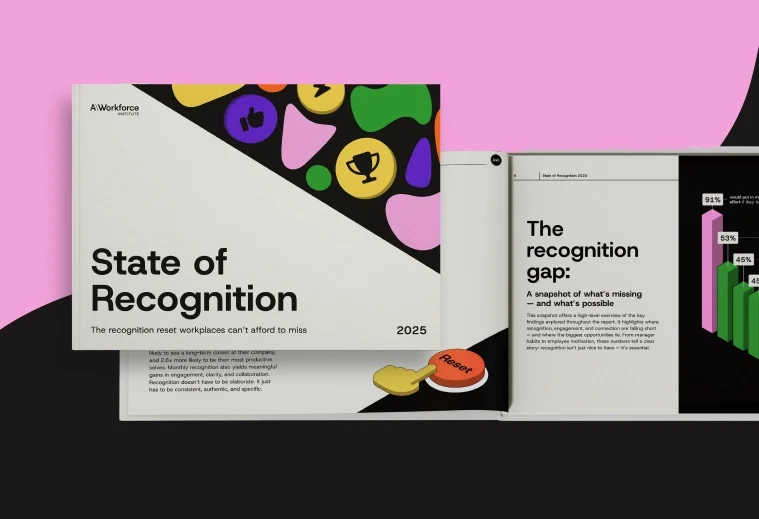
While the qualitative benefits of recognition are widely accepted, data emphatically demonstrates its real, measurable impact when implemented consistently and with clear intention. Insights from Achievers Workforce Institute’s State of Recognition Report unequivocally show that recognition works, but only when strategically designed for scalability and sustainability.
- 45% More Engaged: Employees recognized at least once a month are 45% more engaged. This consistent, timely appreciation signals that contributions are noticed in real-time, integrating appreciation into the daily rhythm of work rather than reserving it for infrequent performance reviews.
- 35% Reduction in Turnover Risk: Consistent manager recognition reduces turnover risk by 35%. Managerial recognition carries significant weight, directly linking effort to expectations and priorities. Regular recognition from managers builds trust, clarity, and confidence, all crucial factors influencing an employee’s decision to stay.
- 37% More Likely to See Positive Business Outcomes: Organizations with robust peer-to-peer recognition programs are 37% more likely to report positive business outcomes. Peer recognition scales culture by making appreciation visible across all levels and captures contributions that leaders might otherwise miss, transforming recognition into a shared, collective responsibility.
- 26% More Likely to Succeed: Recognition programs built around frequent, low-cost moments are 26% more likely to succeed. While significant rewards are memorable, small, frequent moments are sustainable and more effective at shaping long-term behavior.
- 60-70% Social Recognition Effectiveness: Social (non-monetary) recognition can account for 60-70% of total recognition and still drive substantial results. Public praise, thoughtful messages, and visible appreciation address a fundamental human need to feel seen. Monetary rewards add value, but social recognition primarily builds connection and culture at scale.
- 96% Align with Company Values: A remarkable 96% of high-performing recognition programs align recognition with company values. These programs prioritize recognizing what matters most, linking appreciation directly to organizational culture and values, thereby reinforcing priorities and guiding desired behaviors.
- 50% Higher Retention: Milestone awards that reflect meaningful growth, impact, and contribution drive 50% higher retention than generic years-of-service awards. Personalized, relevant, and earned recognition resonates deeply with employees, fostering loyalty and encouraging longer tenure.
The bottom line is clear: a giant budget is not a prerequisite for success. A combination of intentional design and consistent follow-through yields profound results.
Best Corporate Practices for Maximizing Recognition Impact
To truly unlock the potential of employee recognition and rewards, organizations should adopt several best practices:
- Define What Recognition Should Reinforce: Before program launch, clearly identify the behaviors, values, and contributions that directly support organizational goals. This ensures consistency and helps employees understand the meaningful outcomes of recognition, preventing it from being perceived as random praise.
- Provide Multiple Participation Pathways: Recognition should not solely depend on managers. Employees contribute in diverse ways across various teams, locations, and functions. Offering a mix of manager-driven, peer-to-peer, team celebrations, and milestone recognition ensures all contributions are visible at every business level.
- Match Rewards to Employee Preferences: A reward only holds value if employees genuinely desire it. Flexible reward options, allowing employees to choose from merchandise, experiences, charitable giving, or gift cards, make recognition feel more meaningful and relevant.
- Simplify the Act of Giving Recognition: Remove barriers to consistent appreciation. Complicated nomination forms, lengthy approval chains, or limited recognition opportunities create friction that reduces participation. The simpler the process, the more naturally recognition integrates into the culture.
- Train Managers for Effective Recognition: Many managers understand the importance of recognition but lack the specific skills to deliver it effectively. Providing guidance on timing, personalization, behavioral reinforcement, and offering a practical recognition checklist empowers managers to move beyond generic praise to impactful appreciation.
- Balance Recognition and Rewards: Programs that intentionally balance both recognition (visibility and appreciation) and rewards (tangible reinforcement) are more effective. This dual approach reinforces important behaviors and acknowledges contributions without becoming overly reliant on either component.
Understanding the Business Value of Recognition and Rewards
Most organizations do not start from scratch with recognition; some form of platform, process, or budget typically exists, underpinned by the intention to improve performance, strengthen connection, and build a culture that drives business results. However, intention does not always translate into impact. Even with the right components in place, a clear correlation between recognition efforts and desired business outcomes can be elusive. Emma Harvie, Global Head of Recognition and Rewards Insights at Achievers, highlights this gap in her work, emphasizing that the solution isn’t about doing more, but about discerning what truly drives results.
Many recognition strategies fall short of their ROI potential because a recognition platform, while necessary, does not automatically equate to an effective strategy. Programs often launch with initial momentum but falter without consistent reinforcement, preventing recognition from becoming a regular, meaningful part of daily work. AWI research indicates that while 69% of organizations have a formal recognition platform, only 24% of employees feel meaningfully recognized. This disparity arises when recognition is treated as an existing entity rather than an ongoing, active process essential for influencing behavior. Without this consistency, connecting recognition efforts to critical business outcomes becomes challenging.
Measuring platform activity (logins, shared recognitions, redeemed points) can create the illusion of program success. However, as Harvie notes, activity alone doesn’t reveal whether recognition is genuinely influencing how people work. The true measure of success lies in how frequently employees experience meaningful recognition. This consistency is what reinforces desired behaviors, builds connection, and shapes performance over time. The data is compelling: AWI finds that employees recognized weekly are 4 times more productive, 3 times more engaged, and 5 times more likely to envision a long-term career with their organization. This represents a fundamental shift in perspective—moving beyond platform metrics to understanding tangible changes across the organization.
Rewards marketplaces play a crucial role in unlocking scale, governance, and impact. On their own, rewards can feel transactional. However, when integrated with meaningful recognition, they add a layer of value that reinforces behavior long-term. Recognition provides the signal—it illustrates what excellence looks like—while rewards offer reinforcement. Without this crucial connection, rewards risk becoming disconnected from the behaviors they intend to encourage. But when consistently combined, their collective impact is undeniable. Achieving this synergy requires more than mere intention; it demands the right structure to deliver rewards consistently, equitably, and transparently across all teams.
Building Scalable Rewards and Recognition Programs
To build truly scalable and impactful recognition programs, organizations must:
- Recognize Early, Often, and Without Friction: Frequency is paramount. When recognition is embedded in the daily workflow, rather than reserved for infrequent events, employees feel continuously seen and supported. The most effective programs minimize barriers, using intuitive platforms that enable easy participation for everyone.
- Make Recognition Specific and Meaningful: Generic praise is easily forgotten. Recognition is most impactful when it clearly articulates what someone did and why it mattered. Instead of vague affirmations, leaders should highlight specific behaviors or outcomes, such as meeting a deadline, assisting a customer, or collaborating across functions. Specific recognition fosters clarity and makes exemplary work repeatable.
- Solicit and Act on Feedback: The most effective recognition programs are iterative. Regular employee feedback—through surveys, pulse checks, or informal conversations—is vital for understanding what resonates and what falls short. Equally important is demonstrating that employee input leads to tangible changes, which builds trust, credibility, and long-term engagement.
- Select the Right Partner and System: The efficacy of a program is directly tied to the platform supporting it. A robust third-party solution not only simplifies recognition but transforms appreciation into a consistent, measurable habit across the organization. When evaluating platforms, essential features include ease of use, integration with existing daily workflows (e.g., Microsoft Teams, Slack), support for both recognition and flexible reward options, alignment with company values through tagging, and comprehensive reporting capabilities. Thorough testing with real employees before a full rollout is also critical to ensure seamless integration and natural adoption. Independent industry research, such as the Everest Group Rewards and Recognition PEAK Matrix® Assessment, can provide valuable validation of platform capabilities and customer impact.
Coaching Managers for Recognition Excellence
Managers are pivotal in the success of any recognition program. Coaching them effectively is essential:
- Coach for Specific Behaviors: Train managers to articulate what an employee did and why it mattered, rather than just praising outcomes. This helps employees understand their strengths and provides clear examples for others. Research from the 2026 State of Recognition Report indicates that employees receiving regular manager recognition are 11.5 times more likely to trust their managers.
- Coach for Timely Recognition: Emphasize making recognition an everyday practice. Appreciation is most impactful when delivered immediately after the achievement. Encourage managers to acknowledge progress, collaboration, and wins as they happen, avoiding delays until formal reviews.
- Coach for Personalized Recognition: Guide managers to tailor their approach based on individual preferences. Some employees thrive on public praise, while others prefer private conversations. Personalized recognition feels more authentic and memorable.
- Coach for Consistent Recognition Across the Team: Encourage managers to pay attention to who is being recognized and who might be overlooked. Recognizing a wide range of accomplishments across the entire team builds trust and fosters an inclusive workplace.
- Coach for Value-Aligned Recognition: Train managers to connect recognition to core company values. This reinforces desired behaviors and helps employees understand how their actions contribute to broader organizational goals.
Employee Rewards Budget Planning
Effective budget planning for employee rewards typically begins with establishing a per-employee annual budget. This approach simplifies cost forecasting, ensures fairness, and allows the program to scale with workforce growth. The budget should then be strategically distributed across various categories, rather than concentrated in a few large awards. This might include spot recognition for daily wins, performance-based rewards, project completion incentives, and service milestone celebrations. This structure promotes fair and consistent distribution of appreciation across the business.
Robust tracking and control mechanisms are essential. Reward programs should clearly display how funds are allocated and utilized, including participation rates and remaining budget. This enables timely adjustments throughout the year, ensuring optimal budget utilization and alignment with program objectives. Ultimately, budget decisions must be linked to measurable outcomes. Tools like an ROI calculator can help HR and people leaders demonstrate the tangible impact of a rewards program, informing better financial decisions. A strong budget plan is simple to manage, supports frequent recognition, and ensures every dollar contributes to meaningful employee impact.
Supercharging Your Employee Rewards and Recognition Program
Well-structured employee rewards and recognition programs are instrumental in making employees feel valued, thereby cultivating a culture of appreciation that directly influences business success. Frequent, meaningful recognition, aligned with core company values, actively encourages positive behaviors that lead to enhanced team dynamics and superior business results.
Whether an organization is formalizing its recognition efforts for the first time or scaling existing programs across a larger workforce, the right approach today is crucial for future growth. Modern, mobile-friendly platforms like Achievers streamline the entire process, facilitating peer-to-peer recognition, manager-driven appreciation, and flexible, points-based rewards. Coupled with a diverse range of rewards that employees genuinely desire, such platforms enable organizations to create a recognition experience that keeps everyone motivated, engaged, and eager to contribute to long-term success.