The Human Resources (HR) profession has long grappled with an identity crisis, oscillating between its perception as a strategic partner driving organizational value and human capital growth, and its role as a bureaucratic enforcer of policies and regulations. This inherent duality has defined HR for decades, even spawning popular culture critiques like the "Don’t Trust HR" meme, which often painted HR professionals as adversaries to employees. However, a profound and AI-driven reinvention is now underway, poised to resolve this conflict and propel the HR profession into a new era of strategic impact. Beginning in 2026, a significant shift is expected, moving HR away from its administrative overhead and towards a truly "full-stack" model, where human ingenuity is amplified by intelligent automation.
The Escalating Complexity of Human Resources
The HR landscape is vast, employing an estimated 40 million individuals globally across hundreds of distinct job titles. Over the past half-century, the complexity of HR functions has experienced an exponential surge. Historically, HR responsibilities were primarily centered on foundational tasks such as payroll processing, recruitment, and basic work administration. As business environments evolved and societal norms shifted, HR was increasingly tasked with new responsibilities. The 1960s and 70s saw the integration of industrial psychology, career management frameworks, and sophisticated succession planning tools like forced ranking and the nine-box grid.
More recent decades have witnessed the expansion of HR’s purview to encompass employee well-being initiatives, the complexities of hybrid work models, diversity, equity, and inclusion (DEI) strategies, performance management, and the cultivation of organizational culture. The advent of artificial intelligence (AI) has introduced an entirely new set of challenges and opportunities, including concepts like "talent density," flexible organizational design, "jobless" work structures, and sophisticated approaches to pay equity and performance management.
Consider the emergence of "superworkers," individuals possessing a remarkable capacity to develop applications, analyze complex data, and significantly influence business processes. This paradigm shift raises questions about future compensation models, potentially mirroring the demands of highly compensated individuals like Elon Musk. As new disciplines emerge, older ones rarely disappear, leading to a proliferation of HR specialists, each focusing on one of the numerous domains within the profession.

Adding to this complexity is the organizational structure within which HR operates. Larger enterprises often adopt a federated HR model, comprising a central team and localized units catering to specific geographic regions or business units. These localized teams, frequently spearheaded by HR Business Partners, navigate a spectrum from highly strategic to purely administrative functions. Their critical role involves adapting global policies to meet the unique demands of regional job markets, legal frameworks, and cultural nuances. The intricacies of hiring an engineer in Singapore, for instance, differ dramatically from recruiting one in Germany, underscoring the need for localized expertise and adaptable processes.
For the past two decades, Human Capital Management (HCM) systems from industry giants like Workday, Oracle, and SAP have served as the primary technological tools for managing this escalating complexity. While these platforms are sophisticated, their primary function has largely been confined to workflow management and record-keeping, rather than providing holistic solutions to human-centric challenges. They excel at tracking employee data, processing payroll, and facilitating routine processes, yet they still necessitate substantial human intervention for tuning, administration, and ongoing management.
The AI Catalyst: A Paradigm Shift from Record-Keeping to Agentic Action
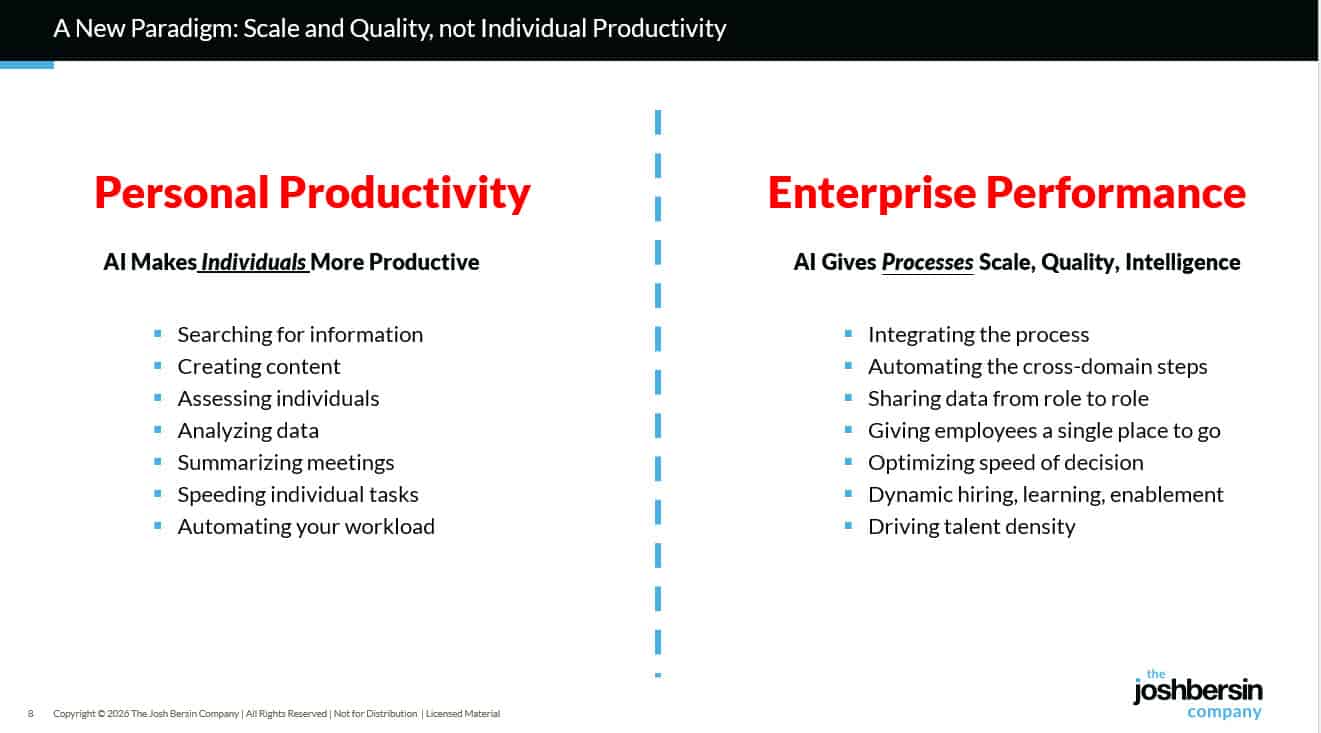
The year 2026 is emerging as a pivotal turning point, largely propelled by the widespread adoption of enterprise AI. This transformation moves beyond simply enhancing individual productivity; it focuses on re-engineering entire business processes. This evolution allows for the creation of "Superagents," intelligent entities capable of managing complex workflows, thereby generating significant scale and autonomy within organizations.
The analogy often used to describe this shift is that of the autonomous vehicle. Instead of augmenting the driver’s capabilities with features like power steering or lane-keeping assist, the focus shifts to creating an integrated "Superagent" that prioritizes the passenger’s optimal mobility. In this scenario, the driver’s role becomes less about active control and more about oversight, akin to how routine administrative tasks in HR are being automated. This transition promises a significant increase in safety and efficiency, paving the way for entirely new business models, such as pay-per-mile services, which redefine traditional ownership paradigms.
Similarly, in HR and other business functions, a progression from individual assistants to automated agents, and now to Superagents managing entire processes, is underway. While this transformation will not occur overnight, its acceleration is undeniable. Pilot programs with major insurance, airline, and pharmaceutical companies are already demonstrating the efficacy of Superagents in areas such as global onboarding, targeted talent acquisition, and sales training. These agentic applications are poised to streamline many HR functions, delivering enhanced organizational scale and improved outcomes.

The Impact on the HR Workforce: Automation and Evolution
The integration of AI is projected to automate a substantial portion of existing HR tasks. Analysis conducted using tools like Galileo, an AI agent specifically designed for HR, has revealed that approximately 30-40% of current HR "jobs" can be automated with relative ease. These tasks often fall into the tactical and administrative categories, such as interview scheduling, recruitment coordination, and helpdesk support – functions that have historically consumed significant HR bandwidth.
This automation does not necessarily imply a net reduction in the HR profession. In fact, HR job postings have seen a significant increase of approximately 60% over the past five years, outpacing many other professions. The critical change lies in the composition of HR roles. Routine administrative jobs are likely to diminish, while new roles focused on managing and developing AI agents will emerge. The majority of HR professionals are expected to transition towards more "full-stack" roles, encompassing a broader range of strategic responsibilities. This evolution is also anticipated to lead to an increase in HR professional salaries, as their value proposition shifts towards higher-level strategic contributions.
The areas most ripe for automation, identified through comprehensive AI blueprints, typically fall into six key categories:
- Recruitment and Talent Acquisition: Automating candidate sourcing, initial screening, interview scheduling, and offer generation.
- Onboarding and Employee Integration: Streamlining the administrative processes of new hire paperwork, system access, and initial training.
- Payroll and Benefits Administration: Ensuring accuracy and efficiency in compensation processing, leave management, and benefits enrollment.
- Performance Management and Feedback: Automating data collection for performance reviews, generating preliminary feedback, and tracking development goals.
- Employee Relations and Support: Providing AI-powered chatbots for answering common queries, directing employees to relevant resources, and managing basic case management.
- Learning and Development: Personalizing training recommendations, tracking course completion, and facilitating access to learning materials.
The Rise of "Full-Stack" HR and its Implications
The ultimate objective of this comprehensive automation is not merely cost reduction but the enhancement of business value. By automating these processes, organizations can achieve greater scalability, accuracy, and improved employee and manager experiences. HR teams will be empowered to facilitate faster and more strategic hiring, mitigate the impact of volatile hiring and firing cycles, provide real-time training to managers and employees, and proactively identify management challenges, high turnover areas, and potential risks.
For HR professionals, this shift liberates them to concentrate on what is termed "Full-Stack HR." This encompasses strategic initiatives that directly impact the company’s bottom line, fostering a closer alignment between HR and the business units they serve. Instead of being consumed by data entry or policy enforcement, HR teams can dedicate their expertise to:
- Strategic Workforce Planning: Aligning talent strategies with long-term business objectives.
- Organizational Design and Development: Creating agile and effective organizational structures.
- Talent Management and Development: Cultivating high-potential employees and fostering continuous learning.
- Culture and Employee Engagement: Building a positive and productive work environment.
- Change Management: Guiding the organization through periods of transformation.
- Data-Driven Decision Making: Leveraging insights from HR analytics to inform strategic choices.
Shifting HR Benchmarks and Redefined Value
A traditional HR benchmark has been the employee-to-HR staff ratio, historically hovering around 100:1. As AI takes over tactical responsibilities, this ratio is expected to undergo a significant transformation, potentially reaching 200:1, 300:1, or even 400:1. While this suggests a reduced need for personnel in administrative roles, it does not necessarily imply a contraction of the overall HR department size, given the creation of new AI-centric roles. The true value lies in the enhanced capabilities and strategic impact of the HR function.
Consider the tangible business benefits: a retail or food service company, by leveraging AI for accelerated hiring and scheduling, can directly increase revenue by more efficiently meeting customer demand, as demonstrated by companies like Chipotle. Similarly, manufacturing giants such as Boeing can boost production by enhancing training programs, fostering a stronger safety culture, and enabling more agile talent mobility. These advancements highlight how a transformed HR function can become a direct driver of operational efficiency and revenue growth.
The Imperative of Data Quality and Trust
As HR operates at the accelerated pace of AI, the paramount importance of data accuracy, explainability, and trust cannot be overstated. In a manual system, individual errors might be isolated. However, in a large-scale automated system, a single flaw in a recruiting algorithm or payroll rule could have widespread and immediate consequences for thousands of employees.
A significant portion of new HR roles will be dedicated to ensuring the quality and integrity of these AI systems. HR professionals will be responsible for verifying that the AI agents deployed are powered by accurate, up-to-date, and complete data. Furthermore, HR now shoulders the responsibility of addressing AI bias and fostering trust in automated decision-making processes. Recent legal actions against HR vendors, such as those involving Workday and Eightfold, underscore the critical need for explainable and high-trust AI systems. This evolving landscape places a new onus on HR to meticulously manage data quality and mitigate potential biases.
Embracing the HR Transformation
The profound transformation of the HR profession is not a future prospect; it is a present reality. For HR professionals and leaders, engaging with this evolution is imperative. Educational resources and AI-driven platforms are emerging to guide this transition. The future of HR lies in embracing AI not as a replacement for human expertise, but as a powerful catalyst for strategic impact, enabling a more agile, efficient, and value-driven approach to managing human capital.