A significant and expanding disparity exists between the ambitious expectations organizational leaders harbor for artificial intelligence and the current capabilities of their companies to effectively implement and leverage these technologies, according to a recent analysis by Adecco Group. This critical divergence, highlighted in a report published on May 27, 2026, by HR Dive, underscores a burgeoning tension in the corporate world as AI rapidly transitions from a nascent technology to a core strategic imperative. The findings suggest that while the allure of AI’s transformative potential is widely acknowledged at the highest levels of management, the practical infrastructure, understanding, and human capital necessary to realize this potential are lagging considerably.
The Adecco Group’s comprehensive study, which surveyed 2,000 C-suite executives across 13 countries, illuminates how quickly AI agents have progressed from mere experimental projects to fundamental board-level priorities. This rapid ascent reflects the profound impact generative AI, in particular, has had on business discourse and strategic planning over the past few years. However, despite this elevated status, the research critically points to a widening gap between the visionary aspirations for AI and the tangible capacity of companies to execute. A striking statistic from the report reveals that less than a third of leaders, precisely 31%, believe that corporate leadership possesses sufficient knowledge about AI to genuinely appreciate the complex interplay of risks and opportunities inherent in its deployment. This knowledge deficit at the top echelons creates a fundamental hurdle to effective strategic planning and resource allocation for AI initiatives.
The Adecco Group’s Landmark Study: A Closer Look
The Adecco Group’s report serves as a crucial barometer for the state of AI integration in the global corporate landscape. Its methodology, encompassing a broad international spectrum of C-suite perspectives, provides a robust snapshot of executive sentiment and operational realities. The consensus among surveyed leaders is clear: AI is no longer an optional add-on but a foundational element for future competitiveness. This recognition, however, is juxtaposed against a stark reality of internal unpreparedness. Denis Machuel, CEO of Adecco Group, articulated this dichotomy succinctly, stating, "AI may move at software speed, but organizational trust moves at human speed. Companies that ignore that gap will struggle to turn pilots into performance. The winners will be those that pair technology with transparency, accountability and a clear path for people to adapt. Business leaders have a fundamental responsibility to ensure people and technology can work in harmony." Machuel’s statement underscores a pivotal insight: technological advancement, no matter how rapid, must be met with deliberate and thoughtful human integration strategies. Without building trust, ensuring transparency, and providing clear pathways for adaptation, the promise of AI risks remaining an unrealized ambition.
Bridging the Perception Gap: Employee Readiness vs. Leadership Confidence
One of the most salient findings of the Adecco report concerns the significant disconnect between employee willingness to engage with AI and leadership’s confidence in their workforce’s ability to do so. While a remarkable 70% of employees expressed readiness to work alongside AI agents, a stark contrast emerged among leaders, with only 39% confident that their employees were adequately equipped for the task. This substantial perception gap suggests a critical breakdown in communication and a fundamental misalignment regarding AI adoption and workforce preparedness. The report posits that this discrepancy is not merely a matter of technological capability but deeply rooted in organizational culture, communication strategies, and talent management approaches.
The implementation of AI agents, therefore, is portrayed as being as much about effective leadership and nuanced talent management as it is about the technology itself. Creating a future-ready workforce, the report emphasizes, necessitates transparent and consistent communication from leadership. This involves articulating a clear vision of how AI will enhance overall business objectives, drive efficiency, and, crucially, create new opportunities for employees rather than solely displace existing roles. Furthermore, the report advocates for involving employees as early as possible in discussions surrounding potential role changes, skill development, and career shifts. This proactive engagement can mitigate anxieties, foster a sense of ownership, and facilitate smoother transitions, ultimately accelerating the human adoption of AI technologies.
The Evolving Landscape of AI Adoption in Business
The challenges highlighted by the Adecco Group are not isolated incidents but reflect a broader pattern observed across various industries and corroborated by numerous other studies. Reports from leading consultancies like PwC, Deloitte, and McKinsey have consistently pointed to the multifaceted hurdles in AI integration, including significant skill gaps, data quality issues, integration complexities, and ethical considerations. The global investment in AI continues to surge, with market forecasts predicting exponential growth, driven by advancements in machine learning, natural language processing, and computer vision. However, for many organizations, the journey from pilot projects to enterprise-wide scalable solutions remains arduous.
Industry analysts suggest that many companies, particularly those in traditional sectors, struggle with legacy IT infrastructure that is not conducive to AI deployment. Moreover, the scarcity of talent with specialized AI skills – encompassing data scientists, AI engineers, machine learning specialists, and AI ethicists – creates intense competition and drives up costs. Beyond the technical challenges, organizational inertia, resistance to change, and a lack of clear strategic direction often impede successful AI adoption. The Adecco report’s emphasis on leadership’s understanding of AI’s "complex balance of risk and opportunity" resonates deeply with the broader industry discourse, which increasingly highlights the need for robust governance frameworks, ethical guidelines, and responsible AI practices to prevent unintended consequences and build public trust.
Reshaping the Workforce: AI’s Impact on Entry-Level and Skill Development
The transformative power of AI extends profoundly to the composition and skill requirements of the workforce. The Adecco report, referencing a study by learning platform D2L in partnership with Morning Consult, notes that AI is frequently deployed to automate lower-level tasks traditionally assigned to junior employees. This trend has significant implications for entry-level hiring and career progression. As AI agents assume repetitive, rule-based functions, the demand for foundational, often administrative, roles diminishes. Consequently, some organizations are re-evaluating their talent acquisition strategies, prioritizing the hiring of fewer entry-level workers and a greater proportion of mid-level professionals who possess more advanced analytical, problem-solving, and critical thinking skills—capabilities that are currently more challenging for AI to replicate.
This shift necessitates a fundamental re-evaluation of educational pathways and corporate training programs. Universities and vocational schools face the imperative to equip graduates with adaptable skills that complement AI, rather than compete with it. For existing employees, particularly those in roles susceptible to automation, continuous upskilling and reskilling initiatives become paramount. Companies must invest in robust learning and development programs that foster digital literacy, data analysis capabilities, critical thinking, creativity, and interpersonal skills – the "human" attributes that AI enhances but does not replace. The emergence of new roles focused on AI supervision, ethical AI governance, human-AI collaboration design, and AI-driven insights further underscores the dynamic evolution of the job market and the critical need for lifelong learning.

Strategic Imperatives for Leaders: Navigating the AI Transformation
The Adecco Group’s findings present a clear call to action for business leaders. Machuel’s assertion of a "fundamental responsibility" implies that leaders must transcend mere technological enthusiasm and embrace a more holistic, human-centric approach to AI integration. This involves cultivating a deep understanding of AI’s capabilities and limitations, fostering an organizational culture that embraces continuous learning and experimentation, and strategically investing in human capital. Effective AI leadership is not just about adopting new tools; it is about orchestrating a harmonious symphony between advanced technology and empowered human talent.
To navigate this transformation successfully, leaders must develop comprehensive AI strategies that are tightly integrated with overall business objectives. This includes identifying specific use cases where AI can deliver tangible value, establishing clear metrics for success, and allocating appropriate resources for technology acquisition, talent development, and change management. Cross-functional teams comprising technology experts, business unit leaders, HR professionals, and ethics specialists can ensure a well-rounded approach. Furthermore, establishing clear governance structures and ethical guidelines for AI use is crucial for building internal trust and external credibility. Leaders must actively champion ethical AI development, ensuring fairness, transparency, and accountability in algorithmic decision-making.
A Timeline of AI’s Ascent and Organizational Response
The current state of AI readiness, as depicted by Adecco, is a culmination of a rapid technological evolution. While AI has been a field of research for decades, the late 2010s and early 2020s witnessed an unprecedented acceleration in its capabilities and accessibility. Key milestones include:
- Mid-2010s: Significant breakthroughs in deep learning and neural networks, particularly in image recognition and natural language processing, began to gain traction in specialized applications.
- Late 2010s: Increased commercialization of AI tools, with cloud providers offering AI-as-a-service, making sophisticated AI more accessible to businesses.
- 2020-2022: The COVID-19 pandemic accelerated digital transformation, prompting many businesses to explore automation and AI solutions for resilience and efficiency.
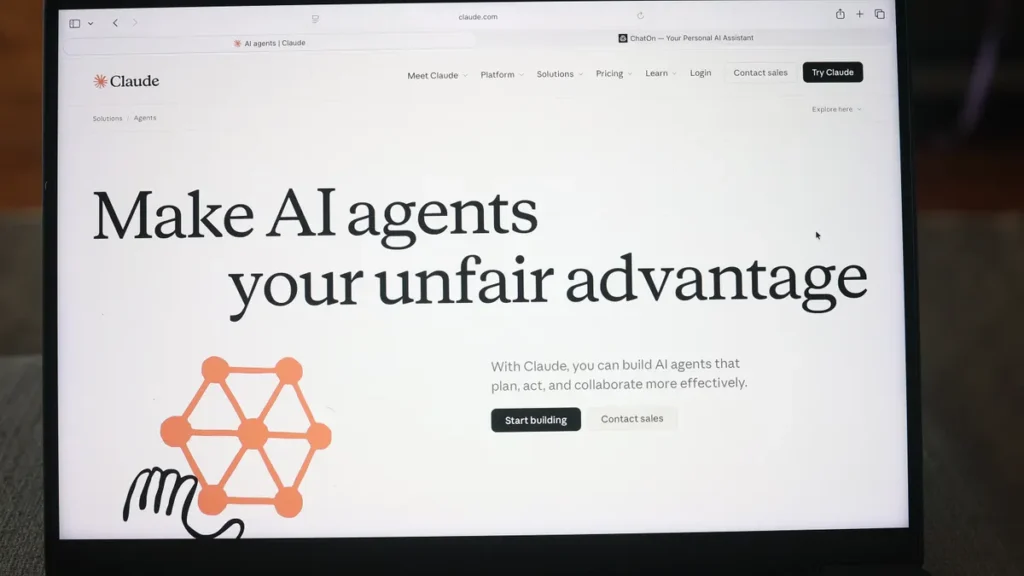
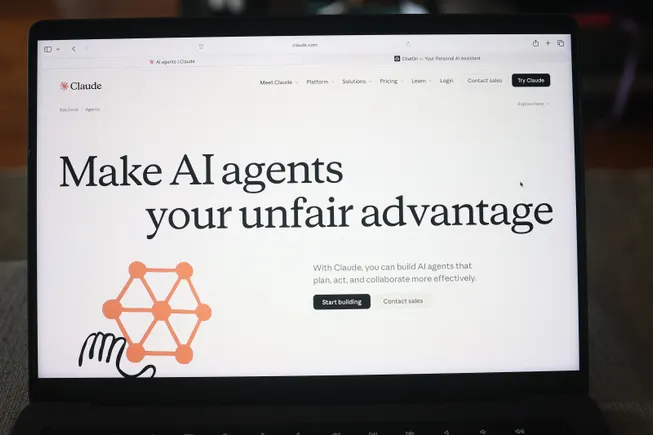
- Late 2022: The public release of generative AI models like OpenAI’s ChatGPT sparked widespread public and corporate imagination, demonstrating the immense potential for content creation, coding, and advanced interaction. The image of the Claude AI website on a laptop in February 2026, as captured for the Adecco report, symbolizes this shift from nascent tools to widely recognized AI agents.
- 2023-2025: A period of intense corporate experimentation with generative AI, moving from initial pilot projects to a more strategic integration discussion at board levels. This period saw rapid investment and a growing understanding of both the opportunities and the complexities.
- May 2026: The publication of Adecco Group’s report, positioned as a critical assessment of organizational readiness at a point where AI has firmly cemented its status as a board-level priority but is confronting the practical realities of human and organizational adaptation.
This chronology highlights that while the technology’s evolution has been swift, human and organizational systems naturally adapt at a slower pace, creating the very gap Adecco’s research identifies.
Industry Echoes: Voices on AI Integration

The Adecco Group’s findings resonate with sentiments expressed by other major players in the human resources and business consulting sectors. Many industry thought leaders agree that while AI offers unprecedented opportunities for productivity gains and innovation, its successful integration hinges on a "human-in-the-loop" approach. Companies like Accenture and Gartner have consistently emphasized the need for a blended workforce where humans and AI collaborate, each leveraging their unique strengths. There’s a growing consensus that simply acquiring AI tools without concurrently investing in human capabilities is a recipe for underperformance.
Official responses from various industry associations, such as the World Economic Forum, have also stressed the importance of public-private partnerships to address skill gaps and develop ethical AI frameworks. These bodies often advocate for educational reforms and lifelong learning initiatives to prepare the global workforce for the AI-driven economy. The consistent message from these diverse voices reinforces the Adecco Group’s central argument: the future of work with AI is not solely a technological challenge but fundamentally a human and organizational one, requiring concerted effort from all stakeholders.
The Road Ahead: Cultivating a Harmonious Human-AI Ecosystem
The Adecco Group’s report serves as a timely reminder that the true potential of AI will only be unlocked when organizations successfully bridge the existing chasm between technological ambition and human-centric readiness. Companies that proactively address this gap by investing in transparent communication, comprehensive training, ethical governance, and a culture of continuous adaptation will undoubtedly gain a significant competitive advantage. Conversely, those that fail to align their AI strategies with their human capital development risk falling behind, squandering investments, and fostering internal resistance.
The road ahead requires agile strategies, a willingness to experiment, and a profound commitment to fostering a harmonious human-AI ecosystem. This involves moving beyond a narrow focus on efficiency gains to embrace the broader societal implications of AI, ensuring that its deployment enhances human potential, creates meaningful work, and contributes to a more equitable future. As AI continues its inexorable march forward, the ability of leaders to cultivate organizational trust, empower their workforces, and navigate the complex ethical landscape will define success in the rapidly evolving digital age. The imperative is clear: technological advancement must walk hand-in-hand with human development to achieve truly transformative and sustainable growth.