The escalating costs of fuel, transportation, housing, and food are outpacing wage growth across the United States, leaving many households struggling to maintain their standard of living. This economic squeeze, affecting workers, families, and retirees alike, raises a critical question: is this a temporary blip, or does it signal a deeper, systemic issue? Recent data suggests the latter, with a significant disconnect between economic productivity and worker compensation.

The Stark Reality of Stagnant Wages and Soaring Costs
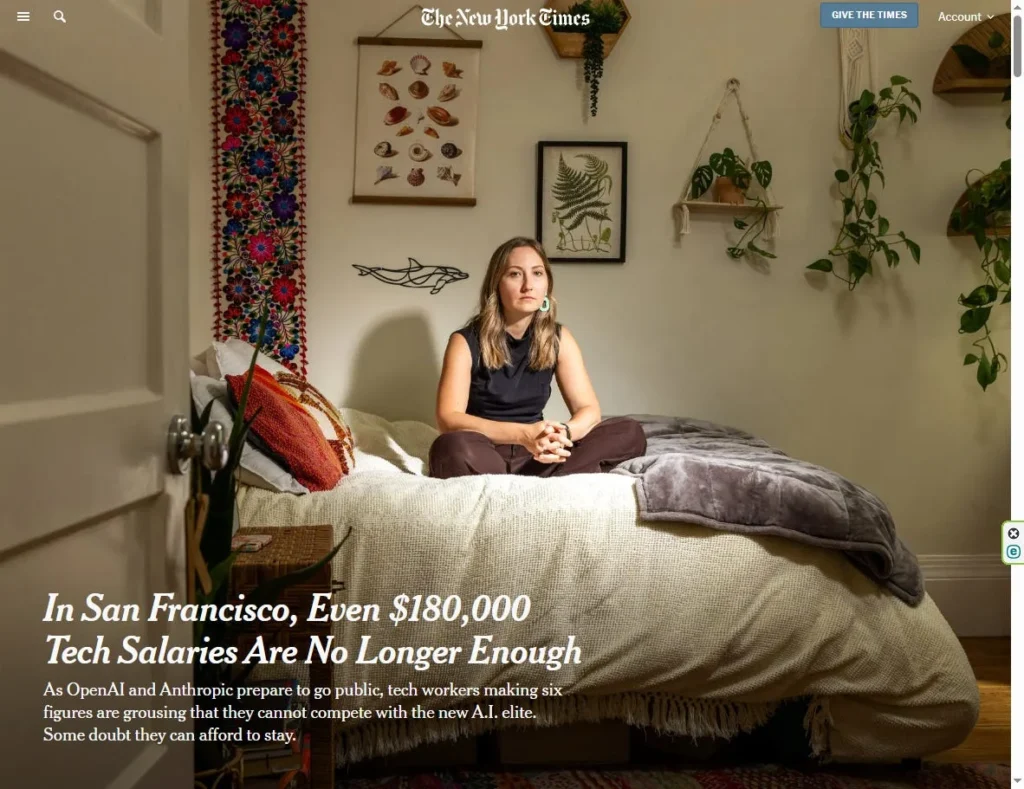
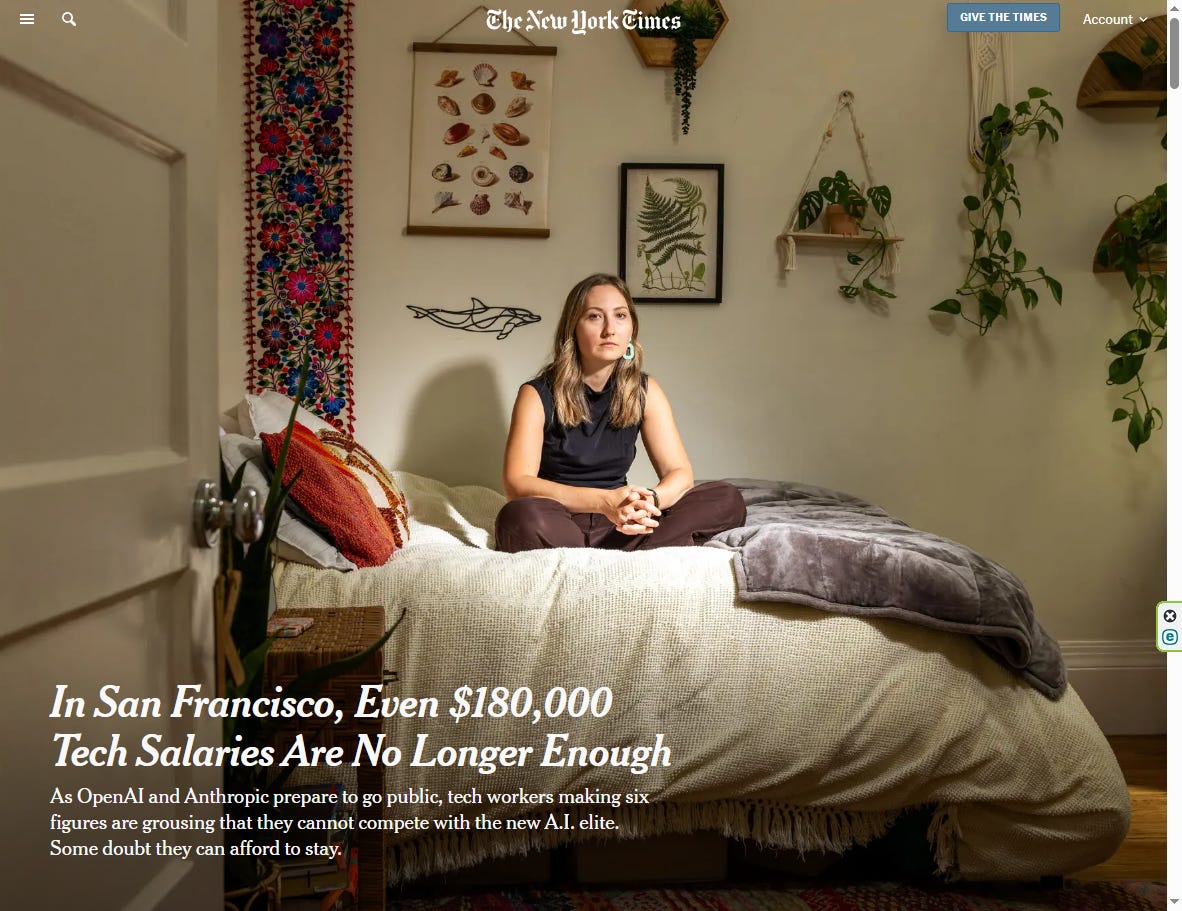
The financial strain is palpable. A recent New York Times article highlighted the precarious situation in San Francisco, where a combined household income of $370,000 is reportedly insufficient to secure comfortable housing. This anecdote is not isolated; it reflects a national trend. Data for 2026 year-to-date reveals a sharp increase in essential costs: gas prices have climbed by 24%, energy by 27%, airline fares by 26%, and even fruits and vegetables have seen a 5% rise. In stark contrast, average private sector wages have only inched up by a modest 3.5%.
This disparity has triggered a significant societal shift, notably the phenomenon of "unretirement." An AARP study found that 7% of retirees have returned to the workforce in 2026, with an additional 12% of seniors re-engaging with employment. The primary driver for this trend is the inability to afford rising healthcare, food, and energy expenses on fixed incomes.
Deconstructing the Economic Disconnect: A Micro-Economist’s Perspective
As professionals who advise companies on leadership and human resources, the growing affordability crisis warrants a deeper examination. From a micro-economic standpoint, understanding the underlying causes is crucial for developing sustainable solutions. The current economic landscape suggests that the "high cost of living" is not an episodic event but rather a consequence of long-term economic policies and corporate strategies that have prioritized capital and shareholder returns over employee well-being.
A Four-Decade Erosion of Purchasing Power
The current economic challenges are not a sudden development. They are the culmination of decades of widening gaps between productivity gains and wage increases.
Declining Real Wages: The Unseen Drain
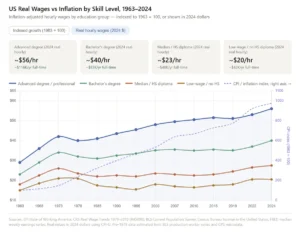
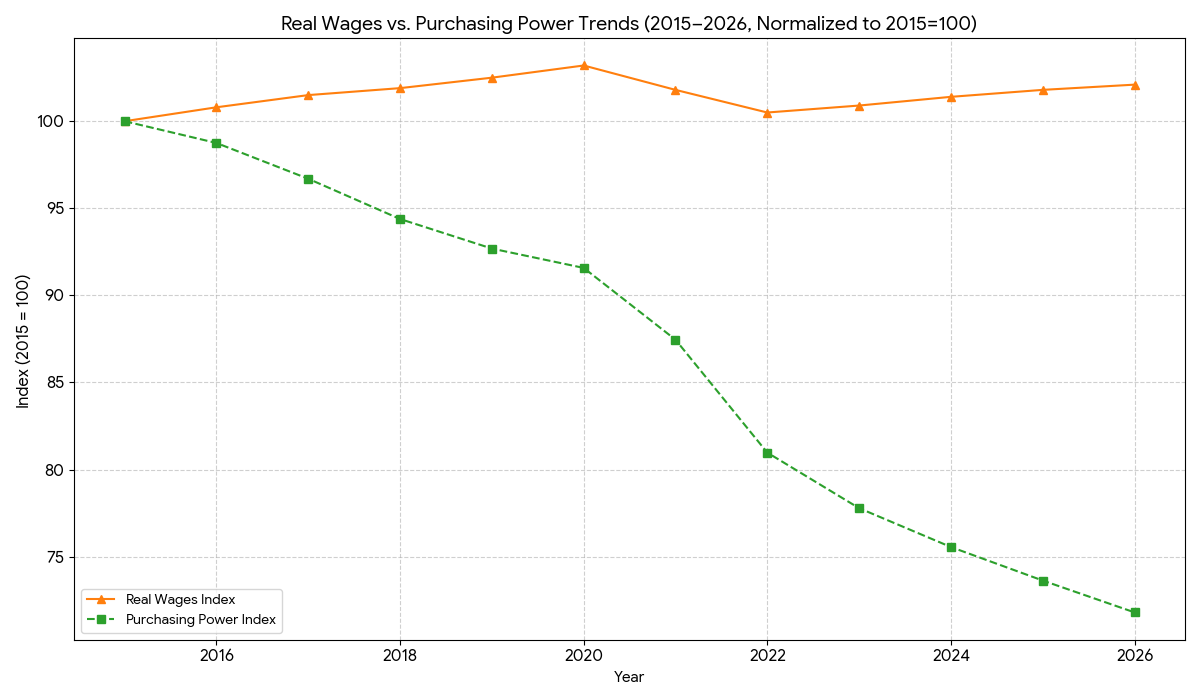
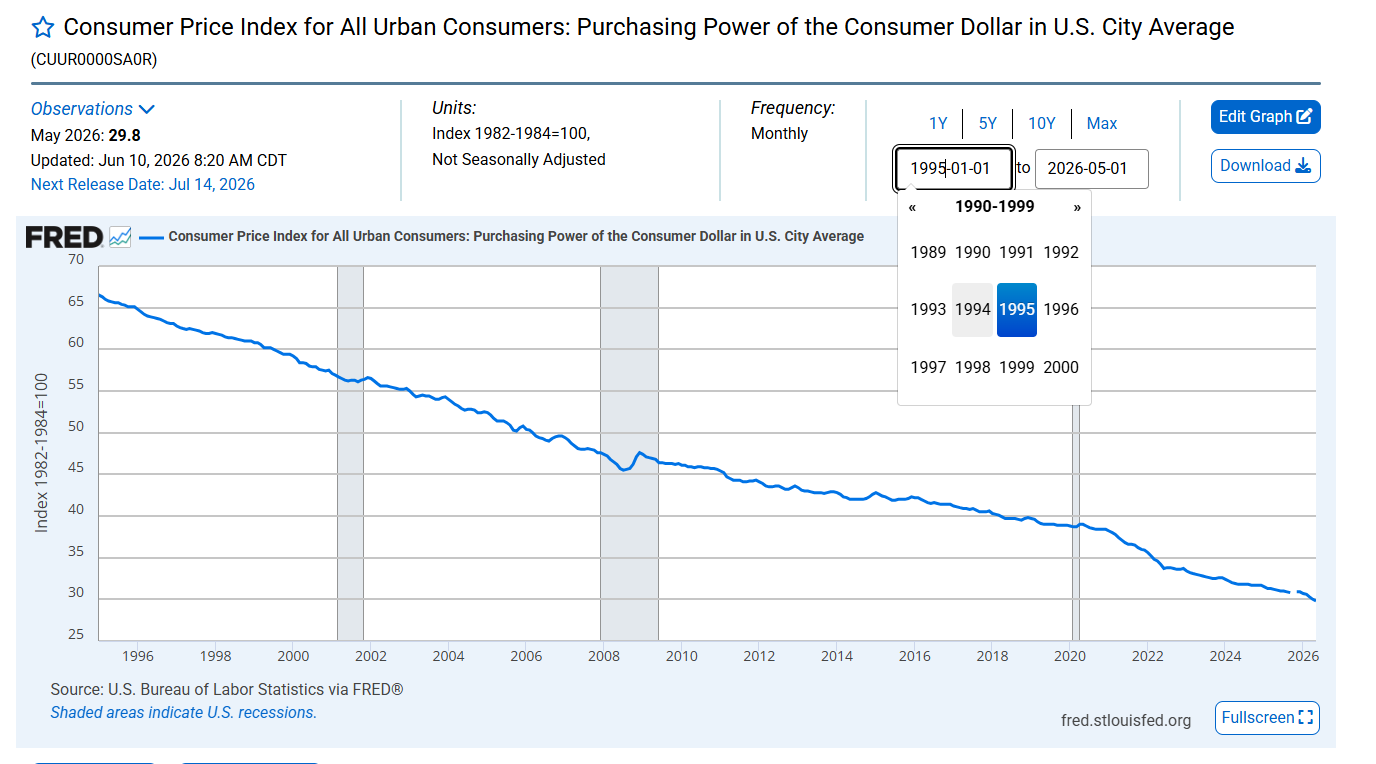
Analysis of wage growth versus inflation over the past 20 to 30 years paints a concerning picture. Real purchasing power in the U.S. has been steadily declining. While nominal wages may show some increase, when adjusted for inflation, the gains have been minimal, barely a few percentage points over the last decade. Meanwhile, inflation has surged, eroding the value of every dollar earned.
Charts from institutions like the St. Louis Fed illustrate this trend vividly. Data on "Purchasing Power" shows a significant decline, approaching 40% over a similar period. This means that for every dollar earned today, it buys considerably less than it did a generation ago, creating a persistent feeling of financial insecurity.
Productivity Soars, Wages Lag: The Unclaimed Gains
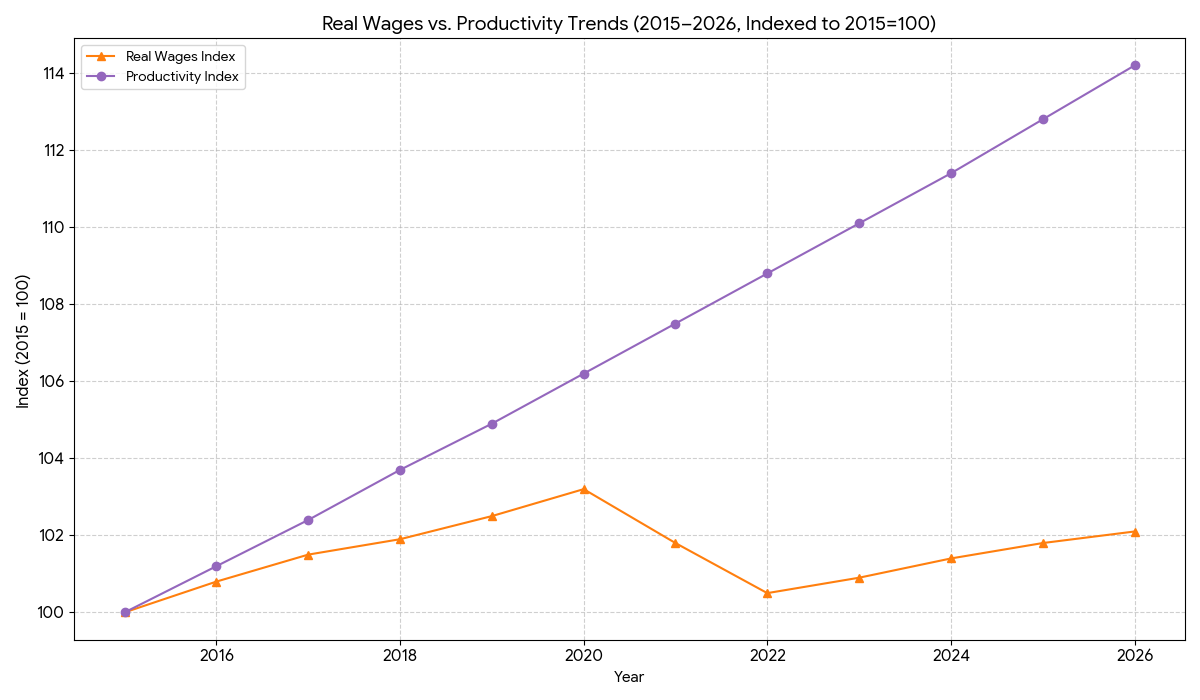
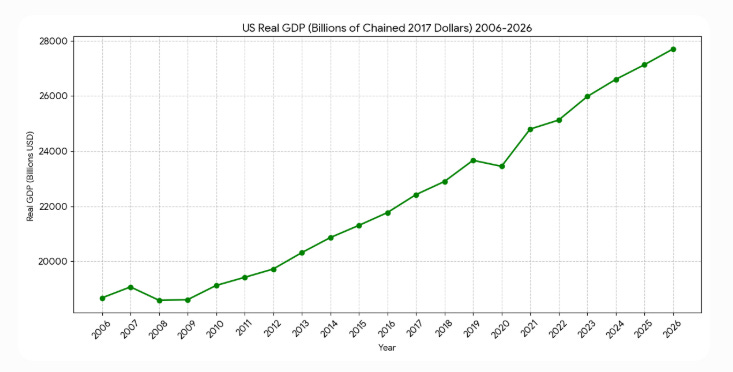
The last three decades have witnessed unprecedented technological advancements, particularly in the tech sector. This surge in innovation has led to substantial increases in U.S. productivity and, consequently, Gross Domestic Product (GDP). However, the benefits of this increased output have not been broadly shared.
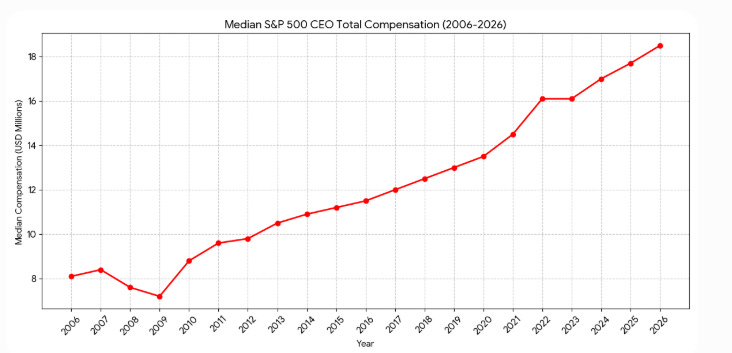
A comparative analysis reveals a dramatic divergence: while productivity has climbed by an estimated 14% over a recent period, wages have only risen by approximately 2%. This leaves a substantial gap of around 12% of economic productivity that has not translated into higher compensation for employees. This surplus has been channeled elsewhere, primarily benefiting shareholders and corporate executives.
The Redistribution of Economic Gains: From Labor to Capital
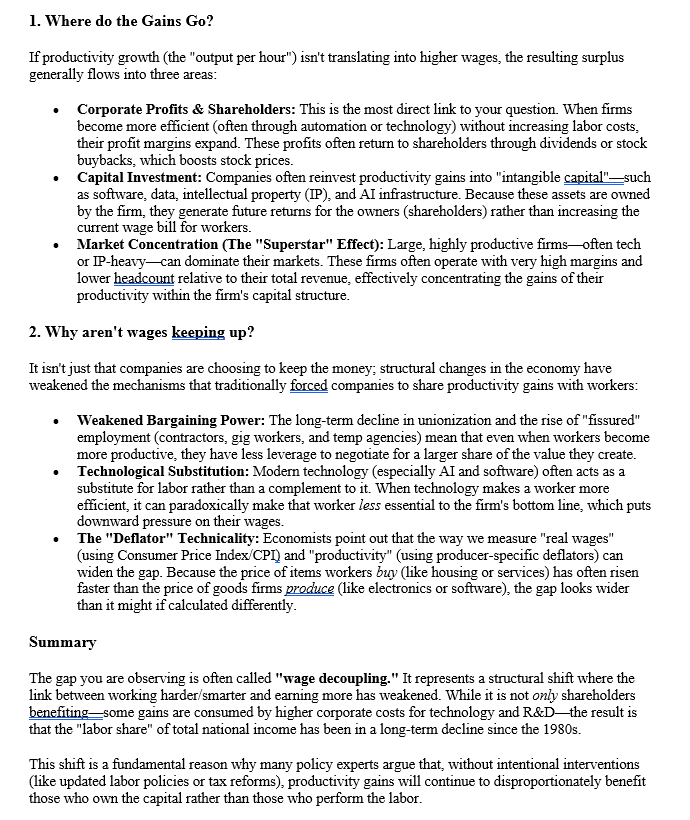
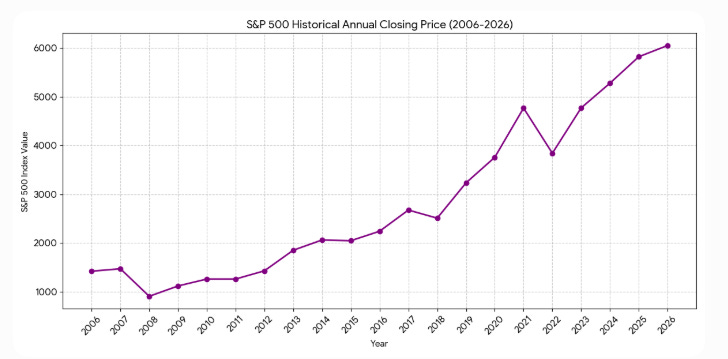
The question then becomes: where has this unclaimed economic productivity gone? The data points overwhelmingly to shareholders and owners of capital. The burgeoning stock market, coupled with increased dividends and corporate buybacks, reflects a significant redistribution of wealth away from labor and towards capital.
This trend has been confirmed by economic analyses, including those generated by advanced AI models. These insights suggest a deliberate strategy by many corporations to minimize labor costs in favor of investments in capital, automation, and technology, thereby maximizing shareholder returns. This approach, while potentially beneficial for investors, has directly contributed to the stagnant real wages experienced by a vast segment of the workforce.
The Era of "Business First" Policies
This shift can be traced back to policy decisions and economic philosophies that gained prominence in the late 20th century. The emphasis on deregulation, tax cuts for corporations and the wealthy, and a general anti-union stance created an environment conducive to prioritizing corporate profits.
The Stagnation of the Federal Minimum Wage
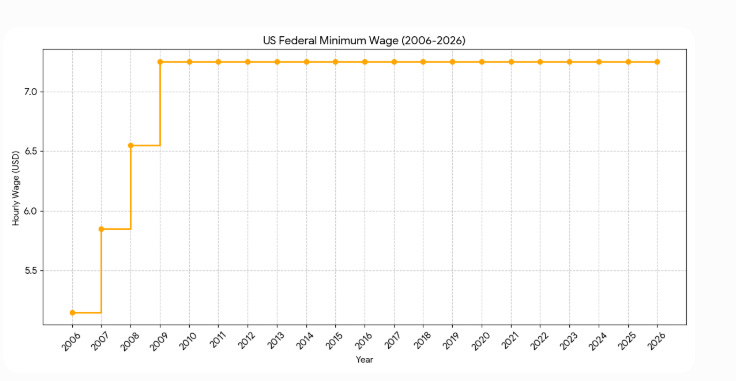
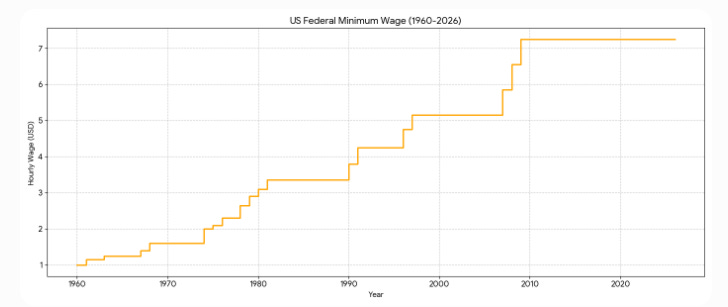
A key indicator of this policy shift is the federal minimum wage. It has remained largely stagnant for years, failing to keep pace with inflation. While some states and cities have implemented higher minimum wages, the federal floor, hovering around $7.50 per hour, has become virtually meaningless in terms of providing a living wage. Historically, the minimum wage saw consistent increases until the 1980s. The subsequent policy decisions, often framed as efforts to combat inflation and boost business, effectively halted this upward trajectory, contributing to the erosion of purchasing power for low-wage workers.
The Decline of Labor Union Power
Simultaneously, labor union participation has plummeted. Following a period of strong union influence, policies and societal shifts led to a significant decline in union membership. This weakening of collective bargaining power has further limited the ability of workers to negotiate for better wages and benefits. The promotion of individualistic retirement savings plans, like 401(k)s, while offering some benefits, has not fully compensated for the loss of power and protections previously offered by unions.
The Persistent Shadow of Inflation
Adding to the economic pressure is the sustained period of elevated inflation. While various factors contribute to inflation, including supply chain disruptions, geopolitical events, and government spending, the current environment has seen inflation rates consistently above the Federal Reserve’s target of 2% since 2021.
Inflation Expectations Become Embedded
This prolonged period of rising prices has led to a phenomenon known as "inflation expectations." When consumers and businesses anticipate continued price increases, they adjust their behavior accordingly, often leading to further price hikes. This has created a cycle where the cost of everyday essentials like groceries, fuel, and housing continues to climb, making it increasingly difficult for households to keep up. The increasing costs associated with AI capital spending, chip shortages, and other economic pressures further exacerbate this situation.
The consequence is a workforce that is deeply dissatisfied with its compensation. A report from the Federal Reserve Bank of New York indicates that employee satisfaction with pay is at its lowest point since 2014, reflecting the growing disconnect between earnings and the cost of living.
The Path Forward: Reimagining the Employer’s Role
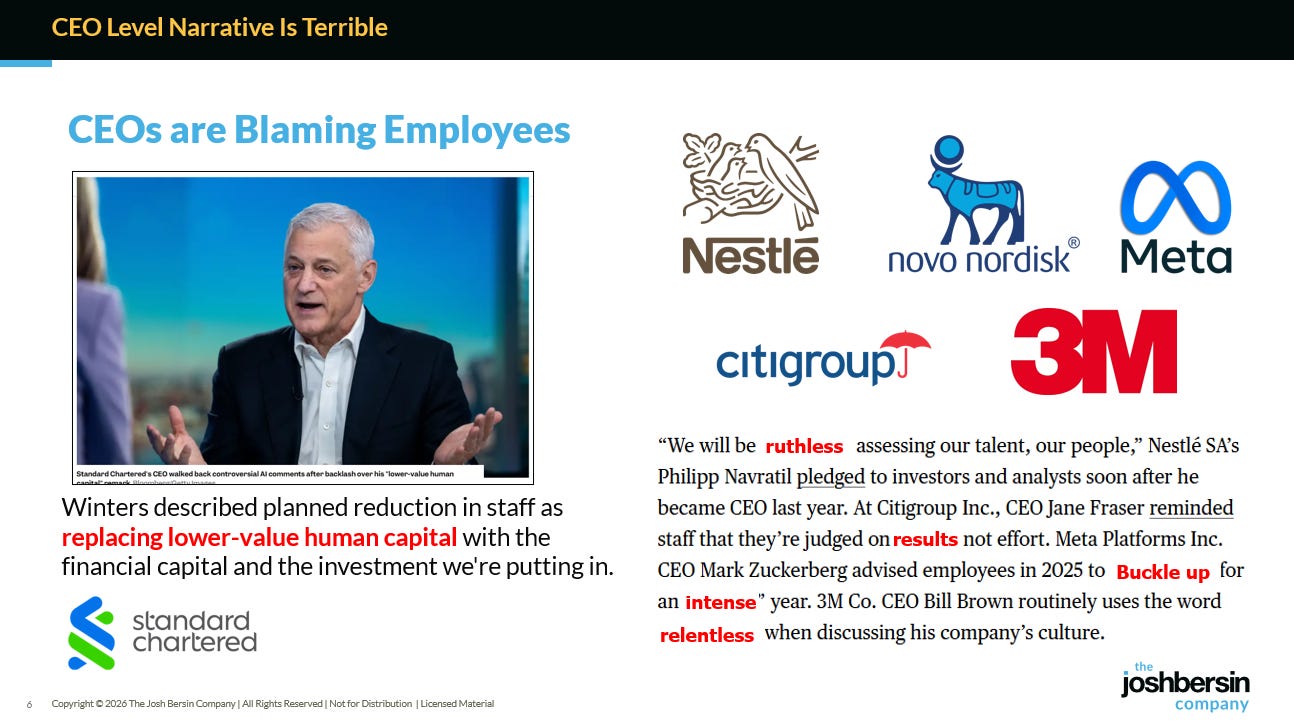
The current economic climate, characterized by stagnant wages, rising costs, and diminishing purchasing power, is systemic. While external factors like government policy and global events play a role, employers themselves hold significant power to influence this dynamic. As business leaders, a reevaluation of compensation strategies and a commitment to employee well-being are not just ethical imperatives but also sound business practices.
Reclassifying Labor: From Expense to Investment
A fundamental shift in perspective is required: labor should be viewed not as a cost to be minimized but as an investment to be nurtured. The research, including extensive studies on employee-focused organizations, consistently shows that treating people well, including paying them fairly, leads to superior business performance. When employees feel valued and are compensated adequately, their engagement, productivity, and loyalty increase, ultimately benefiting the company’s growth and profitability.
Investing in Existing Talent: The Power of Upskilling and Redeployment
Instead of solely focusing on headcount reduction, particularly in the age of AI, companies should prioritize enhancing the capabilities of their current workforce. While AI can drive efficiency and scale, it often complements rather than replaces human workers. The true benefit of AI lies in its ability to create "superworkers" who can achieve greater speed and scale. This increased productivity can then be reinvested in higher wages and employee development.
The concept of "Talent Density"—building teams composed of highly skilled and continuously learning individuals—is paramount. This involves a commitment to a "4R model": Recruit, Retain, Reskill, and Redesign. By fostering internal mobility and providing opportunities for employees to grow and adapt, companies can build dynamic workforces, reduce the costly churn of hiring and firing, and create a more stable and engaged employee base.
The Compelling Case for Fair Wages
The financial benefits of paying employees well are substantial and multifaceted.
- Attracting Top Talent: Competitive compensation packages are essential for attracting and securing the most skilled and ambitious individuals, creating a robust talent pipeline.
- Boosting Retention: Fair and above-average pay significantly improves employee retention rates. When employees feel adequately compensated, they are more likely to remain with the company, reducing the high costs associated with turnover. The expense of replacing an employee can range from 50% to over 200% of their annual salary, encompassing recruitment, hiring, onboarding, and the loss of institutional knowledge and productivity.
- Encouraging Adaptability: A workforce that feels secure and valued is more likely to embrace new roles and reskill themselves when business needs evolve, contributing to greater organizational agility.
Fostering Internal Mobility for Growth
Building a culture of internal mobility is a strategic advantage. It allows companies to redeploy talent effectively, fill open positions with experienced employees, and foster greater engagement. Studies, such as PwC’s 2026 CEO study, indicate that companies with robust internal mobility programs (redeploying 20% or more of their workforce annually) exhibit significantly higher long-term profitability. This approach not only enhances employee satisfaction but also frees up capital that can be reinvested in wage increases and professional development.
The Employer’s Responsibility in Affordability
While external factors are often cited as the primary drivers of the wage-price disparity, employers bear a significant responsibility. Companies that prioritize fair compensation, such as Costco, have demonstrated that paying above-average wages can lead to superior financial performance and greater profitability. The example of Costco cashiers becoming millionaires due to consistent, above-market pay underscores the long-term benefits of investing in employees.
The economic landscape of the United States is at a critical juncture. The lessons from historical economic models, like Henry Ford’s understanding that fair wages create consumer markets, offer a potential blueprint for the future. By embracing a more equitable approach to compensation and employee development, businesses can not only contribute to a more affordable society but also build more resilient, profitable, and sustainable organizations. The choice lies with employers to invest in their people, thereby strengthening the very economic foundations upon which their success is built.