
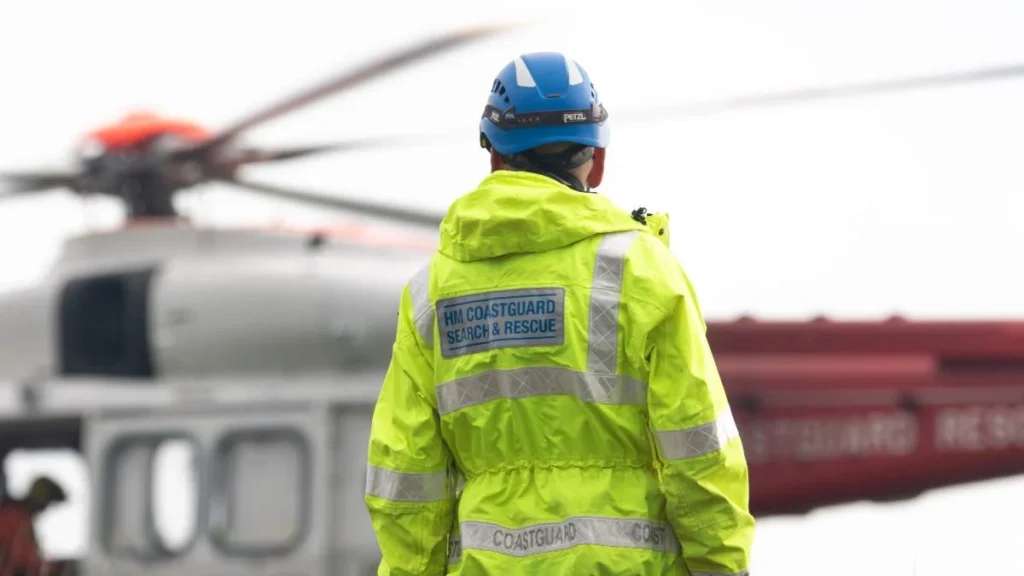
Coastguard rescue officers (CROs) across the United Kingdom are on the brink of a potential mass exodus from service following the Maritime and Coastguard Agency’s (MCA) controversial plans to reclassify their volunteer status, a direct response to a landmark legal tribunal decision in January. This strategic shift by the MCA threatens to fundamentally alter the operational model of HM Coastguard, raising significant concerns about national maritime safety, emergency response capabilities, and the very definition of volunteerism within critical public services.
The Landmark Legal Precedent: Redefining Worker Status
The catalyst for this contentious policy change was a pivotal Court of Appeal ruling in January, which confirmed that CROs who received payment for their time were legally entitled to "worker status." This decision stemmed from the case of Martin Groom, an officer with three decades of service, who was removed from his post in 2020. The Court of Appeal found that a contract legally existed between CROs and HM Coastguard when remuneration was involved, thereby designating them as workers in the eyes of the law, despite their traditional "volunteer" label.
This ruling was not merely an administrative detail; it represented a significant legal victory for CROs, affirming their right to fundamental worker protections. Under this newfound status, CROs became eligible to claim a rate of approximately £11 per hour for callouts and were entitled to a range of workers’ rights, including paid holiday. This development brought their terms of engagement closer to those of traditional employees, offering a degree of security and recognition previously denied to individuals serving in a volunteer capacity. The legal precedent set by Groom’s case potentially opened the door for similar reclassifications across other ostensibly "volunteer" roles within the UK’s public and charitable sectors where some form of payment or stipend is provided. The distinction between a genuine volunteer (receiving only expenses) and a worker (receiving remuneration for time) became sharper, forcing organisations to re-evaluate their engagement models.
The MCA’s Counter-Response: A "Revised Volunteer Model"
In the wake of the Court of Appeal’s decision, the Maritime and Coastguard Agency, the executive agency responsible for HM Coastguard, announced its intention to "change how the service operates." Later this year, the MCA plans to implement a "revised volunteer model" that will explicitly remove the payment for time spent on duties. This move effectively seeks to revert CROs to a purely voluntary status, where their engagement would no longer trigger worker rights.
Under the proposed new model, CROs would still be able to claim expenses, such as mileage, incurred during their service. Furthermore, the MCA has committed to continuing to provide essential training, uniforms, and personal protective equipment (PPE) to ensure officers are properly equipped and skilled for their critical roles. The agency’s stated rationale for this overhaul is to maintain "choice and flexibility," allowing CROs to continue their vital duties alongside their primary employment or other commitments.
However, critics have swiftly condemned the MCA’s approach, labelling it a "fire and rehire" tactic. This term, commonly used in employment disputes, describes a controversial practice where employers dismiss staff and then re-engage them on new, less favourable terms. While technically not a direct dismissal and re-engagement in the conventional sense, the MCA’s plan is perceived as stripping CROs of legally recognised worker rights and remuneration, forcing them to accept a diminished status if they wish to continue serving. Significantly, UK maritime minister Keir Mather has publicly backed these plans, a stance that has drawn considerable criticism given the essential nature of the service provided by CROs.
The Looming Crisis: A Threat to Frontline Capabilities
The potential consequences of the MCA’s reclassification policy are stark and far-reaching, threatening the very operational capacity of HM Coastguard. An internal survey of MCA officers, reported by The Times, suggests a deeply troubling outlook: an estimated 40% of CROs based in Scotland alone would either leave the service or significantly reduce their hours if the changes are implemented. Given that Scotland’s vast and complex coastline relies heavily on these local teams, such a reduction would be catastrophic. The survey projected that the number of on-call personnel in Scotland could plummet from approximately 900 to just 360, representing a staggering loss of over 50% of its frontline emergency responders.
This anticipated attrition is not merely a staffing issue; it directly impacts the ability of HM Coastguard to respond effectively to maritime emergencies, coastal incidents, and search and rescue operations. HM Coastguard typically responds to over 30,000 incidents annually across the UK’s 19,000 miles of coastline, including cliff rescues, assisting vessels in distress, tracking missing persons, and managing floodwaters. A reduction in trained personnel would inevitably lead to slower response times, increased risk to the public, and greater strain on remaining officers and other emergency services. The unique geographical challenges of the UK, particularly in remote and rural areas, mean that local CRO teams are often the first, and sometimes only, responders available. Their intimate knowledge of local terrain and swift deployment capabilities are irreplaceable.

A Unified Cry for "Save Our Service"
In response to the MCA’s proposals, a powerful campaign, #SaveOurService, has rapidly gained momentum. Kelly Stockdale, a dedicated CRO from Berwickshire in Scotland, is leading the charge, articulating the profound concerns shared by many of her colleagues. In a poignant statement, Stockdale underscored the unwavering commitment and professionalism of CROs: "Every single day, across 19,000 miles of complex UK coastline, CROs answer the shout. We leave our families, our beds, and our primary jobs to descend cliff faces, brave rising floodwaters, and track missing and vulnerable persons in all weathers, at all times."
Stockdale vehemently rejects the notion that CROs are mere casual hobbyists. "We are not casual, fair-weather hobbyists. We are highly trained, safety-critical emergency responders," she asserted. She drew a direct and critical comparison between HM Coastguard and other emergency services: "As a Category 1 emergency service, we work alongside the police, fire, and ambulance services. Yet, while every other blue-light service remains funded, HM Coastguard is uniquely being degraded." This comparison highlights a perceived double standard, where a vital emergency service is being asked to operate under terms that undermine its professional standing and the commitment of its personnel.
The #SaveOurService campaign has garnered robust support from various unions, including GMB, a prominent general trade union in the UK. Lynsay Mackay of GMB Scotland articulated the union’s solidarity, stating, "If we want a strong, resilient Coastguard for the future, we must make sure that those who step forward are supported, not penalised. If you save lives, you deserve respect. If you carry out work, you deserve rights. And when those rights are threatened, GMB stands with you." This union backing amplifies the collective voice of CROs, adding significant industrial and political weight to their demands.
Political figures have also weighed in, expressing grave concerns about the MCA’s plans. Scottish Members of Parliament have been particularly vocal, given the disproportionate impact the changes are expected to have on Scotland’s extensive coastline. Brendan O’Hara, MP for Argyll and Bute, urged the government agency to "listen to our coastguard heroes." He warned of the severe repercussions: "The MCA’s plan to strip these vitally important volunteers of their pittance of a remuneration will become another huge stumbling block to both the recruiting and retaining of rescue officers in rural areas." This highlights the critical role even modest remuneration plays in attracting and retaining skilled individuals, especially in areas where alternative employment opportunities might be scarce and the demands of the service are particularly high.
Broader Implications: The Future of Emergency Service Volunteering and Public Safety
The unfolding situation with HM Coastguard raises profound questions about the future model of emergency service provision in the UK and the evolving legal framework surrounding "volunteers." The Court of Appeal ruling underscored a growing legal recognition of the substance over the label – if a role involves consistent duties, directed work, and remuneration, it may legally constitute "work," regardless of how an organisation chooses to classify it. The MCA’s subsequent attempt to circumvent this ruling by removing remuneration sets a challenging precedent.
Firstly, there are significant public safety implications. A reduced and demoralised Coastguard workforce would undoubtedly compromise the safety of mariners, coastal communities, and anyone venturing near the UK’s shores. The highly specialised skills required for cliff rescues, complex search patterns, and swift water operations are developed through extensive training and experience. Losing experienced CROs means a loss of this institutional knowledge and expertise, which cannot be quickly replaced. The additional burden on remaining CROs could lead to burnout and further attrition, creating a dangerous downward spiral.
Secondly, the morale and trust among existing CROs are at an all-time low. Having fought for and won legal recognition of their worker status, only to have it effectively revoked by a policy change, is likely to be perceived as a profound betrayal. This could foster a sense of resentment and disengagement, making it harder for the MCA to foster the necessary commitment from its teams.
Thirdly, recruitment challenges will likely intensify. The MCA’s justification of "choice and flexibility" may ring hollow to potential recruits who observe the current experienced officers contemplating leaving. While the initial draw to the Coastguard is often altruistic, the small remuneration previously offered acknowledged the significant time commitment and inherent risks involved. Removing this could deter new recruits who might otherwise consider joining a service that demands so much.
Finally, this situation prompts a broader national debate on how essential public services are funded and supported. The perceived "degradation" of HM Coastguard, as highlighted by Kelly Stockdale, contrasts sharply with the continued funding models for police, fire, and ambulance services. As the UK grapples with budgetary pressures, the reliance on, and the treatment of, individuals who perform critical life-saving work under various classifications, demands urgent and ethical reconsideration. The outcome of this dispute will not only shape the future of HM Coastguard but could also influence the engagement models for other volunteer-reliant emergency and public services across the country. The call from CROs, unions, and politicians alike is clear: respect for those who save lives must extend to ensuring their rights and the integrity of the service they provide.








