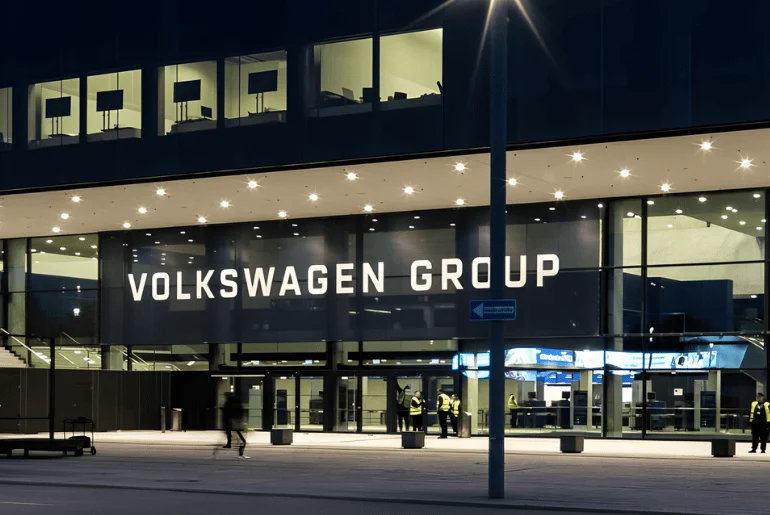
Volkswagen AG, one of the world’s largest automotive manufacturers, is proceeding with a comprehensive restructuring strategy within Germany, a move poised to eliminate thousands of jobs as the company intensifies its pursuit of enhanced efficiency and reduced operating costs. This strategic overhaul comes at a critical juncture for the global automotive industry, which grapples with unprecedented pressures ranging from the costly transition to electric vehicles (EVs) and advanced digital technologies to geopolitical uncertainties and fluctuating market demands. The details of this significant workforce adjustment are anticipated to be formally disclosed by CEO Oliver Blume during the company’s Annual General Meeting scheduled for June 18.
Sweeping Restructuring Plan Targets Thousands of German Jobs
The immediate impact of Volkswagen’s restructuring efforts will be felt across its German operations, with plans to reduce the domestic workforce by approximately 19,000 employees by the close of the current year. This substantial headcount reduction forms a core component of a broader transformation programme, meticulously designed to bolster the company’s competitiveness within an increasingly formidable market landscape. Beyond the immediate measures, Volkswagen has also articulated a more ambitious, longer-term objective: to cut over 28,000 jobs across its German sites by the year 2030. This long-range workforce reduction target has reportedly been formalized as a binding element of the company’s overarching restructuring roadmap, underscoring the seriousness and strategic importance attributed to these changes by the executive board.
Parallel to the planned headcount reductions, Volkswagen is vigorously pursuing substantial cost-saving measures across its vast network of manufacturing facilities. The automaker projects achieving a significant reduction of more than 20 percent in factory costs across its German production sites, an ambitious target integral to its overarching efficiency drive. This dual approach of workforce optimization and operational cost reduction reflects a holistic strategy aimed at streamlining operations and securing the company’s financial resilience in the face of evolving industry dynamics.
The Strategic Imperative: Navigating a Transformative Automotive Landscape
Volkswagen’s decisive actions signal its unwavering commitment to organizational transformation, even as concerns regarding the socio-economic impact on employment persist. Like many established, traditional automakers, the German giant is navigating an exceptionally complex and multifaceted transition. This transition is characterized by several critical factors: a noticeable deceleration in demand across certain key markets, intensifying competition from both legacy rivals and innovative new entrants (particularly in the EV sector), and the immense financial investments necessitated by the accelerating global shift towards electrification and profound digital transformation.
The automotive industry is currently undergoing what many analysts describe as its most significant upheaval since the invention of the assembly line. Legacy automakers, including Volkswagen, are confronted with the monumental task of simultaneously managing their profitable internal combustion engine (ICE) businesses while investing billions into developing entirely new EV platforms, battery technologies, software capabilities, and autonomous driving systems. This dual mandate places immense strain on financial resources and operational structures, often leading to a reassessment of existing cost bases and workforce configurations.
-
Electrification and Digitalization: A Costly Transition
The transition to electric mobility is not merely about swapping engines for batteries; it requires a complete reimagining of vehicle architecture, manufacturing processes, and supply chains. Volkswagen alone has committed tens of billions of euros to electrification and digitalization over the next five years. For instance, the company plans to invest €180 billion by 2027, with over two-thirds allocated to future technologies like EVs, batteries, and software. Such colossal investments necessitate a rigorous re-evaluation of all other operational expenditures. Developing sophisticated software-defined vehicles, a critical component of future mobility, also demands a different skill set than traditional manufacturing, often requiring fewer manual laborers and more highly specialized engineers and IT professionals. -
Intense Competition and Shifting Global Markets
The competitive landscape has dramatically intensified. Tesla, with its disruptive business model, continues to exert pressure, while a burgeoning array of Chinese EV manufacturers, backed by significant government support and rapid innovation cycles, are increasingly challenging established players in critical markets, including Europe. Brands like BYD, Nio, and XPeng are rapidly expanding their global footprints, often offering technologically advanced vehicles at competitive price points. Furthermore, geopolitical tensions, fluctuating raw material costs, and persistent supply chain vulnerabilities (particularly for semiconductors) add layers of complexity and unpredictability to market operations, compelling automakers to seek greater agility and cost efficiency.
A Phased Approach: Timeline and Targets
Volkswagen’s restructuring plan is not an overnight decision but rather a carefully phased strategy with clear milestones, reflecting ongoing efforts to adapt to a dynamic global environment.
-
Immediate Actions for 2024
The initial phase of job reductions, targeting around 19,000 employees, is slated for completion by the end of 2024. This immediate action highlights the urgency perceived by Volkswagen’s leadership to address current inefficiencies and cost pressures. While specific details on how these reductions will be implemented (e.g., voluntary early retirement schemes, severance packages, natural attrition) are still emerging, they are expected to be negotiated with the powerful works councils and labor unions, a hallmark of Germany’s co-determination model. CEO Oliver Blume’s announcement at the June 18 AGM will likely provide more granular insight into the mechanisms for achieving these cuts and the financial provisions made for affected employees. -
Long-Term Vision Through 2030
The commitment to reducing the German workforce by over 28,000 employees by 2030 underscores a fundamental, long-term shift in Volkswagen’s operational philosophy. This extended timeline allows for a more gradual, potentially less disruptive, transition and provides scope for retraining initiatives and re-skilling programs. However, it also signals that the company anticipates a fundamentally leaner and more technologically oriented workforce in the future. The integration of automation, artificial intelligence, and advanced robotics in manufacturing processes is expected to play a significant role in enabling higher productivity with a smaller human footprint over this period.
Financial Drivers: The Quest for Efficiency and Cost Savings
The strategic imperative to reduce the workforce and factory costs is intrinsically linked to Volkswagen’s overarching financial performance and its stated profitability goals. The company has been grappling with lower margins compared to some of its more agile competitors and faces immense pressure from investors to demonstrate a clear path to sustained profitability in the new automotive era.
-
Performance Program and Profitability Goals
These job cuts and cost reductions are part of Volkswagen’s broader "Performance Program," launched in 2023, which aims to improve the company’s operating result by €10 billion by 2026. A significant portion of these savings is expected to come from reducing personnel costs and increasing efficiency in production. The company’s core brand, Volkswagen Passenger Cars, has a stated target of achieving an operating return on sales of 6.5 percent, a significant jump from recent figures that have often hovered below this mark. Reducing factory costs by over 20 percent at German sites is a direct contributor to this goal, addressing the often-cited issue of high labor and overhead costs in Germany compared to other manufacturing hubs. -
Comparative Industry Benchmarks
Volkswagen’s current actions are not isolated. Many global automakers are undertaking similar measures. Ford, for instance, has announced significant job cuts in Europe as it transitions to an all-electric lineup, aiming for higher efficiency. Stellantis, formed from the merger of Fiat Chrysler and PSA Group, has aggressively pursued synergy savings and workforce optimization across its diverse brands. Mercedes-Benz has also streamlined its product portfolio and focused on higher-margin luxury segments, often implying a leaner operational structure. These industry trends highlight a collective recognition that the traditional model of automotive manufacturing, with its large, often unionized workforces, must evolve to remain competitive in a capital-intensive and rapidly changing market.
Stakeholder Reactions and Social Implications
The announcement of such extensive job cuts invariably elicits strong reactions from various stakeholders, particularly labor unions and employees. Germany’s robust co-determination laws mean that the works councils (Betriebsräte) and powerful unions like IG Metall will play a crucial role in negotiating the terms of these reductions.
-
Management’s Rationale
From management’s perspective, led by CEO Oliver Blume, these measures are presented as an unavoidable necessity for the company’s long-term survival and prosperity. Statements from executives are expected to emphasize the need for "future-proofing" Volkswagen, ensuring its ability to invest in groundbreaking technologies, maintain its global leadership position, and secure sustainable employment in the long run, albeit with a different skill profile. They will likely stress that these difficult decisions are made to avoid more severe consequences in the future, framing them as a proactive adaptation rather than a reactive crisis response. -
Labor Union’s Stance and Negotiations
IG Metall, Germany’s largest trade union, and the Volkswagen works council have historically been formidable forces, protecting employee interests. While they understand the industry’s transformative pressures, they are expected to vigorously advocate for socially responsible solutions. Their primary demands will likely include:- Voluntary Programs: Prioritizing voluntary early retirement schemes, partial retirement, and severance packages over forced redundancies.
- Retraining and Reskilling: Investing heavily in comprehensive retraining and upskilling programs to equip existing employees with the competencies required for EV production, software development, and other future-oriented roles.
- Location Guarantees: Ensuring that remaining production sites retain strong employment bases and that investments are directed towards modernizing these facilities.
- Social Plans: Negotiating generous social plans for those who do leave the company, including financial compensation and support for finding new employment.
The negotiation process is anticipated to be complex and protracted, balancing the company’s economic imperatives with the social responsibilities inherent in Germany’s industrial relations framework.
-
Analyst Perspectives
Financial analysts are likely to view these restructuring efforts positively, interpreting them as a clear signal that Volkswagen is serious about improving its profitability and operational efficiency. They will scrutinize the details of the cost savings and the execution of the plans. A successful implementation could lead to improved investor confidence and potentially a more favorable valuation for Volkswagen’s stock. However, they will also be mindful of the execution risk, particularly the potential for labor disputes to disrupt production or delay the implementation of efficiency measures.
Broader Economic and Social Impact
The scale of Volkswagen’s planned job cuts will have significant ripple effects beyond the company itself, impacting regional economies and potentially shaping the future trajectory of German manufacturing.
-
Regional Economic Consequences
Volkswagen’s major production sites, such as Wolfsburg, Hanover, and Emden, are often the economic anchors of their respective regions. Job losses on this scale can lead to a decline in local purchasing power, impact small and medium-sized businesses that supply Volkswagen or rely on its employees, and place strain on local social services. While the cuts are phased, the cumulative effect over several years could necessitate regional economic development initiatives to diversify local economies and create new employment opportunities. -
The Future of German Manufacturing
Volkswagen’s strategy serves as a potent case study for the broader German manufacturing sector. Germany’s industrial strength has long been built on its automotive prowess and highly skilled workforce. The shift to electric and digital mobility challenges this traditional model. It highlights the urgent need for Germany to adapt its educational and vocational training systems to meet the demands of a new industrial era. The ability of German companies to manage these transformations while maintaining social cohesion will be a critical determinant of the country’s economic future. The focus will increasingly shift from volume manufacturing to value-added production, high-tech components, and advanced software development.
Conclusion: A Blueprint for Survival in a New Era
Volkswagen’s announcement of substantial job cuts and aggressive cost-saving measures in Germany is more than just a corporate restructuring; it is a stark reflection of the profound and often painful transformation gripping the global automotive industry. As the company prepares to detail its plans at the Annual General Meeting, it underscores a growing trend among large organizations worldwide: a fundamental reassessment of workforce structures and operational models to maintain competitiveness in an era of rapid technological change. Cost optimization, significant productivity improvements, and radical business transformation are increasingly shaping workforce decisions, particularly in sectors undergoing such deep and pervasive shifts.
For Volkswagen, these measures represent a determined effort to shed legacy costs, streamline operations, and free up capital for the massive investments required to become a leader in electric mobility and digital services. While the immediate human cost is significant, the company’s leadership argues that these difficult decisions are essential to ensure Volkswagen’s long-term viability, securing its position as a global automotive powerhouse well into the 21st century, albeit with a dramatically reconfigured workforce and operational footprint. The success of this ambitious transformation will hinge not only on the effective implementation of these cuts but also on the company’s ability to innovate, adapt, and build a sustainable future for its remaining workforce and its brand.