The global eLearning landscape has reached a pivotal turning point as the year 2026 marks the definitive shift from manual course assembly to AI-native authoring. For over two decades, the production of digital learning content was characterized by a rigid divide between instructional design—the pedagogical architecture of a course—and technical production—the manual labor of building slides, coding interactions, and managing assets. This historical disconnect often resulted in significant production bottlenecks, where innovative educational concepts were frequently diluted by the technical limitations of traditional authoring software or the high costs and long lead times associated with custom development.
However, the emergence of "vibe coding" and AI-native platforms like Mexty has effectively dismantled these barriers. By allowing designers to bridge the gap between conceptualization and execution through natural language, the industry is seeing a total reimagining of the instructional design workflow. This evolution is not merely a matter of incremental automation; it represents a paradigm shift in how organizations conceptualize, develop, and deploy knowledge across global workforces.
The Technological Core: Understanding Vibe Coding in eLearning
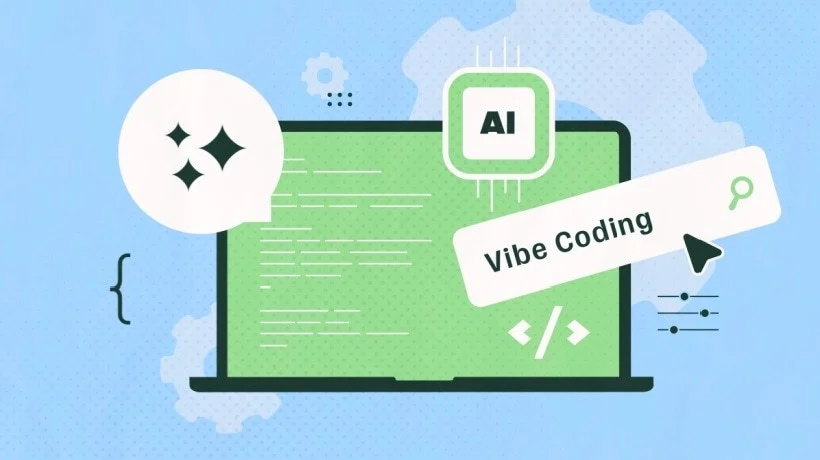
At the heart of this transformation is the concept of "vibe coding." Originally popularized in the general software development sphere, vibe coding refers to the process of using high-level natural language descriptions to generate complex, functional code and interfaces. In the context of interactive learning, this means that an instructional designer no longer needs to manually drag-and-drop elements or write logic scripts to create a branching scenario. Instead, they can describe the "vibe" or the intent of the learning experience, and the AI-native authoring tool handles the structural generation.
For instance, a designer might input a prompt such as: "Create a five-step interactive simulation for a medical sales representative that includes a customer objection phase, a data-driven rebuttal section using these PDF specs, and a final scoring module based on empathy and technical accuracy." Within seconds, the platform generates a structured, interactive journey that includes the logic, assets, and assessment frameworks required. This capability allows for "intent-based design," where the focus is entirely on the pedagogical outcome rather than the technical hurdles of the software.
A Chronology of the eLearning Evolution (2020–2026)
To understand the magnitude of this shift, one must look at the rapid progression of the industry over the last six years:
- 2020–2022: The Traditional Era. During the global pandemic, the demand for eLearning spiked. Organizations relied heavily on "legacy" tools such as Articulate Storyline and Adobe Captivate. While powerful, these tools required specialized training and hundreds of manual hours to produce a single hour of high-quality interactive content.
- 2023: The Generative Spark. The introduction of Large Language Models (LLMs) like GPT-4 led to the first wave of AI integration. Tools began offering "AI assistants" that could write quiz questions or summarize text, but the core production remained manual and slide-based.
- 2024: The Rise of AI-Native Prototypes. New startups began building platforms from the ground up with AI as the engine, rather than an add-on. Concepts like automated video generation and instant translation became standard, but deep interactivity still required human intervention.
- 2025: The Vibe Coding Breakthrough. Natural language processing reached a level of sophistication where it could interpret complex instructional design frameworks (like Bloom’s Taxonomy or Gagne’s Nine Events of Instruction). Platforms began generating full SCORM-compliant packages from simple text prompts.
- 2026: The AI-Native Standard. AI-native authoring is now the industry benchmark. Traditional tools are increasingly seen as "specialty" software for niche manual adjustments, while the vast majority of corporate and academic content is produced via AI-driven interactive platforms.
Supporting Data: Efficiency and ROI Metrics
The transition to AI-native tools is driven by compelling economic and operational data. Recent industry reports from 2025 and early 2026 indicate the following trends:
- Production Time Reduction: Organizations utilizing AI-native platforms like Mexty report a 75% to 80% reduction in the time required to move from a storyboard to a deployed course. A project that previously took three months can now be finalized in less than two weeks.
- Cost Efficiency: The average cost per minute of finished eLearning has dropped by approximately 60%. This is largely due to the elimination of the need for external multimedia developers and specialized "tool experts" for every project.
- Engagement Levels: Data-driven analysis of learner behavior shows that courses built with AI-native interactivity—such as dynamic branching and real-time feedback—see a 40% higher completion rate compared to traditional linear "page-turner" courses.
- Localization Speed: AI-native platforms can now localize and translate interactive courses into over 50 languages simultaneously, maintaining the "vibe" and pedagogical intent of the original content with 98% accuracy.
Industry Perspectives: Statements from the Field
The shift has drawn varied responses from industry leaders and practitioners. Sarah Jenkins, a Senior Learning Architect at a Fortune 500 tech firm, notes: "For fifteen years, I felt like a software operator who happened to know about education. With vibe coding, I am finally an Instructional Designer again. I spend my morning thinking about cognitive load and behavioral change, and my afternoon seeing those ideas instantly manifested in a functional course."
Conversely, some technical developers have expressed concerns about the "black box" nature of AI-generated code. "While the speed is undeniable, the challenge remains in the fine-tuning," says Marcus Thorne, an eLearning Developer. "AI-native tools must allow for ‘surgical’ edits where a human can override the AI’s logic without breaking the entire structure. This is where platforms like Mexty are leading—by providing a structured workspace that balances AI power with human oversight."
The Critical Role of SCORM Compatibility
A major hurdle for any new technology in the L&D (Learning and Development) space is integration with existing infrastructure. Most large organizations have invested millions in Learning Management Systems (LMS) such as Moodle, Docebo, or SAP Litmos. These systems rely on the SCORM (Sharable Content Object Reference Model) standard to track learner progress and scores.
The rise of the SCORM-compatible AI-native interactive learning platform has been the "missing link" for enterprise adoption. By ensuring that AI-generated "vibe-coded" content can be exported as a standard SCORM or xAPI package, platforms have allowed companies to innovate without replacing their entire tech stack. This ensures that data remains centralized while the content creation process is modernized.
From Passive Content to Active Experience
Traditional authoring tools were largely designed around the "slide" metaphor—a digital version of a PowerPoint presentation. This led to a culture of passive consumption, where learners would simply click "next" until they reached a quiz.
AI-native platforms have moved the industry toward "Active Experience" design. Because the AI can handle the complexity of backend logic, designers can easily implement:
- Adaptive Learning Paths: Content that changes in real-time based on the learner’s performance.
- Complex Simulations: Scenarios where the learner’s choices lead to hundreds of potential outcomes.
- Instant Feedback Loops: AI-driven critiques of open-ended learner responses, providing a level of personalization previously only possible with a human tutor.
Analysis of Broader Implications and Future Outlook
The implications of this shift extend far beyond the L&D department. As the cost of creating high-quality training drops, we are seeing a democratization of expertise. Small and medium-sized enterprises (SMEs) that previously could not afford custom eLearning are now producing content that rivals that of global corporations.
Furthermore, the role of the Subject Matter Expert (SME) is being elevated. In the traditional model, an SME would provide a "brain dump" of information to an instructional designer, who would then struggle to translate it into a course. Today, the SME can interact directly with the AI-native authoring tool, using prompts to shape the content themselves, with the AI ensuring that pedagogical standards are met.
However, this new era also presents challenges. The "quality vs. quantity" debate is intensifying. With the ability to produce courses at such high speeds, there is a risk of flooding learners with "good enough" content that lacks deep instructional value. The responsibility of the 2026 Instructional Designer is no longer to build the course, but to be the "Curator of Intent," ensuring that the AI-generated output aligns perfectly with the organization’s strategic goals and the learners’ psychological needs.
Conclusion
Vibe coding and AI-native authoring tools have fundamentally altered the DNA of the eLearning industry. By removing the technical friction that once defined the production cycle, these tools have liberated instructional designers to focus on what truly matters: the learner. As we look toward the latter half of the decade, the distinction between "creating" and "designing" will continue to sharpen. In this new paradigm, the most successful organizations will be those that leverage AI not just for speed, but as a catalyst for deeper, more meaningful, and more interactive human learning experiences. The era of the manual authoring tool is drawing to a close, replaced by a more intuitive, responsive, and intelligent way of sharing knowledge.