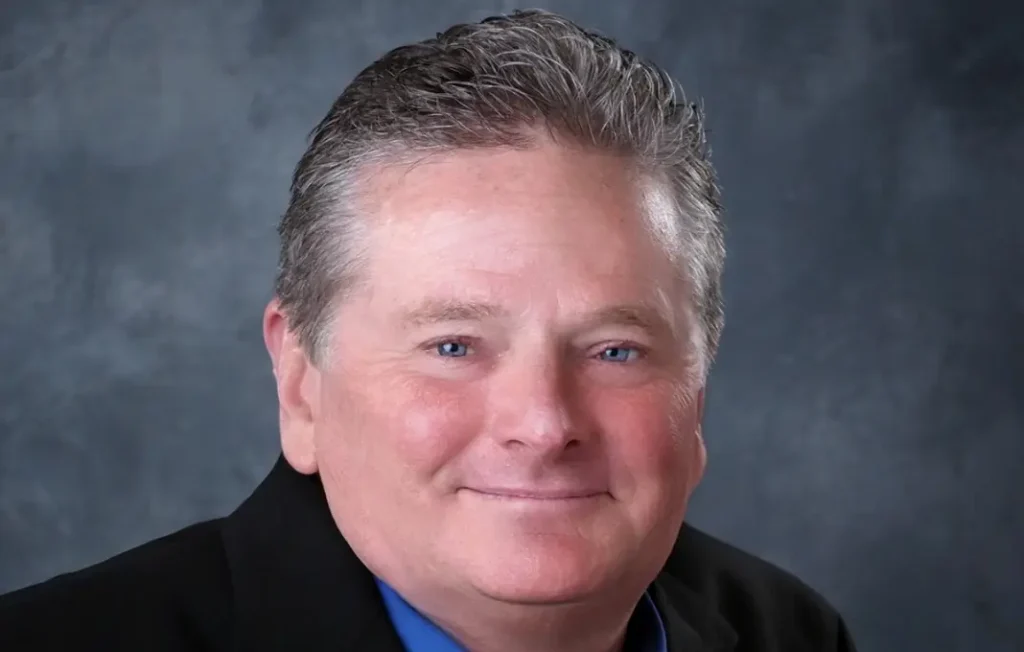
Months after his first IndyCar race win, Schmidt got into a crash that left him paralyzed. But living as a quadriplegic didn’t end his competitive drive—it reshaped it.
The roar of the engines, the blur of the racetrack, the exhilaration of crossing the finish line first – these were the hallmarks of Sam Schmidt’s ascent in the world of professional racing. His maiden IndyCar victory in Las Vegas was not merely a personal triumph; it was a testament to years of dedication, talent, and an unyielding competitive spirit. Yet, just months after this pinnacle achievement, the trajectory of his life was irrevocably altered by a catastrophic crash that left him paralyzed from the shoulders down. While the physical limitations imposed by quadriplegia might have signaled the end of a racing career for many, for Sam Schmidt, it marked the beginning of a profound transformation, a reshaping of his competitive drive into a powerful force for innovation, advocacy, and a future where physical ability is not a barrier to human potential.
A Life Interrupted: The Las Vegas Victory and the Orlando Tragedy
The year 2000 was a watershed moment for Sam Schmidt. Having achieved success in lower racing series, he made his debut in the Indy Racing League (IRL), the precursor to IndyCar, and quickly established himself as a formidable competitor. His breakthrough came on October 15, 2000, at the Las Vegas Motor Speedway, where he secured his first-ever IndyCar victory. This win catapulted him into a new echelon of racing recognition, painting a picture of a bright and promising future on the track. The victory was widely celebrated within the racing community, a symbol of perseverance and skill rewarded.
However, the unpredictable nature of motorsport, a sport where speed and precision are paramount, can also be unforgiving. In January 2001, during a practice session at Walt Disney World Speedway in Orlando, Florida, Schmidt’s career took a devastating turn. A high-speed accident saw his car make contact with a barrier, resulting in injuries that led to paralysis. The diagnosis of quadriplegia was a stark reality, a life-altering event that presented challenges far beyond the physical. The dreams of further racing victories and a long career on the track were suddenly overshadowed by the immense task of adapting to a life with significantly limited mobility.
Reshaping the Competitive Spirit: From Driver to Innovator and Advocate
The immediate aftermath of such a life-altering event is often a period of profound adjustment and reevaluation. For Sam Schmidt, however, the core of his competitive nature remained intact, albeit redirected. Rather than succumbing to the limitations imposed by his condition, he channeled his innate drive and problem-solving skills into new avenues.
"When faced with a setback, we’re taught to push through and persevere. But what happens when we’re faced with something so difficult the challenge seems insurmountable?" the narrative posed, a question that Sam Schmidt answered with remarkable fortitude. He refused to let his circumstances define his limits. Instead, he embarked on a journey of recovery and, concurrently, began to build a new legacy.
His recovery process was not passive. It involved rigorous rehabilitation and a determined effort to regain as much function and independence as possible. This personal battle laid the groundwork for his broader mission. He recognized that his experience, while uniquely his own, resonated with countless others facing similar challenges.
Building a Foundation for Change: Conquer Paralysis Now and Driven Neuro Recovery
Schmidt’s commitment to overcoming his own obstacles quickly translated into a desire to empower others. This led to the co-founding of the Conquer Paralysis Now foundation. This non-profit organization is dedicated to finding a cure for paralysis and improving the lives of those affected by spinal cord injuries. Through research grants, patient support programs, and public awareness campaigns, Conquer Paralysis Now aims to accelerate breakthroughs and foster a community of hope and resilience.
Complementing the foundation’s mission are the Driven Neuro Recovery Centers. These state-of-the-art facilities offer advanced neurorehabilitation therapies, including access to cutting-edge equipment and personalized treatment plans. The centers focus on maximizing recovery potential, helping individuals regain lost function and improve their quality of life. The very name, "Driven," speaks to Schmidt’s own relentless pursuit of progress and his belief in the power of active participation in one’s own recovery.
The "No Finish Line" Philosophy: A Testament to Perseverance
The depth of Sam Schmidt’s journey and his philosophy on overcoming adversity are further chronicled in his co-authored book, No Finish Line. This title itself encapsulates his enduring perspective: that the pursuit of goals and the drive to improve are continuous, with no definitive end point, especially when facing significant challenges.
In his own words, as shared during an episode of the Corporate Competitor Podcast, Schmidt articulated this shift in his purpose: "Racing is my passion, but Driven Neuro Recovery and my foundation is clearly my purpose." This statement highlights the profound evolution from a personal pursuit of athletic excellence to a broader commitment to serving humanity and advancing medical science.
The book and his public statements consistently emphasize that living as a quadriplegic did not extinguish his competitive spirit; it merely reshaped its focus. He learned to find victory in new, imaginative ways, extending his competitive drive beyond the racetrack to the realms of scientific innovation and personal empowerment.
Tangible Demonstrations of Unwavering Resolve
Schmidt’s resilience is not just theoretical; it is demonstrated through extraordinary acts that underscore his refusal to be defined by his physical limitations. One particularly poignant example cited is his use of an exoskeleton to dance with his daughter on her wedding day. This was not merely a symbolic gesture; it was a technological feat enabled by his determination and the advancements he champions. It represented a father’s unwavering commitment to a significant life event, showcasing how innovation can bridge physical gaps and allow for participation in cherished moments.
This anecdote powerfully illustrates his core belief: "Where there’s a will, there’s always a way to overcome an obstacle." He understands that achieving these extraordinary feats requires not just desire, but also proactive engagement and the leveraging of available resources and technologies.
Inventing the Future: The Armless and Legless Driving Technology
Schmidt’s vision extends to creating a more inclusive society where individuals of all abilities can participate fully. His work with Arrow resulted in the invention of a car that can be driven without the use of arms or legs. This groundbreaking technology, developed through collaboration and a shared vision, has the potential to revolutionize mobility for individuals with severe physical impairments.
This innovation is rooted in his experiences traveling the country with his racing team and visiting hospitals, engaging with patients. These interactions provided firsthand insight into the daily challenges faced by individuals with paralysis and fueled his desire to create practical solutions. His stated goal is clear: "We want anybody, regardless of their ability, to be productive members of society." This ambitious objective is being realized through the development of adaptive technologies that enhance independence and open new possibilities.
The implications of such technology are far-reaching. It could enable individuals to commute to work, pursue educational opportunities, engage in recreational activities, and maintain a higher degree of autonomy. This represents a significant step towards breaking down societal barriers and fostering a more equitable world.
The Enduring Power of "Don’t Give Up"
Throughout his journey, Sam Schmidt has encountered numerous junctures where giving up might have seemed like the most logical or easiest option. However, his inherent drive, perhaps amplified by his racing background, has consistently propelled him forward. He embodies the principle that "good things happen to those who persevere."
His perspective is not one of passive hope, but of active engagement and relentless effort. He articulates this by stating, "I didn’t want to look back in five years, no matter what condition I was in, and say I didn’t do my utmost to overcome." This profound commitment to personal effort and continuous striving is a cornerstone of his philosophy and a powerful message for anyone facing adversity.
Broader Impact and Future Outlook
Sam Schmidt’s story is more than just a personal narrative of overcoming tragedy; it is a beacon of inspiration and a catalyst for change. His work has significantly contributed to:
- Advancements in Spinal Cord Injury Research: Through Conquer Paralysis Now, he is directly supporting efforts to find a cure and improve treatments for paralysis.
- Development of Adaptive Technologies: The creation of armless and legless driving systems represents a significant leap forward in assistive technology, with the potential to transform lives.
- Increased Public Awareness and Advocacy: His public platform and personal story have brought greater attention to the challenges faced by individuals with paralysis and the importance of inclusion.
- Fostering a Culture of Resilience: Schmidt’s unwavering determination serves as a powerful example of how individuals can redefine their limitations and continue to lead fulfilling, impactful lives.
The implications of his work extend beyond the immediate beneficiaries. By championing innovation and advocating for inclusivity, Sam Schmidt is helping to shape a future where physical differences are less of a barrier to participation and achievement. His journey underscores the remarkable capacity of the human spirit to adapt, to innovate, and to find purpose even in the face of profound challenges. The competitive drive that once propelled him to victory on the racetrack now fuels a far more significant race – the race towards a future where paralysis is no longer an insurmountable obstacle, but a challenge that can be overcome through ingenuity, perseverance, and an unyielding belief in human potential. His legacy is not just in the races he won, but in the futures he is helping to build.