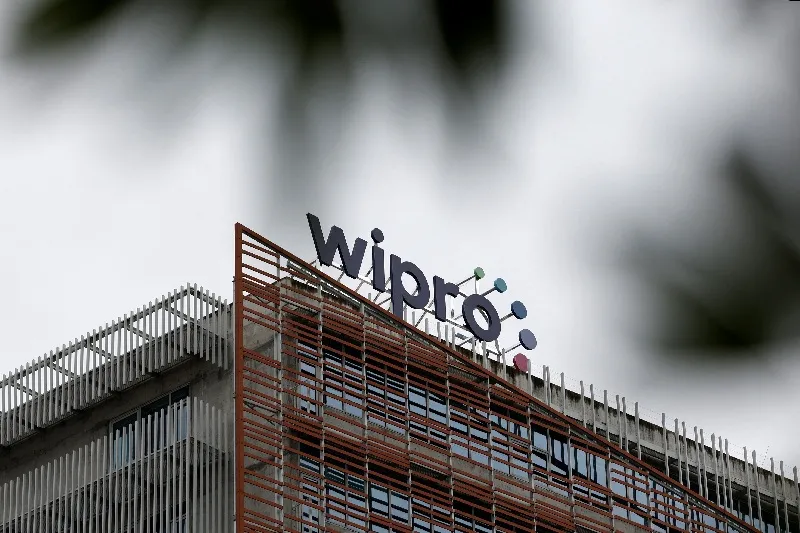
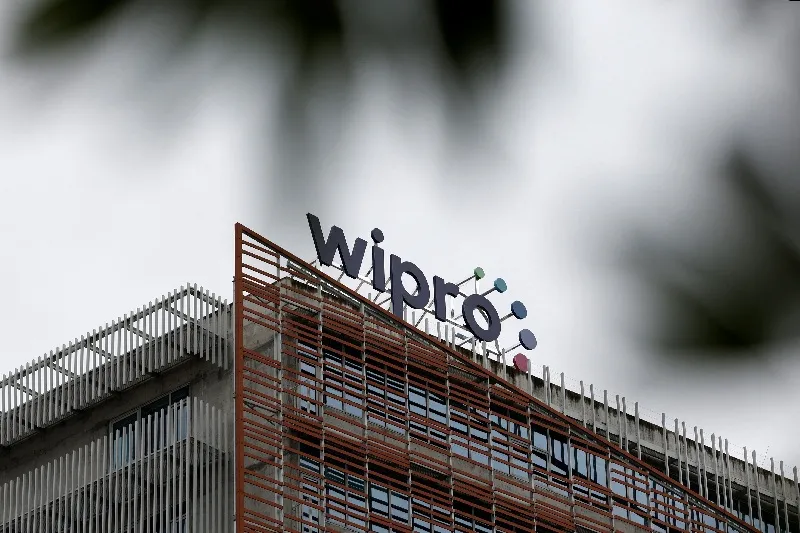
The Indian IT giant Wipro has achieved a significant milestone in its artificial intelligence (AI) integration strategy, reporting that its AI initiatives have boosted productivity to a level equivalent to the output of 20,000 employees. This substantial gain has enabled the company to redeploy these resources internally, underscoring a strategic shift towards a human-AI collaborative operating model. The announcement, made by Wipro’s Chief Technology Officer (CTO), Sandhya Arun, comes at a critical juncture for India’s $315 billion software services industry, which is actively navigating the profound impact of AI on hiring practices, software development methodologies, and contractual agreements.
Wipro, a major player in the global IT landscape with approximately 243,000 employees as of June, is proactively transforming its workforce structure. The company is actively moving towards what Arun described as a "human-AI operating model." A cornerstone of this transformation is an extensive upskilling initiative, with over 100,000 employees currently undergoing advanced AI-related training and obtaining certifications. This proactive approach signals a commitment to equipping its existing workforce with the skills necessary to thrive alongside AI technologies, rather than facing direct displacement.
"It could be the same engineer managing a bunch of agents, deployed on other projects or being trained for some other role. It doesn’t necessarily mean person-to-person replacement by an agent," Arun clarified in a recent interview. This statement emphasizes Wipro’s strategy of augmentation and redeployment, focusing on how AI can enhance human capabilities and create new avenues for employee growth and project engagement. This perspective aligns with the broader sentiment expressed by Wipro Chairman Rishad Premji, who has consistently highlighted the transformative potential of AI for the industry.
The implications of Wipro’s announcement resonate deeply within the Indian IT sector, which is at the forefront of global digital transformation services. The industry’s reliance on a large, skilled human workforce has historically been its strength. However, the rapid advancements in AI, particularly generative AI, are forcing a re-evaluation of traditional operational models. Companies are grappling with how to harness AI’s power to drive efficiency and innovation while managing the impact on their vast employee base.
A Shifting Industry Landscape: AI’s Impact on Indian IT
India’s IT services sector, a powerhouse of the nation’s economy and a significant contributor to its export revenue, is undergoing a seismic shift driven by AI. The industry, which has seen consistent growth fueled by global demand for digital services, is now facing a new paradigm. The $315 billion sector is not only exploring how to integrate AI into client solutions but also how to fundamentally reshape its own internal operations.
This transformation is evident in several key areas:
- Hiring Practices: The traditional model of mass hiring and project-based deployment is being re-examined. Companies are beginning to assess the optimal balance between human talent and AI capabilities.
- Software Development: AI is being leveraged to automate coding, testing, and deployment processes, leading to faster development cycles and potentially reducing the need for certain manual tasks.
- Contractual Models: The nature of IT contracts is evolving. Clients are increasingly seeking solutions that incorporate AI-driven efficiencies, leading to new pricing and service delivery models.
Wipro’s Human-AI Operating Model: A Strategic Vision
Wipro’s deliberate move towards a "human-AI operating model" is a strategic response to these industry-wide shifts. The company’s proactive investment in training its workforce of over 100,000 employees in AI-related skills demonstrates a clear understanding that the future of work lies in collaboration between humans and intelligent machines.
This approach contrasts with a purely automation-driven perspective. By focusing on redeployment and upskilling, Wipro aims to leverage AI as a force multiplier, enabling its existing employees to take on more complex, strategic, and value-added tasks. The AI agents, in this context, are not replacements but tools that enhance the capacity and efficiency of human professionals. This allows engineers, for instance, to manage a larger portfolio of tasks or to focus on higher-level problem-solving and client engagement.
Industry Peers and the Race for AI Integration

Wipro’s strategic pivot is not an isolated event; it mirrors the broader trends observed across major Indian IT firms. Tata Consultancy Services (TCS), India’s largest software services exporter, has also signaled a similar direction. In June, TCS announced that IT firms would likely slow down their hiring as they move towards a workforce composition where "an equal number of employees and AI agents" are utilized. This indicates a fundamental rebalancing of human and artificial intelligence within their operational frameworks.
Furthermore, leading companies are investing in specialized roles to accelerate AI adoption for their clients. TCS plans to build a dedicated team of up to 8,900 "forward-deployed engineers," while Infosys aims for a similar cohort of around 6,000 engineers. These specialized engineers are tasked with embedding themselves within client organizations to facilitate the seamless integration and adoption of AI technologies.
Wipro is also expanding its own pool of forward-deployed engineers, though specific numbers have not been disclosed by Arun. However, she indicated that Wipro’s forward-deployed workforce is expected to be "in line with peers," suggesting a competitive commitment to this critical function.
Beyond Productivity: Focusing on Outcomes
Sandhya Arun’s emphasis on the broader challenge of ensuring engineers can work effectively with AI systems is crucial. She cautioned against an overemphasis on the specific role of AI agents and instead urged a focus on the broader impact of AI integration.
"The shift has to be from productivity to outcomes," Arun stated. This reframing is significant. It suggests that the true measure of AI’s success should not be solely based on how much faster tasks are completed, but rather on the tangible business benefits it delivers. These benefits, according to Arun, should include improvements in customer experience, the creation of new revenue streams, and the successful achievement of overarching business objectives.

This outcome-oriented perspective aligns with the evolving expectations of clients. As businesses invest in AI, they are looking for demonstrable returns on investment, not just incremental improvements in operational efficiency.
Wipro’s Monetization Strategy: A Comparative Analysis
While Wipro is making significant strides in AI integration and workforce transformation, its approach to AI revenue reporting offers a point of comparison with its peers. Wipro is notably the only one among India’s top four IT companies that does not publicly disclose its AI-specific revenue figures.
This lack of transparency has led to analysis from industry experts. Manoj Chandra Jha, principal analyst at Nord-IQ Research, commented that Wipro appears to be in an "earlier, cost-absorbing phase of AI monetization relative to peers." He suggested that the "real test would come when these deals start converting to revenue and margin recovery."
Jha further observed that while Wipro’s investment intensity in AI-related training and ecosystem partnerships is comparable to that of competitors like TCS, Infosys, and HCLTech, the company "trails in commercialization maturity." This suggests that Wipro’s strategic investments in AI are foundational, aimed at building capability and workforce readiness, with the monetization phase potentially following as these capabilities mature and are translated into client solutions.
The Future of Work: A Collaborative Ecosystem

The developments at Wipro and across the Indian IT sector underscore a fundamental shift in the nature of work. The integration of AI is not merely a technological upgrade; it is a redefinition of how businesses operate and how human capital is leveraged. The emphasis on upskilling, redeployment, and an outcome-driven approach signals a move towards a more dynamic and adaptable workforce.
As AI continues to evolve at an unprecedented pace, companies that can successfully navigate this transition by fostering a collaborative ecosystem between humans and intelligent machines will be best positioned for sustained growth and innovation. Wipro’s strategy, with its focus on employee development and strategic redeployment, appears to be a blueprint for such a future, aiming to harness the power of AI not just for efficiency, but for a more intelligent and value-driven approach to business. The coming years will be crucial in observing how these early investments translate into tangible revenue growth and sustained competitive advantage for Wipro and the broader Indian IT industry. The company’s journey is a testament to the ongoing evolution of the digital economy, where adaptability and a human-centric approach to technology integration will be paramount.