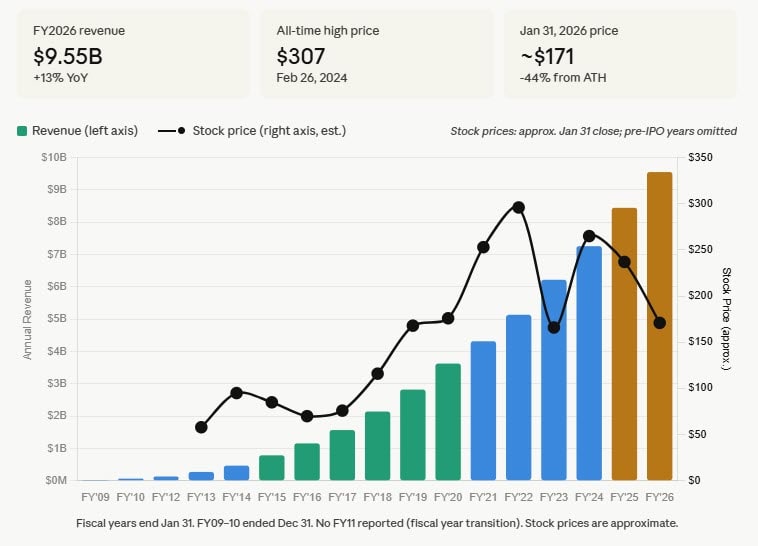
Workday, a long-standing leader in cloud-based enterprise applications for finance and human resources, has embarked on a significant strategic pivot to address the transformative impact of artificial intelligence. In a comprehensive unveiling at a recent industry summit, the company articulated a clear vision for its future, integrating its substantial acquisition portfolio, a revamped executive leadership, and a redefined role within the burgeoning landscape of AI agents. This strategic realignment, spearheaded by founder Aneel Bhusri’s return to the CEO role, signals Workday’s intent to not only adapt but to lead in the next generation of enterprise software.
A Legacy of Innovation and the AI Imperative
Workday’s journey began in 2008 with a groundbreaking platform architected for the cloud, a stark departure from the then-dominant on-premise client-server systems. This innovative approach offered a unified, object-oriented database, integrated security and business rules, and a novel user interface, quickly capturing market share with its "Power of One" message – a single, future-proof system for all HR and financial needs. Over the years, Workday cultivated a robust customer base, serving over 11,500 organizations and impacting more than 75 million end-users globally, securing a significant portion of the Fortune Global 2000.
However, as the AI revolution accelerated, Workday, like many established tech giants, faced the challenge of evolving its core offerings to remain relevant. In early 2024, Aneel Bhusri, who had transitioned from CEO to Executive Chairman, reassumed the CEO position, citing a perceived loss of startup dynamism and a lack of clarity in the company’s AI strategy. This marked the beginning of a concerted effort to revitalize Workday’s product roadmap and market positioning.
The New Workday: From System of Record to Platform for Agents

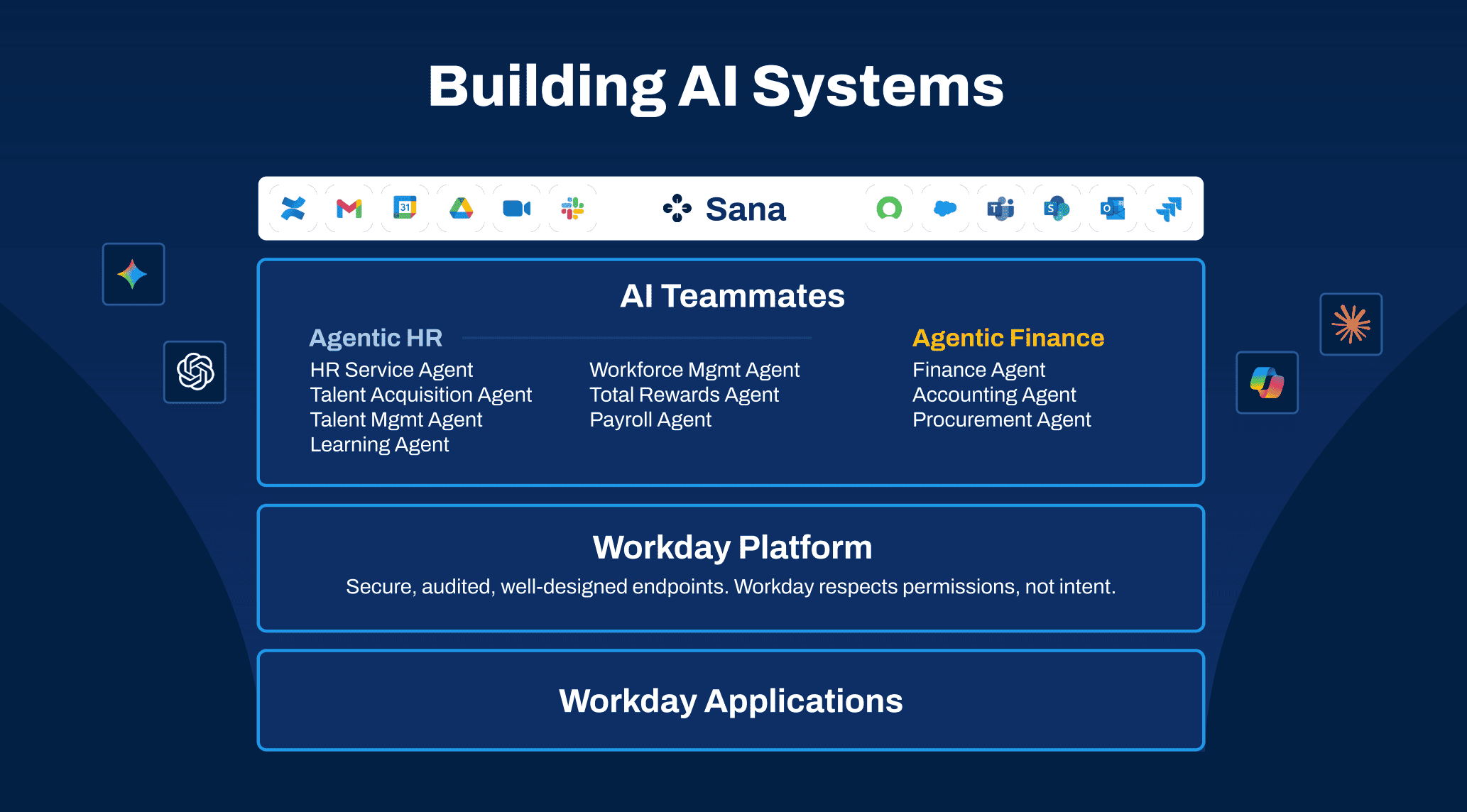
At the heart of Workday’s reinvention is a fundamental redefinition of its role in an era increasingly defined by readily available AI agents. The central question Workday addresses is the enduring value of a "system of record" when AI can ostensibly generate insights and execute tasks independently. The company’s answer is to transform its robust data and operational framework into a "platform for agents."
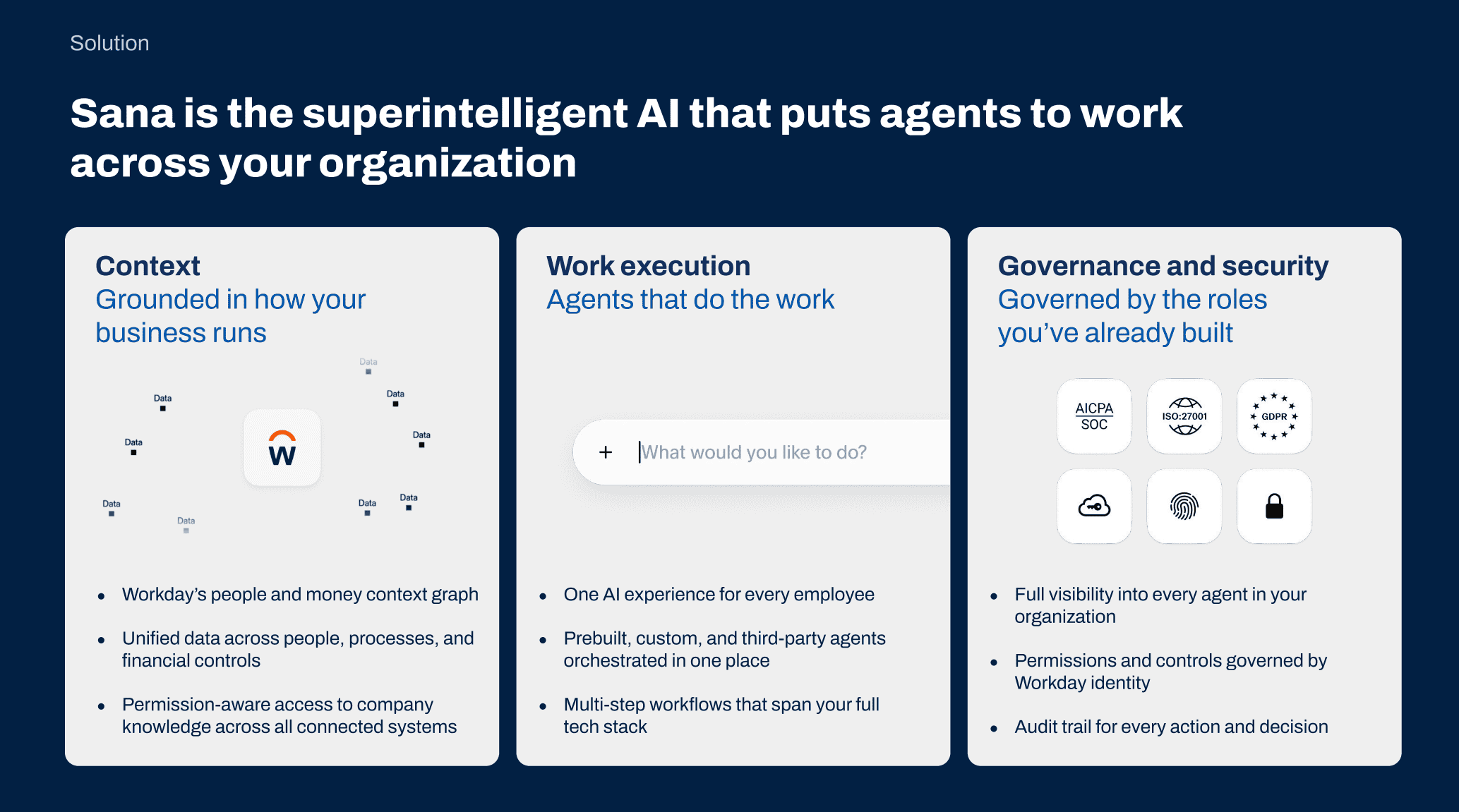
Workday’s strategy posits that by unlocking its deeply embedded data, security protocols, and business rules, it can provide a secure, scalable, and compliant foundation upon which AI agents can be built and operated effectively. The argument is that replicating the intricate "rails" of enterprise-grade compliance, policy enforcement, and security outside of Workday is prohibitively expensive, time-consuming, and risky.
This strategic shift is underpinned by five key pillars:
Pillar 1: AI as a Complement, Not a Replacement, for Enterprise Software
Workday asserts that while AI excels at probabilistic reasoning, core enterprise functions like payroll processing, financial closing, employee onboarding, and segregation of duties require deterministic rules and established data models. The company’s approach integrates AI-driven reasoning with the precise execution capabilities inherent in its existing platform. This means that standalone AI agents, operating on extracted enterprise data, are viewed as structurally incomplete without the underlying enterprise logic that Workday provides. This is analogous to how autonomous vehicles, despite their advanced AI, still rely on the established infrastructure of roads, traffic signals, and legal frameworks.
Pillar 2: Workday’s "Rails" as the Foundation for Enterprise AI
The company emphasizes that its extensive configuration and business process framework encapsulate each customer’s unique policies, approval hierarchies, compliance mandates, and organizational structures. These "rules" are integral to how a company operates. AI agents interacting with Workday data must adhere to these established protocols. Workday’s framework ensures that agent actions are routed through these existing configurations, thereby rendering agents "lawful by default." The alternative, building agent nests from scratch, would necessitate the creation of complex coordination and rule-governed agents, a task that can be streamlined by leveraging Workday’s existing infrastructure.
Pillar 3: Productizing Governance and Agent Management
Workday aims to provide enterprise-grade governance and management tools for AI agents. Recognizing the potential for agent sprawl, the company is developing solutions that treat agents as first-class citizens with defined identities, skills, authorizations, and audit trails. Key initiatives include the "Agent System of Record," a standards-based access and privilege management system, and a unified portal for managing both internal and external agents. This positions Workday as a provider of essential "trust infrastructure" for the agentic enterprise, though it enters a competitive space with offerings from players like ServiceNow and Microsoft.
Pillar 4: A Unified Experience Powered by Sana
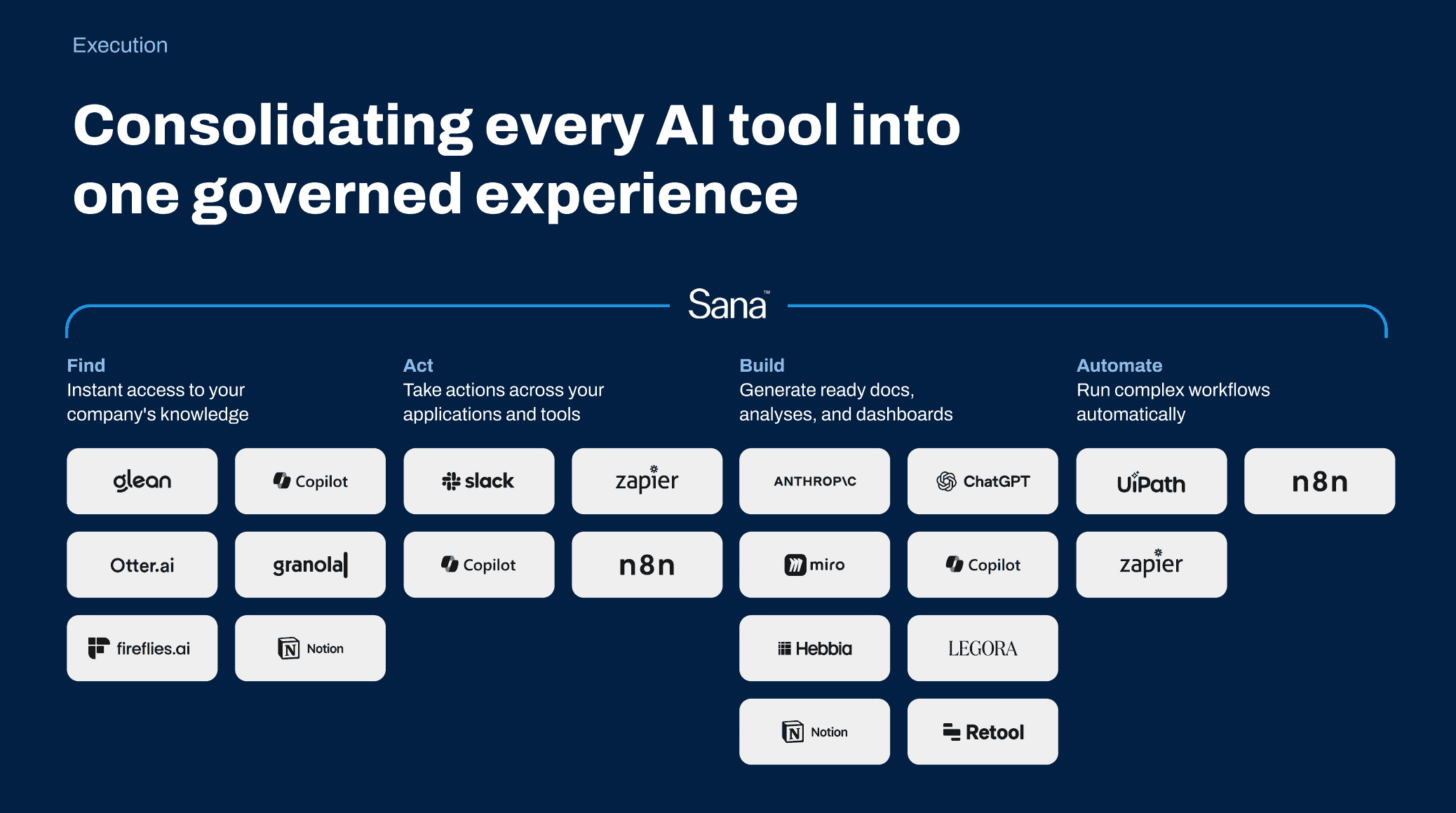
The acquisition of Sana, a dynamic learning platform, plays a pivotal role in Workday’s new user experience. Sana is positioned as the new default front door for Workday applications, with an extended enterprise version capable of integrating with other leading platforms like Salesforce, Slack, Teams, and SharePoint. This comprehensive agent platform aims to compete directly with solutions like Microsoft Copilot, offering a unified interface for employees and serving as an agent development studio and learning surface. The integration of Sana is expected to democratize AI-driven enablement and reskilling, potentially unlocking significant productivity gains.
Pillar 5: Outcome-Based Commercial Models
Workday is transitioning from a purely "per-seat" licensing model to a hybrid approach that incorporates consumption-based pricing, utilizing "Flex Credits." This shift aims to align Workday’s revenue more closely with customer outcomes, such as business growth and productivity enhancements. API usage will also be metered per call, capturing revenue from external platforms that leverage Workday’s capabilities. This move signals a broader industry trend towards valuing the tangible results delivered by software rather than simply the number of users.
Addressing the "Build from Scratch" Mentality
In an environment where tools like GitHub Copilot and Cursor empower developers to quickly prototype AI applications, some organizations may consider building bespoke HR and finance agent capabilities outside of Workday. Workday’s counter-argument is that such endeavors often result in "shadow ERPs" that are costly, fragmented, and lack the unified data graph, configuration, compliance, and security machinery of its platform. Agents developed in isolation risk violating compliance rules, ultimately necessitating the integration of robust security and workflow tools that Workday already provides.
Navigating a Multi-Agent Future
Workday acknowledges that enterprises will likely deploy a diverse array of AI surfaces, including Microsoft Copilot, Google’s Gemini Enterprise, and custom-built agents. The company’s strategy accommodates this reality by establishing an "Agent Gateway" that supports open standards. External agents can delegate tasks to Workday agents, inheriting Workday’s compliance framework, or interact directly with Workday APIs. Crucially, when an agent needs to engage with human resources, financial transactions, or regulated workflows, the reasoning process is handed off to Workday for secure and compliant execution.
Enabling Dynamic Reconfiguration and Continuous Innovation
A historical critique of cloud enterprise software has been the perceived slowness of product release cycles. Workday is addressing this through significant advancements:
- Extensibility via Sana: The integration of Sana and the new user experience allows for easier extension of Workday’s capabilities. By registering agents in the Agent System of Record, new applications can be developed rapidly. The burgeoning Agent Partner Network further expands the ecosystem with industry-specific and advisory agents.
- Deployment Agent: This new system-testing, configuration, and deployment tool promises to dramatically accelerate the pace at which customers can deploy changes and receive new releases. This reduces reliance on expensive system integrators and enables Workday to deliver updates more continuously, a significant benefit for customers and a potential disruption for traditional Workday implementation partners.
Analysis: A Strategic Turning Point for Workday
The recent summit and accompanying announcements signal a critical juncture for Workday. The return of Aneel Bhusri has demonstrably infused the organization with renewed energy and strategic focus. The implementation of a "General Manager" model for key product areas, including the Agent Factory and AI APIs, has streamlined decision-making and fostered a more agile, startup-like culture. This centralization of AI strategy mirrors efforts by other major tech companies, such as Microsoft’s recent consolidation of its Copilot engineering.
Leading the Charge in Agentic HR and Finance
Workday’s strategic acquisitions of Paradox and Sana position it to lead the charge in agentic HR and finance transformations. These companies bring deep expertise in AI-driven talent acquisition, recruiting, and learning platforms. By integrating these capabilities, Workday can showcase how AI agents can redefine business operations while leveraging existing enterprise infrastructure. This allows Workday to proactively guide customers toward the future of work, facilitating the development and deployment of agents that can automate entire workflows and unlock substantial ROI, moving beyond simple task automation to true process redesign.
New Leadership Driving Innovation
The integration of Paradox CEO Adam Godson and Sana CEO Joel Hellermark as General Managers under Gerrit Kazmaier, President of Product and Technology, represents a significant infusion of entrepreneurial leadership. Godson now oversees Workday’s entire talent acquisition suite, including the acquired HiredScore ATS and intelligence capabilities, a move that directly addresses the highly competitive and vast talent acquisition market. Hellermark leads Workday’s learning platform and AI layer, encompassing both legacy and new AI-native capabilities, a critical area within the expansive corporate learning and enablement sector. This new leadership structure fosters accountability and is expected to accelerate product vision, velocity, and competitiveness.
Defining the Enterprise AI Infrastructure
In the complex and often confusing landscape of enterprise AI, Workday has the opportunity to define the architecture for AI integration. The company is grappling with fundamental questions regarding agent hierarchy, specialization (action vs. observation), inter-agent communication, and the segmentation of information and authority. By leveraging its position as a trusted "system of record," Workday can provide a framework that governs the interaction between intelligent LLMs, semantic and rules layers, agent orchestration code, and the underlying runtime and trust infrastructure. While competing vendors are also vying for leadership in this space, Workday’s deep entrenchment in ERP and HCM provides a unique platform to set industry standards.
Mastering Context and Semantics
A critical, yet often overlooked, aspect of AI’s success is the quality of context. As Joel Hellermark aptly puts it, "Everyone is ignoring the big boring problem of bad context." Workday’s commitment to enhancing its Data Cloud to include not just raw data but also rich semantic information—such as skills models, cost centers, career paths, and certification workflows—demonstrates a forward-thinking approach. This focus on knowledge graphs and context engineering, rather than solely relying on larger models, is crucial for building trustworthy and valuable AI agents. This understanding positions Workday as an AI-native organization rather than a mere transactional software provider.
Conclusion: A Reinvention on the Horizon
The recent strategic announcements from Workday, coupled with the infusion of new leadership and the integration of cutting-edge acquisitions, mark a significant turning point for the company. Workday appears poised to reinvent itself, pioneering new solutions that enable customers and partners to fully participate in the business agent revolution. With a renewed focus on dynamic reconfiguration, continuous innovation, and a clear vision for enterprise AI infrastructure, Workday is well-positioned to capitalize on the evolving demands of the digital economy. The integration of Sana and Paradox, alongside the new AI management tools, is expected to drive immediate revenue growth, reinforcing Workday’s relevance and leadership in the future of enterprise applications.