September 21, 2026, marks World Gratitude Day, an annual observance offering a crucial moment for organizations to reflect on a fundamental driver of workplace success: employee value. This year’s observance arrives at a critical juncture, as the 2026 Engagement and Retention Report, which surveyed 2,500 employees globally, reveals a stark reality: only 25% of employees are actively engaged in their work. This statistic underscores the pressing need for intentional strategies to foster a more connected and motivated workforce. Gratitude, when cultivated intentionally, has the power to transform this landscape, leading to employees who are more connected, more committed, and demonstrably more energetic in their daily contributions. However, the report emphasizes that a culture of gratitude does not emerge spontaneously; it requires consistent effort, deliberate planning, and sustained leadership commitment.
Understanding World Gratitude Day
World Gratitude Day serves as a global invitation to decelerate and acknowledge the individuals who enrich our lives and contribute significantly to our professional environments. At its heart, the day advocates for a conscious recognition of the people and circumstances for which we are thankful, fostering a sense of appreciation across individuals, teams, and entire communities.
The Significance of September 21st
Observed annually on September 21st, World Gratitude Day will fall on a Monday in 2026. Unlike holidays that may shift their dates annually, this fixed observance provides a consistent global touchpoint for expressing gratitude, encouraging the acknowledgment of both people and experiences that evoke thankfulness.
The Evolving Theme of Gratitude
While World Gratitude Day does not adhere to a single, prescribed theme, its underlying spirit encourages a collective focus on what is functioning well and on the individuals who are instrumental in driving positive outcomes. This mindset is crucial for building resilience and strengthening interpersonal connections within organizations. It shifts the focus from a purely transactional approach to work to one that embraces a more human-centric perspective, making the workplace a more supportive and fulfilling environment.
Origins of a Global Tradition
The genesis of World Gratitude Day can be traced back to 1965. During a Thanksgiving dinner held at the United Nations building in Hawaii, Sri Chinmoy and the Peace Meditations at the United Nations proposed the establishment of a global day dedicated to the practice of gratitude. This concept garnered significant resonance, leading to the inaugural official celebration on September 21, 1966. Since its inception, the day has evolved into a widely recognized observance, encouraging a moment of collective reflection and appreciation.

World Gratitude Day’s Impact on the Workplace
In the professional sphere, World Gratitude Day offers a vital opportunity for organizations to address a key employee desire: genuine appreciation. It provides a structured moment to identify and rectify potential gaps in recognition that directly impact employee engagement and retention. The importance of this day can be articulated through several key benefits:
- Enhanced Employee Engagement: Studies consistently show a strong correlation between feeling valued and employee engagement. When employees believe their contributions are recognized, they are more likely to invest their best efforts into their work.
- Improved Retention Rates: A lack of appreciation is a significant driver of employee turnover. Conversely, workplaces where gratitude is a regular practice tend to experience higher retention rates, as employees feel a stronger sense of loyalty and commitment.
- Boosted Productivity and Performance: Engaged employees are more productive. The positive reinforcement derived from gratitude can fuel motivation, creativity, and a greater willingness to go the extra mile, ultimately contributing to improved overall performance.
- Stronger Team Cohesion: Acts of gratitude, especially when shared openly, foster a sense of camaraderie and mutual respect among team members. This can lead to more effective collaboration and a more positive team dynamic.
- Positive Organizational Culture: Embedding gratitude into the workplace culture contributes to a more humane, supportive, and appreciative environment. This can have a ripple effect, influencing everything from customer interactions to innovation.
Strategies for Celebrating World Gratitude Day in the Workplace
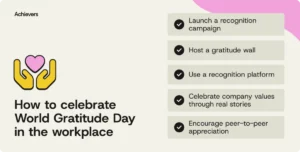
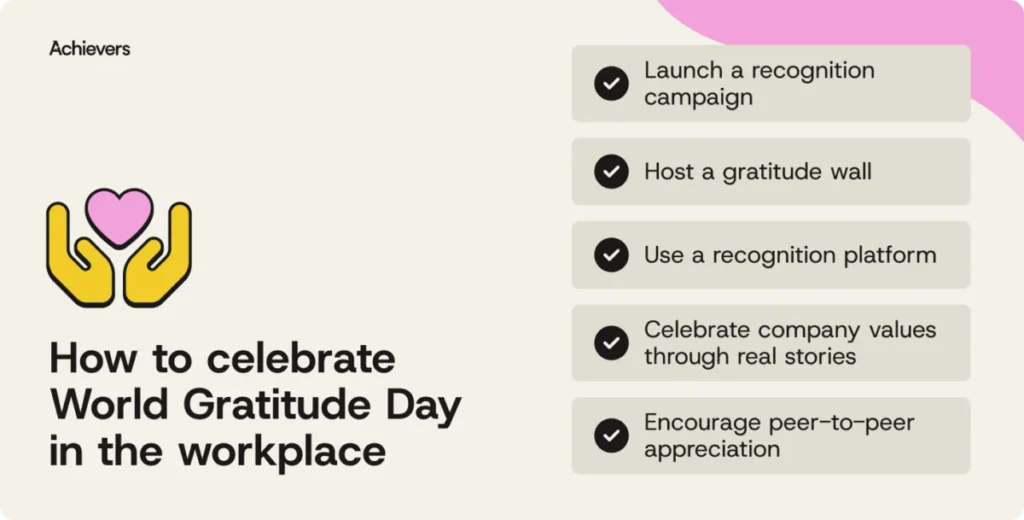
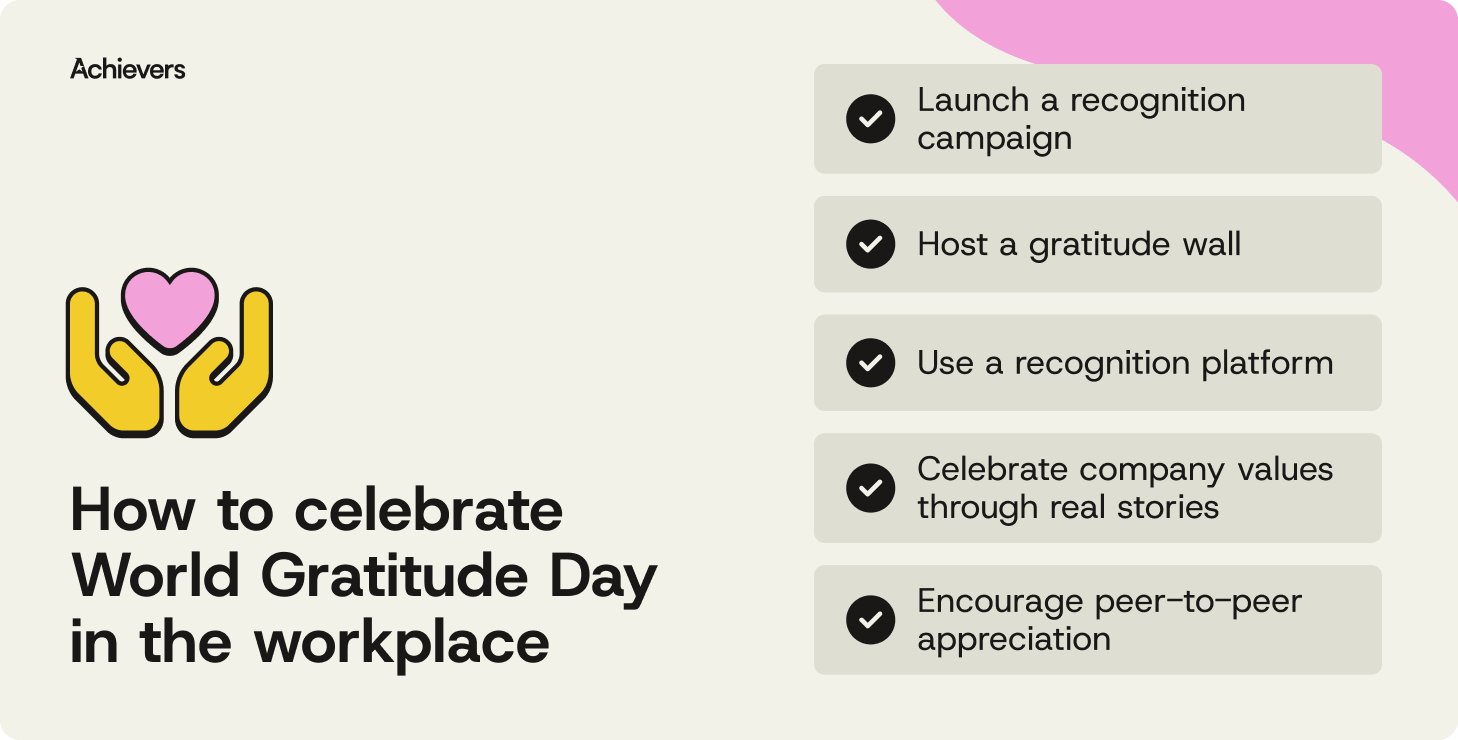
Implementing effective gratitude practices requires a strategic approach that moves beyond a single-day event to embed appreciation into the organizational fabric. Here are several actionable strategies for celebrating World Gratitude Day:
Launching a Recognition Campaign
Initiate a straightforward, high-visibility campaign that encourages employees to actively participate in peer-to-peer recognition. This can involve highlighting colleagues who exemplify company values or who have made significant contributions. Utilizing automated prompts or providing pre-designed templates can streamline the process and maintain momentum, making it easier for employees to acknowledge each other’s efforts. The simpler the recognition process, the more likely it is to be embraced.
Establishing a Gratitude Wall
Create a shared digital or physical space where employees can express appreciation for one another across different teams. A social-media-style feed or a mobile-friendly posting option ensures accessibility for all employees, regardless of their work arrangements – whether they are fully in-office, hybrid, or remote. This visual representation of appreciation can serve as a constant reminder of the positive contributions within the organization.
Illuminating Company Values Through Real Stories
Spotlight concrete examples of employees embodying company values through their daily work. Sharing these stories makes individuals feel seen and acknowledged, while also subtly reinforcing the behaviors that are crucial for shaping a positive culture and driving performance. These narratives offer tangible proof of what success looks like in practice.
Equipping Managers with Gratitude Toolkits
Provide managers with practical resources, such as prompts, templates, and gentle reminders, to help them consistently recognize their teams. Research, such as the Achievers State of Recognition Report, indicates that employees who are recognized by their managers exhibit significantly higher levels of trust and are more likely to recommend their company to others. Simple tools and real-time feedback can empower managers to cultivate recognition as a sustainable habit.
Fostering Peer-to-Peer Appreciation
It is essential that recognition is not solely a top-down initiative. Create avenues for colleagues to acknowledge each other for collaboration, support, and everyday achievements. Non-monetary forms of appreciation can be highly impactful, particularly when they are timely, personal, and shared publicly where their positive influence can be observed by others.
Leveraging Recognition Platforms
Utilize employee recognition platforms to amplify the impact of World Gratitude Day and extend it throughout the year. These tools facilitate immediate recognition on any device, offer helpful nudges, and provide visibility across teams. When appreciation is made simple, consistent, and accessible to everyone, World Gratitude Day can serve as a powerful catalyst for establishing lasting recognition habits.
Best Practices for National Gratitude Day
To maximize the impact of World Gratitude Day, organizations should consider implementing the following best practices:
- Leadership Buy-in: Ensure that senior leadership actively participates in and champions gratitude initiatives. Their visible commitment sets the tone for the entire organization.
- Consistency is Key: While World Gratitude Day provides a focal point, the goal should be to integrate gratitude into the daily workflow. Encourage ongoing recognition beyond the designated day.
- Specificity Matters: Vague acknowledgments are less impactful. Encourage specific feedback that highlights the particular actions or behaviors being appreciated.
- Timeliness: Recognize contributions as close to the event as possible to maximize their impact and reinforce desired behaviors.
- Inclusivity: Ensure that all employees have opportunities to both give and receive recognition, regardless of their role, tenure, or location.
- Feedback Loops: Use World Gratitude Day as an opportunity to gather feedback on existing recognition programs and identify areas for improvement.
The Transformative Power of Gratitude on Performance
The tangible benefits of a gratitude-infused workplace extend directly to performance metrics. When employees feel genuinely appreciated:
- Motivation Surges: Acknowledged employees are more intrinsically motivated, leading to greater effort and a willingness to tackle challenges.
- Innovation Flourishes: A supportive environment where contributions are valued encourages employees to share ideas and take creative risks.
- Resilience Strengthens: During difficult times, a foundation of gratitude can bolster team morale and foster collective problem-solving.
- Collaboration Improves: When colleagues regularly express appreciation for each other’s support, it strengthens bonds and enhances teamwork.
- Well-being Increases: Feeling valued contributes to overall job satisfaction and reduces stress, leading to improved mental and emotional well-being.
The Lasting Impact of World Gratitude Day
While World Gratitude Day offers an invaluable moment for pause, reflection, and appreciation, its true power lies in its ability to serve as a catalyst for sustained change. The real impact is realized in the days, weeks, and months that follow September 21st, as teams reintegrate into their routines. This is where leadership plays a pivotal role.
HR teams and managers have a unique opportunity to leverage this observance to cultivate ongoing habits of gratitude. This involves actively noticing great work, articulating specific praise, and reinforcing the behaviors that empower individuals to perform at their best. At Achievers, the evidence is clear: consistent and authentic recognition fundamentally transforms organizational culture. When employees feel seen, heard, and genuinely appreciated, the entire organization, and every individual within it, thrives. World Gratitude Day 2026, therefore, represents not just a day of observance, but a strategic imperative for building a more engaged, resilient, and high-performing future of work.