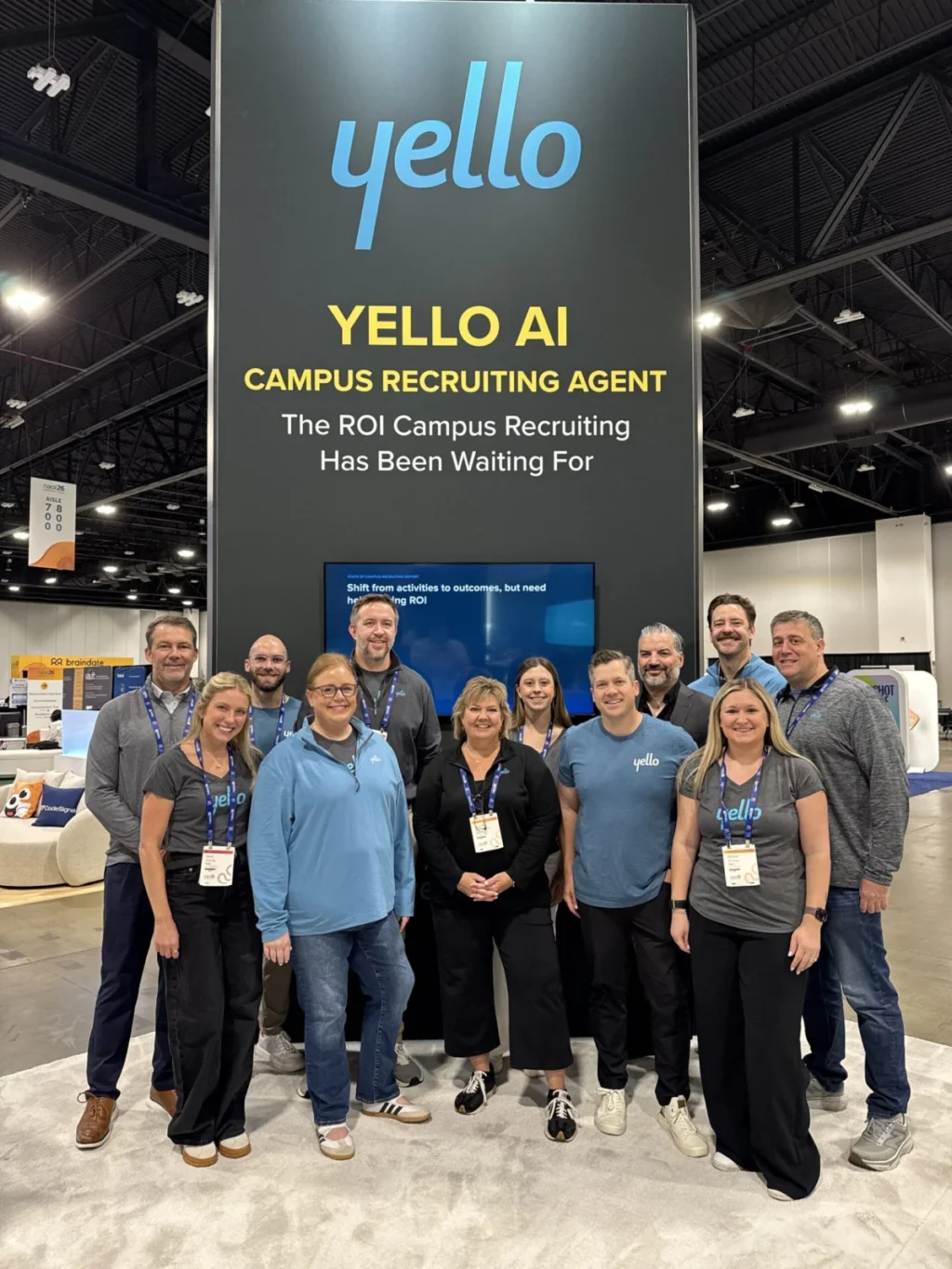
The National Association of Colleges and Employers (NACE) recently convened its annual conference, NACE26, in Denver, Colorado, bringing together a critical mass of university relations and recruiting professionals, career services experts, and HR technology innovators. This year’s event served as a crucial forum for discussing the rapidly evolving landscape of early talent acquisition, particularly in light of technological advancements and changing candidate expectations. Yello, a leading provider of early talent acquisition software, played a prominent role as a platinum sponsor, leveraging the conference platform to not only engage with the community through speaking sessions and networking events but also to unveil significant advancements in its own offerings: the AI Campus Recruiting Agent and a strategic partnership with Symplicity. The insights gleaned from NACE26, coupled with Yello’s announcements, underscore a paradigm shift towards more data-driven, relationship-centric, and ethically-conscious recruiting practices.
The Evolving Landscape of Campus Recruiting: Key Industry Insights from NACE26
The NACE26 conference, a cornerstone event for the early talent community, provided a comprehensive overview of the prevailing challenges and innovative solutions shaping the industry. Attendees, including representatives from Fortune 500 companies, mid-sized enterprises, and academic institutions, engaged in robust discussions centered on three critical themes: the nuanced integration of Artificial Intelligence (AI) in recruiting workflows, the strategic recalibration of employer event participation, and the persistent challenge of offer reneges. These discussions illuminated the urgent need for recruiting teams to adapt their strategies to maintain a competitive edge in a dynamic talent market.
AI’s Transformative Role: Balancing Efficiency with Human Connection
The integration of Artificial Intelligence into recruiting processes emerged as a central topic at NACE26, with a clear consensus that while AI is undeniably changing recruitment, its effective and ethical application is paramount. Industry data, including Yello’s own State of Campus Recruiting report, indicates that a significant portion of current AI usage among campus teams is concentrated at the top of the funnel, primarily in sourcing (26%) and candidate communications (25%). This suggests an initial focus on automating high-volume, repetitive tasks. However, a glaring gap remains in the application of AI for more sophisticated functions such as data analysis and proving Return on Investment (ROI), areas where AI could deliver substantial strategic value. Recruiters at NACE26 articulated a strong desire for AI tools that alleviate administrative burdens and recurring tasks, thereby freeing up valuable time to engage meaningfully with candidates, rather than systems that make critical hiring decisions autonomously.
This sentiment was explicitly addressed in a panel session titled "Can Campus Recruiting Be Autonomous? The Answer Is Complicated." The discussion featured Tamara Welch from LPL Financial, Matthew Brink from NACE, and Dan Bartfield from Yello, who collectively explored the distinction between achieving autonomous recruiting and empowering recruiters to focus on higher-value work. The audience’s overwhelming preference leaned towards the latter, emphasizing that for AI to be truly effective, it must be purpose-built to address the unique needs and challenges inherent in campus recruiting. By automating manual processes, AI can enable recruiters to dedicate more resources and attention to the human-centric aspects of their roles, such as building rapport and fostering genuine connections with prospective hires.
Matthew Brink of NACE further highlighted a critical ethical dimension, noting that students exhibit caution towards employers who rely excessively on AI in their hiring processes, especially when its use is not transparently disclosed. A recruitment experience that feels impersonal or opaque can inadvertently deter highly qualified candidates and subtly erode an employer’s brand reputation. The analysis underscores that while AI offers immense potential for efficiency, its deployment must be balanced with a commitment to maintaining a human touch and ensuring transparency to preserve candidate trust and protect the integrity of the employer brand. The implications suggest a future where successful AI integration is characterized by augmentation, not replacement, of human judgment and interaction in early talent acquisition.
Rethinking Event Strategies: From Volume to Value
Another significant trend discussed at NACE26 was the fundamental shift in how employers approach recruitment events. While application volumes continue their upward trajectory—a trend amplified by the widespread adoption of AI-assisted resume tools that make distinguishing qualified candidates more challenging—the efficacy of traditional, high-volume career fairs is being re-evaluated. Vincent Bond from Synchrony, Kristin Leek from Boeing, and Christopher Cantu from Marathon Petroleum explored this dynamic in their session, "Purpose Over Presence: Rethinking Your Event Strategy for Better ROI." They noted that the proliferation of AI-generated resumes has led to a landscape where, as Vince Bond aptly put it, "every resume looks the same now," creating an "AI-versus-AI" scenario that complicates the initial screening process.
In response to these challenges, industry leaders are advocating for an earlier and more intentional investment in relationship building, primarily through strategic in-person events. The purpose of these events has fundamentally changed. The focus has moved away from simply attending numerous career fairs with the hope of encountering a few suitable candidates, and measuring success purely by activity metrics. Instead, employers are adopting an outcomes-based approach, meticulously evaluating which events yield the highest return on investment in terms of quality hires and long-term talent pipeline development.
Christopher Cantu characterized career fairs not as the starting line, but as the "end zone"—the point where offers are closed and commitments are solidified. The groundwork, he emphasized, is laid months, and often even years, in advance through targeted engagement and consistent touchpoints. This proactive, relationship-driven strategy builds "relationship equity," which is becoming a crucial competitive advantage in combating escalating application volumes and mitigating the risks associated with candidate fraud. The shift signifies a strategic pivot towards deeper, more meaningful interactions that foster genuine connections and lead to higher quality hires, thereby optimizing the substantial resources invested in early talent outreach.
Tackling the Reneging Challenge: Sustained Engagement as a Solution
The issue of offer reneges continues to plague early talent acquisition, and it was a hot topic of discussion at NACE26. The prevailing sentiment was clear: an offer acceptance no longer signifies a done deal. In today’s competitive talent market, where candidates often juggle multiple offers, the period between offer extension and the candidate’s start date must be treated as an active recruiting phase. The most successful organizations are those that implement consistent, personalized communication strategies during this crucial post-offer window, aiming to keep top talent engaged and committed. Panelists at the conference also noted a direct correlation between robust relationship-building efforts initiated at events and lower renege rates, reinforcing the value of early and sustained engagement.
In a virtual session titled "Designing the Complete Journey: From Pre-Boarding to Off-Boarding," Ahva Sadeghi from Yello introduced the "KEEP framework" as a strategic model to help employers maintain talent engagement throughout the entire candidate journey. KEEP stands for Kick Off, Engage, Enable, and Perform—four pillars designed to guide a candidate from the moment of offer acceptance through to their first day and beyond. Sadeghi provided insightful analysis into the primary reasons candidates renege, the significant financial and operational costs incurred by employers when an offer is withdrawn, and showcased how Symba customers have successfully reduced their renege rates by over 55% through proactive engagement strategies. This framework, combined with continuous personalized communication, underscores a proactive and holistic approach to talent retention that begins long before an employee’s official start date.
Yello’s Major Innovations Unveiled: Powering the Future of Early Talent
NACE26 also served as the stage for Yello to announce two pivotal developments set to redefine early talent acquisition: the launch of its AI Campus Recruiting Agent and a strategic partnership with Symplicity. These innovations directly address the industry challenges highlighted at the conference, particularly the need for greater efficiency, improved candidate quality, and expanded reach.
Introducing the AI Campus Recruiting Agent
Yello officially launched and demonstrated its groundbreaking AI Campus Recruiting Agent, an AI-powered solution designed to automate manual tasks and streamline critical recruiting processes. This agent aims to simplify event creation and management, enhance candidate sourcing, optimize outreach campaigns, and facilitate interview scheduling. The overarching goal is to liberate recruiting teams from administrative burdens, allowing them to redirect their focus towards meaningful engagement with candidates.
Traditionally, campus recruiting has revolved around attending events and hoping the right candidates visit a booth. Yello’s AI Campus Recruiting Agent fundamentally flips this model. Instead of relying on chance encounters, the agent proactively identifies best-fit candidates and pre-schedules interviews before an event even commences. It handles the heavy lifting of event logistics, precise candidate matching and prioritization, personalized outreach, and intricate interview scheduling. This transformative approach ensures that recruiters arrive at events with a pre-filled interview schedule comprising candidates who are genuinely aligned with their roles, maximizing the efficiency and effectiveness of their event participation. This paradigm shift represents a strategic move from reactive to proactive recruitment, promising a significant enhancement in recruiter productivity and candidate quality.
Strategic Partnership with Symplicity: Expanding Candidate Reach
In another significant announcement at NACE26, Yello revealed a new partnership with Symplicity, a leading global provider of student affairs and career services technology. This collaboration grants Yello customers unparalleled access to Symplicity’s extensive network of over 600,000 early talent candidates. This strategic integration means that employers utilizing the Yello Campus Recruiting Agent can now match against active candidates sourced directly from the Symplicity database, in addition to candidates already residing in their own Applicant Tracking Systems (ATS), the Yello database, WayUp, and over 35 other diverse sources across the web.
This partnership is particularly impactful for broadening the reach to a diverse pool of early talent, including candidates from underrepresented groups and those in niche academic programs often connected through university career centers. By combining Yello’s advanced AI capabilities with Symplicity’s vast network, the collaboration offers a more comprehensive and targeted approach to candidate discovery, ensuring that recruiters can identify and engage with a wider array of qualified individuals more efficiently than ever before. This synergy is poised to significantly enhance the ability of organizations to build robust and diverse talent pipelines, directly addressing the challenge of finding qualified candidates amid rising application volumes.
Broader Implications and the Road Ahead for Early Talent Acquisition
The discussions at NACE26 and Yello’s timely announcements collectively paint a vivid picture of the future of early talent acquisition. The emphasis is firmly shifting towards intelligent automation that supports, rather than supplants, human interaction. Recruiters are increasingly being called upon to act as strategic advisors and relationship builders, leveraging technology to streamline processes and gain deeper insights, while preserving the essential human element in hiring.
The growing demand for data-driven ROI in recruiting underscores a broader industry trend towards accountability and strategic investment. Organizations are moving beyond superficial metrics to evaluate the true impact of their talent acquisition efforts, necessitating sophisticated analytics tools that AI can provide. Furthermore, the focus on relationship equity and proactive engagement strategies highlights a maturation in how employers view the candidate journey—not as a transactional process, but as an ongoing, mutually beneficial relationship that begins long before an offer is extended and continues well past acceptance.
Ethical considerations, particularly around AI transparency and bias, will continue to shape the development and deployment of recruiting technologies. The industry is poised for an era where technological innovation must be thoughtfully integrated with a commitment to fairness, empathy, and positive candidate experiences. Yello’s advancements, coupled with the insights from NACE26, signal a future where early talent acquisition is more strategic, more personalized, and ultimately, more effective in connecting deserving candidates with opportunities. The evolving role of the campus recruiter will be characterized by a blend of technological proficiency and highly developed interpersonal skills, navigating a landscape where data, relationships, and ethical practices converge to shape the workforce of tomorrow.