
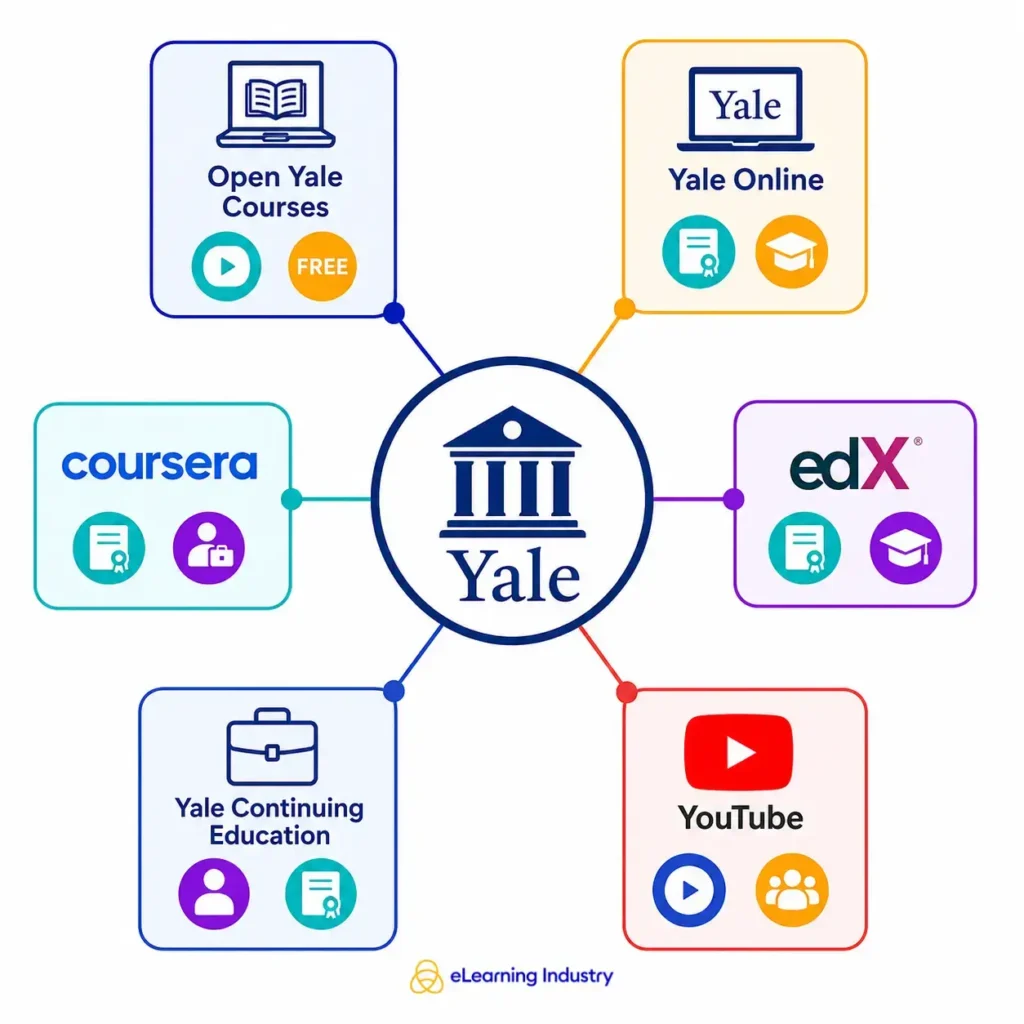
The landscape of higher education has undergone a radical transformation over the last two decades, moving from the exclusive confines of ivy-covered lecture halls to the accessible digital screens of a global audience. Yale University, a cornerstone of the American Ivy League, has been at the forefront of this shift, establishing a robust ecosystem of free online courses designed to bridge the gap between elite academic research and the general public. Through platforms such as Open Yale Courses (OYC), Coursera, and edX, the institution provides high-level instruction in disciplines ranging from theoretical physics to the nuances of financial markets. While these programs offer the rigor of a Yale education without the associated tuition costs, they also represent a strategic move by the university to expand its global influence and contribute to the "democratization of knowledge."
The Evolution of Open Education at Yale
The initiative to provide free digital content began in earnest in December 2007 with the launch of Open Yale Courses. Funded initially by the William and Flora Hewlett Foundation, the project aimed to provide free and open access to a selection of introductory courses taught by Yale’s most distinguished teachers and scholars. Unlike many early online learning platforms that focused on slides and text, Yale’s approach was immersive, offering full video and audio recordings of actual classroom sessions, supplemented by transcripts, syllabi, and reading lists.
In the years following the 2008 financial crisis, the demand for accessible high-level education surged. By 2014, Yale expanded its reach by partnering with Coursera and edX, introducing Massive Open Online Courses (MOOCs). This transition allowed for a more interactive experience, including automated quizzes, peer-graded assignments, and the option for students to earn verified certificates. According to internal university data, Yale’s online offerings have reached millions of learners in nearly every country on earth, with "The Science of Well-Being" alone attracting over 4.5 million enrollments since its debut.
Understanding the Certification Model
A critical distinction for prospective students lies in the difference between "auditing" a course and "earning a certificate." Yale’s free online courses are primarily accessible through an audit model. In this format, learners can access all video lectures, reading materials, and forum discussions at no cost. This provides a high-level educational experience suitable for lifelong learners and professionals seeking knowledge without the need for formal validation.
However, for those requiring a "verified certificate" to bolster a resume or LinkedIn profile, a fee is typically required. These fees, which generally range from $49 to $99 per course, cover the cost of identity verification and the grading of specialized assignments. It is important to note that while these certificates carry the Yale brand and the signature of the instructor, they do not grant university credit or a degree. For HR professionals and Learning and Development (L&D) leaders, these certificates serve as evidence of self-motivation and a commitment to continuous professional growth, though they are viewed as supplements to, rather than replacements for, traditional degrees.
Detailed Review of 15 Essential Yale Online Courses
1. Financial Markets
Taught by Nobel Laureate Robert Shiller, this course remains a cornerstone of Yale’s economics curriculum. Recorded in the wake of the 2008 financial crisis, Shiller provides an exhaustive overview of the ideas, methods, and institutions that permit human society to manage risks and foster enterprise. The course covers behavioral finance, insurance, and the future of capitalism, making it essential for finance professionals and those seeking to understand the mechanics of the global economy.
2. The Science of Well-Being
Professor Laurie Santos originally designed this course (as "Psychology and the Good Life") to address the high levels of stress among Yale undergraduates. It quickly became the most popular course in the university’s 300-year history. The online version focuses on "miswanting"—the things we think will make us happy but don’t—and provides practical, evidence-based "rewirement" challenges to improve mental health.
3. Introduction to Psychology
Professor Paul Bloom provides a comprehensive survey of the scientific study of thought and behavior. This course is particularly valuable for managers and educators, as it delves into the complexities of human nature, including social behavior, perception, memory, and the causes of mental illness.
4. Introduction to Political Philosophy
Professor Steven B. Smith guides learners through the works of Plato, Aristotle, Machiavelli, and Locke. In a modern context, this course offers a foundational understanding of the state, justice, and the rights of the individual, providing a framework for leaders to analyze contemporary political and ethical dilemmas.
5. Introduction to Classical Music
Professor Craig Wright aims to foster a deep appreciation for Western music by teaching the "language" of the genre. From the Baroque era to modernism, the course provides professionals in creative fields with a broader cultural vocabulary and an understanding of the historical context of artistic innovation.
6. Moral Foundations of Politics
Ian Shapiro explores the major political theories of the modern West, from utilitarianism to Marxism and the social contract. This course is designed for those in policy, law, and executive leadership who must navigate the competing moral claims that define modern governance and corporate ethics.
7. A Law Student’s Toolkit
Professor Ian Ayres provides a "pre-law" curriculum that focuses on the fundamental tools used in legal reasoning. While aimed at prospective law students, the course’s emphasis on logic, case analysis, and argumentation is highly beneficial for compliance officers and business negotiators.

8. Financial Theory
John Geanakoplos offers a more technical counterpart to Robert Shiller’s "Financial Markets." This course is geared toward MBA candidates and analysts, focusing on the mathematical underpinnings of asset pricing, portfolio theory, and the equilibrium of the financial system.
9. Game Theory
Game theory is the study of strategic decision-making. Professor Ben Polak introduces the concepts of Nash Equilibrium, backward induction, and asymmetric information. These skills are vital for business strategists and negotiators who must predict and react to the actions of competitors.
10. Introduction to Ancient Greek History
Donald Kagan, one of the most respected historians of his generation, provides a sweeping narrative of Greek civilization. The course examines the rise of the polis, the Persian and Peloponnesian Wars, and the birth of democracy, offering timeless lessons on leadership and crisis management.
11. Roman Architecture
Professor Diana E. E. Kleiner uses a virtual tour format to explore the architecture of the Roman Empire. The course is an interdisciplinary masterpiece, blending history, engineering, and art, making it a favorite for architects and designers.
12. Philosophy and the Science of Human Nature
Tamar Gendler bridges the gap between ancient philosophy and modern cognitive science. By examining the works of thinkers like Kant and Hume alongside contemporary psychological research, the course provides deep insights into morality, happiness, and the structure of the human mind.
13. Fundamentals of Physics I
Professor Ramamurti Shankar provides a rigorous introduction to Newtonian mechanics, special relativity, and thermodynamics. This course is a significant resource for STEM students and engineers looking to refresh their understanding of the fundamental laws governing the physical world.
14. Frontiers of Biomedical Engineering
Professor W. Mark Saltzman explores how engineering principles are applied to solve medical problems. Topics include tissue engineering, drug delivery systems, and artificial organs. This is a critical course for healthcare professionals and innovators in the med-tech space.
15. Frontiers and Controversies in Astrophysics
Professor Charles Bailyn focuses on three "frontiers" of modern astronomy: extra-solar planets, black holes, and dark energy. This course emphasizes the scientific method and how researchers navigate debates and conflicting data to expand our understanding of the universe.
Institutional Impact and Industry Reactions
The success of Yale’s online initiative has prompted reactions from both the academic and corporate worlds. In academic circles, the move has been seen as a way to maintain institutional prestige in an increasingly digital world. By putting their best lecturers on a global stage, Yale ensures that its brand remains synonymous with intellectual excellence.
In the corporate sector, the reaction has been cautiously optimistic. A 2023 survey of HR managers indicated that while a certificate from an online Yale course does not carry the same weight as a Yale degree, it does signify a "high-signal" candidate. "When we see a ‘Financial Markets’ certificate from Yale on a resume, we know the candidate has been exposed to Nobel-level theory," says one senior recruiter at a global investment firm. "It shows a level of intellectual curiosity that sets them apart."
Broader Implications for the Future of Learning
The availability of 15 high-quality Yale courses for free is more than just a convenience for learners; it is a shift in the global educational paradigm. As traditional tuition costs continue to rise, the existence of these "open" alternatives forces a conversation about the value of the "campus experience" versus the value of "pure knowledge."
For the individual learner, these courses represent an opportunity for self-directed advancement. Whether a professional is looking to transition into a new industry or a student is looking to supplement their local curriculum, the Yale digital catalog offers a level of depth that was previously inaccessible to those outside the elite university system.
As Yale and other Ivy League institutions continue to expand their digital footprints, the "borderless classroom" is becoming a reality. The challenge for the future will not be the availability of information, but the discipline of the learner to navigate this wealth of resources and apply it to real-world challenges. In the final analysis, Yale’s free online courses are a testament to the idea that while a degree is earned through a university, an education is something an individual must pursue for themselves.






