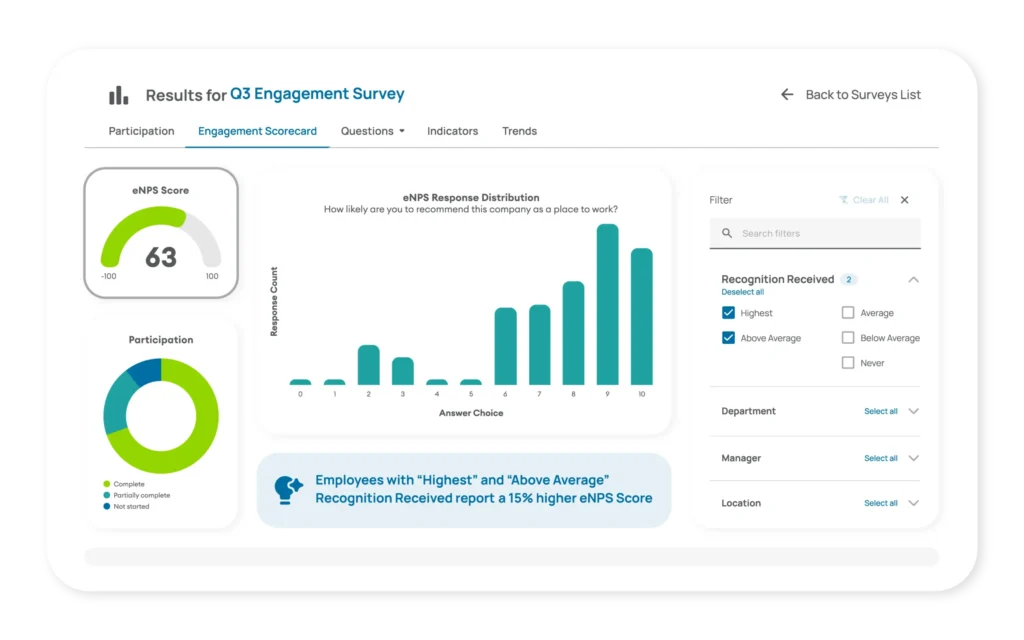
Employee recognition software for mid-sized companies has officially grown up. In North America, fast-scaling organizations are navigating the complex landscape of hybrid work models, increasingly competitive labor markets, and a workforce that expects more than a perfunctory "great job" email once a year. While the intrinsic value of recognition remains paramount, informal and inconsistent programs are no longer sustainable, and the reliance on spreadsheets for tracking these efforts is demonstrably ineffective. This evolution signifies a critical shift in how businesses approach employee engagement and retention, particularly for those in their growth phases.
The stakes involved in effective employee recognition are significant. Research conducted by the Achievers Workforce Institute (AWI) underscores this, revealing that employees who receive meaningful recognition each month are a staggering 12 times more likely to find their work fulfilling and 17 times more likely to feel a strong sense of connection with their colleagues. This data positions employee recognition not merely as a perk, but as a potent strategic advantage for mid-sized companies grappling with rapid expansion, continuous change, and the intense competition for top talent. The ability to cultivate a culture of appreciation is directly linked to employee satisfaction, productivity, and ultimately, business success.
However, for recognition software to truly serve its purpose, it must align with the operational realities of modern organizations. This means being flexible, easy to adopt, and fundamentally designed for human interaction within diverse teams, spanning multiple time zones and integrated with existing digital tools. This comprehensive guide aims to dissect the essential criteria for selecting employee recognition software, with a specific focus on platforms that empower organizations to foster deeper connections, reinforce core values, and drive measurable results as they scale.
The Pillars of Effective Recognition Software for Mid-Sized Enterprises
For mid-sized companies operating in North America, the primary mandate of employee recognition software is to simplify, standardize, and deepen the impact of recognition as the organization expands. This is not a future aspiration, but a present necessity. During this crucial growth phase, company culture is still malleable, but it can also deteriorate rapidly. As teams grow, managers become increasingly stretched, and the onus of recognition can fall upon individual recollection, a system that inevitably falters. The right software solution acts as a silent, supportive force, reinforcing positive habits and scaling connection without transforming recognition into an overlooked or burdensome "program."
Several core components are fundamental to achieving this:
The Power of Peer-to-Peer Recognition
Why it Matters: Mid-sized organizations are often characterized by flatter hierarchies, accelerated decision-making processes, and a highly collaborative environment. In such settings, the individuals who are most likely to witness and appreciate exceptional work are typically colleagues, rather than direct managers.
Illustrative Scenario: Consider a complex client launch involving a cross-functional team. Marketing, sales, and product departments all play integral roles. Peer-to-peer recognition enables immediate, public acknowledgment of contributions, bypassing the need for formal approval chains and fostering a sense of shared accomplishment.
Key Features to Seek: Platforms should facilitate effortless peer nominations, allowing employees to easily express gratitude and highlight specific contributions. Integration with communication tools like Slack or Microsoft Teams can further streamline this process, making recognition a seamless part of daily interactions. The ability to attach comments and specific achievements to these recognitions provides context and amplifies the impact.
Manager-Led Recognition: Sustaining Momentum
Why it Matters: While peer recognition is vital, managers remain instrumental in setting the tone and reinforcing strategic priorities. However, managers are frequently juggling performance management, project deadlines, and team well-being, often relegating recognition to a lower priority unless it is exceptionally easy to execute.
Illustrative Scenario: A manager overseeing a hybrid team dispersed across various locations and time zones needs a streamlined way to consistently acknowledge progress and reinforce key objectives. Recognition software can provide the necessary framework, minimizing administrative overhead and ensuring that appreciation is a regular occurrence, not an afterthought.
Key Features to Seek: Intuitive dashboards for managers to track team progress and identify opportunities for recognition are crucial. Features that allow for the quick awarding of points or badges, linked to specific achievements or behaviors, are highly beneficial. The ability to set recognition budgets and guidelines can also ensure consistency and fairness across teams.
Rewards Catalog Flexibility: Catering to Diverse Motivations
Why it Matters: In today’s diverse workforce, a one-size-fits-all approach to rewards is increasingly ineffective. Employees have varying preferences and motivations, and a well-designed rewards catalog must accommodate this spectrum of desires.
Illustrative Scenario: A frontline employee might prioritize a digital gift card redeemable immediately for everyday needs, while a remote team member might value unique experiences or professional development opportunities. A comprehensive catalog allows for personalized recognition, ensuring that the reward resonates with the recipient.

Key Features to Seek: A broad selection of rewards is essential, encompassing digital gift cards from popular retailers, experiential rewards, charitable donations, merchandise, and options for professional development or wellness. The ability to customize the catalog with company-specific rewards or local offerings can further enhance its appeal.
Real-Time, In-the-Flow Recognition
Why it Matters: The efficacy of any recognition system hinges on its adoption and integration into the daily workflow. If recognition requires logging into a separate platform or feels like an additional task, participation rates will inevitably decline.
Illustrative Scenario: Teams spend a significant portion of their day collaborating within platforms like Slack or Microsoft Teams. Recognition that appears directly within these familiar environments feels natural and organic, eliminating the friction associated with navigating separate systems.
Key Features to Seek: Seamless integrations with widely used communication and collaboration tools are paramount. Features that allow for instant recognition messages to be posted in team channels, complete with relevant emojis or GIFs, can significantly boost engagement. The ability to trigger recognition workflows directly from within these tools ensures that appreciation is timely and contextually relevant.
Values-Based Recognition: Reinforcing Culture
Why it Matters: Recognition should not solely focus on task completion but also on the behaviors and values that drive success. As companies grow, maintaining a cohesive culture becomes more challenging, and values-based recognition provides a critical anchor.
Illustrative Scenario: As a company expands, leaders may worry about the dilution of its core culture. Values-based recognition ensures that desired behaviors are explicitly acknowledged and celebrated, reinforcing expectations and demonstrating how individual contributions align with the company’s mission and ethos.
Key Features to Seek: The ability to tag recognitions with specific company values is a fundamental requirement. This allows organizations to track which values are being most actively demonstrated and to highlight employees who exemplify them. Features that enable the creation of value-specific award programs can further amplify this impact.
Addressing Mid-Sized Company Challenges with Targeted Recognition Features
The true value of recognition software is realized when its capabilities directly address the common pain points experienced by growing mid-sized organizations. As teams expand, work becomes more distributed, and managerial bandwidth becomes a premium, recognition can either scale gracefully or begin to falter. Mapping specific software features to these real-world challenges helps differentiate platforms that offer superficial appeal from those that genuinely support cultural evolution and organizational growth.
Scaling from 300 to 800 Employees
What once sufficed through informal conversations and hallway acknowledgments becomes inadequate as an organization scales. Recognition software introduces necessary structure without sacrificing authenticity, ensuring that culture evolves in tandem with the company rather than becoming lost in its expansion. This structured approach provides a consistent framework for appreciation, regardless of team size or reporting lines.
Supporting Diverse Workforces: Remote, Frontline, and Hybrid
Ensuring that recognition reaches all employees, irrespective of their work location or schedule, is a critical challenge. Platforms must be designed to foster visibility and inclusivity across all roles, locations, and working arrangements, preventing any segment of the workforce from feeling overlooked.
Maintaining Consistency Across Departments and Managers
Without shared tools and standardized processes, recognition efforts can quickly become uneven and inconsistent. Software provides clear guardrails, ensuring that recognition feels fair, frequent, and aligned with organizational objectives, irrespective of an individual’s manager or department.
Flexibility and Scalability: A Prerequisite for Growth
Mid-sized companies are inherently dynamic, characterized by continuous adaptation and evolution. Recognition software must possess a commensurate level of flexibility and scalability to remain effective over time.
Configurable Programs Over Rigid Platforms
Organizations should avoid solutions that impose rigid structures, hindering adaptability. The ideal software offers configurable rules, budgets, and recognition experiences that can evolve alongside the organization’s changing needs. This adaptability ensures that the recognition program remains relevant and impactful.
Modular Design Enhances Adaptability
Rather than monolithic, all-or-nothing suites, the most effective platforms adopt a modular design. This approach allows organizations to implement features as needed and scale their usage over time, rather than being forced to adopt functionalities before they are ready or relevant.
Choosing a Scalable Model
A critical question for mid-sized companies to continually ask is: "Will this solution remain effective as we grow, become more distributed, or increase in complexity?" The recognition software should be capable of supporting these future states.
Recognition software should facilitate:
- Scalable Reward Management: The ability to manage budgets, reward approvals, and redemption processes efficiently as the number of employees and recognition events increases.
- Dynamic User Management: Easy onboarding and offboarding of users, along with the ability to manage permissions and roles as the organizational structure changes.
- Global Reach: For companies with international operations, support for multiple currencies, languages, and regional reward preferences is essential.
- Future-Proofing for Evolving Needs: The platform should have a roadmap that anticipates future workplace trends, such as the increasing integration of AI or new communication channels, ensuring long-term relevance.
Ultimately, recognition software should enhance the human element of work, not complicate it. For mid-sized companies, the right capabilities not only support immediate recognition needs but also lay the foundation for scaling culture, connection, and performance well into the future.
A Strategic Approach to Evaluating Recognition Software for Growing Mid-Sized Companies
It’s often the case that most recognition platforms appear compelling at first glance. However, the true differentiator lies in how well the software aligns with the practical realities faced by mid-sized organizations. A structured evaluation process can help narrow down the options effectively before diving into direct comparisons.
Prioritizing Usability and Adoption
The most feature-rich platform is ineffective if employees do not utilize it. Adoption hinges on several key factors for mid-sized companies:
- Intuitive User Interface: The platform should be easy to navigate for both givers and receivers of recognition, requiring minimal training.
- Seamless Integration: Recognition should feel like a natural extension of existing workflows, not an additional system to learn.
- Mobile Accessibility: With a significant portion of the workforce often on the go, a robust mobile application is essential for consistent engagement.
- Social and Engaging Experience: Gamification elements, leaderboards, and social feeds can make recognition more dynamic and encourage broader participation.
If recognition feels like "one more system," participation will inevitably decline. The most successful platforms integrate unobtrusively into daily work.
Leveraging Integrations for Real-World Workflows
Recognition should not operate in isolation. Strong mid-market platforms integrate with:
- Communication Tools: Slack, Microsoft Teams, and other collaboration platforms are essential for timely and contextual recognition.
- HRIS/HCM Systems: Seamless integration with systems like Workday, BambooHR, or ADP ensures accurate employee data and streamlined administration.
- Single Sign-On (SSO): Simplifies user access and enhances security.
Bonus points are awarded if insights can be aggregated automatically, eliminating the need for manual data exports and complex spreadsheet analysis.
Focusing on Insight, Not Just Activity
Recognition data is only valuable if it provides actionable intelligence. Mid-sized HR teams should seek reporting capabilities that answer critical questions, such as:
- Which values are most frequently recognized? This highlights cultural strengths and areas for reinforcement.
- What behaviors are being rewarded? This provides insight into performance drivers and desired actions.
- Are recognition efforts reaching all employee segments? This helps identify potential disparities and ensure equity.
- What is the correlation between recognition and employee engagement metrics? This demonstrates the ROI of recognition initiatives.
If a platform merely tracks the volume of points awarded, it’s likely missing the broader strategic picture.
A Quick Gut Check Before Proceeding
Before delving into vendor comparisons, it’s prudent to ask:
- Does this platform feel human-centric? Does it prioritize genuine connection and appreciation?
- Is it designed for growth? Can it adapt to our evolving needs and scale with our workforce?
- Does it align with our company culture? Will it reinforce our values and desired behaviors?
If the answers to these questions are ambiguous, it’s wise to continue the search.
Streamlining the Selection Process for Sanity and Efficiency
Selecting recognition software doesn’t have to be an arduous, multi-month undertaking. A structured approach can significantly simplify the process.
Purposeful Shortlisting
Limit your shortlist to platforms that unequivocally meet your non-negotiables:
- Core Functionality: Does it offer the essential recognition features (peer-to-peer, manager-led, etc.) you require?
- Integration Capabilities: Does it integrate with your critical existing systems?
- Scalability: Is it demonstrably built to grow with your organization?
- Budget Alignment: Does it fit within your allocated financial resources?
More options do not necessarily lead to better decisions; they often result in more demos and prolonged evaluation periods.
Strategic Demo Planning
Demos are where robust platforms distinguish themselves, and where superficial offerings can falter. During demonstrations, vendors should be asked to showcase:
- End-to-End User Experience: From sending recognition to redeeming rewards, demonstrate the entire process.
- Integration Functionality: Show how the platform connects with your existing tools.
- Reporting and Analytics: Provide concrete examples of how insights are generated and presented.
- Customization Options: Demonstrate the flexibility of the platform to adapt to your specific needs.
Transparency regarding what is not included is equally important.
Early Stakeholder Alignment
Recognition impacts more than just the HR department. Engaging relevant stakeholders early is crucial:
- Department Heads: To understand their team’s specific needs and potential benefits.
- IT Department: To assess integration feasibility and security protocols.
- Finance Department: To review budget implications and ROI projections.
- Employee Representatives: To gather feedback on user experience and perceived value.
Upfront alignment prevents rework and significantly eases buy-in.
Confident Comparison
Once the groundwork is laid, comparison becomes more straightforward. The focus shifts from "Is this good?" to "Is this the right fit for us?" This leads to more informed decision-making and a faster path to implementation.
Evaluating Top Employee Recognition Software Solutions for Mid-Sized Companies
The following platforms represent leading options for mid-sized organizations seeking to enhance their employee recognition strategies, each with distinct strengths and ideal use cases.
1. Achievers
G2 Rating: 4.6/5
Strengths: Achievers offers a comprehensive employee recognition and rewards platform designed to foster genuinely connected workplaces. It excels in helping mid-sized and enterprise organizations cultivate environments where employees understand their impact, feel consistently appreciated, and see how their contributions align with larger organizational goals. The platform supports both peer-to-peer and manager-led recognition, underpinned by a robust global rewards marketplace and seamless integrations with daily work tools. What distinguishes Achievers is its perspective on recognition as a continuous system, rather than isolated moments. It facilitates frequent, in-the-flow recognition tied directly to company values and observable behaviors. Over time, this consistent activity generates rich, actionable data that HR teams can leverage to understand the drivers of engagement, alignment, and performance. This approach minimizes guesswork and superficial "feel-good" programs, prioritizing measurable impact.
Best For: Mid-sized companies aiming for scalable recognition programs that grow with their workforce. It is particularly well-suited for organizations looking to support hybrid teams, solidify company culture, and gain meaningful insights without introducing undue complexity.
Key Features:
- Integrated Recognition & Rewards: Combines social recognition with a diverse global rewards catalog.
- Values-Based Recognition: Explicitly links recognition to company values and behaviors.
- Seamless Integrations: Connects with popular HRIS and collaboration tools.
- Actionable Insights: Provides deep analytics on recognition trends, engagement, and performance drivers.
- Global Reach: Supports diverse workforces with multi-currency and multi-language capabilities.
Limitations: Achievers is meticulously engineered for organizations prioritizing scale and significant impact. Very small teams or nascent startups might find its comprehensive feature set and analytical depth to be more than initially required.
Review: "I have worked with many vendors and I have never received the level of service that I have from everyone at Achievers, especially our Client Success Manager. I have worked with many other vendors – Taleo, Oracle, as well as Jive – and I have never had such a responsive internal team." – Heather Markle, Manager Rewards & Recognition, AutoTrader Group, Human Resources.
2. Guusto
G2 Rating: 4.9/5
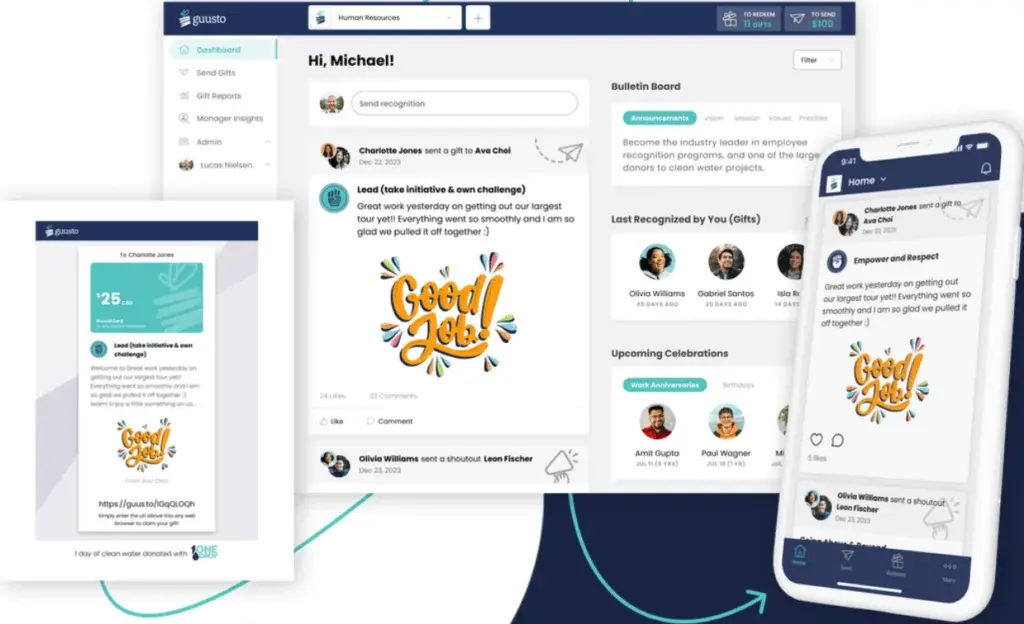
Strengths: Guusto stands out for its simplicity and its strategic focus on reaching frontline and deskless employees. The platform streamlines reward distribution, enabling organizations to send digital gift cards and recognition through various channels, including SMS, QR codes, email, and even printed materials. This accessibility makes Guusto an excellent choice for teams that may not have consistent access to email or traditional workplace collaboration tools. Its ease of use ensures that recognition can be delivered quickly and efficiently, directly to the employee.
Best For: Mid-sized organizations with a significant proportion of frontline or hourly workers who require a straightforward, low-friction method for distributing rewards and recognition without mandating platform logins for every employee.
Key Features:
- Multi-Channel Delivery: Supports recognition via SMS, QR codes, email, and print.
- Simple Reward Redemption: Easy for employees to access and use their rewards.
- Focus on Frontline Workers: Designed for accessibility across diverse work environments.
- Global Brands: Offers a wide selection of popular global brand gift cards.
Limitations: Guusto’s analytics and reporting capabilities are more focused on reward distribution and basic usage rather than offering deep insights into behavioral trends, cultural impact, or performance correlations. This may limit its utility for organizations seeking strategic data to inform broader HR initiatives.
Review: "What I like most about Guusto is how easy it makes recognizing people in a genuine way. Instead of dealing with complicated points or systems, you can just send a real gift right away, which feels a lot more personal." – Pooja G., Insurance Advisor, Small business, via G2.
3. Nectar
G2 Rating: 4.7/5
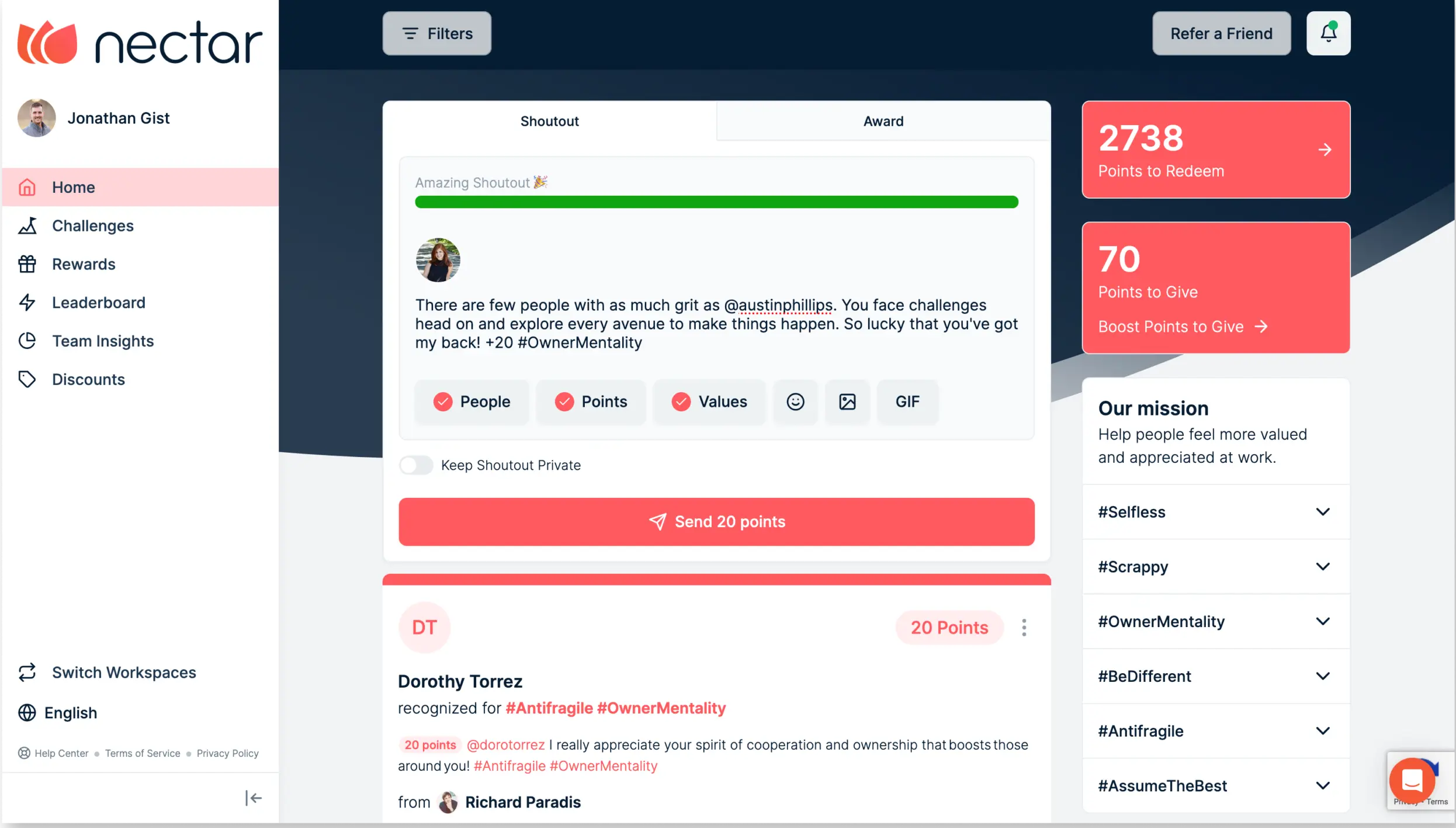
Strengths: Nectar is an employee recognition and rewards platform designed to make everyday appreciation visible, social, and sustainable. It adeptly combines peer-to-peer recognition, points-based rewards, milestone celebrations, and team challenges into a single, user-friendly interface. A key advantage of Nectar is its integration with common workplace tools like Slack and Microsoft Teams, enabling recognition to occur organically within existing workflows rather than necessitating access to a separate, dedicated system. This approach fosters a more natural and continuous flow of appreciation.
Best For: Mid-sized companies seeking a straightforward, budget-friendly recognition platform that effectively encourages peer recognition and visible appreciation across teams. It’s ideal for organizations prioritizing ease of use and social engagement in their recognition efforts.
Key Features:
- Social Recognition Feed: Promotes visibility and engagement through a shared feed of recognitions.
- Points-Based Rewards System: Allows employees to accumulate points for redemption.
- Milestone Celebrations: Facilitates recognition for significant work anniversaries and achievements.
- Integration with Collaboration Tools: Seamlessly connects with Slack and Microsoft Teams.
Limitations: Nectar’s reporting capabilities, behavioral insights, and program customization options are less extensive compared to enterprise-grade platforms. This can present challenges for growing organizations aiming to deeply connect recognition activities with long-term cultural objectives, performance metrics, and retention strategies.
Review: "When we first started using Nectar, it was so intuitive, that we were able to jump right in to using it. Nectar is very easy to use. I can navigate smoothly between redeeming my own rewards and giving out rewards to others." – Jennifer R., Curriculum and Instruction Specialist, Mid-market, via G2.
4. Motivosity
G2 Rating: 4.7/5
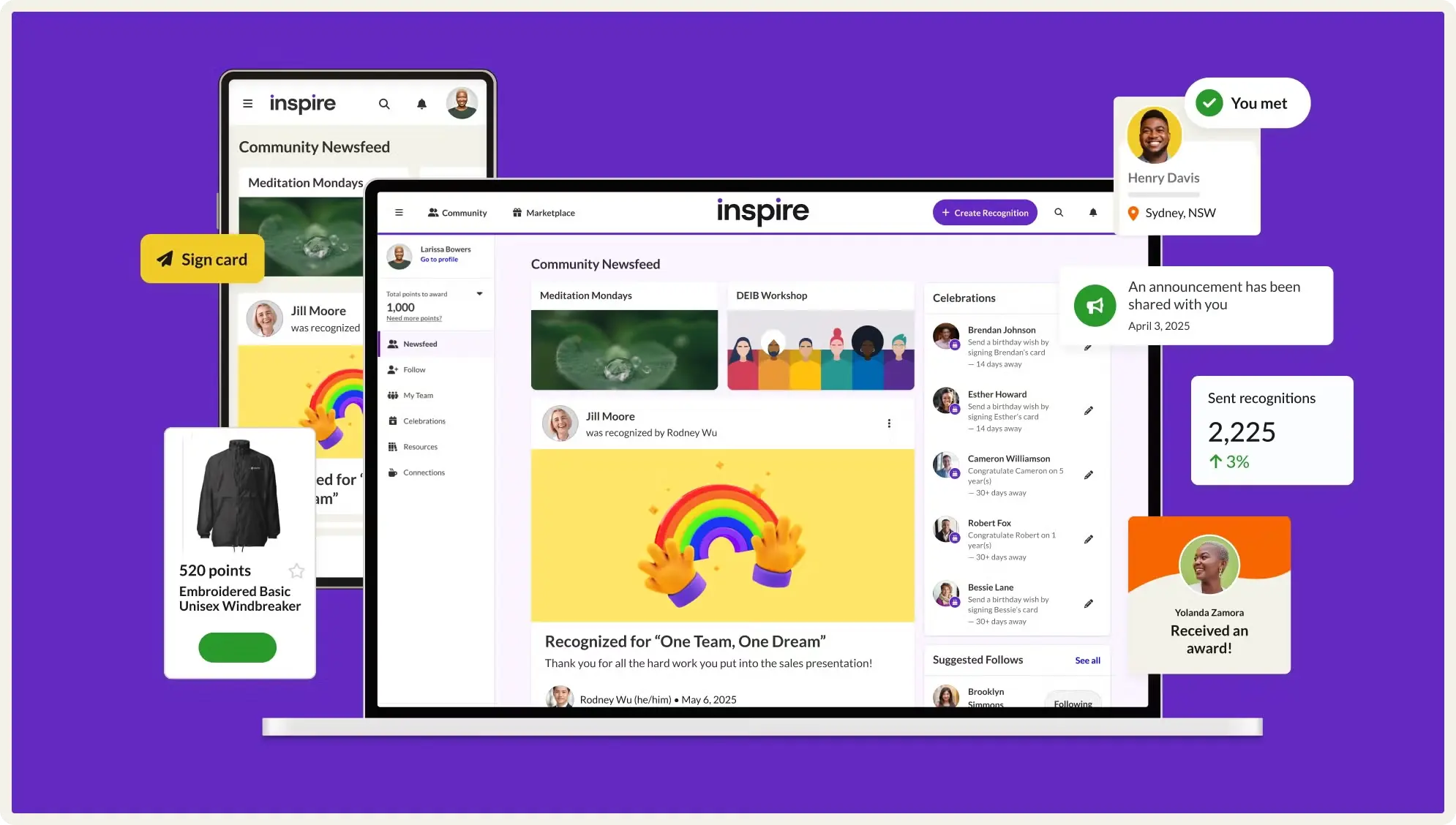
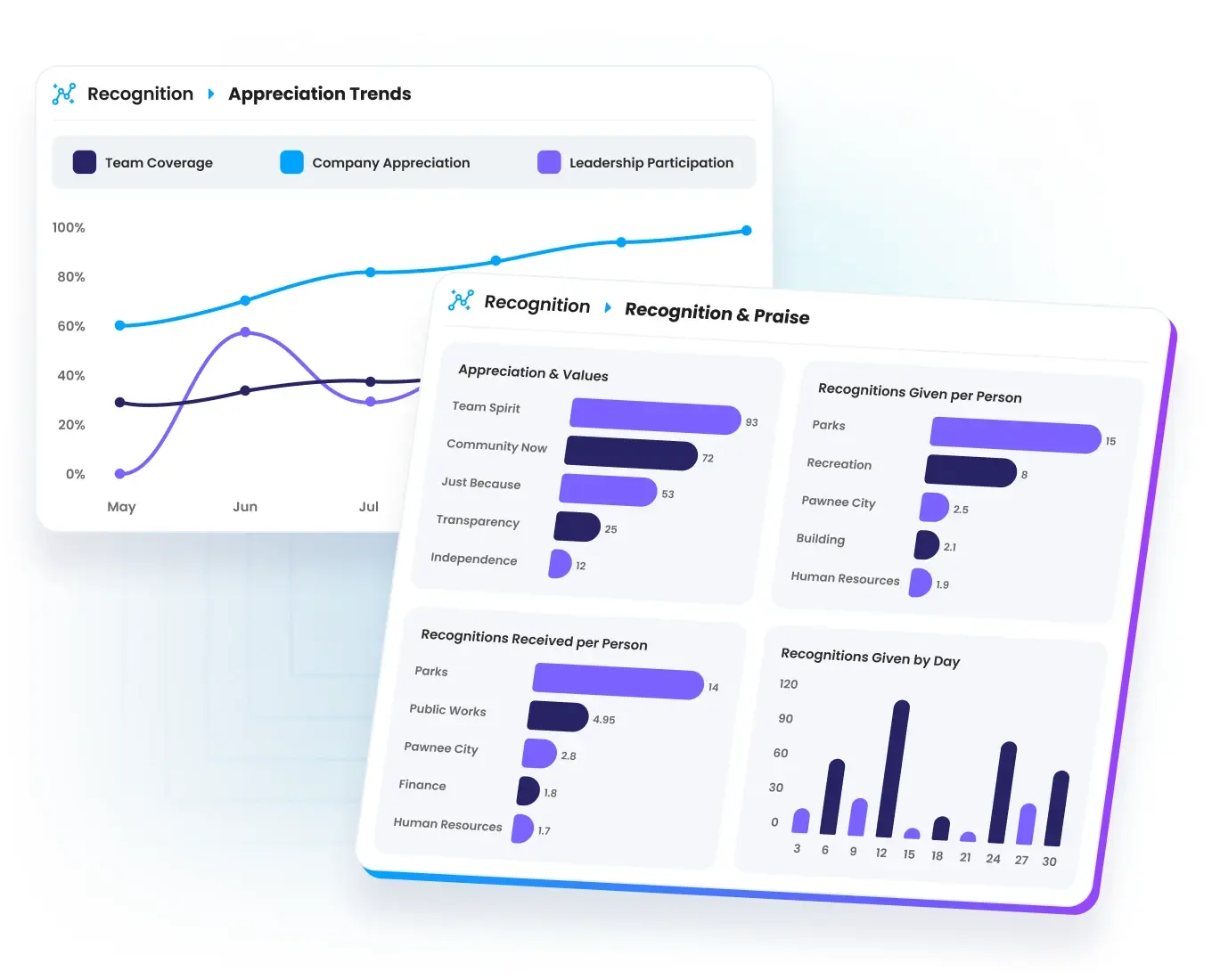
Strengths: Motivosity is an employee recognition and rewards platform specifically engineered to cultivate connection, appreciation, and community within mid-market and enterprise organizations. It ingeniously merges peer-to-peer recognition, manager-driven awards, milestone acknowledgments, and spot bonuses within a social, feed-based experience designed to maximize visibility and frequency. The platform places a significant emphasis on social connection, featuring employee profiles, organizational charts, and community spaces that encourage interaction beyond formal recognition events. This holistic approach aims to build a more engaged and connected workforce.
Best For: Mid-sized organizations that prioritize a socially driven recognition platform to enhance visibility, foster deeper connections, and boost participation across all teams. It is ideal for companies that believe a strong social fabric is key to employee engagement.
Key Features:
- Social Recognition Feed: Centralizes recognition activities in a dynamic, engaging feed.
- Employee Profiles & Org Charts: Enhances visibility and understanding of team members.
- Community Features: Encourages interaction and belonging beyond formal recognition.
- Manager and Peer Recognition: Supports multiple avenues for appreciation.
Limitations: Motivosity’s recognition data and reporting tend to focus more on participation metrics and activity levels rather than providing deep behavioral or performance insights. This may present a limitation for organizations seeking to draw clearer strategic connections between recognition initiatives, business outcomes, and retention rates as they scale.
Review: "I loved using Motivosity. Being a new employee it was such a fun way to get to know my coworkers. It always performed well and the user experience was easy to get into. Also loved the personality quiz. I don’t know what the price is for our team to use, but to me money well spent and great for employee retention." – Jenna B., Account Manager, Small-Business, via G2.
5. Terryberry
G2 Rating: 4.6/5
Strengths: Terryberry is an established employee recognition and engagement platform with a long history in service awards and milestone recognition. The platform effectively integrates peer-to-peer and manager-led recognition, service anniversaries, symbolic awards, and a global rewards marketplace that includes both digital and physical rewards. Its legacy in service awards makes it a strong contender for organizations that place a high value on celebrating employee tenure and significant career milestones.
Best For: Mid-sized organizations that prioritize service awards, milestone celebrations, and traditional recognition programs, while also seeking basic engagement tools. It’s a solid choice for companies with a strong emphasis on acknowledging long-term employee commitment.
Key Features:
- Service Awards & Milestones: Robust features for celebrating employee anniversaries.
- Global Rewards Marketplace: Offers a diverse selection of tangible and intangible rewards.
- Symbolic Awards: Provides options for unique and meaningful recognition items.
- Peer and Manager Recognition: Supports multiple recognition channels.
Limitations: Terryberry’s recognition experience and analytical capabilities are primarily geared towards program administration and milestone tracking. This may offer less visibility into real-time, behavior-driven recognition patterns, which can be a drawback for organizations aiming to modernize their approach and gain deeper insights into everyday employee contributions as they grow.
Review: "I like how easy the Terryberry platform is to use. I also value the new birthdays collection, the reporting features, and the rewards platform a lot. These features are important to me and I use all of them frequently. Switching to Terryberry from our homegrown platform was a positive change because Terryberry is user-friendly." – Elizabeth C., Mid-market, via G2.
The Ultimate Goal: Recognition Software That Delivers Measurable Results and Scales with Your Business
At its core, effective recognition must drive tangible behavioral change. This is precisely where platforms like Achievers aim to excel. Engineered to foster frequent, meaningful recognition within the natural flow of work, Achievers empowers mid-sized companies to strengthen employee connections, reinforce core values, and transform everyday moments into measurable improvements in engagement, productivity, and retention. It offers a blend of human-centric appreciation and systematic performance, shaping culture while propelling business objectives forward.
For organizations still navigating the complex landscape of employee recognition software selection, understanding these key differentiators is crucial. By focusing on platforms that not only facilitate appreciation but also provide actionable insights and scalability, mid-sized companies can turn recognition into a powerful engine for sustained growth and a more engaged, motivated workforce. The right recognition strategy, supported by the right technology, is no longer a mere perk; it is a fundamental component of a thriving, competitive business.