The evolution of employee feedback mechanisms has transformed significantly from rudimentary annual surveys and static suggestion boxes into sophisticated, always-on listening platforms. These advanced tools now empower Human Resources (HR) teams to maintain a continuous pulse on employee sentiment, offering granular insights into engagement, retention, and organizational culture. This shift reflects a growing understanding that timely, actionable feedback is critical for fostering a dynamic and resilient workforce. As organizations navigate the complexities of modern work environments, the demand for intelligent, integrated feedback solutions is projected to escalate, making the selection of appropriate tools a strategic imperative for 2026 and beyond.

The Paradigm Shift: From Periodic Check-ins to Continuous Dialogue
Historically, employee feedback was often a reactive and infrequent exercise. Companies typically relied on laborious annual engagement surveys, which, while providing a snapshot, often missed the nuances of day-to-day employee experience and failed to capture issues before they escalated. The digital revolution, coupled with an increasing focus on employee experience (EX) as a competitive differentiator, catalyzed a fundamental shift. The rise of remote and hybrid work models further accelerated this need for continuous, asynchronous communication channels. HR leaders recognized that a proactive approach, rooted in real-time data, was essential to understand evolving employee needs, identify potential attrition risks, and cultivate a truly supportive culture.
According to a 2023 report by Grand View Research, the global employee engagement software market size was valued at USD 1.7 billion in 2022 and is expected to grow at a compound annual growth rate (CAGR) of 10.7% from 2023 to 2030, underscoring the rapid expansion and increasing strategic importance of these solutions. This growth is driven by the realization that engaged employees are more productive, innovative, and loyal, directly impacting business outcomes.
Key Attributes Defining Modern Feedback Tools
Not all feedback tools offer the same depth or breadth of insight. The most effective platforms transcend simple data collection, providing a holistic view of the employee journey and actionable intelligence to guide HR interventions. Several key features have emerged as crucial for organizations seeking comprehensive employee feedback solutions:
- Real-time Data and Analytics: The ability to capture and analyze feedback instantly, moving beyond delayed annual reports.
- AI-Powered Sentiment Analysis: Utilizing artificial intelligence and machine learning to interpret qualitative feedback, identifying underlying emotions and trends.
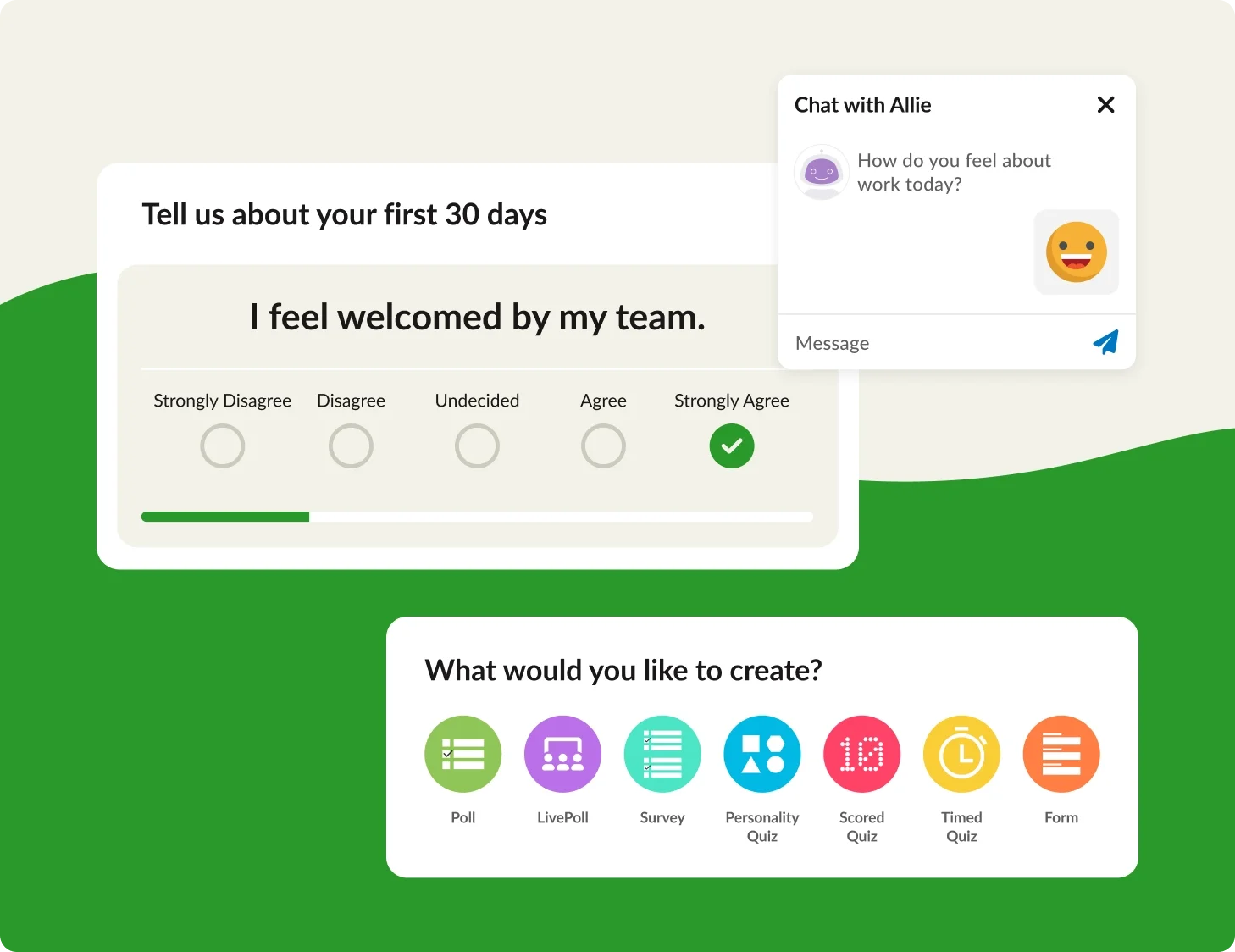
- Customizable Survey Capabilities: Flexibility to design surveys tailored to specific organizational needs, departments, or lifecycle stages (e.g., onboarding, exit).
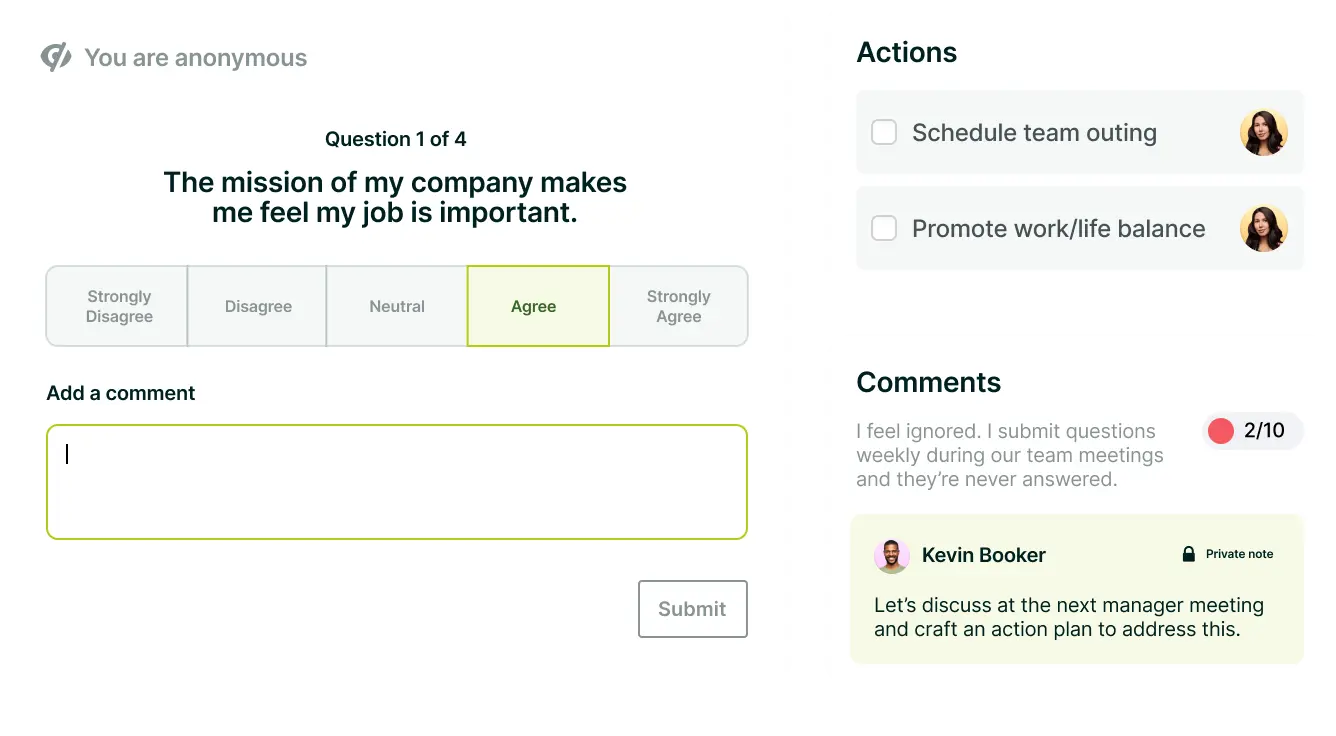
- Action Planning and Tracking: Tools that facilitate the creation of concrete action plans based on feedback, with mechanisms to track progress and measure impact.
- Integration with Existing HR Systems: Seamless connectivity with HRIS, payroll, and communication platforms (e.g., Slack, Microsoft Teams) for streamlined workflows and data consistency.
- Anonymity and Trust: Robust mechanisms to ensure employee anonymity, fostering a safe environment for honest feedback.
- Global Scalability: Support for multiple languages and regions, essential for multinational corporations and distributed teams.
- Unified Employee Experience: Integrating feedback with other EX components like recognition, performance management, and learning and development.
Leading the Charge: Top Employee Feedback Tools for 2026
The market for employee feedback tools is vibrant and diverse, with platforms offering varied strengths to cater to different organizational sizes and strategic priorities. Here’s an overview of some of the leading contenders shaping the landscape in 2026:
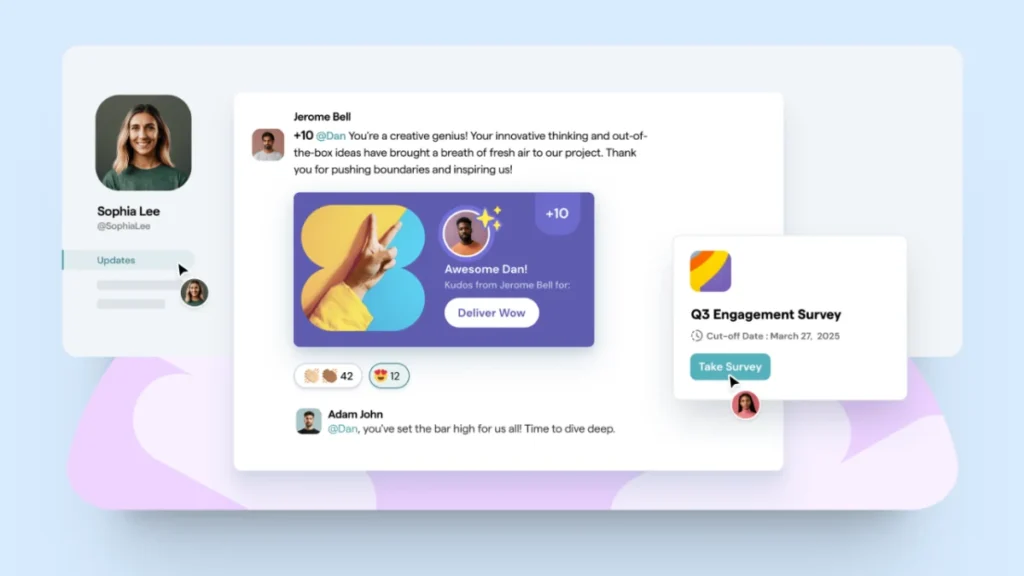
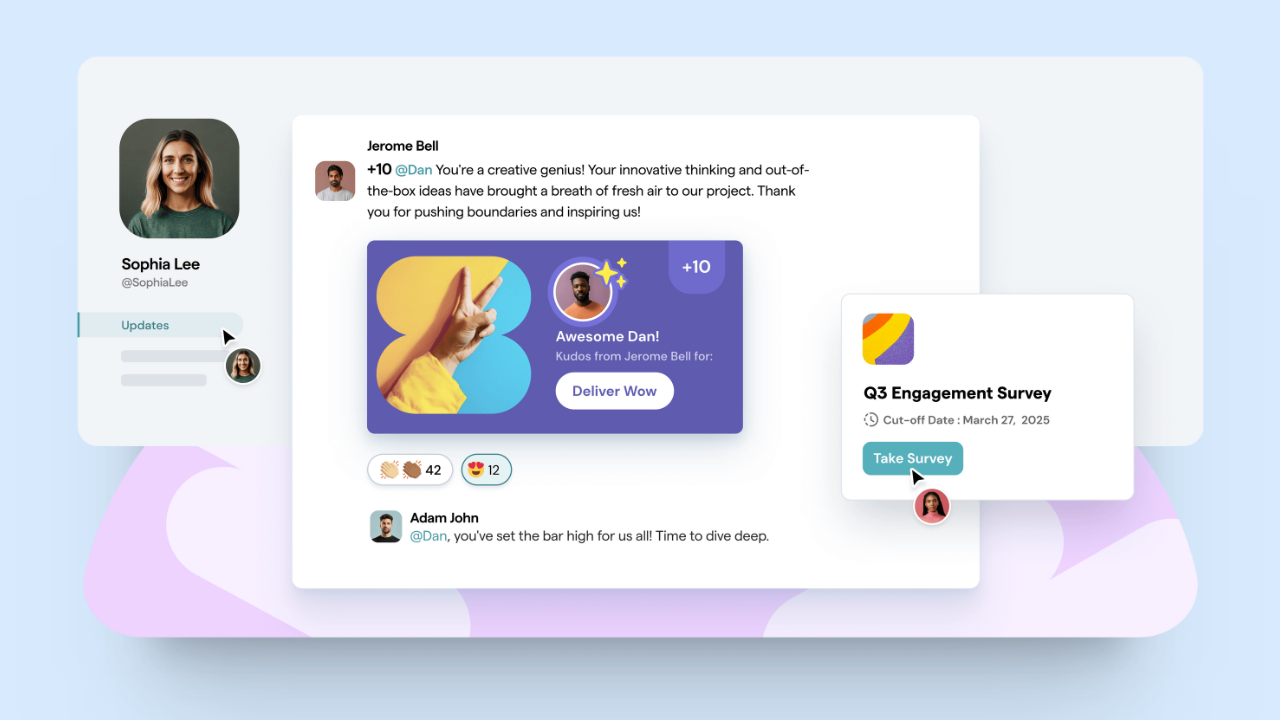
1. Achievers: Renowned for its unified recognition and Voice of Employee (VoE) platform, Achievers excels at connecting appreciation with feedback across the entire employee lifecycle. Its robust VoE solution provides over 100 customizable templates and flexible survey tools, transforming collected data into actionable insights through real-time dashboards and self-serve reporting. Achievers is particularly suited for mid-market to enterprise organizations that require advanced analytics and seamless HRIS integrations (Workday, Slack, Microsoft Teams, UKG, SAP, LinkedIn) to understand drivers of engagement, culture, and retention. Kyaisia K., a G2 reviewer, praises its intuitive design and focus on "building a culture of appreciation and connection," highlighting its impact on morale and belonging. While designed for scale, its comprehensive capabilities make it a long-term investment for growing global organizations.
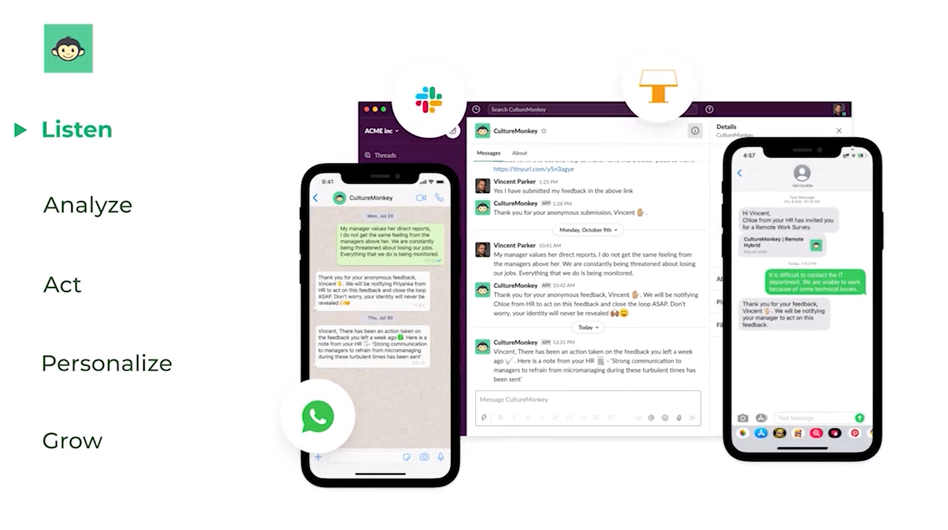
2. CultureMonkey: This platform focuses on measuring and enhancing engagement through customizable surveys, anonymous feedback, and AI-powered sentiment analysis. CultureMonkey tracks eNPS and engagement scores, visualizing results via real-time dashboards and automating survey delivery across the employee lifecycle. Its multilingual support makes it ideal for distributed teams, aiming to provide a scalable, data-focused platform for understanding employee sentiment. Mandy W., General Manager People, lauded its "excellent automated tool for all your surveying needs," emphasizing its user-friendliness and great reporting insights. Its strength lies in measurement, though it offers fewer features for recognition or continuous performance enablement.
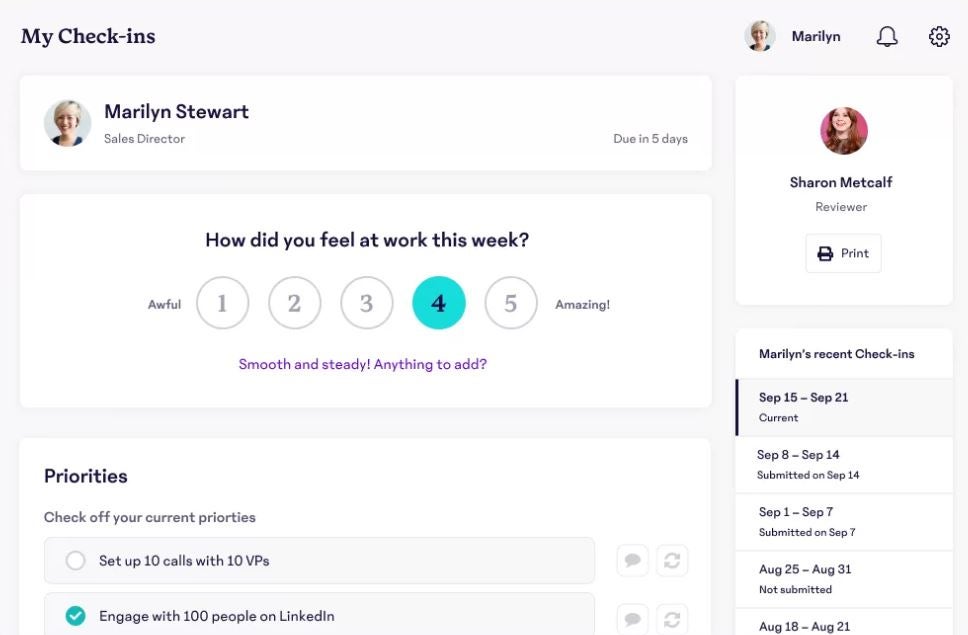
3. 15Five: Combining engagement, performance, and manager development, 15Five leverages AI and machine learning to analyze survey data and pinpoint high-impact action areas. The platform supports focused action plans, progress tracking, and outcome measurement with real-time dashboards, along with lifecycle surveys and customizable templates. It is best for organizations seeking a data-driven platform that links engagement insights directly to performance. A Capterra reviewer noted its "top-tier reporting" but suggested that the "repetitive survey questions over time" and simple recognition features could lead to decreased engagement.
4. ThriveSparrow: Designed to translate employee feedback into measurable actions, ThriveSparrow integrates engagement surveys, performance tools, and collaborative action planning. It provides managers and teams with structured ways to address improvement areas through built-in checklists, task tracking, and performance insights, fostering a closed-loop feedback process. It offers integrations with Slack, Google Workspace, and BambooHR. While user-friendly for action planning, a G2 review wished for "better flexibility in customizing reports and survey templates" and "smoother integration with other HR tools."
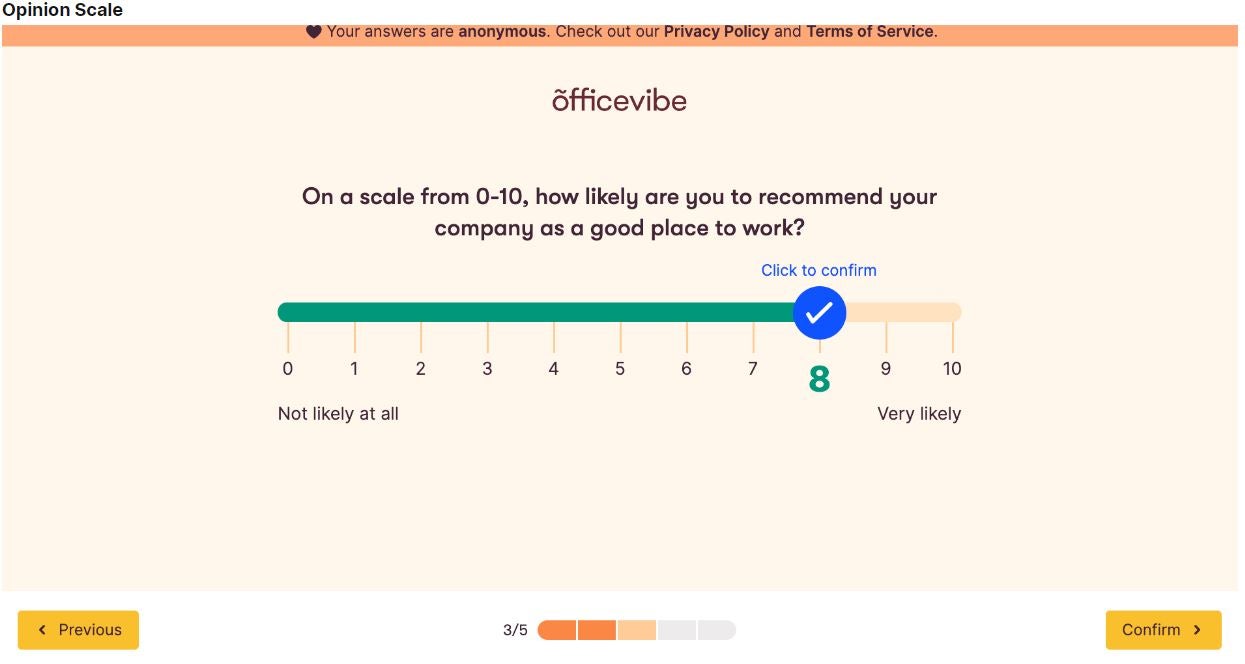
5. Officevibe (Workleap): Acquired by Workleap, Officevibe facilitates feedback collection and action through pulse surveys, AI insights, and lightweight recognition tools. It supports peer recognition via customizable digital cards, anonymous feedback channels, and manager coaching. Its AI capabilities summarize feedback, identify engagement trends, and suggest actionable steps for managers. It’s well-suited for small to midsize organizations prioritizing regular feedback and peer recognition, integrating with Microsoft Teams and Slack. While easy to use, a G2 review noted its LMS focus, suggesting that "a couple of features could be added to make it an even more central tool," such as incorporating in-person activities.
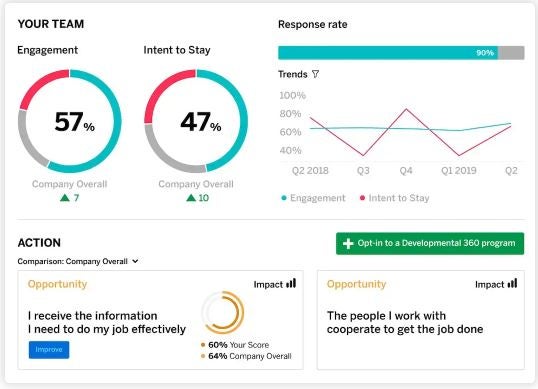
6. Qualtrics: As an experience management platform, Qualtrics collects and analyzes feedback across various stakeholders, including employees, customers, and markets. Its Employee Experience suite supports extensive survey programs, lifecycle feedback, and AI-powered predictive analytics. The platform features detailed dashboards, automated workflows, and advanced segmentation, helping organizations correlate feedback with engagement and performance outcomes. Gartner reviews praise it as an "Excellent Customer Feedback Management tool." Its strength lies in research-grade analytics, though it tends to rely on traditional survey cycles rather than continuous, in-the-flow engagement.
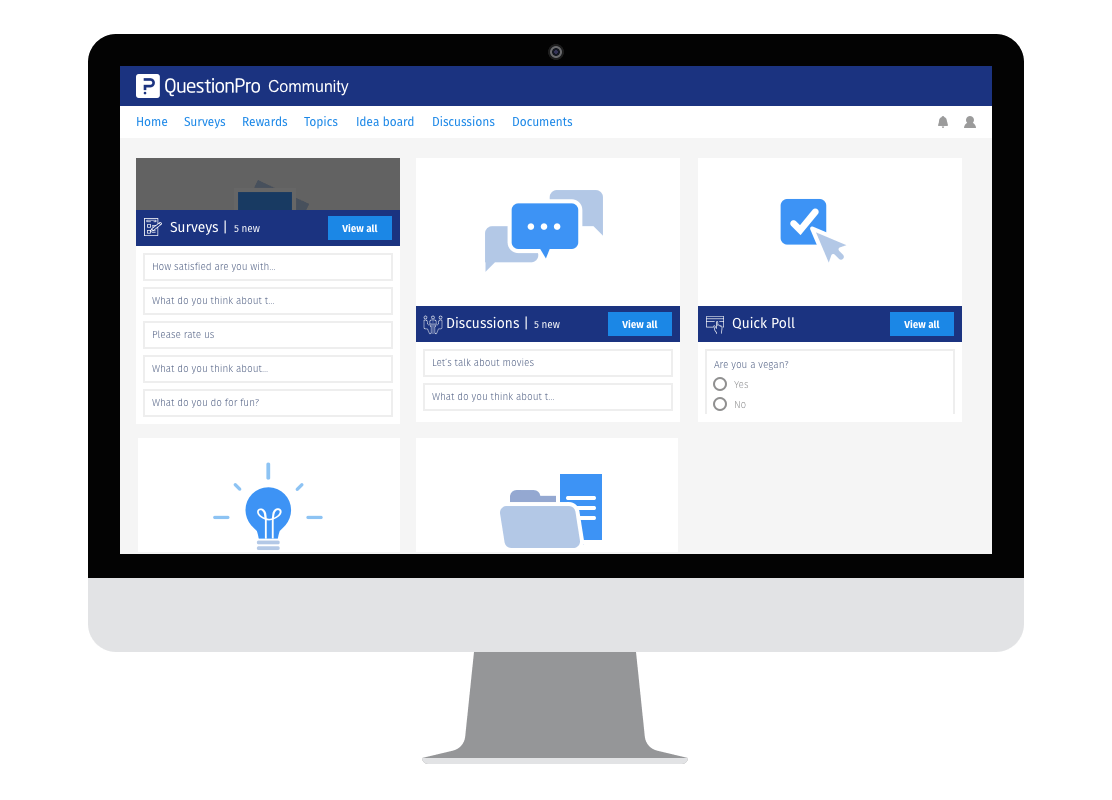
7. QuestionPro: This comprehensive platform enables the collection and analysis of employee, customer, and market feedback. Its Employee Experience suite includes 360 feedback, lifecycle, and pulse surveys with real-time reporting and customizable templates. QuestionPro supports multilingual surveys, advanced data visualization, and benchmarking tools, integrating with Microsoft Teams, Slack, Salesforce, and Workday. Samantha, a Partnerships and Operations Manager, found it "pleasantly surprising" how easy it was to design questionnaires. It prioritizes survey design and analytics, offering fewer tools for continuous recognition.
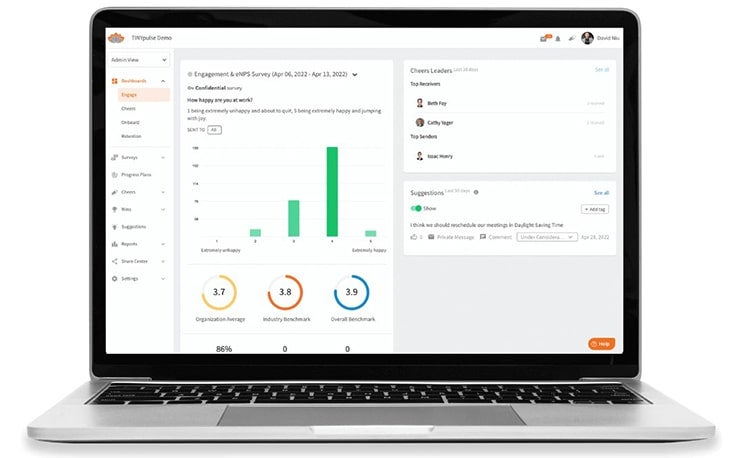
8. TINYpulse by WebMD Health Services: Focused on gathering feedback and fostering recognition, TINYpulse utilizes simple, research-backed tools. It offers pulse surveys, anonymous two-way messaging, and "Cheers for Peers" recognition features to promote appreciation. Leaders can track engagement drivers, access analytics, and implement guided action plans. It integrates with Slack and Microsoft Teams. Tina H., Chief of Staff, appreciated its anonymous nature and comparative industry data, noting its overall ease of use for collecting employee feedback. While strong in surveys and peer recognition, it offers limited depth in advanced analytics or global reward systems.
9. Quantum Workplace: An all-in-one platform connecting engagement, performance, and development, Quantum Workplace offers surveys, goal tracking, 1-on-1s, recognition, and performance reviews. Its feedback tool incorporates peer and manager feedback, AI-assisted writing prompts, and automated feedback cycles. It integrates with Microsoft Teams, Slack, and Workday. Philip, an Internal Communications Manager, highlighted the robust filtering options in survey results but cautioned about the need for careful and consistent data handling. Its focus is on performance management and structured feedback, with limited real-time recognition.
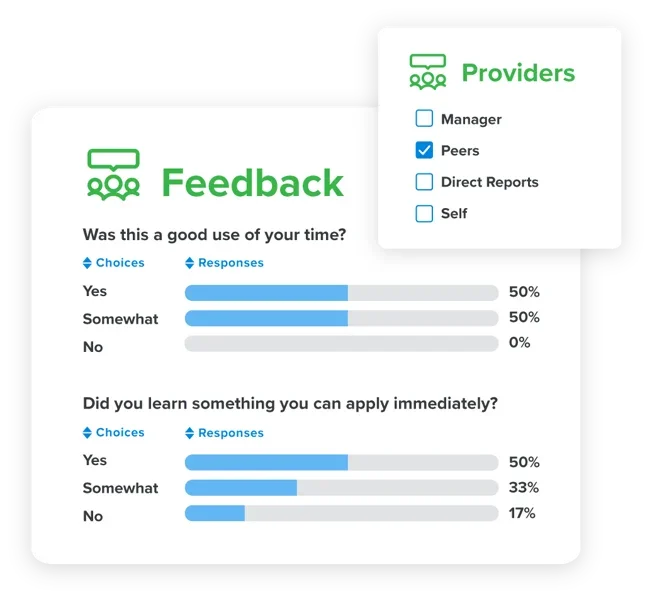
10. Culture Amp: This platform integrates engagement, performance, and development, backed by extensive people science research. Its AI-driven features assist managers in collecting feedback, setting goals, and tracking progress through continuous performance conversations, offering 360 feedback, one-on-ones, and pre-built survey templates. It integrates with Slack, Microsoft Teams, BambooHR, and Workday. Dmitry D., an HRP Specialist, praised its intuitive interface and ability to foster "healthy relationships within a team." Culture Amp excels in structured performance and survey cycles but offers limited recognition capabilities.
11. Lattice: Combining performance management, engagement, and compensation in an AI-powered platform, Lattice helps HR teams manage feedback, reviews, goals, and pay decisions from a single system. It includes built-in analytics, AI writing assistance, and personalized coaching tools. It integrates with Slack, Microsoft Teams, and Workday. A Gartner review noted complexities in filling out goals and objectives, and challenges with managers sending feedback. Lattice focuses on performance and HR processes, rather than continuous recognition.
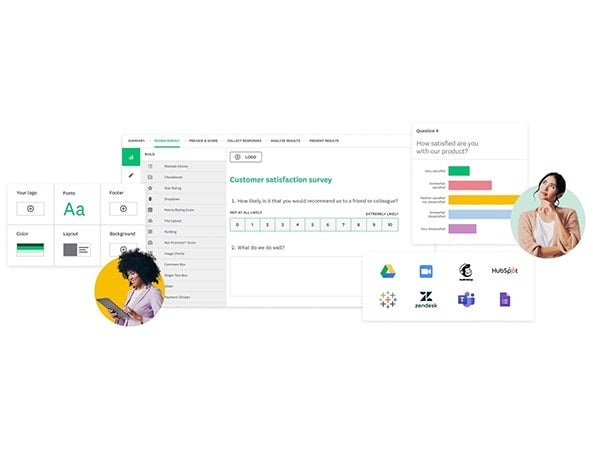
12. SurveyMonkey: A leading platform for creating and analyzing surveys across various experience programs (customer, market, employee), SurveyMonkey offers AI-powered survey creation, sentiment analysis, and automated insights. It’s highly flexible and easy-to-use for collecting feedback across multiple audiences, with integrations to Google Sheets, Tableau, and Salesforce. A Capterra review highlighted its user-friendly interface and advanced logic capabilities for large-scale surveys but suggested improvements in data presentation for visualization. While excellent for data gathering, transforming insights into actionable change often requires additional support.
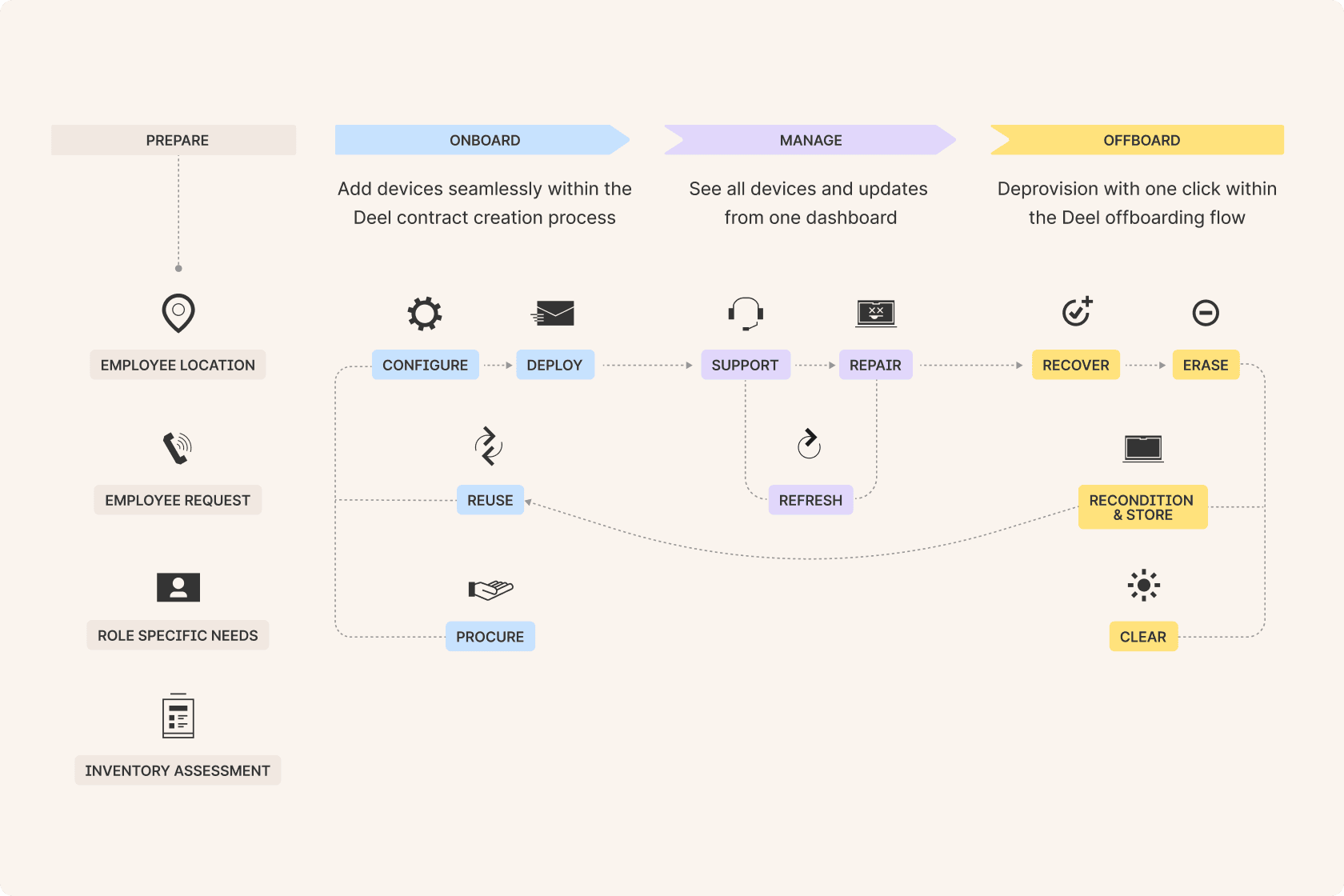
13. Deel: Deel unifies HR, payroll, and engagement, particularly for distributed and international teams. Deel Engage builds on this foundation with AI-powered surveys, career development, and training programs, all within the same system used for payroll and compliance. This integration ensures seamless data and insights flow across teams. It integrates with Workday, BambooHR, Slack, and Microsoft Teams. A Capterra review from a coach praised its efficiency for international nomads, stating "My earnings arrive in time and in my country’s currency." While strong in compliance and payroll, its recognition features do not cover the ongoing moments that drive performance and belonging.
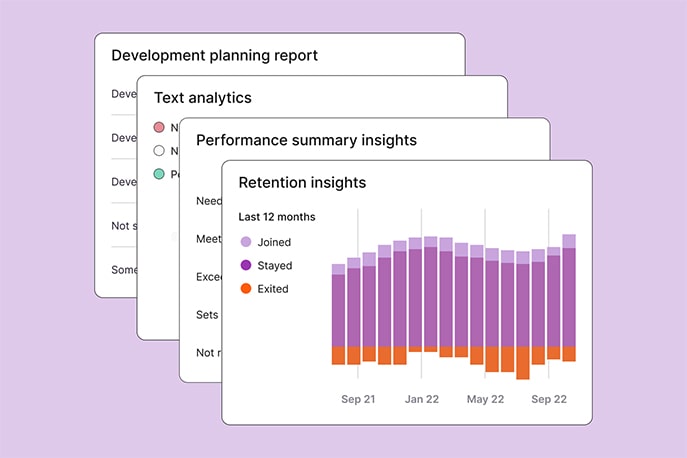
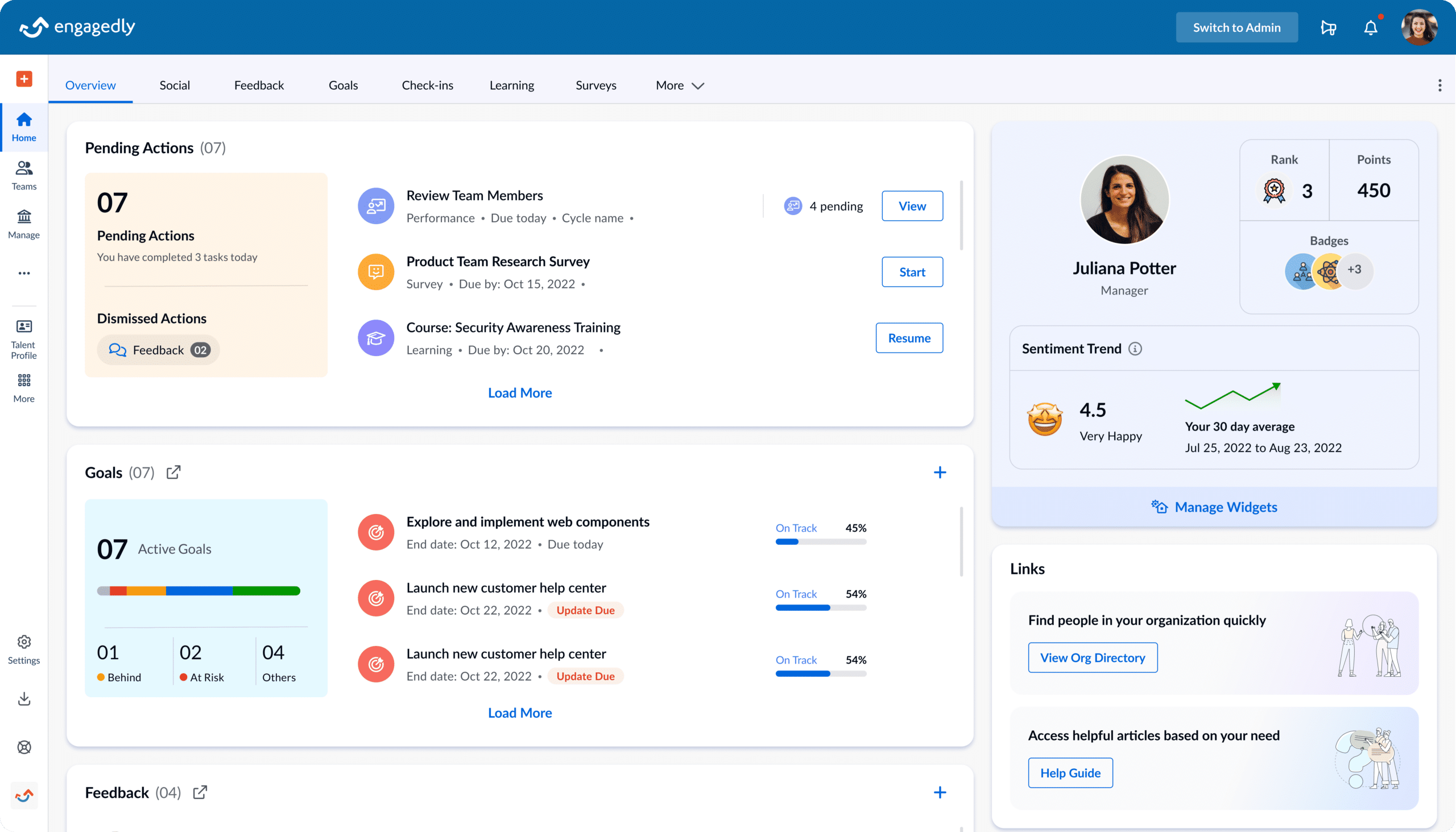
14. Engagedly: This platform converges performance, learning, engagement, and recognition using AI and gamification to make development interactive and feedback actionable. It covers goal tracking, 360 reviews, personalized learning paths, and real-time engagement insights, aiming to foster a connected, growth-focused culture. It integrates with Slack, Microsoft Teams, and Workday. A G2 review noted that the "goal setting feature is great and has worked to help evolve how our organization approaches goal setting." While broad in features, its recognition and engagement insights may focus more on activity than on behavioral outcomes.
15. Eletive: Eletive integrates engagement surveys, performance tools, and AI-driven insights to bolster culture and retention. It supports pulse, lifecycle, and targeted surveys, along with anonymous employee chat, providing HR leaders with visibility into sentiment and areas for improvement. Features like real-time dashboards and AI analysis facilitate quick trend identification and action. It integrates with Slack, Microsoft Teams, and BambooHR. A Capterra review found the software functional for basic online learning needs but noted "small quirks to work through." Eletive emphasizes surveys and sentiment tracking but offers fewer tools for ongoing recognition or measurable behavior change.
The Strategic Imperative: Benefits of Advanced Employee Feedback Tools
The adoption of sophisticated employee feedback tools offers multifaceted benefits that extend far beyond simple data collection. These platforms are instrumental in shaping organizational culture, enhancing operational efficiency, and driving strategic business outcomes:
- Elevated Employee Engagement and Morale: By providing a voice and demonstrating that feedback is valued and acted upon, these tools significantly boost employee engagement and foster a sense of belonging.
- Improved Retention Rates: Timely identification and resolution of issues, coupled with a responsive culture, lead to higher job satisfaction and reduced turnover.
- Enhanced Productivity and Performance: Engaged employees are more productive. Feedback tools can pinpoint obstacles to performance and facilitate targeted development opportunities.
- Stronger Organizational Culture: Continuous feedback loops promote transparency, trust, and a culture of open communication, which are foundational for a healthy work environment.
- Data-Driven Decision Making: HR can move from intuition to informed decisions, using concrete data to justify initiatives, allocate resources, and demonstrate measurable impact on business objectives.
- Proactive Problem Solving: Real-time insights enable HR and leadership to address emerging issues before they escalate into larger problems, preventing crises and maintaining stability.
Challenges and the Road Ahead
Despite the clear benefits, the implementation and effective utilization of employee feedback tools come with their own set of challenges. Organizations must guard against survey fatigue, ensure data privacy and security, and, most importantly, commit to acting on the feedback received. A lack of follow-through can erode trust and negate the positive impact of even the most advanced tools.
Looking ahead, the market is poised for further innovation. Expect deeper integration of predictive analytics, allowing organizations to anticipate future trends and potential issues with greater accuracy. The convergence of feedback, performance management, learning, and well-being platforms will likely continue, creating more holistic and seamless employee experience ecosystems. Ethical considerations surrounding AI and data usage will also come to the forefront, requiring platforms to prioritize transparency and fairness.
Achievers: A Culture-Shaping Engine
In the dynamic landscape of employee feedback, tools that do more than just collect opinions stand out. They must cut through the noise, highlight critical insights, and facilitate meaningful action. Achievers exemplifies this, positioning itself not merely as a survey tool but as a comprehensive culture-shaping engine. Its always-on feedback channels, extensive customizable templates, and insightful reporting empower HR to translate employee insights into tangible organizational impact. With the industry’s richest recognition data set and seamless integrations, Achievers provides the clarity, confidence, and speed necessary for HR leaders to drive significant, positive change within their organizations, whether for mid-market growth or enterprise-level partnership. As the workforce continues to evolve, strategic investment in such platforms will be paramount for sustaining engagement, fostering retention, and cultivating a thriving workplace culture.