This week, Cornerstone, a titan in the corporate learning technology sector with an estimated annual revenue of around $1 billion, announced a significant strategic reinvention, venturing deep into the complex world of Artificial Intelligence. This move, positioning Cornerstone to confront the rapidly evolving demands of the modern workforce, comes at a critical juncture for the company and the broader learning and development (L&D) industry. As the landscape of corporate education shifts from traditional content delivery to dynamic, AI-powered enablement, Cornerstone’s pivot signals a proactive response to impending market disruption. This analysis delves into the intricacies of Cornerstone’s AI strategy, its implications for the company, its customers, and the future of corporate learning, with a particular focus on the forthcoming HR 2030 research.
Cornerstone: A Legacy in Corporate Learning
Founded 27 years ago as an e-learning platform provider, Cornerstone has established itself as a dominant force in the corporate learning market. The company boasts an impressive client roster of over 7,000 enterprise customers, including many of the world’s largest brands, serving an estimated 140 million users globally. Its core revenue streams are derived from its robust Learning Management System (LMS) and Learning Experience Platform (LXP) software, complemented by a significant contribution from its talent management suite.
Cornerstone has historically been a trailblazer, pioneering the "talent-driven learning platform" market. Over its history, it has either outpaced or strategically acquired nearly every standalone LMS company that emerged in the last two and a half decades. The overall corporate learning market is estimated to be worth approximately $30 billion, a segment also significantly populated by major human capital management (HCM) players like Workday, Oracle, and SAP. Within this competitive arena, Cornerstone has carved out a reputation for superior functionality, solidifying its market leadership.

The company’s trajectory shifted in 2021 when it was acquired and taken private for $5.5 billion, a valuation representing roughly five times its then-current revenues. Since then, Cornerstone has pursued a strategy of targeted acquisitions to enhance its capabilities, notably acquiring EdCast (LXP), Skyhive (skills and labor market data), and Tailspin (VR), along with several smaller content providers. While these acquisitions have bolstered its offering, the company’s market valuation has seen limited growth, largely attributed to a perceived stagnation and even contraction within certain segments of the traditional e-learning market.
Recognizing these challenges, Cornerstone has been diligently working to expand its sales channels, offer more comprehensive solutions, and broaden its feature set. However, the company has also faced perceptions of having a somewhat dated brand, leading some customers to explore alternatives during renewal periods. This situation, while not uncommon in the tech industry as new innovations emerge, underscores the urgent need for Cornerstone to adapt to a rapidly shifting market. Fortunately, the company is guided by an experienced and execution-focused leadership team, including Himanshu Palsule, Michael Pawlyszyn, and Vincent Belliveau.
The AI Disruption: Reshaping the Learning Paradigm
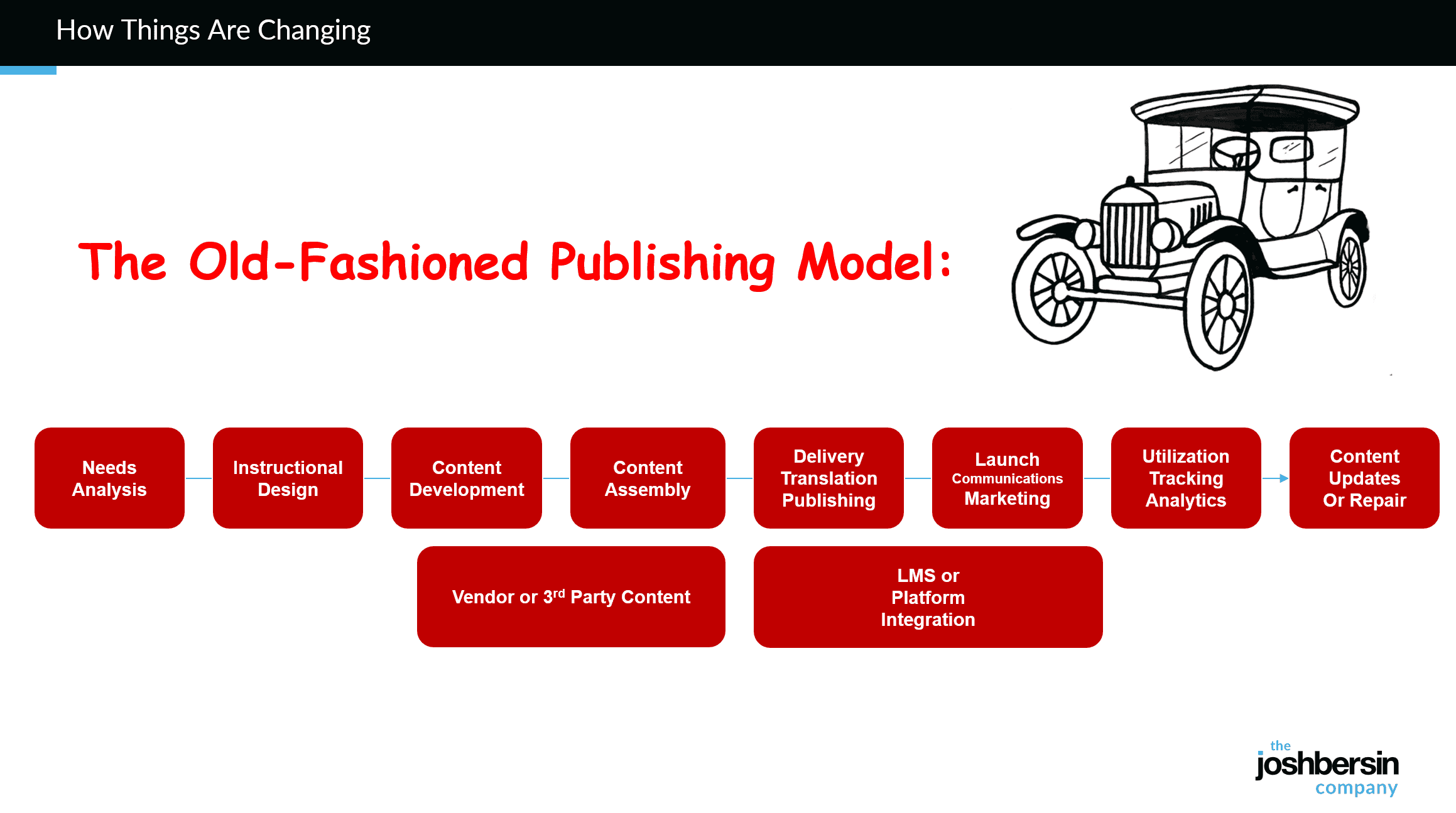
The advent of generative AI, epitomized by the public release of ChatGPT in the fall of 2022, has catalyzed a profound transformation in the corporate learning space. The traditional market for "e-learning" and "published training content," a segment valued at over $400 billion, is undergoing a radical reinvention at an unprecedented pace. For decades, the creation of corporate training content followed a laborious and time-consuming process. This involved meticulously authoring, publishing, and licensing materials such as courses, videos, assessments, and simulations. Instructional designers, graphic artists, and subject matter experts would spend months developing a single course, akin to writing a book. This content then required translation, testing, and integration into Learning Management Systems, often relying on the 35-year-old SCORM tracking standard to monitor learner progress.
This established model, while employing millions of dedicated learning professionals, is proving increasingly inefficient. The process is inherently slow, inflexible for updates, and prohibitively expensive. Developing a single, high-quality course could cost upwards of $50,000, placing significant constraints on content publishers and internal L&D teams. This often led to questions about the return on investment for such lengthy development cycles. While the industry has strived for excellence, the inherent complexities and resource demands of traditional content creation have become a bottleneck in a world demanding agility and continuous upskilling.
The emergence of AI fundamentally alters this dynamic. While early AI-generated content may have drawn criticism for quality, the rapid advancement of AI models, exemplified by tools like NotebookLM, demonstrates their capacity to produce high-quality content efficiently. The development time for a course can now be reduced from months to mere days or hours. Even if an AI-generated course is initially 70% perfect, the remaining time and resources can be dedicated to refinement, a far more agile approach than the original process.
Beyond rapid content generation, AI introduces a revolutionary shift in how learners interact with information. Instead of navigating through static chapters, learners can engage with AI-powered courses as interactive, conversational experts. This allows for personalized learning experiences, where each employee receives a tailored version of the information they need, a feat previously unattainable with SCORM-based materials.
Furthermore, AI-powered learning environments can create interconnected knowledge ecosystems. If an employee is seeking specific information, such as safety protocols for sulfur dioxide in a refinery, they no longer need to locate a dedicated "sulfur dioxide safety" course. Instead, they can simply ask the system a question, and the AI can retrieve and present the relevant information, drawing from a connected network of all available learning resources. This moves beyond traditional "learning" to a model of "enablement," where the primary goal is to provide immediate assistance, information, tips, advice, or knowledge required for effective job performance. This AI-native learning experience represents a profound departure from merely using AI to build traditional SCORM courses.
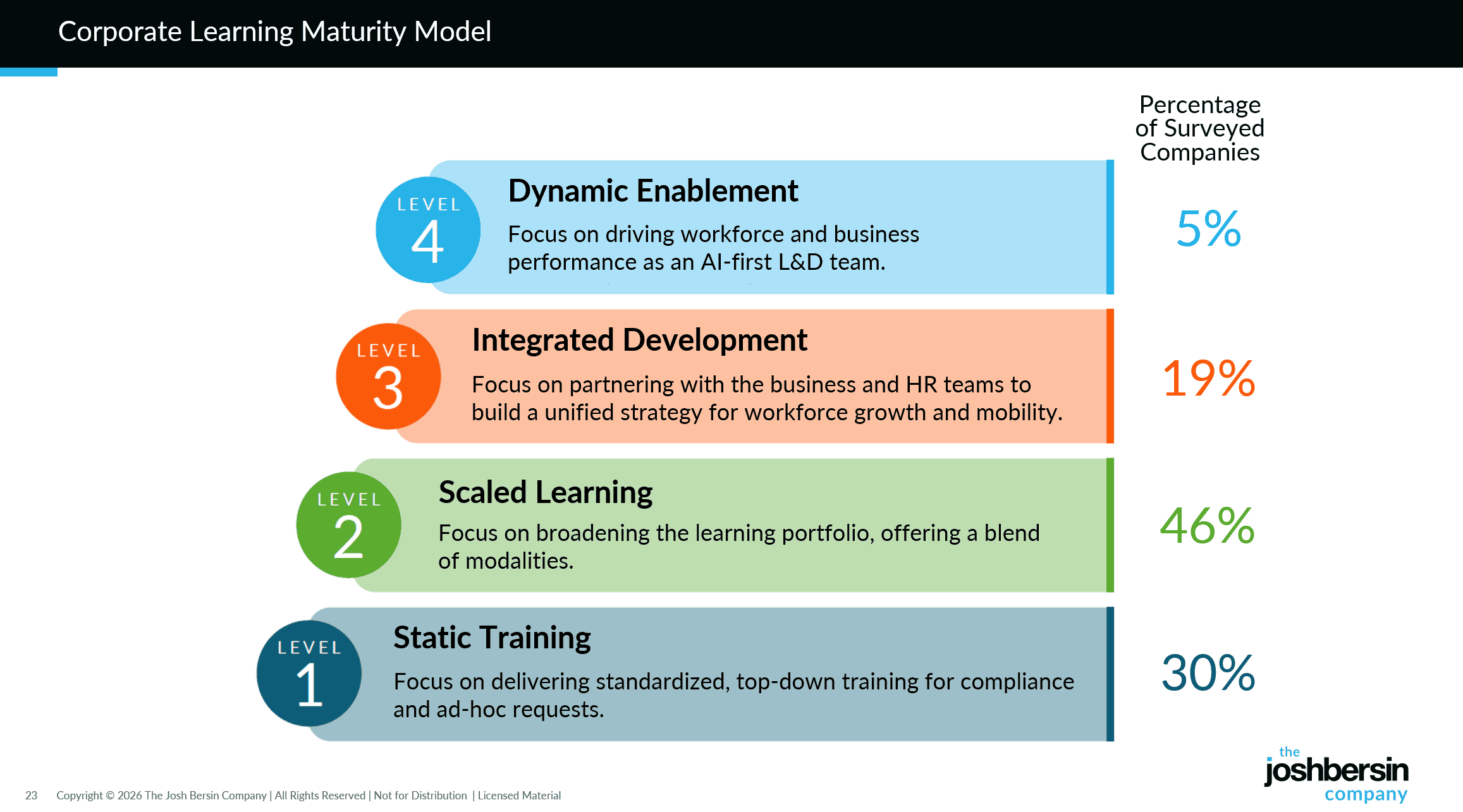
This transformation is not just a L&D revolution; it is a business revolution. L&D departments are poised for significant streamlining, shifting their focus from content creation to becoming strategic enablement operations. A substantial portion of L&D staff will likely transition into business-facing roles, directly supporting operational needs. In many cases, the reinvented L&D function may even move beyond traditional HR structures to become a direct business enabler, with the exception of compliance-related training. Research indicates that companies operating at higher levels of learning maturity are significantly more innovative and responsive in skills development, earning widespread appreciation from business units for their agility in addressing emerging challenges.
Cornerstone’s Strategic Response: Workforce AI
In direct response to this AI-driven disruption, Cornerstone has unveiled its ambitious reinvention strategy, centered around its new "Cornerstone Workforce AI" platform. This initiative, spearheaded by the company’s dedicated AI team led by Guna Jayaraman, represents a significant effort to reimagine the company’s core offerings. While the platform is still in its nascent stages, it integrates several key AI-driven capabilities designed to address the evolving needs of the modern enterprise.
The core of Workforce AI lies in its ability to infer skills and capabilities, powered by an open "People Graph." This graph is designed to ingest and integrate data from a multitude of enterprise systems, including Human Resource Management Systems (HRMS), LMS platforms, project management tools, and employee engagement surveys. This comprehensive data aggregation allows for a holistic understanding of an individual’s skills, experiences, and potential.
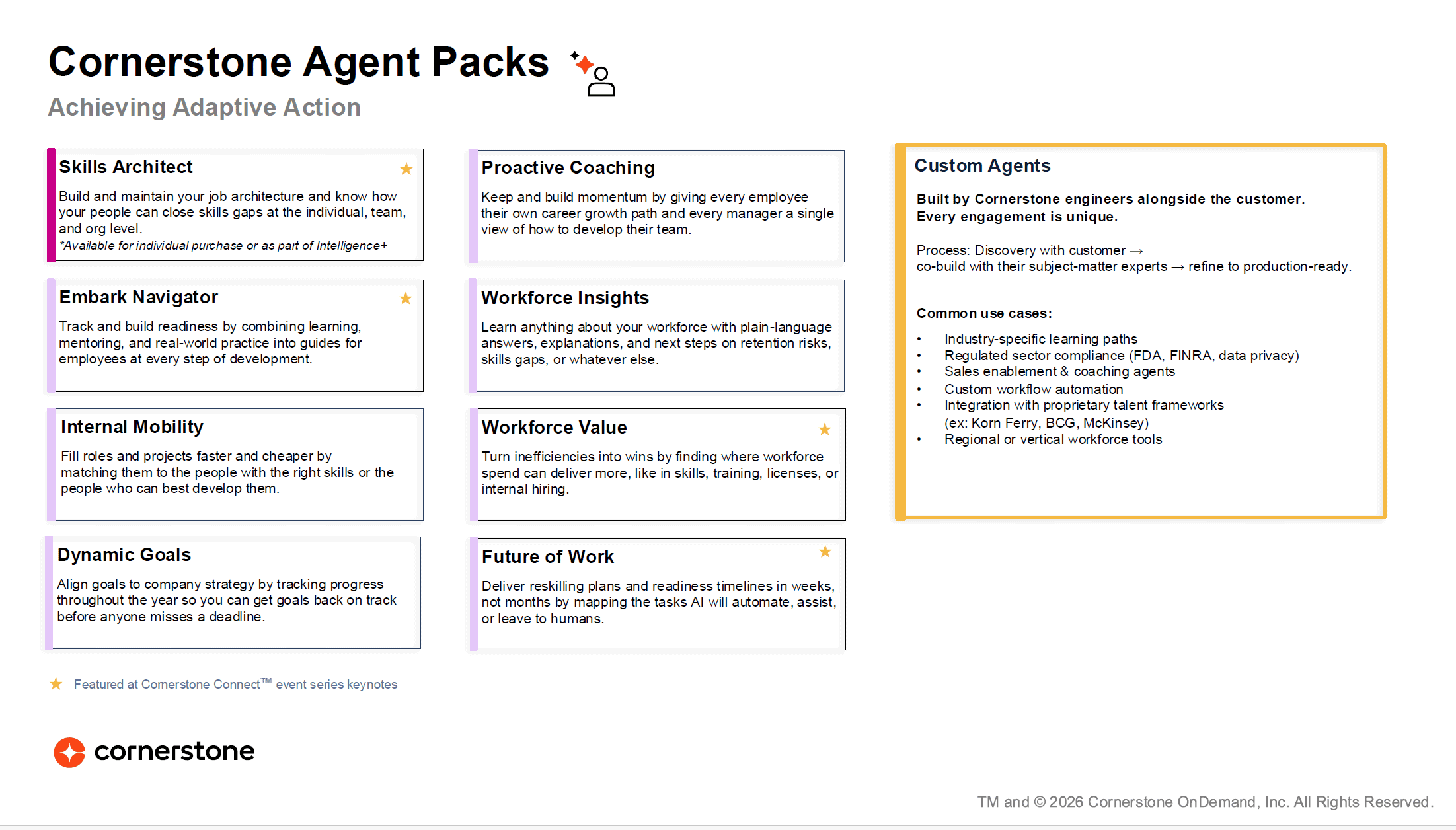
Furthermore, the platform leverages data services, including labor market intelligence sourced from Skyhive, and incorporates a suite of pre-built "Readiness Agents." These agents are designed to address immediate business challenges and facilitate rapid skill development. Some of the platform’s foundational functionalities, such as those residing within the existing Cornerstone Galaxy platform, are being integrated and enhanced. However, customers can access the full suite of new AI capabilities either by adopting the new platform from scratch or by upgrading their existing licenses to unlock these advanced features.
Early feedback from customers has been positive. Wealth management firms and large media companies are reportedly exploring Workforce AI to drive significant transformations in their skills development, talent mobility, and risk mitigation strategies. For instance, a wealth management company might use the platform to identify skill gaps in their client advisory teams and rapidly deploy AI-generated training modules to address these deficiencies. Similarly, a media company could leverage it to upskill content creators in emerging digital storytelling techniques.
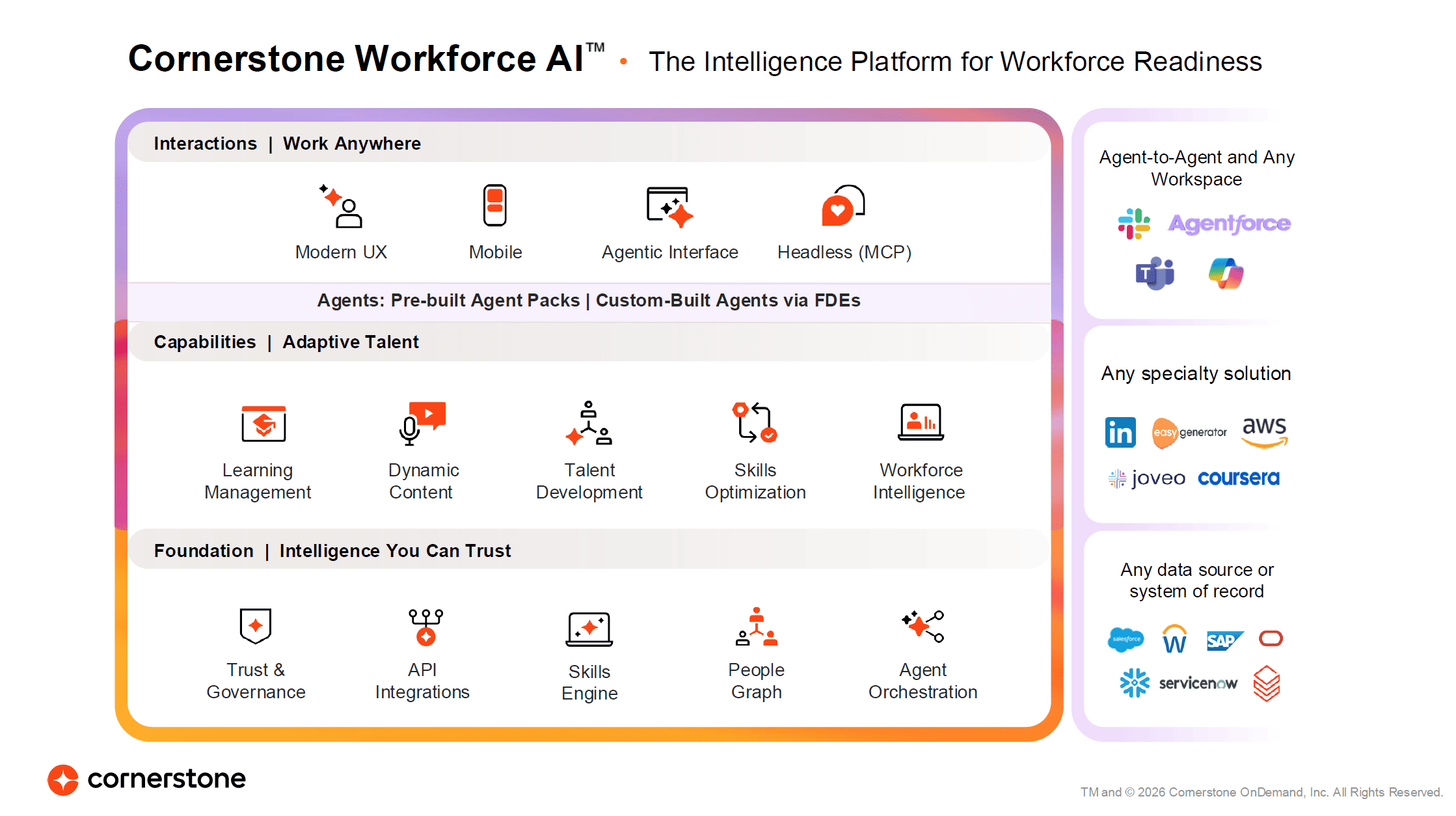
While Workforce AI may not yet be a fully "AI-Native" platform in the same vein as some emerging competitors like Sana, it is rapidly converging towards that standard. Cornerstone has already introduced an AI content development tool and is deploying agents to streamline LMS administration and analysis. These AI-native content features are being rolled out across both the existing and the new platform environments. The currently available packaged agents, while not yet fully customizable by users, demonstrate the power of Workforce AI by leveraging the platform’s extensive data and intelligence.
Implications for Cornerstone and the Market
Cornerstone’s pivot to AI is not merely a product update; it is a strategic imperative for survival and growth in a market undergoing seismic shifts. The company faces a dual challenge: transitioning its existing customer base while simultaneously attracting new clients who are increasingly seeking AI-native solutions. The rapid emergence of competitors like Sana, Docebo, Absorb, Uplimit, and Arist, all offering AI-driven learning experiences, intensifies this competitive pressure. Moreover, foundational AI players like OpenAI are actively integrating content from established providers and collaborating with organizations to build AI-powered learning solutions.
The implications for Cornerstone are profound. The market for traditional learning solutions is projected to decline as L&D budgets increasingly reallocate towards AI-powered tools. This shift poses a potential revenue risk for Cornerstone if it cannot effectively transition its offerings. However, the company also possesses a significant opportunity to leverage its established market position and extensive customer base to lead in this new AI-driven era.
A critical aspect of this transition is the evolving role of L&D professionals. As AI takes over many of the tasks associated with content creation and delivery, L&D leaders who fail to embrace AI-native solutions risk losing their budgets, seniority, and overall relevance. The question will no longer be about the cost of developing content but about the effectiveness and speed with which AI can enable employees to succeed.
The future of corporate learning, as envisioned by emerging platforms and exemplified by the potential of Cornerstone’s Workforce AI, points towards a highly personalized and proactive enablement model. As personal AI agents become more sophisticated, understanding an individual’s work, communications, and digital footprint, they can provide continuous, context-aware support. This "People Graph" becomes the foundation for intelligent nudges, onboarding plans, and personalized coaching, rendering many traditional, slow-moving learning interventions obsolete.
Cornerstone’s management team acknowledges the inherent nervousness of migrating existing customers. However, as observed by industry analysts, this is precisely the moment for them to take bold steps and actively shape the market. The substantial sums of money currently invested in traditional training solutions are expected to decrease, while budgets for AI initiatives are readily available. Despite the presence of formidable competitors, Cornerstone’s extensive experience and market reach provide a unique advantage.
For organizations looking to embrace this AI revolution, Cornerstone’s new platform offers a compelling proposition. While the offering is still evolving and will require further development of comprehensive solutions, the underlying AI architecture provides a powerful foundation for ambitious innovation. The ultimate goal is to foster an environment where every employee feels empowered to succeed through personalized, AI-driven enablement. The success of Cornerstone’s strategy will hinge on its ability to clearly articulate the value proposition of Workforce AI in the fast-paced and ever-changing AI market, demonstrating how it can empower every individual to thrive.
The path forward for Cornerstone involves not only technological advancement but also effective market communication and strategic partnerships. As the company navigates this transformative period, its ability to adapt, innovate, and clearly convey the benefits of its AI-powered solutions will be paramount to maintaining its leadership position in the dynamic world of corporate learning.