In a significant strategic shift aimed at navigating the rapidly evolving landscape of artificial intelligence, Workday, a long-standing leader in enterprise applications for finance and human resources, has unveiled a comprehensive vision for its future. This initiative, spearheaded by a revitalized executive team and bolstered by substantial investments in key acquisitions, signals a deliberate effort to reposition the company as a foundational platform for AI agents within the enterprise. The strategy leverages nearly $3 billion in strategic acquisitions, including HiredScore, Evisort, Paradox, and Sana, to transform Workday’s core offerings from a traditional "system of record" into a robust "platform for agents."
The company’s approach addresses the growing challenge of integrating AI capabilities into established enterprise workflows, emphasizing that AI should complement, not replace, the critical functions managed by systems like Workday. This pivot comes at a crucial juncture for Workday, a company that pioneered cloud-based enterprise software in 2008 with a revolutionary object-oriented architecture designed for scalability and flexibility.
The Genesis of Workday and its Pioneering Cloud Architecture
Workday’s journey began with a groundbreaking innovation: a cloud-native platform fundamentally different from the on-premise client-server systems prevalent at the time. Unlike existing Software-as-a-Service (SaaS) or hosted solutions, Workday’s architecture was built from the ground up for the cloud. Key to its initial success was its object-oriented database, an integrated engine for security and business rules, and a user-friendly interface that resonated with businesses across various sectors.
This innovative approach was marketed under the powerful "Power of One" message, promising a single, unified system for all HR and financial needs. This vision proved highly successful, driving rapid revenue growth and capturing a significant market share, including over 30% of the Fortune Global 2000. Today, Workday boasts more than 11,500 customers and serves over 75 million end-users worldwide.
During its formative years, Workday cultivated a strong, employee-centric culture, attracting top talent from HR, IT, and the investment community. Co-founder Aneel Bhusri served as CEO until 2024, when he transitioned the role to Carl Eschenbach. However, recognizing a perceived dilution of the company’s startup ethos and a lack of clear AI strategy in recent years, Bhusri returned to the CEO position earlier this year. His mandate: to spearhead a comprehensive reinvention of Workday, a task he has begun with a significant overhaul of the executive leadership and a redefined strategic direction.

Redefining Workday’s Role: From System of Record to Platform for Agents
The core challenge Workday addresses is defining its value proposition in an era where AI agents are becoming increasingly accessible and easier to build. In this new paradigm, the traditional role of a "system of record" is being re-evaluated. Workday’s answer is to transform its established platform into a sophisticated "platform for agents."
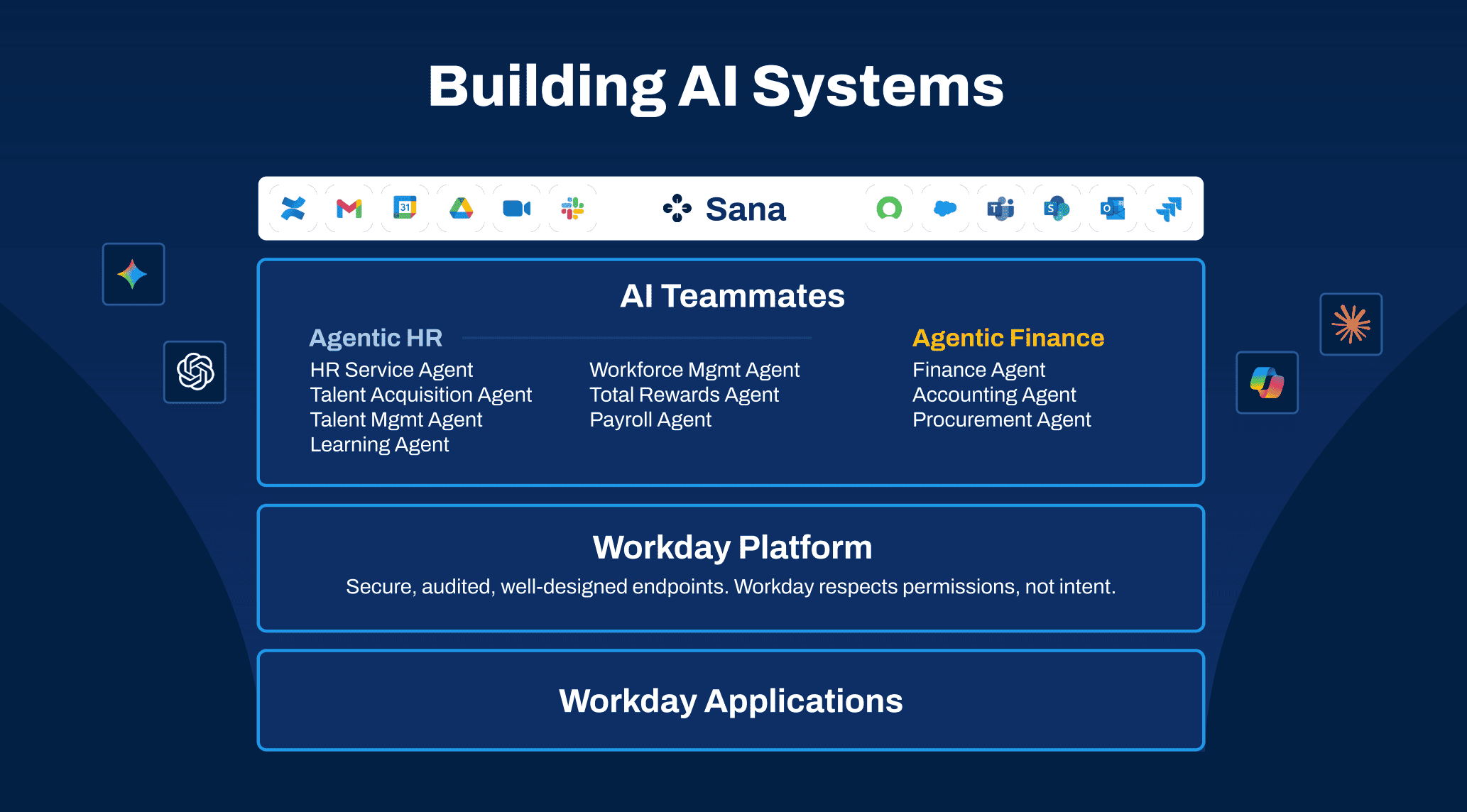
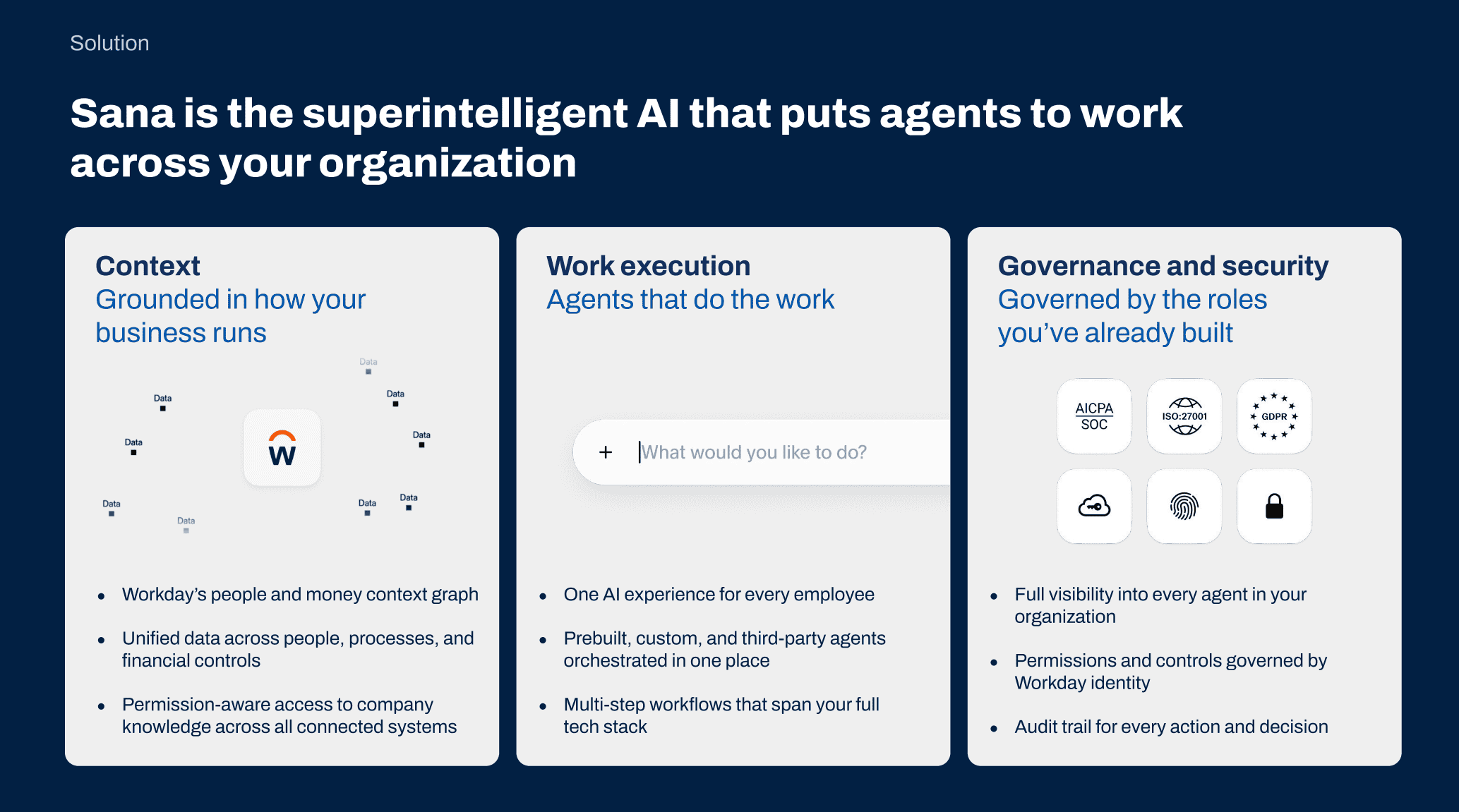
The company’s strategy hinges on unlocking the vast troves of data, security protocols, and business rules embedded within its system. By doing so, Workday aims to enable the development and deployment of AI agents that benefit from inherent scalability, robust security, and rapid execution. As a trusted system of record, Workday provides the essential "rails" – company rules, policies, security models, and compliance frameworks – that allow AI agents to operate effectively and securely at enterprise scale. Attempting to replicate these foundational elements outside of Workday, the company argues, is costly, time-consuming, and fraught with risk.
The Five Pillars of Workday’s Reinvention Strategy
Workday’s ambitious pivot is built upon five key strategic pillars:
Pillar 1: AI as a Complement, Not a Replacement
Workday asserts that artificial intelligence, particularly in its reasoning capabilities, cannot independently manage complex enterprise functions. Tasks such as processing payroll, closing financial books, onboarding new employees, or enforcing segregation of duties require deterministic rules, multi-level approvals, and deeply embedded data models honed over years of operational experience. Workday’s approach integrates probabilistic AI reasoning with deterministic execution, creating a hybrid model for enterprise AI. The company contends that standalone agent platforms, which rely on extracted enterprise data, are inherently incomplete without this underlying deterministic framework.
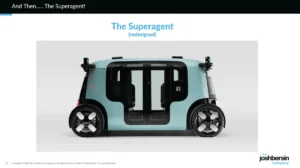
This perspective draws an analogy to the automotive industry: self-driving cars, however advanced, require a foundational infrastructure of roads, traffic signals, and legal regulations to function safely and effectively. Similarly, Workday posits that AI agents require the structured environment and established protocols of an enterprise system to deliver true business value. This is not merely about protecting its existing customer base but about unleashing innovation through a secure and scalable infrastructure.
Pillar 2: Workday’s "Rails" as the Core of Enterprise AI
The intricate configuration and business process frameworks within Workday encapsulate each customer’s unique policies, approval hierarchies, compliance mandates, and organizational structures. These codified rules represent the operational DNA of a company. When an AI agent operates outside of Workday, it may lack the nuanced understanding of these specific business rules, potentially generating outputs that appear reasonable but violate critical compliance requirements. Workday’s solution involves routing agent actions through its existing configuration, thereby ensuring that agents operate within lawful parameters by default.
The argument here is that building a complex ecosystem of AI agents from scratch necessitates a layer of coordination and rule enforcement. By leveraging Workday’s existing "rails," companies can avoid the significant effort and potential pitfalls of developing these foundational governance layers independently.
Pillar 3: Productizing Governance and Agent Management
Workday aims to offer robust agent management tools as a core component of its future infrastructure. The company views AI agents as first-class entities within the enterprise, each requiring a unique identity, defined skill sets, scoped authorization, and comprehensive audit trails.
To this end, Workday is introducing several productized layers:
- Agent System of Record: This system, already being adopted by over 1,200 customers, allows for the registration and monitoring of agents.
- Standards-Based Access and Privilege Management: A new system designed to control how agents access and interact with enterprise data and functions.
- Unified Front Door for Agents: A single point of access for both internal and external agents, simplifying management and deployment.
These offerings are positioned as enterprise-grade trust infrastructure designed to manage the inevitable sprawl of AI agents within an organization. While this is a rapidly evolving and competitive space, with solutions emerging from companies like ServiceNow and Microsoft, Workday’s integrated approach promises a cohesive solution for its existing customer base.
Pillar 4: A Unified Experience Through Sana
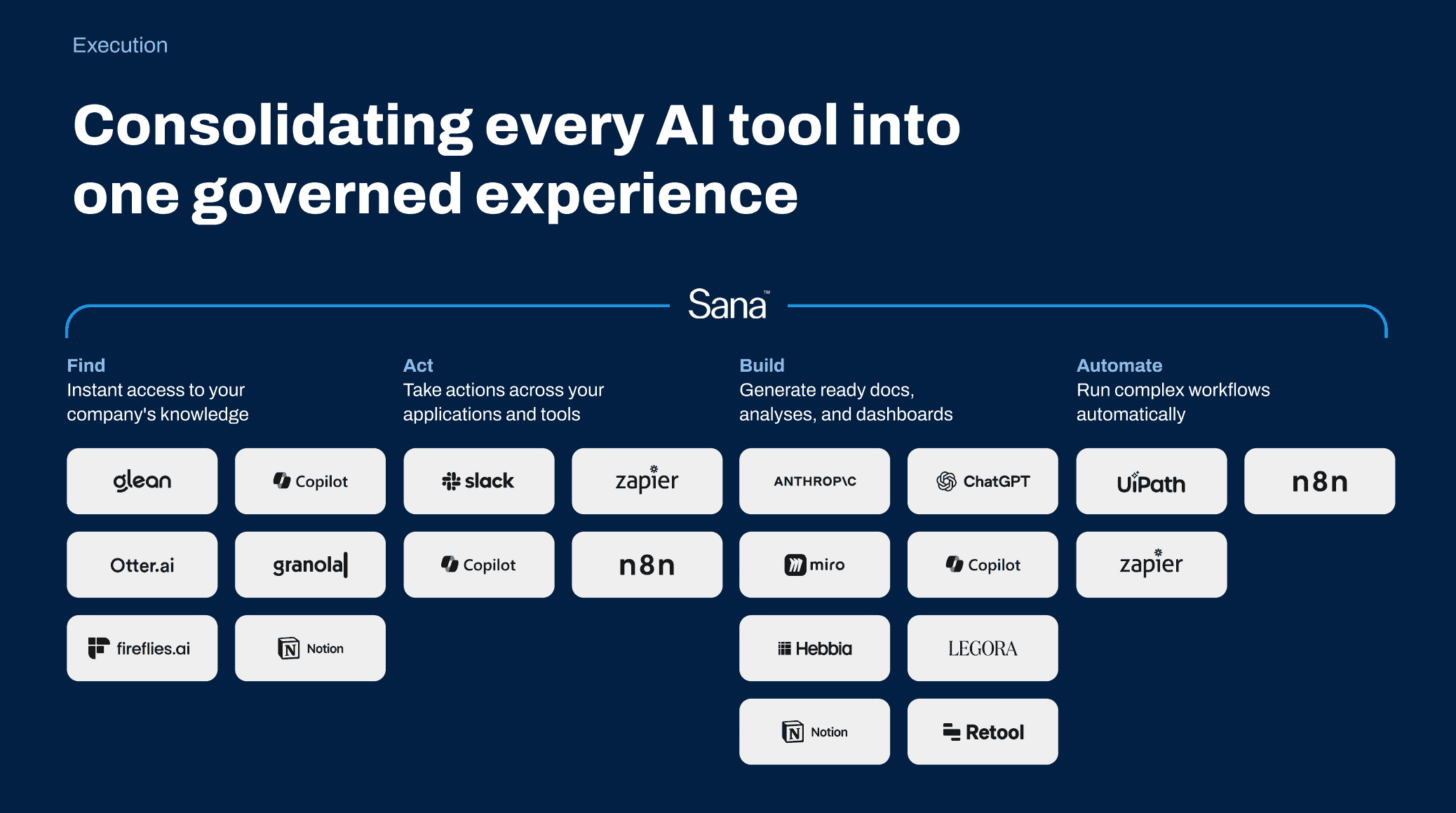
Sana, a recent acquisition, is being positioned as the new default "front door" for Workday. Available as "Sana for Workday" for all customers and extendable to other platforms like Salesforce, Slack, Teams, and SharePoint through "Sana Enterprise," it aims to compete directly with prominent AI interfaces like Microsoft Copilot. Workday envisions Sana as the last enterprise application employees will ever need to learn, functioning as both an agent development studio and a primary learning interface.
The strategic importance of Sana extends beyond its role as a user interface. Its dynamic learning platform capabilities are seen as transformative, enabling AI-native learning that goes beyond traditional training to foster global employee enablement and drive significant improvements in productivity and reskilling.
Pillar 5: Outcome-Based Commercial Models
Workday is shifting away from a purely seat-based licensing model towards a hybrid approach that incorporates consumption-based pricing. This new model, utilizing "Flex Credits" as a unit of consumption, aims to align Workday’s revenue more closely with customer outcomes, such as business growth and productivity gains. APIs used by external platforms will also be metered per call, capturing revenue that Workday believes has been previously uncollected.
This evolution reflects a broader industry trend towards valuing the tangible business impact of software rather than simply the number of users. By aligning its commercial strategy with customer success, Workday seeks to foster deeper partnerships and demonstrate greater value.
Addressing the "Build from Scratch" Mentality
In an era where tools like Claude Code, Codex, and Cursor make it feasible to conceptualize building enterprise functionalities from the ground up, Workday confronts the challenge of customers considering custom AI agent development outside its ecosystem. The company’s response is clear: such an approach risks creating a "shadow ERP" that is prohibitively expensive to build and maintain. These custom solutions often lack the unified object graph, integrated configuration systems, and robust compliance machinery inherent in Workday. Consequently, the resulting agents, while potentially task-focused, may be "lawless by design," prioritizing task completion over rule adherence, thereby introducing significant risk and eventually necessitating the very security and workflow tools Workday already provides.
Workday’s strategy acknowledges that customers will likely utilize multiple AI interfaces, including Microsoft Copilot, Anthropic Claude, Gemini Enterprise, and Salesforce Agentforce, alongside custom-built agents. The company’s "Agent Gateway" provides a mechanism for these external agents to interact with Workday using open standards. Agents can either delegate tasks to Workday’s internal agents, inheriting its established governance, or call Workday APIs directly. This ensures that whenever an agent needs to interact with critical business processes involving people, finances, or regulated workflows, the execution seamlessly hands off to Workday’s controlled environment.
Enhancing Agility: Dynamic Reconfiguration and Deployment
A common critique of cloud enterprise systems has been their perceived slow product release cycles. Workday, which historically updates its system twice a year with highly interdependent product roadmaps, is addressing this by introducing greater dynamism.
- Extensibility via Sana and Agent System of Record: By enabling agents to be registered in the Agent System of Record and allowing extensions through the new UX and Sana, Workday significantly accelerates the deployment of new applications and capabilities. The company is also fostering an "Agent Partner Network" to deliver industry-specific and advisory agents.
- Deployment Agent: This critical new system facilitates dynamic system testing, configuration, and consultative deployment. It empowers customers to deploy changes in a week or less, reducing reliance on expensive systems integrators and enabling Workday to roll out updates more continuously. This dramatically lowers implementation and ownership costs and provides a significant competitive advantage.
Analysis of Workday’s Strategic Reinvention
The recent announcements and leadership changes at Workday represent a pivotal moment for the company.
The Founder’s Return and Renewed Energy
Aneel Bhusri’s return as CEO has injected a new level of energy and focus into Workday. His deep understanding of both technology and the enterprise market, reminiscent of leaders like Steve Jobs at Apple or Howard Schultz at Starbucks, positions him to guide the company through its next transformative phase. This renewed leadership has resulted in a more focused AI strategy, with a "General Manager" model assigned to specific product areas, rather than a diffuse approach. This structure includes dedicated ownership for the "Agent Factory," AI APIs, and a cross-functional AI task force that convenes monthly with the management team. The recent streamlining of fifty agent projects down to fifteen in a single afternoon highlights this newfound decisiveness and a return to a "startup culture." This mirrors strategic moves by other tech giants, such as Microsoft’s recent centralization of its Copilot engineering efforts.
Leading the Charge in Agentic HR and Finance
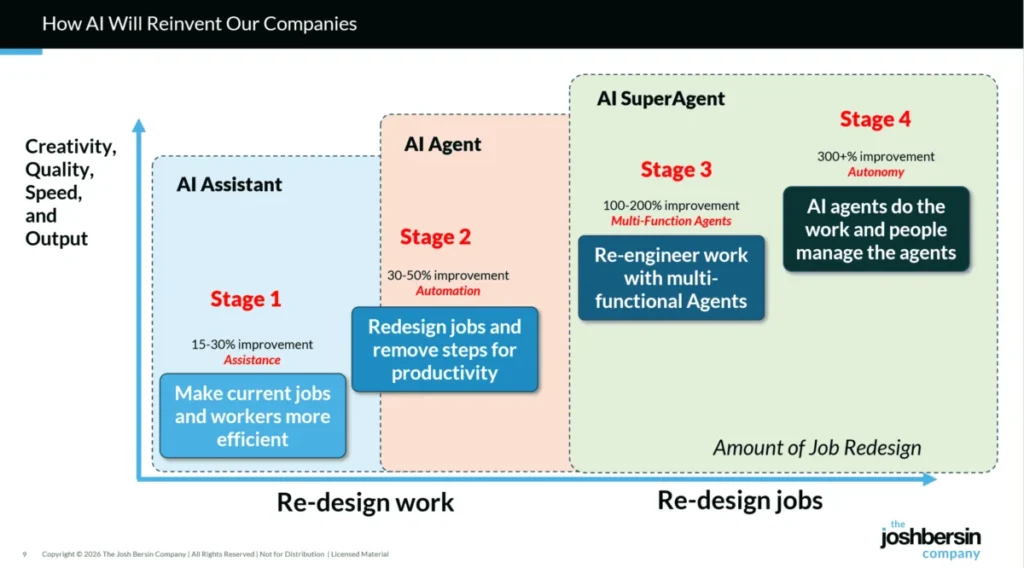
Workday’s strategy positions it to lead the charge in agentic transformation for HR and finance. By acquiring Paradox and Sana, companies at the forefront of AI in recruiting, agent development, and learning, Workday has assembled a management team with profound experience in agentic applications. This allows Workday to showcase transformative applications that not only embrace the future of AI agents but also leverage its existing robust infrastructure. The company is poised to proactively guide businesses towards an agent-driven future, redefining how work is performed. The distinction between "agentifying" existing workflows with modest benefits and creating "Stage 3 agents" that automate entire workflows with significant ROI is crucial. Sana and Paradox represent the vanguard of this latter, more impactful, future.
Sana and Paradox: Catalysts for New Leadership and Innovation
The integration of Paradox and Sana brings new leadership and market expertise to Workday. Adam Godson, CEO of Paradox, now heads Workday’s entire talent acquisition platform, incorporating the ATS and intelligence system acquired from HiredScore. This is a highly competitive market, valued at over $200 billion. Similarly, Joel Hellermark, CEO of Sana, now leads Workday’s learning platform and AI layer, encompassing Workday Learning. This segment of the market exceeds $400 billion. As General Managers responsible for product strategy, revenue, and customer support, these entrepreneurial leaders are expected to drive exponential increases in product vision, velocity, and competitiveness. Given that talent acquisition, mobility, corporate learning, and enablement are areas where AI is currently most advanced within HR, innovations from Paradox and Sana are likely to catalyze agentic redesigns across other Workday modules. The dynamism of these markets is evident, with SAP’s recent acquisition of SmartRecruiters for $1.8 billion and Glean’s valuation at $7.2 billion, underscoring the significant market potential of these acquired entities.
Defining Enterprise AI Infrastructure
Workday has a unique opportunity to define the architectural evolution of enterprise AI. The complexity of integrating AI agents, determining the balance between "superagents" and "subagents," defining agents of "action" versus "observation," and managing inter-agent permissions and data segmentation presents a significant challenge for many organizations. Workday’s historical role as a "system of record" that set enterprise rules now extends to governing the complex layers of modern AI: the intelligent LLM, the semantic and rules layer, the agent code layer (orchestration, tools, workflows), and the runtime/trust layer (security, compliance, guardrails). While competing vendors like Microsoft, Anthropic, OpenAI, ServiceNow, and Google are active in this space, Workday’s established presence in the ERP/HCM world positions it to take a leadership role in defining enterprise AI architectures.
Understanding Context and Semantic Layers
Joel Hellermark’s observation that "everyone is ignoring the big boring problem of bad context" resonates deeply with Workday’s strategic direction. The company recognizes that context is paramount to creating value and ensuring the trustworthiness of AI agents. Workday’s investment in knowledge graphs and context engineering, rather than solely relying on larger models, has yielded significant accuracy improvements. The evolution of Workday’s Data Cloud to encompass not just raw data but also the intricate semantic understanding of a business—including skills models, cost centers, career paths, and certification workflows—demonstrates a sophisticated approach to AI. This focus on semantic context signals that Workday is operating with the mindset of an AI-native company, rather than a transactional vendor.
Conclusion: A Turning Point for Workday
The recent announcements, leadership transitions, and strategic initiatives signal a clear turning point for Workday. The company is poised for reinvention, aiming to pioneer new solutions and empower its customers and partners to participate in the burgeoning business agent revolution. With new product leaders, a robust AI infrastructure, and an enhanced focus on real-time system testing and reconfiguration, Workday appears to be on the cusp of a significant transformation.
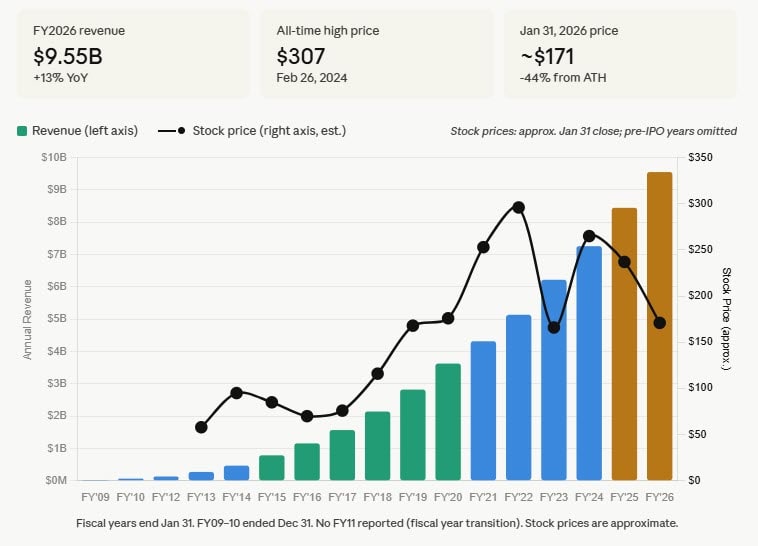
For financial analysts, the immediate impact of products like Sana, Paradox, and the Enterprise AI management tools is expected to drive new revenue growth. The deep value these acquired entities have demonstrated to Workday customers over the past five years suggests a strong foundation for future success. Aneel Bhusri, Gerrit Kazmaier, and the entire Workday team are commended for navigating this crucial juncture, setting the stage for continued innovation and market leadership in the age of AI.