In today’s dynamic global economy, the notion that employee recognition is merely a courtesy has been unequivocally replaced by a strategic understanding: it is a foundational pillar of robust business performance. For large enterprise organizations, where workforces span continents, cultures, and myriad operational roles, the ability to effectively acknowledge and reward employees is not just beneficial—it is critical for fostering loyalty, enhancing productivity, and cultivating a resilient corporate culture. As a result, enterprise leaders are increasingly turning to sophisticated employee recognition software to scale appreciation across thousands, or even tens of thousands, of employees, ensuring that valuable contributions never go unnoticed, regardless of an organization’s vastness.
The Evolution of Employee Recognition: From Ad-Hoc to Strategic Imperative

Historically, employee recognition often consisted of infrequent annual awards, manager-led commendations, or informal gestures. While well-intentioned, these traditional methods proved insufficient for the complexities of modern, large-scale workforces. The rise of distributed teams, remote work, and a more diverse demographic of employees has necessitated a shift towards more consistent, inclusive, and technologically-driven recognition strategies. What was once an HR "nice-to-have" has evolved into a strategic imperative, directly linked to critical business outcomes.
The challenges of scaling appreciation across geographically dispersed teams, varied departments, and distinct technological ecosystems are significant. Even the most sincere intentions can falter without the right infrastructure. This is precisely where purpose-built recognition software intervenes, acting as a crucial connector that surfaces recognition in real-time, transcends organizational silos, and ensures that every instance of exceptional work is celebrated, reinforcing positive behaviors and strengthening organizational bonds.
Best Practices for Cultivating Recognition at Enterprise Scale
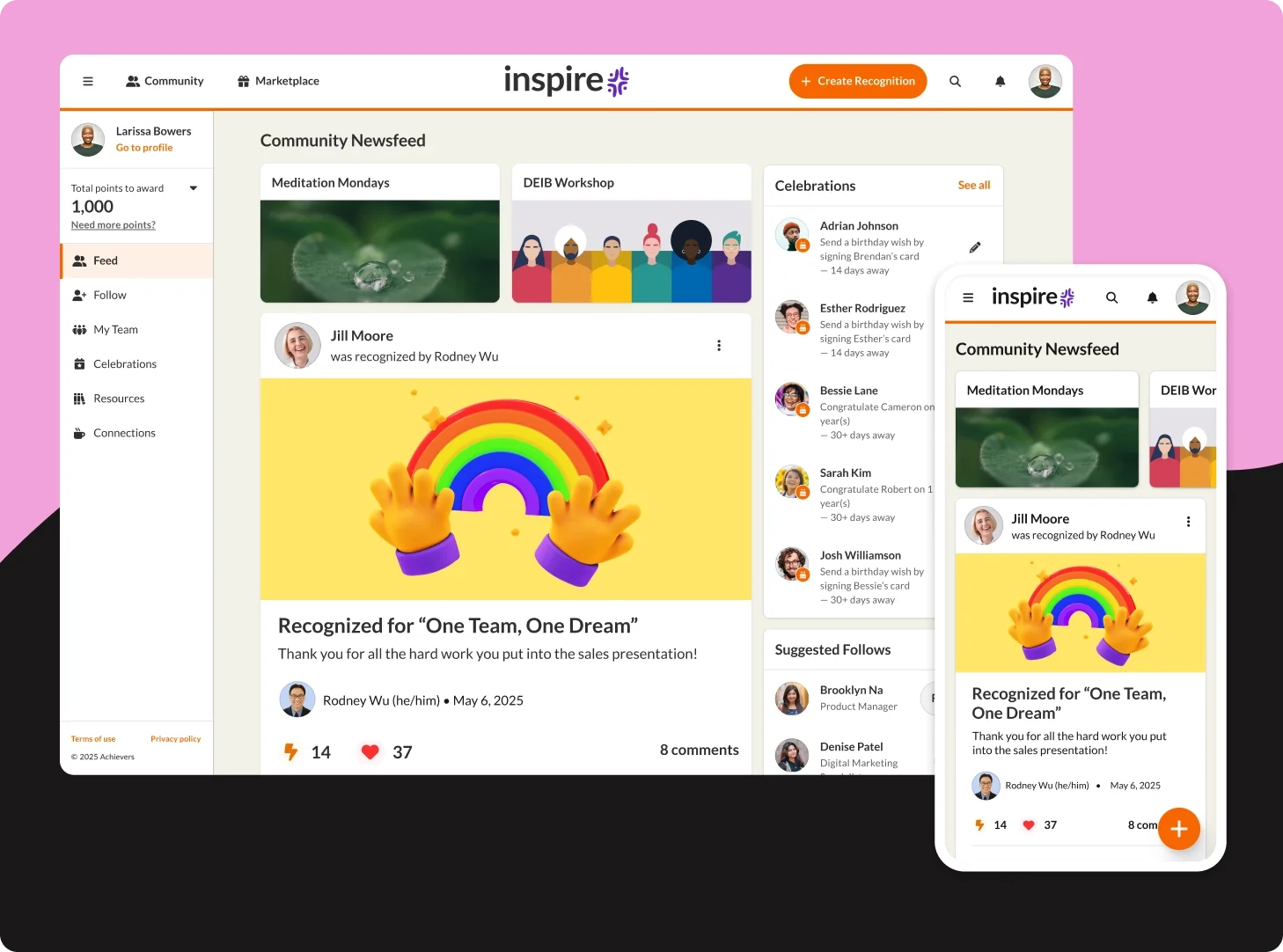
Implementing a recognition program that truly resonates within a large organization demands more than just good faith; it requires a meticulously structured and consistent approach designed to reach every employee, irrespective of their location, role, or tenure. For large enterprises, the most impactful recognition initiatives are those crafted to maximize participation, intrinsically reinforce core company values, and deliver demonstrable business value.
To construct a recognition program that thrives at scale, organizations should adhere to several key best practices:
- Frequency and Accessibility: Recognition must be a continuous process, not an intermittent event. Empowering employees to acknowledge their peers and direct reports in real-time, rather than confining appreciation to annual reviews or significant milestones, is crucial. Frequent recognition acts as a powerful reinforcement of desired behaviors and sustains high levels of engagement. Modern platforms facilitate this by integrating recognition into daily workflows.
- Alignment with Organizational Values and Goals: Every act of recognition should be purposefully linked to the organization’s overarching values, strategic objectives, or specific business goals. This strategic alignment ensures that recognition actively drives behaviors that contribute to enhanced performance and a stronger, more cohesive culture. When employees understand why their contributions are valued, it deepens their connection to the company’s mission.
- Empowering Peer-to-Peer Recognition: In expansive organizations, relying solely on managers for recognition is unsustainable and often ineffective. Delegating the ability to recognize to every employee—through robust peer-to-peer recognition systems—significantly amplifies the reach, authenticity, and overall participation in the program. This democratized approach fosters a culture of mutual support and appreciation.
- Blended Recognition Models: The most effective programs leverage a combination of social and rewards-based recognition. Public recognition, through digital feeds or company-wide announcements, builds community, connection, and visibility for exemplary work. Simultaneously, meaningful rewards—whether monetary or experiential—provide tangible reinforcement of impact and act as a powerful motivator.
- Data-Driven Optimization: Recognition programs should not operate in a vacuum. By tracking key metrics such as participation rates, recognition frequency, and associated outcomes, organizations can gain invaluable insights into what aspects of the program are thriving and where adjustments are needed. Data-driven programs are inherently more effective at establishing a direct link between recognition efforts and improvements in engagement, retention, and overall business performance.
- Seamless Integration into Workflows: For recognition to become an ingrained part of the company culture, it must seamlessly integrate into the existing tools and platforms employees utilize daily. When recognition is an intuitive component of communication or project management tools, it removes friction and encourages spontaneous acts of appreciation, transforming it from an extra step into a natural habit.
By embracing these strategic practices and leveraging appropriate technology, large organizations can transcend fragmented or inconsistent recognition efforts, cultivating an environment where every employee feels genuinely seen, heard, and deeply valued.
Identifying the Ideal Employee Recognition Software for Enterprise Needs
When an organization’s workforce is distributed across diverse offices, time zones, and job functions, even minor deficiencies in a software platform’s usability or support infrastructure can cascade into significant operational disruptions. The most effective recognition platforms are those that prioritize ease of use and universal accessibility, ensuring that recognition is effortless for everyone, everywhere.
Key attributes to scrutinize when selecting employee recognition software for a large enterprise include:
- Scalability: The platform must be engineered to handle thousands, or even hundreds of thousands, of users across multiple regions without any degradation in performance or user experience. This includes robust global fulfillment capabilities for rewards, comprehensive multilingual support, and the capacity to deliver consistent experiences across diverse operational landscapes.
- Ease of Use: A recognition platform’s efficacy is directly proportional to its adoption rate. If the software is cumbersome or unintuitive, it will inevitably languish unused. Prioritize platforms that seamlessly integrate into existing tools and workflows, making recognition feel like an organic part of the workday rather than an additional administrative burden.
- Frequency and Visibility: High-impact recognition occurs in real-time. The chosen system should facilitate public, rapid, and frequent acts of appreciation, thereby helping employees visually connect their individual contributions to broader company objectives and fostering a culture of continuous feedback.
- Integration Capabilities: A cohesive tech stack is paramount. The optimal platforms offer robust integration with existing HRIS (Human Resources Information Systems), communication platforms (e.g., Slack, Microsoft Teams), and productivity tools. This ensures that employees can recognize and be recognized within the environments they already inhabit, maximizing engagement.
- Reporting and Analytics: Beyond the intrinsic good feeling, recognition generates invaluable data. Seek platforms that provide sophisticated reporting capabilities to track participation, engagement levels, and, crucially, enable the calculation of Return on Investment (ROI). This data-driven approach allows organizations to directly correlate appreciation initiatives with concrete performance outcomes and justify their strategic investment.
- Vendor Support and Partnership: Large-scale recognition programs demand strong vendor partnerships. Look for providers that offer more than just initial setup; they should provide dedicated customer success teams, hands-on implementation support, and ongoing strategic guidance to ensure the recognition culture evolves harmoniously with the company’s growth.
Leading Employee Recognition Software Solutions for Large Companies
A thorough evaluation of the market reveals several platforms vying for the attention of large enterprises. Here’s an analytical overview of top contenders, focusing on their enterprise suitability:
-
Achievers:
- G2 Rating: 4.7/5
- Strengths: Achievers is widely recognized as a market leader, distinguished by its widespread adoption (over 4.3 million global users and reported adoption rates reaching 93%) and its ability to transform recognition into a quantifiable business driver. Its platform is accessible across desktop, mobile, and integrated workforce tools, ensuring ubiquitous access. A core differentiator is its deep integration of behavioral science, informed by the Achievers Workforce Institute, enabling leaders to strategically shape habits that enhance engagement, retention, and performance. With flexible global reward fulfillment in 190 countries, AI-driven insights, and 24/7 multilingual support, Achievers is built for the intricate demands of a complex global workforce.
- Best for: Enterprise and global organizations seeking to scale recognition, significantly boost engagement, and measure tangible cultural impact through actionable, data-driven insights.
- Weakness: Its advanced analytics and extensive configuration options, while powerful for large enterprises, may present an overly complex solution for smaller businesses with simpler needs.
-
Motivosity:
- G2 Rating: 4.7/5
- Strengths: Motivosity emphasizes fostering connection and appreciation through a comprehensive recognition and rewards platform. It supports peer and manager recognition, milestone celebrations, and spot bonuses, alongside integrated communication tools and employee profiles designed to enhance ongoing participation.
- Best for: Organizations that prioritize a strong social component and integrated engagement features within their recognition platform, particularly suitable for mid-sized to larger companies seeking robust connectivity.
- Weakness: While effective for mid-sized teams, its analytical depth and customization options might not fully satisfy the more granular insights and bespoke requirements of very large global enterprises.
-
Guusto:
- G2 Rating: 4.9/5
- Strengths: Guusto is adept at engaging both desk-bound and frontline employees, offering flexible digital or printed reward delivery, automated milestone programs, and consolidated budget management. Its support for non-monetary recognition through peer nominations and shoutouts broadens its appeal across diverse employee segments.
- Best for: Organizations with a significant mix of office and frontline workers requiring a user-friendly platform for streamlined reward and recognition distribution.
- Weakness: Guusto’s simplified setup and reporting, while beneficial for ease of use, may lack the advanced analytics, comprehensive integrations, and extensive scalability often required by global enterprise clients.
-
Mo:
- G2 Rating: 4.6/5
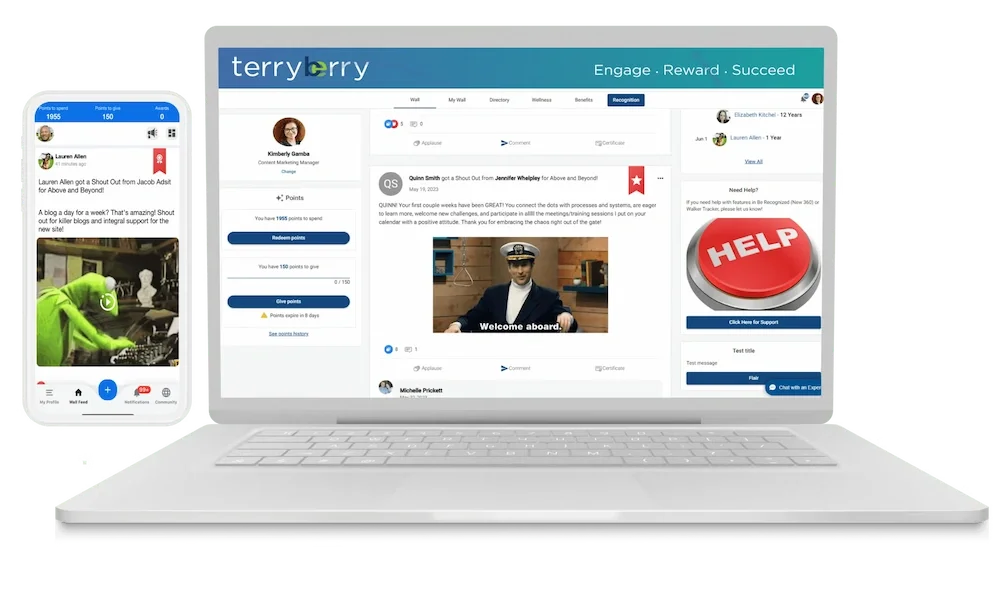
- Strengths: Mo distinguishes itself by making organizational culture visible through consistent, everyday appreciation. It facilitates manager and employee recognition, milestone celebrations, and value-aligned contributions, supported by automated prompts and integrations that embed recognition into daily routines.
- Best for: Companies that prioritize ease of daily use and a continuous culture-building approach over deep, complex reporting or extensive customization.
- Weakness: Mo’s focus on recognition and culture building may mean it offers less in terms of the advanced analytics and customization features that larger enterprises frequently demand for strategic HR insights.
-
Terryberry:
- G2 Rating: 4.6/5
- Strengths: Terryberry provides a unified engagement platform encompassing employee recognition, wellness initiatives, and survey tools. It excels in measuring cultural and engagement outcomes, such as eNPS and retention risk, through integrated analytics, and offers global fulfillment for various award programs.
- Best for: Teams seeking a holistic employee engagement system where recognition is one component within a broader suite of HR tools.
- Weakness: As an all-in-one platform, Terryberry may offer less granular flexibility for organizations whose primary focus is deeply specialized recognition and advanced behavioral analytics.
-
Nectar:
- G2 Rating: 4.7/5
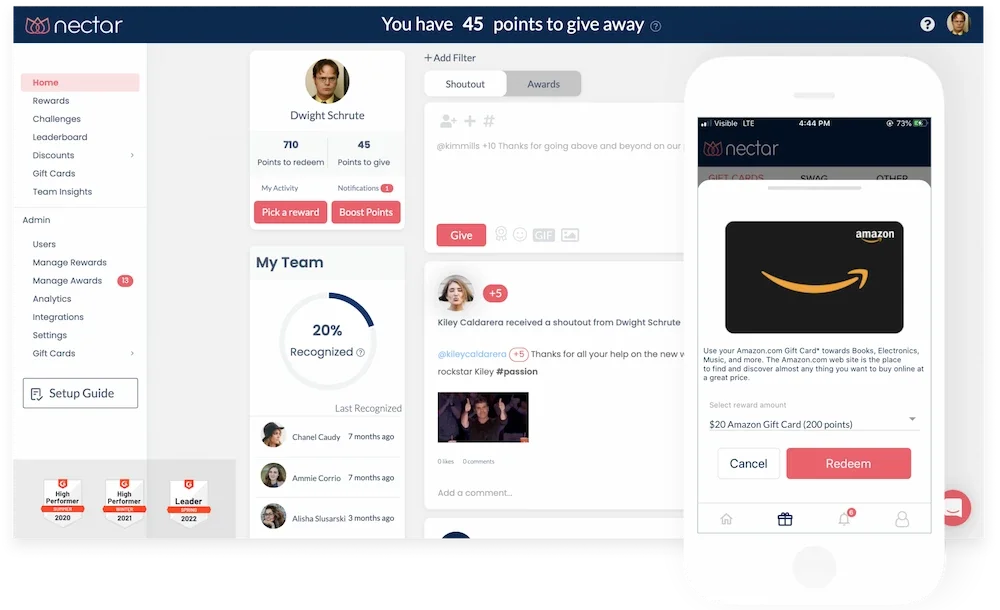
- Strengths: Nectar offers a straightforward, automation-focused recognition and rewards platform, simplifying the celebration of achievements, management of nominations, and internal communications. Its emphasis on ease of use streamlines milestone recognition, challenges, and reward distribution.
- Best for: Organizations desiring a simple, automated recognition platform without the need for sophisticated analytics or extensive enterprise-level functionalities.
- Weakness: While user-friendly, Nectar’s simpler design might not provide the advanced analytical capabilities or extensive global reward options necessary for very large, internationally diverse enterprises.
-
Kudos:
- G2 Rating: 4.8/5
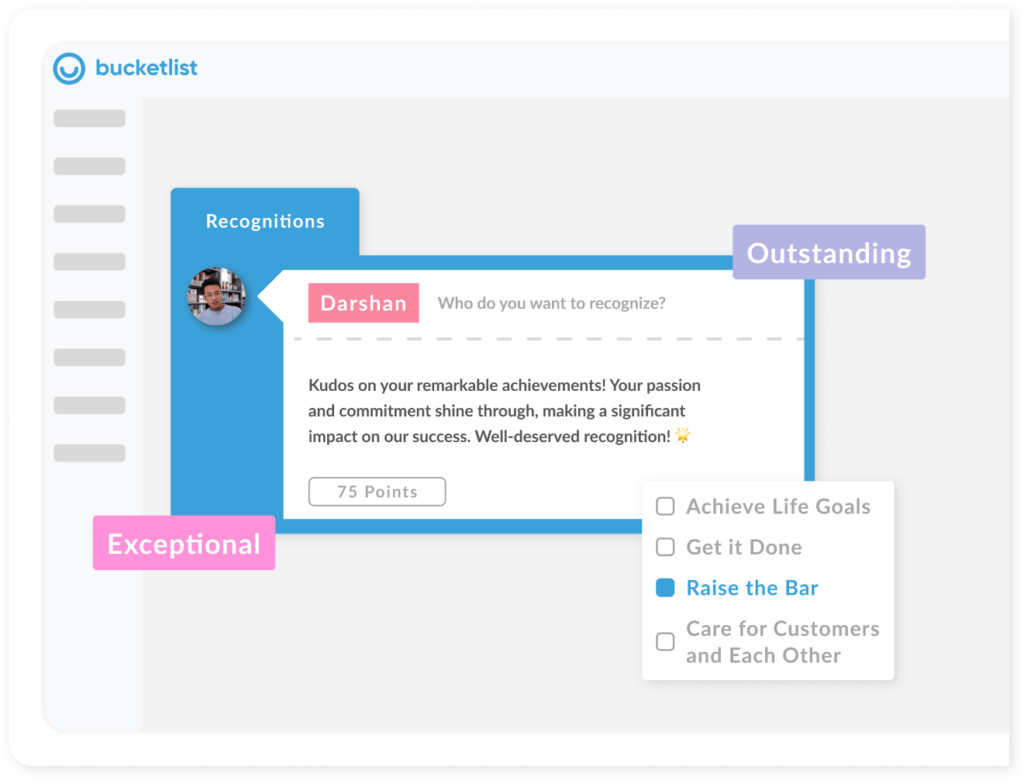
- Strengths: Kudos is designed to reinforce company values through both peer-to-peer and top-down recognition. Its "Performance Recognition" framework links recognition messages to specific impact levels and organizational values, ensuring alignment with business goals. It also features milestone automation and a broad catalog of global rewards.
- Best for: Organizations prioritizing a value-based recognition framework with accessible analytics and foundational engagement features.
- Weakness: Kudos, while strong in value-based recognition, may offer lighter data insights and reporting depth compared to platforms designed for the most demanding enterprise analytical requirements.
-
WorkTango:
- G2 Rating: 4.7/5
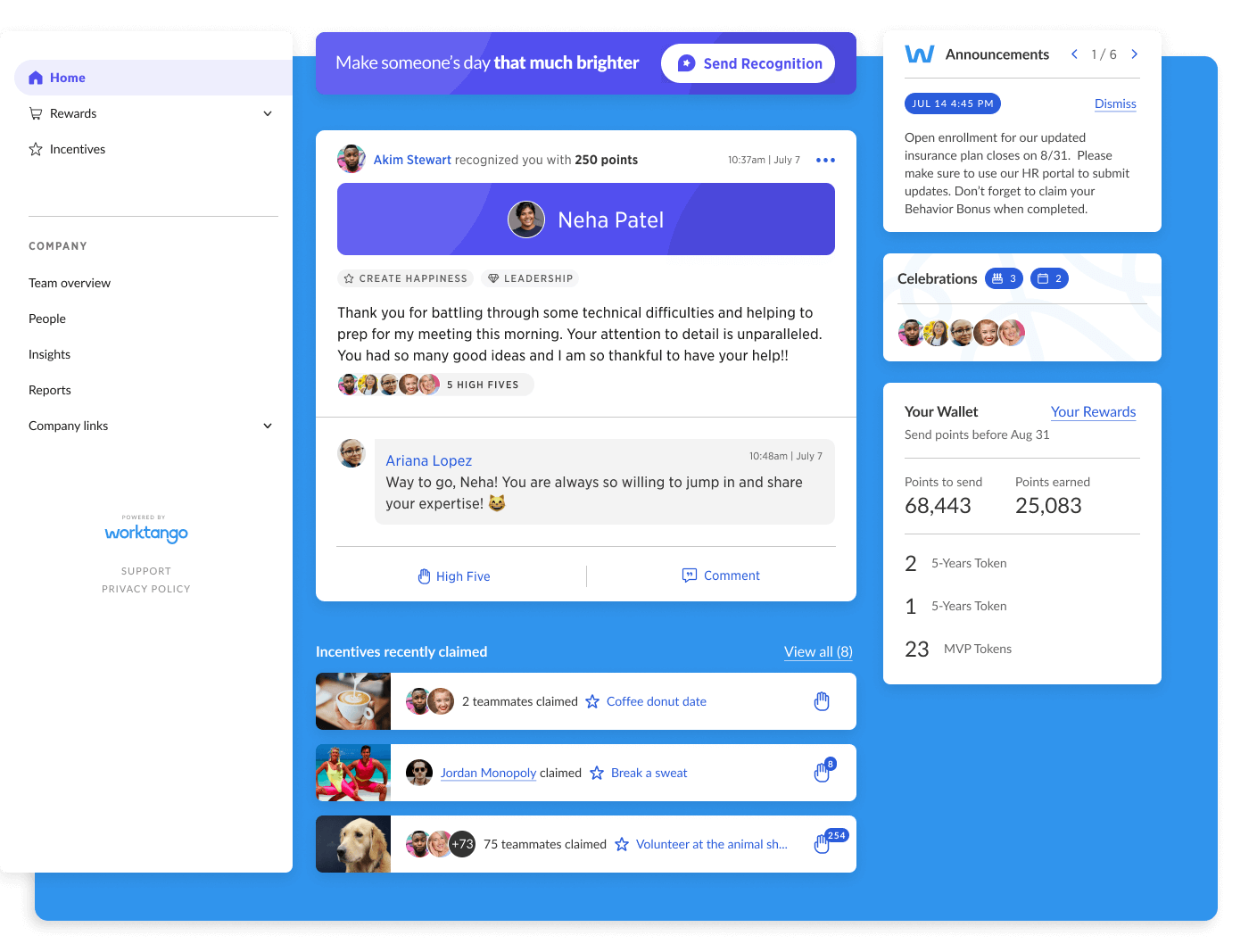
- Strengths: WorkTango integrates recognition, rewards, surveys, and insights within a single employee experience platform. It enables organizations to measure engagement, collect feedback, and reinforce behaviors through automated recognition and incentive programs, complemented by a large global rewards marketplace and comprehensive reporting.
- Best for: Teams seeking a broader HR platform where recognition is a key, integrated component of a holistic employee engagement strategy.
- Weakness: Given its comprehensive coverage of multiple HR functions, WorkTango’s recognition features might be less specialized or customizable than those found in platforms exclusively dedicated to recognition and engagement.
-
Bucketlist:
- G2 Rating: 4.8/5
- Strengths: Bucketlist focuses on automation, accessibility, and real-time engagement through a social-style feed and mobile app. It supports peer and manager recognition, milestone celebrations, and goal-based incentives, with integrations across popular communication and HRIS systems, making it suitable for both office and frontline employees.
- Best for: Organizations prioritizing daily engagement and straightforward recognition delivery over extensive analytical depth or complex measurement frameworks.
- Weakness: While its recognition tools are intuitive, Bucketlist may offer limited capabilities for organizations requiring deeper analytics or highly robust global support infrastructures.
-
Qarrot:
- G2 Rating: 4.6/5
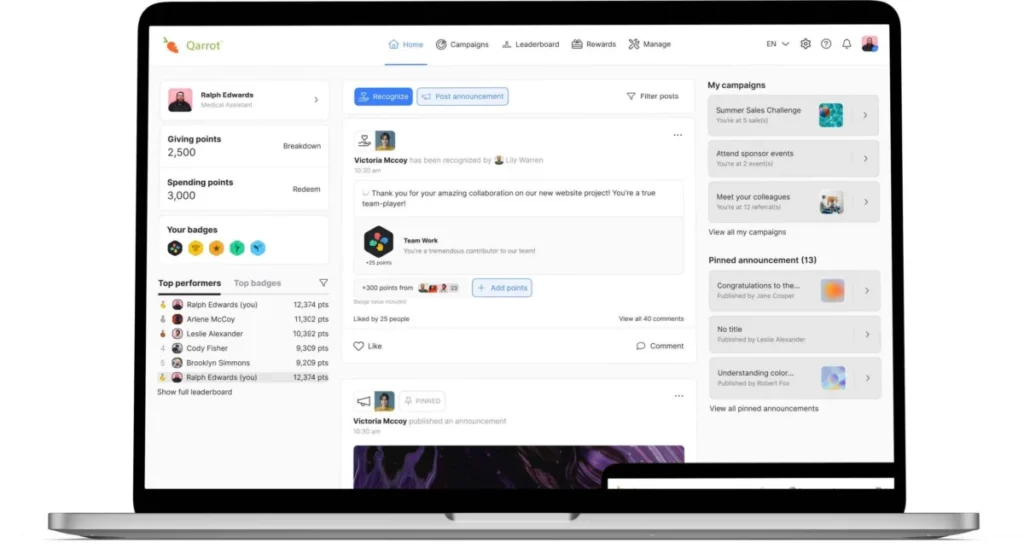
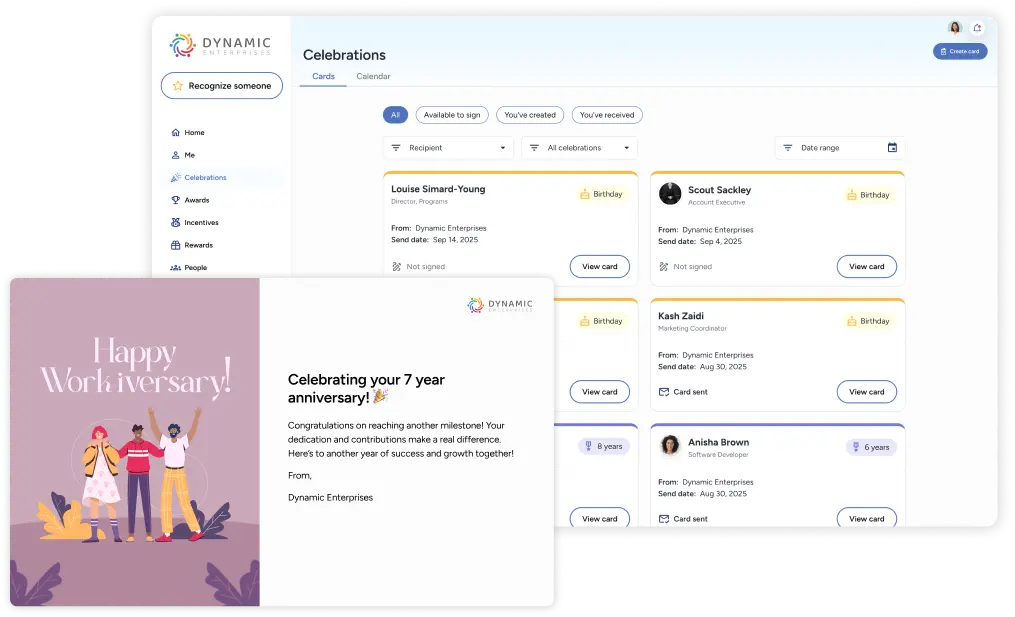
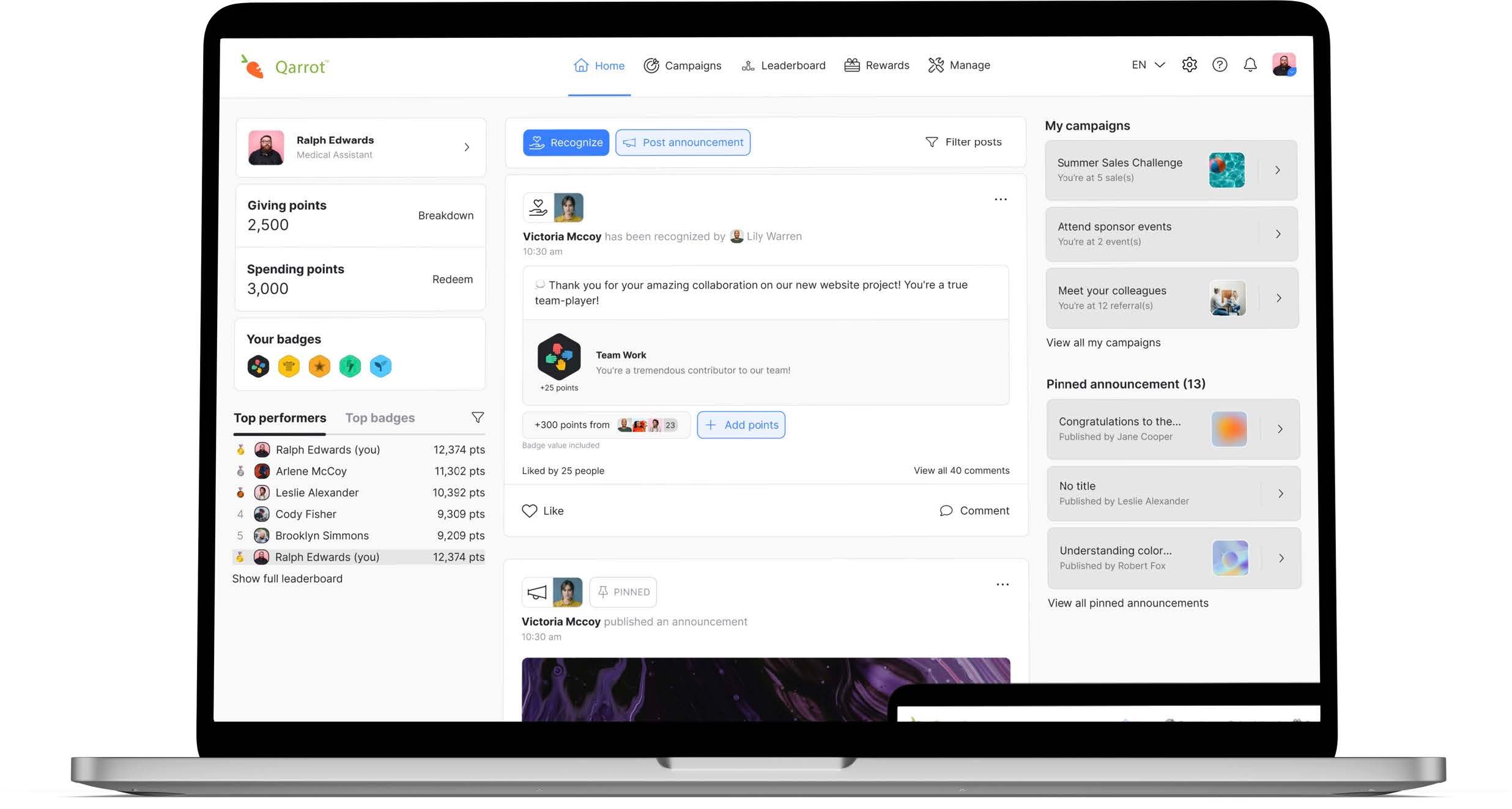
- Strengths: Qarrot offers an employee recognition and rewards platform that facilitates peer recognition, milestone celebrations, and goal-based campaigns. It includes custom, value-aligned badges, gamified challenges, and team announcements, with integrations into Slack and Microsoft Teams for seamless workflow embedding.
- Best for: Companies seeking an easy-to-manage and engaging recognition solution, particularly for small to mid-sized teams looking for a fun, interactive platform.
- Weakness: Qarrot may not provide the extensive depth of analytics or the advanced configuration options that larger, more complex organizations typically require.
-
Workvivo:
- G2 Rating: 4.8/5
- Strengths: Workvivo is an employee experience platform that unifies internal communications, engagement, recognition, and intranet functionalities in a mobile-first solution. It excels at connecting dispersed workforces through a social-style interface, offering high adoption rates and analytics to track communication effectiveness.
- Best for: Organizations prioritizing seamless communication and strong connection across highly dispersed or hybrid teams, where recognition plays a supportive role within a broader communications strategy.
- Weakness: While it includes recognition tools, Workvivo’s primary focus leans heavily towards communication and overall engagement, potentially offering less specialized depth in rewards or intricate behavioral analytics compared to dedicated recognition platforms.
-
Empuls (by Xoxoday):
- G2 Rating: 4.6/5
- Strengths: Empuls combines recognition, rewards, surveys, and communication into a single platform, offering a structured approach to appreciation. It supports peer-to-peer recognition and milestones with a global rewards catalog, alongside engagement surveys and feedback tools for monitoring sentiment.
- Best for: Companies seeking a comprehensive engagement platform that integrates recognition with robust survey and communication capabilities.
- Weakness: Empuls provides a wide array of features, but organizations requiring deeper behavioral insights or highly advanced analytics might find its reporting capabilities more functional than strategically deep.
-
Matter:
- G2 Rating: 4.7/5
- Strengths: Matter is designed for direct integration within Slack or Microsoft Teams, enabling peer-to-peer kudos, automated celebrations, and simple pulse surveys without the need for separate software. Its focus on quick setup and ease of use fosters recognition habits through features like Feedback Friday.
- Best for: Companies seeking a lightweight, natively integrated recognition solution that operates entirely within their existing Slack or Teams environments.
- Weakness: Matter prioritizes simplicity and direct integration, which means it may lack the advanced analytical capabilities or extensive customization options found in larger, standalone recognition platforms.
-
Assembly:
- G2 Rating: 4.9/5
- Strengths: Assembly facilitates making appreciation a regular part of the workday, combining peer-to-peer shoutouts, automated celebrations, and integrated rewards to enhance engagement and morale. It also includes culture insights and manager enablement tools to encourage consistent recognition.
- Best for: Companies looking for a straightforward, user-friendly platform to boost employee engagement and recognition without the need for highly detailed reporting or complex strategic insights.
- Weakness: Assembly may not offer the same global reach or the breadth of advanced reward options typically available in more enterprise-focused recognition platforms.
-
Profit.co:
- G2 Rating: 4.7/5
- Strengths: Profit.co offers a unified platform that integrates OKRs (Objectives and Key Results), performance management, and employee engagement tools. It supports goal alignment, continuous feedback, and peer recognition through features like leaderboards and pulse surveys, connecting business performance with engagement.
- Best for: Companies that prioritize a highly structured, data-driven approach to connecting business performance, OKRs, and task management with employee engagement.
- Weakness: Given its primary focus on OKRs and performance management, Profit.co’s recognition capabilities might feel less comprehensive or specialized compared to platforms exclusively dedicated to scalable recognition and rewards.
The Indisputable Value of Recognition for Large Enterprises
In the sprawling, often complex landscape of global organizations, recognition serves as the essential connective tissue that binds the corporate culture. It is the mechanism that maintains consistency in values and aligns employees around a shared purpose, even as the business undergoes continuous growth and evolution. The strategic importance of recognition for large companies cannot be overstated:
- Enhanced Employee Retention: Studies consistently show that employees who feel appreciated are significantly less likely to seek opportunities elsewhere. A robust recognition program directly contributes to reducing turnover rates, which is particularly impactful for large organizations where recruitment and onboarding costs can be substantial.
- Boosted Engagement and Morale: Regular and meaningful recognition fosters a positive work environment, elevating employee morale and increasing overall engagement. Engaged employees are more invested in their work, more proactive, and more likely to contribute innovative ideas.
- Improved Productivity and Performance: When employees understand that their hard work will be acknowledged and rewarded, it serves as a powerful incentive to perform at their best. Recognition programs can drive higher levels of productivity by reinforcing desired behaviors and outcomes.
- Stronger Corporate Culture: Recognition platforms, especially those that enable peer-to-peer appreciation, build a culture of mutual respect, teamwork, and psychological safety. They actively reinforce company values, making them tangible and actionable for every employee.
- Better Team Collaboration: By highlighting contributions across teams and departments, recognition software can break down silos and encourage cross-functional collaboration. Seeing others recognized for collaborative efforts inspires similar behaviors.
- Actionable Insights for HR Leaders: The data generated by sophisticated recognition platforms provides HR and leadership teams with invaluable insights into employee sentiment, engagement hotspots, and areas requiring attention. This intelligence supports data-driven decision-making in talent management.
Why Leading Enterprises Gravitate Towards Achievers for Recognition
At the scale of a multinational corporation, recognition can either become lost in the noise or, when executed strategically, profoundly shape the organizational culture. Achievers empowers large organizations to ensure recognition is meaningful, measurable, and deeply human.
- Behavioral Science Foundation: Achievers’ approach is rooted in behavioral science, leveraging insights from its Workforce Institute to design programs that genuinely drive desired behaviors, leading to sustained engagement and performance improvements.
- Unrivaled Global Scalability: With support for workforces in 190 countries and 24/7 multilingual assistance, Achievers is purpose-built to cater to the complexities of truly global enterprises, ensuring consistent experiences across all regions.
- High Adoption Rates: Its intuitive design and seamless integration capabilities lead to industry-leading adoption rates, ensuring that the platform is actively used by a vast majority of the workforce.
- Actionable AI-Driven Analytics: Achievers provides sophisticated AI-driven insights that allow leaders to not just track recognition activity but also understand its impact on engagement, retention, and overall business outcomes, enabling continuous program optimization.
- Comprehensive Reward Options: A flexible and extensive global rewards catalog ensures that recognition can be tailored to individual preferences and cultural nuances, making rewards genuinely meaningful and motivating.
- Dedicated Enterprise Support: Achievers offers robust customer success teams and hands-on implementation, partnering with large organizations to build, launch, and continuously refine their recognition culture as they grow.
Finding the Right Software to Empower Your Workforce
For large companies, maintaining a sense of personal connection and individual value can be increasingly challenging as operations expand. Yet, this is precisely where the power of effective recognition shines brightest. It serves as the bridge that spans geographical distances, fortifies interpersonal connections, and consistently reminds every employee of their intrinsic worth and their vital contribution to a larger collective endeavor.
The right employee recognition software transforms this connection from an aspiration into an effortless reality. It ensures that recognition remains visible, quantifiable, and an undeniable force within the organization. This is the fundamental purpose for which platforms like Achievers were engineered: to enable large enterprises to retain their human-centric ethos, foster profound connections, and inspire their entire workforce, no matter the scale of their global footprint.