
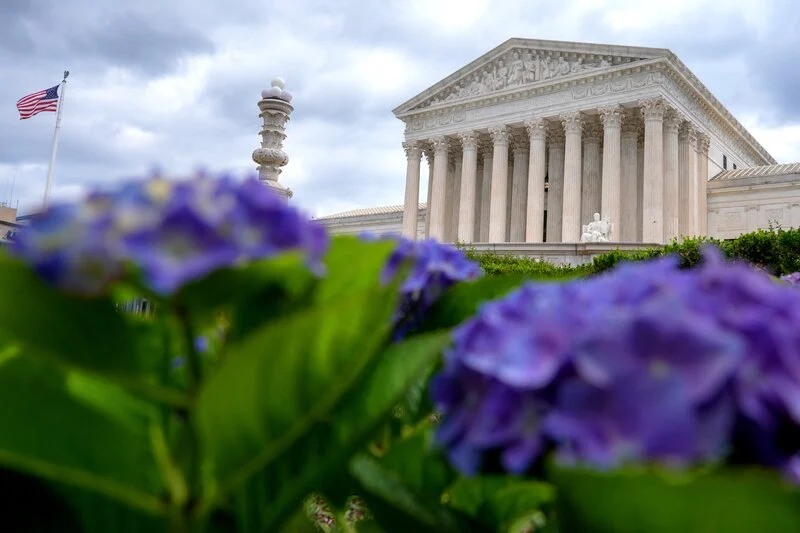
The 2025-2026 term of the United States Supreme Court concluded with a flurry of landmark decisions that reshaped the American legal landscape, leaving the nation’s thirteen federal appellate courts to navigate a complex new set of precedents. As the dust settles on the term, a clear picture emerges of the shifting dynamics between the high court and its subordinate circuits. The term was characterized by a rigorous re-evaluation of administrative power, a deepening commitment to originalist interpretations of the Constitution, and a surprising series of rebukes and affirmations for regional courts that have traditionally served as ideological anchors. From the conservative hotbed of the Fifth Circuit to the historically liberal Ninth Circuit, the justices’ rulings have provided a definitive, if sometimes unpredictable, roadmap for the future of American jurisprudence.
The National Landscape: A Term of Judicial Recalibration
During the recently completed term, the Supreme Court issued 64 signed opinions, a slight increase from the previous year’s historical lows. The overarching theme of the term was the continued deconstruction of the "administrative state," building upon the foundations laid in the preceding years. However, the term was also notable for the Supreme Court’s willingness to rein in lower courts that the justices perceived as moving too fast or too far ahead of the high court’s established trajectory.
Statistically, the court’s reversal rate remained high, hovering around 72%, consistent with historical averages which suggest that the Supreme Court primarily takes cases to correct perceived errors in the lower courts. Yet, the distribution of these reversals across the circuits tells a more nuanced story of judicial influence and ideological alignment.
The Fifth Circuit: The Agenda-Setter Faces Scrutiny
The New Orleans-based U.S. Court of Appeals for the Fifth Circuit remained the most watched and arguably the most influential lower court during the 2025-2026 term. Known for its aggressive conservative rulings, the Fifth Circuit has frequently acted as a laboratory for novel legal theories, particularly those challenging federal agency authority and social policy.
In the previous 2024-2025 term, the Fifth Circuit suffered a series of high-profile reversals, leading some commentators to suggest the court had lost its standing with the conservative supermajority in Washington. However, the 2025-2026 term saw a marked improvement in its "best showing in years." While the Supreme Court did not uphold every Fifth Circuit ruling, it adopted the circuit’s reasoning in several pivotal cases involving the Second Amendment and the scope of executive orders.
Legal analysts note that the Fifth Circuit continues to drive the Supreme Court’s docket. By taking bold stances on issues like the "Major Questions Doctrine," the Fifth Circuit effectively forces the Supreme Court to address fundamental constitutional questions that the justices might otherwise avoid. Even when reversed, the Fifth Circuit’s opinions often provide the intellectual framework for the Supreme Court’s eventual, albeit more moderate, rulings.
The Ninth Circuit: A Surprising Resurgence
Historically, the San Francisco-based Ninth Circuit has been the Supreme Court’s most frequent target for reversals. During the late 2010s and early 2020s, the Ninth Circuit was often characterized as a "rogue" liberal bastion. However, the 2025-2026 term saw the Ninth Circuit experience what many are calling a "déjà vu" moment—but in a positive direction.
Following a period where the Ninth Circuit began to find favor with the justices due to a wave of conservative appointments during the Trump administration, the court maintained a surprisingly high affirmance rate this term. The Ninth Circuit’s success was particularly evident in cases involving technology law and intellectual property, where its specialized expertise appeared to align with the Supreme Court’s desire for technical precision.
The shift in the Ninth Circuit’s fortunes is attributed to a more balanced bench and a pragmatic approach to following Supreme Court precedents, even when those precedents deviate from the circuit’s traditional leanings. This "new" Ninth Circuit has moved away from the ideological outliers of the past, focusing instead on narrow, fact-based rulings that are less likely to trigger Supreme Court intervention.
The DC Circuit: The Administrative Battleground
The U.S. Court of Appeals for the District of Columbia Circuit, often referred to as the "second most important court in the land," occupied its traditional role at the center of administrative law disputes. During the 2025-2026 term, the DC Circuit’s reputation for independence was thrust into the spotlight as it grappled with the fallout from the Supreme Court’s previous decisions to overturn the Chevron deference.
The DC Circuit faced the daunting task of reviewing dozens of agency regulations without the traditional "thumb on the scale" for the government. The Supreme Court’s review of DC Circuit cases this term showed a high degree of interest in how the lower court applied the "Major Questions Doctrine." In several instances, the Supreme Court vacated DC Circuit rulings, remanding them with instructions to apply a more stringent standard of review to agency actions.
The tension between the DC Circuit’s expertise in regulatory matters and the Supreme Court’s skepticism of agency power has created a period of uncertainty for federal departments. Reaction from the Department of Justice (DOJ) suggests a growing concern that the "regulatory ping-pong" between the DC Circuit and the Supreme Court is hampering the government’s ability to implement long-term policy.
The Second and Third Circuits: Commercial and Financial Clarity
The New York-based Second Circuit and the Philadelphia-based Third Circuit saw a significant number of their cases involving corporate law and financial regulation reach the high court. In these arenas, the Supreme Court showed a preference for predictability and national uniformity.
The Second Circuit, in particular, was upheld in a major case involving the extraterritorial reach of U.S. securities laws. The Supreme Court’s decision to affirm the Second Circuit’s "conduct and effects" test provided much-needed clarity for international markets. Analysts suggest that in commercial matters, the Supreme Court views the Second Circuit as a reliable partner in maintaining the stability of the financial system.
Chronology of the 2025-2026 Term
To understand the current state of the circuits, one must look at the timeline of the term’s most influential decisions:
- October 2025: The term opens with a focus on jurisdictional disputes. The Supreme Court grants certiorari to several cases from the Eighth and Eleventh Circuits involving the "Shadow Docket," signalling a desire to formalize emergency stay procedures.
- January 2026: Oral arguments begin for the term’s "blockbuster" administrative law cases. The Fifth Circuit’s challenge to the EPA’s new emissions standards takes center stage.
- March 2026: The Court issues a surprise ruling in a Ninth Circuit case involving digital privacy, establishing a new "reasonable expectation of privacy" standard for encrypted communications.
- May 2026: The "opinion season" begins in earnest. The Court reverses a Tenth Circuit ruling on tribal sovereignty, sparking a debate over the "original public meaning" of 19th-century treaties.
- June 2026: The term concludes with the release of decisions on high-profile social issues, including a significant Second Amendment case from the Fourth Circuit that further limits state-level firearm restrictions.
Supporting Data: Reversal Rates by Circuit (2025-2026)
The following data represents the preliminary reversal rates for the 13 federal circuits during the 2025-2026 term:
| Circuit | Cases Decided | Affirmed | Reversed/Vacated | Reversal Rate |
|---|---|---|---|---|
| 1st Circuit | 2 | 1 | 1 | 50% |
| 2nd Circuit | 6 | 4 | 2 | 33% |
| 3rd Circuit | 4 | 2 | 2 | 50% |
| 4th Circuit | 5 | 1 | 4 | 80% |
| 5th Circuit | 12 | 7 | 5 | 42% |
| 6th Circuit | 4 | 1 | 3 | 75% |
| 7th Circuit | 3 | 1 | 2 | 67% |
| 8th Circuit | 4 | 0 | 4 | 100% |
| 9th Circuit | 10 | 6 | 4 | 40% |
| 10th Circuit | 3 | 0 | 3 | 100% |
| 11th Circuit | 5 | 2 | 3 | 60% |
| DC Circuit | 4 | 1 | 3 | 75% |
| Federal Circuit | 2 | 0 | 2 | 100% |
Note: Data includes all signed opinions and per curiam decisions following oral argument.
Analysis of Implications and Future Trends
The results of the 2025-2026 term suggest several emerging trends that will dictate legal strategy in the coming years. First, "forum shopping" remains a potent tool for litigants. The Fifth Circuit’s relatively high affirmance rate this term—despite its aggressive stance—indicates that conservative litigants will continue to file nationwide injunction requests in Texas and Louisiana.
Second, the "professionalization" of the Ninth Circuit is likely to continue. By aligning more closely with the Supreme Court’s methodological approach, the Ninth Circuit is insulating its decisions from review, thereby maintaining more control over the law of the West.
Third, the high reversal rates for the Eighth, Tenth, and Federal Circuits suggest a disconnect between these regional courts and the Supreme Court’s current priorities. The Federal Circuit, in particular, continues to struggle with the Supreme Court’s ongoing interest in patent eligibility, a conflict that has persisted for over a decade.
Official responses to the term’s end have been polarized. Advocacy groups on the left have expressed concern that the Supreme Court is "micromanaging" the appellate process to ensure ideological purity. Conversely, conservative legal foundations have praised the court for "restoring the constitutional order" by holding lower courts accountable to the text of the law.
As the legal community prepares for the 2026-2027 term, the circuit courts find themselves in a state of watchful waiting. The Supreme Court has clarified many areas of the law, but in doing so, it has opened new questions about the limits of judicial power and the future of the federal bureaucracy. The "Circuit-By-Circuit Guide" serves as a reminder that while the Supreme Court has the final word, the path to that word is paved by the successes and struggles of the courts that sit just below it.








