
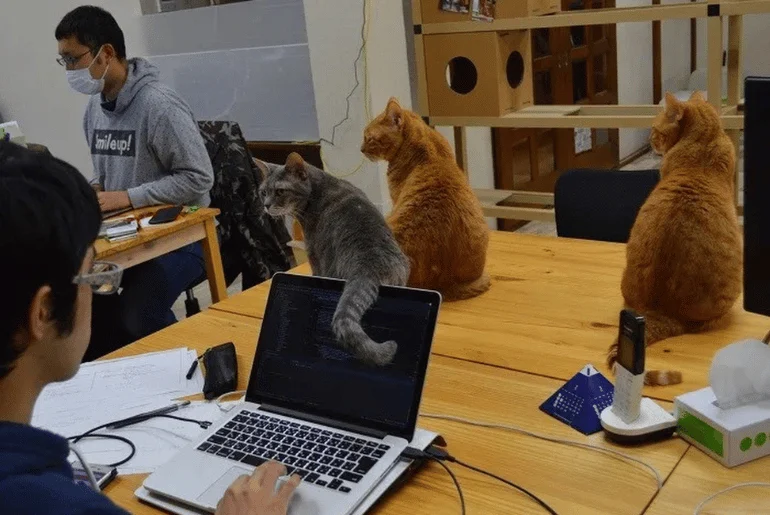
Qnote Inc., a Tokyo-based software development firm, has gained significant attention for its innovative approach to corporate culture, integrating a team of 11 rescued felines directly into its daily operations. These furry colleagues are not merely office pets; they are esteemed members of the organization, assigned symbolic job titles such as manager, auditor, and office clerk, embodying a work philosophy that prioritizes both human and animal welfare. This distinctive model began in 2004 and has since evolved into a core tenet of the company’s identity, attracting talent and fostering an environment renowned for its calm, collaborative spirit.
The Genesis of a Feline-Friendly Firm: A Chronological Account
The journey of Qnote Inc.’s transformation into a cat-centric workplace began organically in 2004, a pivotal year that would forever alter the company’s trajectory. One of the company’s co-founders, driven by compassion, brought a rescued stray kitten into the office. This initial act was not part of a grand corporate strategy but a simple gesture of kindness. The kitten, named "Chibineko" (meaning "small cat"), quickly adapted to the office environment, its playful antics and calming presence having an immediate, albeit unforeseen, positive impact on the employees.
Initially, Chibineko’s presence was an informal arrangement, but its popularity grew exponentially. Employees found themselves gravitating towards the feline, discovering that brief interactions provided much-needed respite from intense coding sessions and project deadlines. The relaxed atmosphere it created was palpable, leading to improved moods and informal conversations among staff members. This initial success prompted the company to consider expanding the initiative.
Over the subsequent years, more rescued cats found their way into the Qnote headquarters. Each new feline arrival was met with enthusiasm, gradually shaping a unique office environment where the boundaries between human and animal companionship blurred. By the mid-2010s, the presence of multiple cats had become an established norm rather than an exception. The company observed a sustained positive impact on morale, stress levels, and inter-employee communication.
Recognizing the profound benefits, Qnote Inc. made a deliberate decision to formalize its cat-friendly policy. This wasn’t merely about allowing pets; it was about integrating them as active, valued members of the organization. The company invested in significant office redesigns to accommodate its growing feline family. This included the installation of multiple litter boxes discreetly placed, elevated walkways and climbing shelves to satisfy the cats’ natural instincts, designated resting zones, and the use of scratch-resistant interiors to ensure both feline comfort and office longevity. The company’s commitment extended to incorporating a love for animals as a desirable quality in prospective employees, signaling its deep-seated dedication to this unique culture. Today, 11 cats freely roam across workstations, meeting rooms, and common areas, embodying the company’s innovative spirit.
Beyond the Whiskers: The Strategic Rationale and Benefits
Qnote Inc.’s decision to embrace a cat-friendly office environment is rooted in a strategic understanding of employee well-being, productivity, and corporate culture. Far from being a mere gimmick, the presence of these feline colleagues is viewed as a calculated investment in human capital.
Enhancing Employee Well-being and Mental Health:
Numerous studies have highlighted the therapeutic benefits of human-animal interaction. In a demanding work environment like software development, where long hours and high-pressure tasks are common, the cats serve as natural stress relievers. Interacting with animals has been shown to lower cortisol levels (the stress hormone), reduce blood pressure, and alleviate symptoms of anxiety and depression. Employees at Qnote are encouraged to take short breaks to pet or play with the cats, providing momentary escapes that help them clear their minds and return to work refreshed. This proactive approach to mental health contrasts with traditional corporate settings that often overlook the subtle stressors of daily work life. The company reports a significant reduction in perceived stress levels among its staff since the full integration of the cats.
Fostering Collaboration and Communication:
The cats act as natural conversation starters and social facilitators. New hires, particularly, find the presence of the felines helps break the ice and encourages informal interactions with colleagues, easing their transition into the workplace. This organic interaction fosters a stronger sense of community and collaboration. Employees often discuss the cats’ antics, share responsibility for their care, and bond over their shared affection for the animals, strengthening team cohesion. This informal networking can lead to better cross-departmental communication and a more integrated, supportive work environment.
Boosting Productivity and Creativity:
While occasional interruptions by a cat jumping onto a desk might seem counterproductive, Qnote Inc. views these moments as valuable opportunities for employees to take micro-breaks. These brief mental resets prevent burnout and can lead to increased focus and creativity upon returning to tasks. A relaxed and positive atmosphere, cultivated by the cats’ presence, is also conducive to creative thinking and problem-solving, essential in the innovative software industry. Employees report feeling more energized and less fatigued, attributing this partially to the calming and stimulating presence of their feline co-workers.
Talent Attraction and Retention:
In Japan’s competitive job market, companies constantly seek unique ways to attract and retain top talent. Qnote Inc.’s cat-friendly policy serves as a powerful differentiator. It appeals to a significant segment of the workforce who are animal lovers, signaling a progressive, empathetic, and employee-centric corporate culture. This unique selling proposition not only draws in individuals who value such an environment but also contributes to higher employee satisfaction and loyalty, potentially reducing turnover rates. The company’s stance on considering a "love for animals" as a desirable quality in hiring further embeds this philosophy into its core identity.
The Feline Workforce: Roles, Responsibilities, and Daily Life
The cats at Qnote Inc. are not just mascots; they are assigned symbolic job titles that reflect their perceived contributions to the office environment. While these titles—such as "manager," "auditor," or "office clerk"—are largely whimsical, they underscore the company’s commitment to recognizing the cats as active participants in the workplace. A "manager" cat might be seen supervising from an elevated perch, while an "auditor" cat might meticulously inspect a desk, and an "office clerk" cat might accompany employees on their rounds. These roles inject an element of playful charm into the daily grind.
Their daily routines are seamlessly integrated into the office flow. The cats move freely, often napping in sunbeams, observing meetings from a distance, or seeking attention with gentle nudges. Dedicated feeding stations, water bowls, and multiple litter boxes are meticulously maintained by staff members, ensuring hygiene and comfort. Regular veterinary check-ups are scheduled, with the company covering the costs, further cementing its commitment to the animals’ welfare. Employees collectively share the responsibility of their care, fostering a sense of shared ownership and teamwork.
Addressing Challenges and Mitigations:
Operating a pet-friendly office, especially with multiple animals, comes with its own set of challenges, which Qnote Inc. has proactively addressed:
- Allergies: This is a common concern. Qnote likely implements a thorough screening process during hiring, making potential employees aware of the cat presence. It’s also possible they have designated "cat-free" zones or air purifiers to mitigate allergen spread for sensitive individuals.
- Hygiene: Strict protocols for cleanliness, including daily litter box maintenance, regular vacuuming, and professional cleaning services, are essential. The scratch-resistant materials also help maintain the office aesthetic.
- Safety: Ensuring the safety of both cats and humans is paramount. This involves careful management of office equipment, securing hazardous materials, and creating safe, elevated spaces for cats to retreat when needed.
- Interruptions: While viewed positively as breaks, constant interruptions could hinder focused work. Employees likely learn to manage these interactions, and the cats themselves often adapt to the rhythm of the office, understanding when to seek attention and when to rest.
A Broader Lens: Pet-Friendly Workplaces in Japan and Beyond
Qnote Inc.’s model is part of a growing global trend towards more humanized, and increasingly animal-inclusive, workplaces. Major corporations worldwide, including tech giants like Google and Amazon, have experimented with pet-friendly policies, recognizing the benefits for employee morale and retention. However, Qnote’s deep integration of rescued animals, assigning them symbolic roles, positions it at the forefront of this movement.
The Japanese Context: Japan has a unique relationship with pets. Pet ownership rates are high, and pet cafes, where customers can interact with cats, dogs, or even owls, are popular urban attractions. This cultural affinity for animals provides a fertile ground for initiatives like Qnote’s. Furthermore, Japan’s traditional work culture, often characterized by long hours and high-stress environments, has led to a growing emphasis on employee well-being and work-life balance initiatives. Companies are increasingly seeking innovative ways to combat karoshi (death by overwork) and improve the overall quality of life for their employees. Qnote’s approach offers a tangible solution to these societal challenges, aligning with a broader shift towards more empathetic corporate practices.
Animal Welfare Implications: Beyond employee benefits, Qnote Inc.’s model has significant implications for animal welfare. By adopting 11 rescued cats, the company provides loving, permanent homes for animals that might otherwise face uncertain futures. This sets a powerful example for other businesses, demonstrating how corporate responsibility can extend to supporting animal welfare initiatives, particularly through adoption rather than purchase. It helps normalize the idea of integrating rescued animals into society and promotes responsible pet ownership.
Economic and Societal Impact: The success of Qnote Inc. suggests that pet-friendly policies can contribute to a more positive economic outcome. Healthier, happier employees are generally more productive, take fewer sick days, and are more likely to stay with a company. This translates into reduced healthcare costs, lower recruitment expenses, and higher overall output. On a societal level, such initiatives can foster a more compassionate and integrated community where the welfare of all living beings is considered.
Statements and Expert Perspectives
Qnote Management Perspective (Inferred):
"From a simple act of kindness in 2004, our feline companions have become an indispensable part of Qnote’s DNA," states a spokesperson for Qnote Inc. "We firmly believe our 11 feline colleagues are not merely office pets but integral members who enhance our productivity, creativity, and overall well-being. Their presence fosters a unique culture of empathy, collaboration, and calm. We’ve seen firsthand how a quick interaction with a purring cat can de-stress an employee and spark a new idea. It’s a testament to our commitment to a holistic approach to employee satisfaction and corporate responsibility."
Employee Testimonials (Inferred):
"Working here is unlike anywhere else," shares Akari Tanaka, a software developer at Qnote. "During a particularly intense coding session, a cat might jump onto my desk for a cuddle, and it’s an immediate mood changer. It’s incredibly calming to have them around. A brief moment spent petting them can completely recharge me." Another employee, Kenji Sato, an HR specialist, adds, "They really help new hires feel at home and break the ice. It’s easier to connect with colleagues when you have a shared love for these wonderful animals."
Workplace Culture Expert (Inferred):
Dr. Emily Chen, a renowned organizational psychologist specializing in workplace environments, comments, "Qnote Inc. exemplifies a forward-thinking approach to workplace design, recognizing the profound impact of human-animal bonds on employee morale and organizational health. In an era where companies are struggling with employee burnout and mental health challenges, Qnote offers a compelling model. This initiative is not just about having pets; it’s about cultivating a culture of empathy, psychological safety, and intrinsic motivation. It could inspire other companies looking for innovative ways to combat workplace stress and foster community, particularly in high-pressure sectors."
Animal Welfare Advocate (Inferred):
"This initiative by Qnote Inc. highlights how businesses can play a crucial role in animal welfare," says Hiroshi Nakamura from the Japan Animal Welfare Society. "By providing loving, stable homes for rescued animals, while simultaneously enriching their human employees’ lives, it’s a profound win-win situation. It sets a precedent for corporate social responsibility that extends beyond traditional environmental or community projects, showcasing how businesses can actively contribute to reducing the number of homeless animals."
Future Outlook
Qnote Inc.’s pioneering model offers valuable lessons for the broader corporate world. As companies continue to grapple with the evolving dynamics of work, employee expectations, and the persistent challenge of mental health in the workplace, the integration of animals could become a more widely accepted strategy. While not every industry or office layout may be suitable for such an extensive program, the underlying principles—prioritizing employee well-being, fostering a humane and empathetic culture, and recognizing the therapeutic power of human-animal bonds—are universally applicable.
The success of Qnote Inc. serves as a powerful case study, demonstrating that productivity and profit do not have to come at the expense of well-being. Instead, by embracing a more holistic and compassionate approach to the workplace, companies can cultivate environments where both humans and, in this unique instance, felines thrive, leading to a more innovative, collaborative, and ultimately, more successful enterprise.








