
The landscape of talent acquisition has undergone a profound transformation by mid-2026, with artificial intelligence (AI) emerging as the undisputed linchpin for successful recruitment strategies. Traditional reliance on job boards, while still generating significant applicant volume, is increasingly proving insufficient for securing top-tier talent. A groundbreaking revelation from Gem’s 2026 Recruiting Benchmark Reports underscores this paradigm shift, indicating that candidates identified through direct sourcing methods are an astonishing eight times more likely to be hired compared to those applying via conventional job postings. This compelling data point has solidified AI candidate sourcing tools as an essential, rather than optional, component for organizations striving to maintain a competitive edge in the global talent market. The era of passive talent—individuals not actively seeking new roles but open to compelling opportunities—has been unlocked by advanced AI capabilities, allowing companies to proactively identify, engage, and ultimately secure the most qualified professionals who might never interact with an "apply" button.
The Evolution of Talent Acquisition: From Reactive to Proactive
For decades, recruitment primarily operated as a reactive process, heavily dependent on candidates actively seeking out job opportunities. The advent of online job boards in the late 1990s and early 2000s digitized this process, offering employers broader reach and a seemingly endless pool of applicants. However, this volume often came at the cost of quality, burying recruiters under mountains of unsuitable resumes and diluting their efficiency. The rise of professional networking platforms like LinkedIn introduced a new dimension, enabling direct outreach, but the manual effort required to sift through profiles and initiate personalized conversations remained a significant bottleneck.
The mid-2020s marked a pivotal turning point with the rapid maturation and widespread adoption of AI within human resources. Recognizing the limitations of purely inbound strategies, forward-thinking organizations began to invest heavily in AI-powered sourcing solutions. These tools moved beyond simple keyword matching, leveraging sophisticated algorithms, natural language processing (NLP), and machine learning (ML) to analyze vast datasets, identify nuanced skill sets, predict cultural fit, and even anticipate career trajectories. This shift from reactive application processing to proactive talent discovery has fundamentally reshaped the role of the recruiter, transforming it from administrative gatekeeper to strategic talent scout.
Key Drivers of AI Sourcing Effectiveness
The significant increase in hiring likelihood for sourced candidates can be attributed to several core capabilities inherent in advanced AI sourcing tools:
- Access to Passive Talent Pools: AI algorithms can scan professional networks, academic databases, industry forums, and even public code repositories to identify individuals with the precise skills and experience required, regardless of their active job-seeking status. This opens up a talent pool estimated to be 70-80% larger than the active job market.
- Enhanced Matching Precision: Unlike traditional applicant tracking systems (ATS) that often rely on keyword matching, AI sourcing tools can understand the context and nuances of job descriptions and candidate profiles. They can infer skills from project experience, assess potential based on learning patterns, and even gauge cultural alignment by analyzing communication styles and previous team engagements.
- Automation of Repetitive Tasks: AI automates the laborious tasks of initial candidate identification, screening, and even personalized outreach. This frees up recruiters to focus on higher-value activities such as building relationships, conducting in-depth interviews, and strategic workforce planning.
- Bias Mitigation and Diversity Enhancement: When properly configured and monitored, AI tools can help reduce unconscious bias often present in human screening processes. By focusing on objective criteria like skills and experience, and by actively identifying candidates from underrepresented groups, these tools can significantly improve diversity, equity, and inclusion (DEI) metrics within an organization’s talent pipeline. Findem and Eightfold AI are notable examples in this domain, offering specific diversity filters and DEI analytics.
- Data-Driven Insights and Market Intelligence: AI platforms provide invaluable insights into talent availability, salary benchmarks, skill gaps, and competitive hiring trends. This market intelligence empowers organizations to make informed decisions about their recruitment strategies, compensation packages, and talent development initiatives.
A Comprehensive Look at Leading AI Candidate Sourcing Tools for 2026
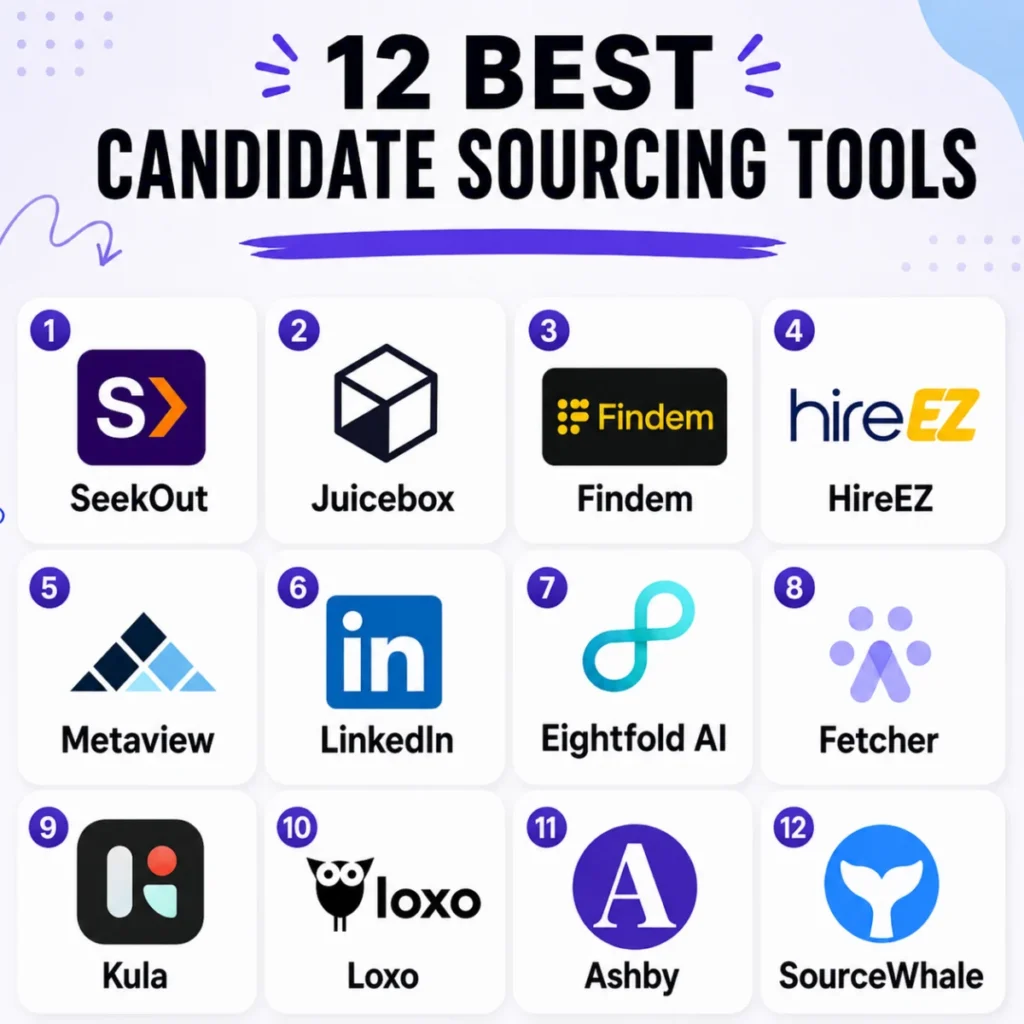
The market for AI candidate sourcing tools is dynamic and rapidly evolving, with a range of specialized platforms catering to diverse organizational needs. Here’s an overview of some of the leading solutions making waves in 2026:
- SeekOut: Renowned for its prowess in identifying elusive technical talent, SeekOut leverages extensive data aggregation and advanced search capabilities to uncover candidates in niche fields, offering robust filters for specific skills, experience levels, and even diversity attributes. Its integration with major ATS platforms streamlines the transfer of qualified leads.
- Juicebox: This platform distinguishes itself with natural-language candidate search, allowing recruiters to use conversational queries rather than complex Boolean strings. Its automated outreach capabilities further enhance efficiency, crafting personalized messages to engage potential candidates.
- Findem: A leader in diversity hiring and talent market intelligence, Findem goes beyond traditional sourcing by providing rich analytics on talent pools, helping companies strategically target underrepresented groups and track DEI metrics throughout the hiring funnel.
- HireEZ: Specializing in outbound sourcing at scale, HireEZ empowers talent acquisition teams to launch extensive, personalized outreach campaigns across multiple channels, making it ideal for organizations with high-volume hiring needs or ambitious growth targets.
- Metaview: Pushing the boundaries of automation, Metaview offers autonomous AI sourcing agents that can independently identify and pre-qualify candidates, significantly reducing the manual effort involved in the initial stages of the recruitment process. It often integrates with interview intelligence features to provide a more holistic view.
- LinkedIn Talent Insights / Recruiter AI: For teams deeply embedded in the LinkedIn ecosystem, these tools offer unparalleled access to the professional network’s vast database. LinkedIn’s AI continually refines candidate recommendations and provides valuable talent market insights, making it a powerful solution for integrated recruitment efforts.
- Eightfold AI: Positioned as an enterprise-grade talent intelligence platform, Eightfold AI offers a holistic view of talent, from internal mobility to external sourcing. Its deep learning capabilities match candidates to roles based on skills, potential, and career trajectory, serving as a comprehensive solution for large organizations.
- Fetcher: Combining AI sourcing with a crucial human quality check, Fetcher ensures a balance between automation and human oversight. Its AI identifies potential candidates, which are then reviewed by a human team to ensure accuracy and relevance before outreach, providing a curated candidate list.
- Kula AI: Marketed as an AI-native, end-to-end hiring platform, Kula AI aims to manage the entire recruitment lifecycle, from initial sourcing and outreach to interview scheduling and candidate experience management, all powered by integrated artificial intelligence.
- Loxo: An all-in-one platform for sourcing and talent intelligence, Loxo provides a comprehensive suite of tools including a vast candidate database, CRM functionalities, and automated outreach, making it a versatile choice for recruitment agencies and corporate talent teams alike.
- Ashby: Geared towards data-driven hiring teams, Ashby offers robust analytics and reporting capabilities that allow organizations to track every aspect of their recruitment funnel, optimize processes, and make strategic decisions based on quantifiable metrics.
- SourceWhale: Excelling in multi-channel outreach campaigns, SourceWhale enables recruiters to engage candidates across various platforms (email, LinkedIn, social media) with personalized sequences, significantly improving response rates and candidate engagement.
The Indispensable Role of Job Description Optimization: The Ongig Advantage
Even with the most sophisticated AI sourcing tools, the effectiveness of recruitment efforts can be significantly hampered by poorly crafted job descriptions. This is where specialized platforms like Ongig play a crucial, complementary role. Ongig focuses exclusively on job description optimization, ensuring that job postings are not only attractive to top talent but also inclusive, compliant, and optimized for search engine visibility.
Ongig’s AI-powered capabilities analyze job descriptions for:
- Inclusive Language: Identifying and suggesting alternatives for biased or gender-coded words that might deter diverse candidates.
- Clarity and Conciseness: Ensuring job requirements are clear, concise, and easy for candidates to understand, improving applicant quality.
- Brand Voice Consistency: Aligning job descriptions with the company’s employer brand to create a cohesive and appealing message.
- Compliance: Flagging potential compliance issues related to legal and regulatory standards in different regions.
- SEO Optimization: Enhancing descriptions with relevant keywords to improve visibility on job boards and search engines, even if job boards are not the primary sourcing channel.
By integrating Ongig into the talent acquisition workflow, organizations ensure that candidates, whether sourced directly by AI or found through other channels, are met with compelling and equitable job opportunities, maximizing the return on investment from their sourcing efforts.
Integration and the Seamless Talent Ecosystem
A crucial aspect of modern AI sourcing tools is their ability to integrate seamlessly with existing HR systems, particularly Applicant Tracking Systems (ATS). This interoperability ensures a smooth workflow, preventing data silos and manual data entry errors. Leading platforms like SeekOut, Eightfold AI, hireEZ, Juicebox, and Fetcher boast robust integrations with major ATS platforms such as Workday, Greenhouse, SAP SuccessFactors, and SmartRecruiters. This connectivity allows for a holistic view of the candidate journey, from initial identification to onboarding, and enables a more data-driven approach to talent management.
Challenges and Ethical Considerations in AI Sourcing
While the benefits of AI in recruitment are undeniable, the rapid evolution of these technologies also presents important challenges and ethical considerations. Data privacy remains a paramount concern, requiring strict adherence to regulations like GDPR and CCPA. Organizations must ensure that candidate data is collected, stored, and processed responsibly and transparently. Furthermore, while AI can mitigate human bias, it is not inherently bias-free. AI models are trained on historical data, which can sometimes reflect existing societal biases. Therefore, continuous auditing, diverse training datasets, and human oversight are essential to ensure that AI sourcing tools promote fairness and equity, rather than perpetuating existing inequalities. The "human quality check" offered by tools like Fetcher exemplifies a proactive approach to addressing these concerns.
Statements from Industry Leaders
"The shift we’ve seen in 2026 is nothing short of revolutionary," states Dr. Evelyn Reed, VP of Global Talent Acquisition at InnovateCorp. "Relying solely on inbound applications is akin to fishing with a single line in a vast ocean. AI sourcing allows us to cast a wide net, precisely target the right species, and even know where they’re likely to bite. The Gem report simply validates what we’ve been observing: proactive, AI-driven sourcing delivers superior talent and significantly reduces our time-to-hire."
Mark Jensen, CEO of a leading AI recruitment platform, added, "Our mission has always been to empower recruiters to be more strategic. With AI handling the heavy lifting of identification and initial engagement, talent professionals can dedicate their expertise to building genuine relationships and assessing true potential. This isn’t about replacing humans; it’s about augmenting their capabilities to achieve unprecedented results."
The Broader Impact and Future Implications
The widespread adoption of AI candidate sourcing tools carries significant implications for the future of work, for HR professionals, and for candidates themselves.
- For HR Professionals: The role of the recruiter is evolving. Success in this new landscape demands proficiency in data analytics, an understanding of AI capabilities, and strategic thinking. Recruiters will increasingly act as talent strategists, leveraging AI insights to build robust talent pipelines, forecast future needs, and drive workforce planning.
- For Companies: Organizations that embrace AI sourcing will gain a substantial competitive advantage. They will be able to fill critical roles faster, access a higher caliber of talent, foster greater diversity, and ultimately drive innovation and growth. Failure to adapt will likely result in slower growth, increased talent costs, and a struggle to keep pace with competitors.
- For Candidates: The experience of job seeking is becoming more personalized. Instead of endlessly scrolling through job boards, top talent will find themselves being sought out for opportunities that truly align with their skills and career aspirations. This could lead to more fulfilling career paths and a reduction in the "spray and pray" application approach.
Conclusion
As we move further into 2026, the message is clear: AI candidate sourcing tools are no longer a luxury but an essential component of any competitive talent acquisition strategy. The overwhelming evidence, highlighted by industry benchmarks like Gem’s 2026 report, demonstrates their unparalleled effectiveness in identifying and securing the talent that truly drives organizational success. By leveraging these advanced technologies, complemented by crucial tools like Ongig for optimizing job descriptions, organizations can streamline their hiring processes, enhance diversity, and build resilient, high-performing workforces capable of navigating the complexities of the future. The era of strategic, intelligent recruitment is here, and AI is its foundational pillar.






