
New York lawmakers passed S8877 on June 2, a bill poised to significantly reshape the landscape of online job recruitment by mandating that larger employers and job-posting platforms disclose whether an advertised position is for a current vacancy and when they realistically expect to fill it. This pivotal legislation introduces substantial penalties for non-compliance, with initial fines starting at $2,500 per posting platform, escalating if violations are not rectified within a 30-day period. The bill’s passage comes at a critical juncture, driven by mounting evidence that pervasive "ghosting" practices and an unprecedented surge in application volumes are fundamentally altering both candidate behavior and the operational strategies of hiring departments across the nation.
Unmasking the Phenomenon of "Ghost Jobs"
At the heart of the New York bill, and indeed a growing legislative movement, lies the issue of "ghost jobs." These are defined as job postings for roles that an employer has no immediate or near-term intention of filling. Such postings can be insidious, creating a false sense of opportunity for job seekers and contributing to widespread frustration within the labor market. State Senator Michael Gianaris, a key sponsor of S8877, did not mince words when describing the practice, publicly denouncing it as "dishonest and exploitative" in a post on X. This sentiment echoes a broader public outcry against opaque and often misleading recruitment tactics that waste applicants’ time and energy.
The proliferation of ghost jobs can be attributed to several factors. Some companies use these phantom postings to gauge market interest for potential future roles, to maintain a perceived image of growth and expansion, or to build extensive talent pipelines without the immediate intent to hire. In other cases, internal organizational inefficiencies or a lack of coordination between HR and hiring managers can lead to requisitions remaining open long after a role has been filled or deprioritized. Whatever the reason, the outcome is consistent: a diluted and frustrating experience for job seekers who invest significant effort into applications that, from the outset, had no genuine prospect of leading to employment. The economic downturns and periods of uncertainty, such as those experienced during and after the COVID-19 pandemic, further exacerbated this issue, as companies sought to maintain flexibility in their workforce planning without always committing to active recruitment.
A Broadening Legislative Offensive Against Opaque Hiring
New York’s S8877 is not an isolated incident but rather a significant component of a burgeoning multi-jurisdictional effort to introduce greater transparency and accountability into the hiring process. This legislative momentum reflects a growing recognition among policymakers of the detrimental impact of current recruitment practices on individuals and the broader economy.
In the state of Pennsylvania, a proposed "Ghost Job Postings Prevention Act" signals a similar intent, though with some distinct requirements. This bill would compel employers to explicitly disclose whether a posting represents an existing vacancy or an anticipated one. Furthermore, it seeks to mandate the provision of a clear hiring timeline and, notably, requires disclosure of how many times the same role was posted in the prior year. This latter provision directly targets the practice of repeatedly advertising positions that never seem to be filled, offering a clear metric for identifying potential ghost jobs.
Across the border in Ontario, Canada, anti-ghosting rules have already taken effect as of January 1. These regulations apply to employers with 25 or more employees and impose two critical obligations: employers must notify candidates of a formal interview within 45 days of the interview taking place, and they must disclose when artificial intelligence (AI) is utilized in the candidate screening process. While Ontario’s rules encompass a broader scope of candidate experience beyond just ghost jobs, they share the common thread of enhancing transparency and establishing a baseline for respectful engagement with job seekers. The inclusion of AI disclosure is particularly forward-thinking, addressing concerns about algorithmic bias and the increasingly automated nature of initial application reviews. These diverse legislative approaches underscore a global shift, indicating that the days of unbridled, opaque hiring practices are drawing to a close.
The Erosion of Candidate Experience: A Deep Dive into Data
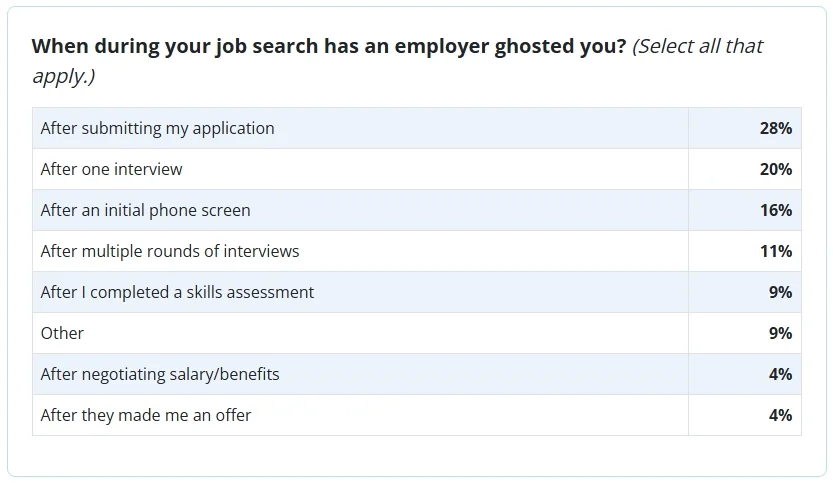
The legislative attention to ghost jobs and ghosting is entirely justified by alarming statistics that reveal a severe degradation of the candidate experience. Recent research by iHire found that a staggering 53% of job seekers reported being ghosted by a potential employer in the past year. This represents a significant and troubling increase from 38% reported just a year prior, highlighting a worsening trend in employer communication and engagement. Such practices leave candidates feeling undervalued, disrespected, and profoundly discouraged, often after dedicating considerable time and effort to crafting applications and preparing for interviews.
Compounding this issue is the double-edged sword of artificial intelligence in recruitment. While AI promises efficiency, its widespread adoption has introduced new challenges. A survey conducted by Robert Half revealed that 67% of U.S. HR leaders believe that AI-generated applications have actually slowed down the hiring process. This counterintuitive finding can be attributed to the sheer volume of applications that AI tools can generate and submit, creating what HR Executive aptly describes as a "sea of sameness." Recruiters are often overwhelmed by an influx of applications that, despite being tailored by AI, lack genuine distinctiveness or human nuance, making the screening process more arduous and time-consuming. This increased burden on human recruiters can inadvertently contribute to ghosting, as the sheer volume makes it impractical to provide personalized feedback or even basic communication to every applicant. The promise of AI to streamline hiring has, in some respects, inadvertently created new bottlenecks and exacerbated existing communication failures.
Long-Term Economic Scarring: Beyond Employer Brand
The cost of this cycle of ghosting and poor candidate experience runs far deeper than just a damaged employer brand; it has significant, long-term implications for labor force participation and the broader economy. A groundbreaking National Bureau of Economic Research (NBER) working paper, published in June by University of Connecticut economists Remy Levin and Daniela Vidart, sheds critical light on this issue. Their research found that men’s decisions to participate in the labor force are profoundly shaped by their lifetime observations of how the labor market treats the people around them. Crucially, these foundational beliefs about the job market are formed predominantly before the age of 24 and, once established, tend to persist for decades, even among individuals who subsequently relocate to stronger job markets.
Levin and Vidart’s findings present a stark warning: short-run drops in labor demand, characterized by a difficult and unrewarding job search experience, can harden into long-run, structural drops in labor supply. In simpler terms, if young individuals repeatedly encounter frustration, lack of feedback, and perceived disrespect from employers, they are more likely to become permanently discouraged and disengage from the formal labor market altogether.
Current U.S. labor data gives this academic finding a profound and urgent relevance. The U.S. labor force experienced a contraction of approximately 720,000 people in June. Federal Bureau of Labor Statistics (BLS) figures further indicate that roughly 6 million people who express a desire for jobs are not currently counted within the labor force. These individuals, often referred to as "discouraged workers," may have simply stopped actively seeking employment due to repeated failures, lack of response, and the emotional toll of an unrewarding job search. Each unanswered application, each ignored interview, and each encounter with a "ghost job" can reinforce this negative behavior, pushing individuals further away from active participation in the economy. This phenomenon creates a vicious cycle: a frustrating job market discourages potential workers, leading to a smaller labor pool, which then creates challenges for employers even as demand for labor increases.
Reclaiming Control: Employer Responsibility and Strategic Talent Engagement
The emerging legislative landscape places a significant portion of the responsibility for rectifying these issues squarely within the purview of Human Resources departments. The pending laws, even in their nascent stages, point towards an undeniable employer obligation to proactively audit open requisitions, ensuring that only genuine, currently available positions are advertised. This includes the critical step of promptly removing postings for roles that no one intends to fill in the near term. Beyond compliance, employers are increasingly expected to disclose hiring timelines, even in jurisdictions where no specific statute yet requires it, and to consistently "close the loop" with every interviewed candidate, regardless of the outcome.
Proactive and ethical candidate engagement extends beyond merely avoiding negative practices. Forward-thinking HR strategies advocate for transforming rejected finalists into valuable assets. Instead of leaving them in silence, these candidates can be nurtured as a "talent community" – a curated pool of qualified individuals who have already demonstrated interest and capability. Many consultants now advise that the recruitment process should conclude not with a cold rejection, but with an invitation for promising finalists to join such a community, encouraging them to stay connected for future opportunities. This proactive groundwork is not merely a gesture of goodwill; it represents a strategic investment. Recruiters will eventually face the monumental task of re-engaging individuals who, having been repeatedly disheartened, may have quit searching altogether.
This proactive approach is critical in light of looming workforce challenges. As HR Executive reported in July, Lightcast projects a U.S. worker deficit of nearly six million by 2032, which would represent the largest labor shortage in the country’s history. This sobering forecast underscores a profound paradox: today’s often impersonal and discouraging hiring processes are inadvertently teaching potential future employees to walk away from the very labor market that will desperately need them. Employers who fail to adapt to this new paradigm of transparency and respect in recruitment will find themselves at a significant disadvantage, struggling to fill critical roles in an increasingly competitive talent landscape.
Reactions, Implications, and the Future of Recruitment Transparency
The passage of bills like S8877 is likely to elicit varied reactions across the industry. Employers, particularly larger corporations and staffing agencies, will face an increased compliance burden, necessitating a thorough review of their job posting protocols, Applicant Tracking Systems (ATS), and communication workflows. HR technology providers may see a surge in demand for solutions that help automate disclosure requirements and streamline candidate communication. Recruiters will need to adapt their practices, moving away from passive "post and pray" strategies towards more active, transparent, and candidate-centric engagement.
From the perspective of worker advocacy groups and labor organizations, these legislative efforts are a welcome development, signaling a necessary shift in power dynamics within the job market. They champion the idea that job seekers deserve basic respect and transparency, and that the emotional and economic toll of ghost jobs and ghosting can no longer be ignored.
However, challenges in implementation and enforcement are inevitable. Defining "larger employers" and ensuring compliance across the myriad of job boards and social media platforms will require significant regulatory oversight. There may be debates over the exact timing of disclosure and the practicalities of updating expected fill dates. Despite these hurdles, the broader implication is clear: the era of opaque, one-sided hiring practices is drawing to a close. New York’s S8877, alongside similar initiatives in Pennsylvania and Ontario, marks a definitive pivot towards a more ethical, transparent, and accountable recruitment ecosystem. This shift is not merely about avoiding fines; it’s about rebuilding trust, fostering genuine engagement, and ensuring the long-term health and stability of the labor force in the face of unprecedented demographic and economic challenges. The future of hiring will increasingly demand empathy, clarity, and a commitment to valuing every potential contributor to the workforce.








