
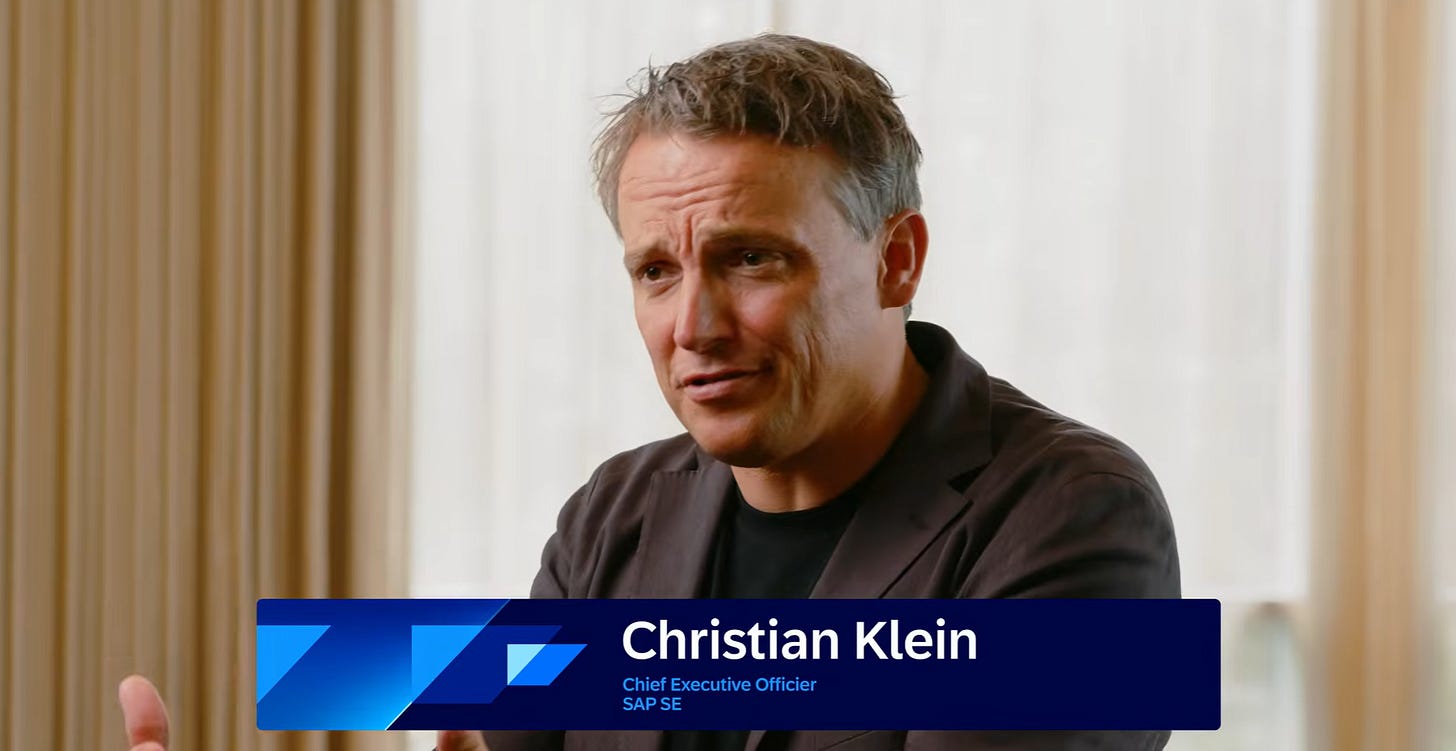
Last week, SAP, a titan in enterprise software, unveiled a comprehensive AI architecture that CEO Christian Klein boldly declared positions the company "at its core" as an AI firm. This ambitious initiative, named "The Autonomous Enterprise," represents a significant strategic pivot for SAP, aiming to embed artificial intelligence deeply into its suite of business management solutions. The announcement, made during a period of intense focus on generative AI’s potential, seeks to redefine how businesses operate by leveraging intelligent agents and a unified AI platform.
A Vision for the Intelligent Business
At the heart of SAP’s new vision is a commitment to empowering businesses with unprecedented levels of automation and insight. Christian Klein stated, "The Autonomous Enterprise includes a unified AI platform for building, contextualizing, and governing agents, an autonomous suite that executes core business operations, and a new user experience that redefines how people work with enterprise software." This multi-faceted approach aims to move beyond simple task automation towards a more integrated and responsive business ecosystem.
The concept of "The Autonomous Enterprise" is built upon three key pillars:
- Unified AI Platform: This foundational layer provides the tools and infrastructure necessary for developing, managing, and deploying AI agents across the SAP landscape. It emphasizes governance and contextualization, ensuring that AI applications are not only powerful but also secure and aligned with business objectives.
- Autonomous Suite: This encompasses the core business operations powered by AI. The goal is to enable systems to execute complex processes with minimal human intervention, identifying and rectifying inefficiencies automatically. This is where the concept of "agents" plays a crucial role, acting as intelligent assistants and executors of tasks.
- Redefined User Experience: SAP aims to transform how users interact with enterprise software through intelligent interfaces, primarily driven by conversational AI like Joule. This shift intends to make complex business systems more accessible and intuitive, fostering greater user engagement and productivity.
SAP’s ERP Heritage: A Foundation for AI
Understanding SAP’s announcement requires acknowledging its deep roots in Enterprise Resource Planning (ERP). Unlike specialized software providers, SAP has historically managed a vast spectrum of business resources, including finance, human capital, supply chain, manufacturing, and procurement. With over 25 industry-specific editions, SAP’s systems offer end-to-end visibility, tracing a product’s lifecycle from sale back to its raw materials and suppliers. This intricate web of data allows businesses in diverse sectors—from pharmaceuticals to telecommunications—to manage complex value chains, revenue streams, costs, and profitability.
The advantage of this comprehensive data model is its ability to answer complex business questions. For instance, an inquiry about declining profit margins for a specific product line in a particular region can be analyzed by SAP to pinpoint contributing factors such as supplier price increases, changes in sales commissions, or soaring shipping costs. Previously, such investigations would require extensive manual data analysis by dedicated teams.
The Role of AI in Unlocking Deeper Insights
SAP’s new AI architecture, particularly through its "autonomous enterprise AI" stack, promises to automate and accelerate these analytical processes. By posing questions to tools like Joule, users can receive detailed answers that go beyond surface-level observations. The AI can delve into intricate causal relationships, identifying the primary drivers of business performance fluctuations, such as a specific supplier’s impact on a profit margin. This capability is poised to offer significant value, provided the systems perform as intended.
In the realm of Human Capital Management (HCM), similar complex questions arise daily: why is one sales team underperforming its peers? Is it leadership quality, training deficiencies, team tenure, management experience, or external market forces? Traditionally, "skills" have often been seen as the universal solution, but SAP’s AI approach aims to explore a broader range of factors, including team dynamics, leadership effectiveness, and systemic process bottlenecks. This focus on "optimization problems" across human capital operations underscores the potential of AI to drive performance improvements.
The Autonomous Enterprise: A Deeper Dive into SAP’s Strategy
The term "autonomous" in SAP’s announcement signifies a move towards systems that can operate with greater self-sufficiency. The company envisions a future where SAP systems can proactively identify and address suboptimal processes. This ambition is reflected in the announcement of over 200 "agents," designed to automate various business functions.
Human Capital Management: A Focus Area
Within HCM alone, SAP has introduced numerous agents, each targeting specific processes. These agents, while varying in scope and complexity, are designed to streamline operations. Examples include agents for payroll, which is notoriously prone to errors and complexity, and employee development. In these areas, the AI aims to automate steps, detect and rectify issues, generate alerts, create personalized development materials, and identify employees for upskilling initiatives.
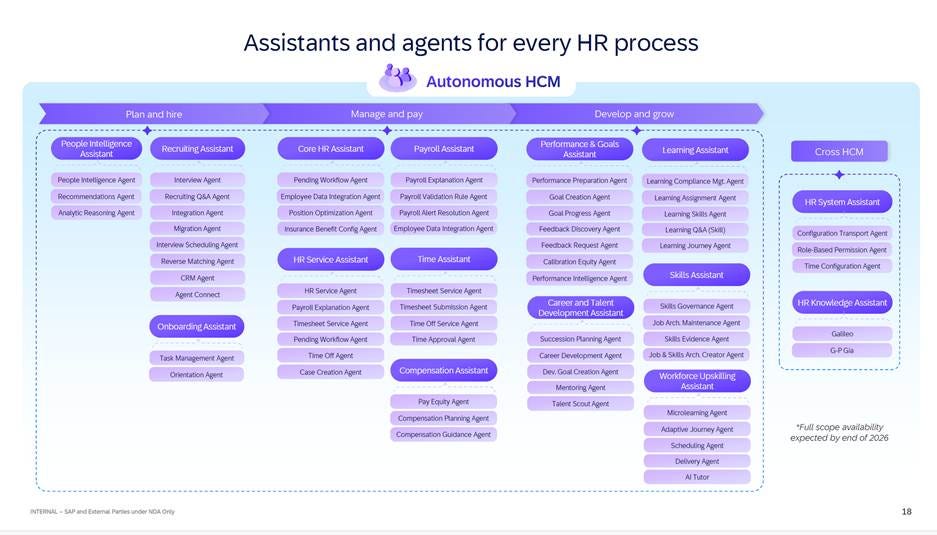
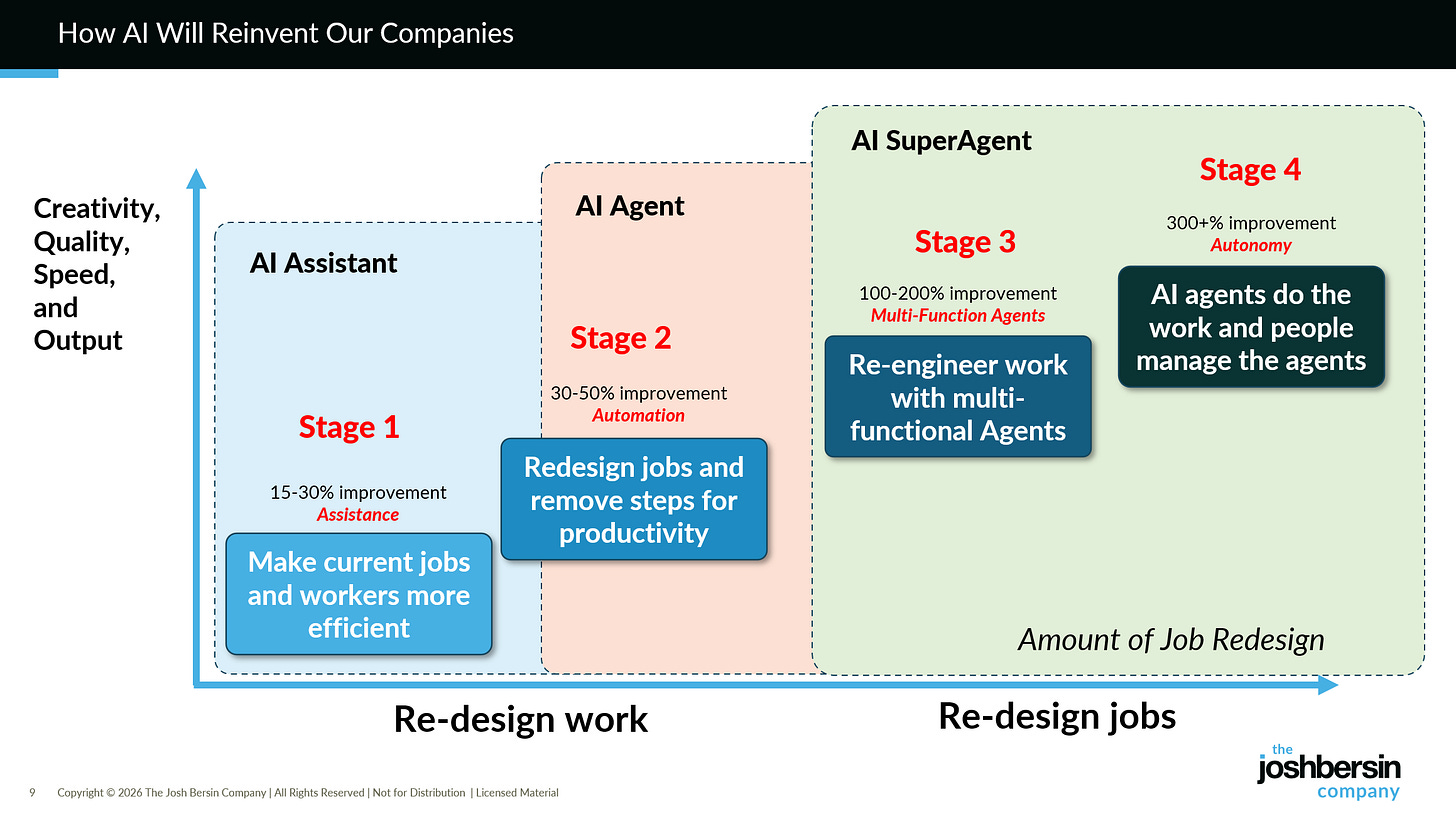
The critical question for enterprise AI adoption is whether these "automations" merely simplify existing workflows or fundamentally redesign how business functions operate. While SAP’s initial offerings appear to focus heavily on automation, the underlying architecture suggests a potential for more profound process redesign over time.
A "Waymo" Approach to AI Transformation
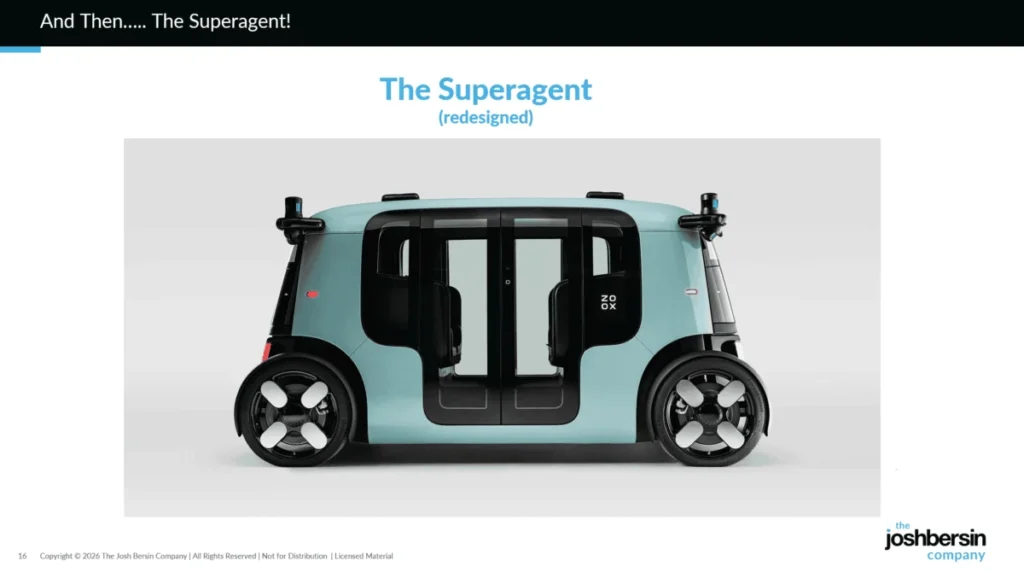
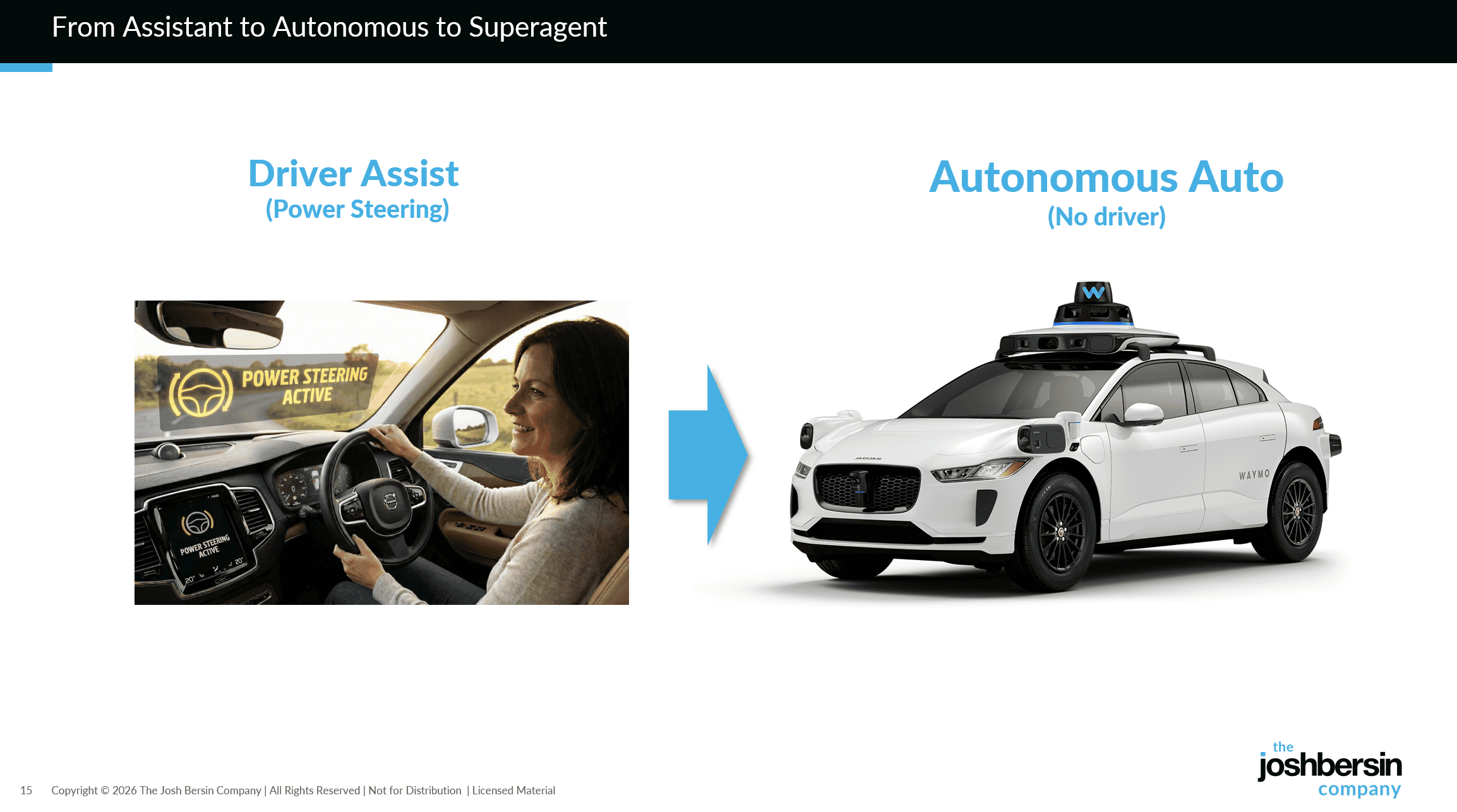
The author draws an analogy to the evolution of autonomous vehicles to explain SAP’s current strategy. SAP is likened to Waymo, which developed self-driving technology for existing car platforms, enhancing them without fundamentally altering the core vehicle design. This contrasts with companies like Zoox, which aim to revolutionize the automotive experience by redesigning the vehicle itself.
SAP’s approach, therefore, is seen as optimizing the current SAP system to operate more autonomously and effectively, rather than immediately undertaking a complete overhaul of existing processes. This "Step 1: From Driver Assist to Autonomous Driving" approach prioritizes automating and enhancing current workflows. The potential for a "Step 2: From Autonomous (Old Process Automated) to Superagent (Redesigned)"—where AI drives fundamental process innovation—remains a future possibility. While automating complex SAP workflows offers significant value, the true transformative potential of AI may lie in its ability to facilitate complete business process redesign.
Key Technological Innovations Under the Hood
SAP’s AI architecture is underpinned by several key technological advancements:
- The AI Layer and Data Fabric: A robust AI layer, integrated with a data fabric, forms the core of the system. This layer incorporates numerous AI models and a substantial "context window," allowing SAP to process vast amounts of business data.
- SAP-RPT-1.5 (Tabular Data Model): A groundbreaking proprietary AI model designed to analyze, evaluate, and model tabular data. This is particularly significant as tabular data forms the bedrock of virtually all business software. Unlike general-purpose Large Language Models (LLMs) that can struggle with spreadsheets and tables, SAP-RPT-1.5 is optimized for massive datasets, enabling sophisticated analysis, modeling, and "what-if" scenario planning. A public playground for this technology is available, offering users a hands-on experience.
- SAP Knowledge Graph: Positioned as the "brain" of the system, the Knowledge Graph maps SAP’s thousands of business entities, structures, and rules into a semantic layer. This allows users to query the system using natural language, translating complex English requests into function-specific data queries. This semantic understanding is crucial for providing relevant insights and actions.
- Joule: The Copilot and Development Tool: Joule, SAP’s conversational AI interface, has evolved beyond its initial role as a transaction finder. The new "Joule Studio" is presented as an enterprise-grade development environment for building and managing AI agents. This tool provides a robust platform for IT teams and SAP developers to create both simple and complex agents, offering a significant advantage over less structured "vibe coding" approaches. Joule acts as the primary user-facing interface for interacting with these agents.
The "Big Memory" Concept and Company Models
SAP’s announcement also touched upon the concept of "massive context windows" for storing an entire "company memory." This refers to the AI’s ability to retain and utilize a comprehensive dataset of operational knowledge, including customer information, product details, processes, rules, and even documents and emails. This "company corpus" can then be used for continuous analysis, modeling, and improvement.
This "company model" has the potential to revolutionize problem-solving. By capturing tribal knowledge and operational best practices within the AI, businesses can identify the direct contributing factors to performance gaps. For example, discovering that some sales teams engage senior executives for support while others do not could reveal undiscovered operational efficiencies. This deep integration of AI with ERP systems promises significant benefits in improving business activities.
AI Governance: Ensuring Responsible Deployment

Recognizing the critical need for responsible AI deployment, SAP has introduced the "AI Agent Hub." This system provides governance capabilities similar to those offered by competitors like Workday and ServiceNow. It allows for the management of AI agents, including non-SAP agents, by setting rules, data policies, security controls, and operating limits. The hub supports agent verification, data connectivity, and coordination, addressing the potential for AI agents to operate erratically or compromise data security.
A key challenge highlighted is the coordination of agent-to-agent communication. In HCM, for instance, an agent delivering personalized training should ideally interact with agents responsible for development planning, performance management, and work monitoring to ensure cohesive and effective employee support.
Is SAP Truly an AI Company?
SAP’s ambitious AI strategy positions it as a significant player in the enterprise AI landscape. While startups are rapidly innovating, the established ERP and HCM giants like SAP, Workday, and Oracle are leveraging their decades of R&D and deep customer relationships to integrate AI into their existing platforms. This approach suggests that the "SaaS Apocalypse" narrative, driven by the fear of legacy systems being rendered obsolete, may be premature.
SAP’s strategy is not about abandoning its software but rather about making it less visible by embedding its execution into intelligent agents. This shift promises to move customers away from static workflows and towards more dynamic, AI-driven decision-making and action. The goal is to leverage AI for cross-domain process innovation, enhanced customer and employee experiences, and smarter overall business operations.
The company anticipates that this transformation will lead to a financial model shift towards consumption and outcomes, rather than solely relying on traditional seat licenses. By embedding AI capabilities across its suite—providing assistants for finance, procurement, supply chain, HR, and customer-facing functions—SAP aims to prove its transformation into an AI-centric organization.
Broader Implications and Future Outlook
SAP’s move is a clear signal that established enterprise software vendors are committed to evolving their offerings with AI. The deep industry knowledge and substantial customer investments in platforms like SAP remain vital. This new AI strategy has the potential to reinvigorate SAP’s growth and competitiveness. As AI continues to mature and integrate into business operations, the focus will likely shift from simple automation to more sophisticated process redesign and intelligent decision-making. The interplay between these evolving AI capabilities and existing enterprise systems will be a key area to monitor in the coming years.







