
Sam’s Club is charting a distinctive course in the rapidly evolving landscape of artificial intelligence integration, asserting that any AI tool adopted must fundamentally lead to more human conversation and interaction within its clubs, not less. This strategic imperative, articulated by Claire MacIntyre, the retailer’s chief people officer, during a compelling discussion with PBS NewsHour co-anchor Amna Nawaz at Semafor‘s influential World of Work event, serves as the foundational framework for how the wholesale club giant is deploying AI across its extensive store operations and sophisticated workforce development initiatives. The overarching philosophy, succinctly summarized by MacIntyre as "people-led, tech-powered," underscores a deliberate commitment to leveraging technological advancements to augment, rather than diminish, the human element crucial to its business model.
The Genesis of a Human-Centric AI Philosophy
The "people-led, tech-powered" mantra is more than just a catchy corporate slogan; it represents a deeply ingrained organizational principle that guides every conversation and decision regarding technological adoption at Sam’s Club. This philosophy positions human capital and interaction at the core of its operations, with technology serving as an empowering enabler. The retail sector, frequently at the forefront of technological disruption, often grapples with the dual promise and peril of AI: the promise of efficiency and enhanced capability versus the peril of job displacement and dehumanized customer experiences. Sam’s Club’s strategy seeks to navigate this dichotomy by intentionally designing AI implementations that free up associates to engage more meaningfully with members and with each other, thereby enriching the overall club experience.
The Semafor World of Work event, where MacIntyre shared these insights, is a significant annual forum that convenes leaders from business, policy, and academia to explore the profound transformations sweeping through the global workforce. Held in a context of widespread industry discussions about automation, skill gaps, and the future of employment, MacIntyre’s presentation offered a refreshing counter-narrative to the prevailing anxieties surrounding AI. The event typically features panels and keynotes addressing themes such as the ethical implications of AI, the imperative for upskilling, and innovative HR strategies, making it an ideal platform for Sam’s Club to showcase its progressive stance. Discussions at such events frequently highlight the tension between technological advancement and human welfare, making Sam’s Club’s clear articulation of its human-first approach particularly resonant.
Evolution of AI Integration: A Chronological Perspective
Sam’s Club’s journey into AI is not a sudden pivot but rather an evolving strategy built upon earlier technological innovations. While specific launch dates for all AI tools are proprietary, the progression reflects a deliberate, iterative approach:
- Early 2010s (Foundational Digital Tools): The initial groundwork for digital transformation began with the introduction of mobile applications and digital membership cards, streamlining basic member interactions.
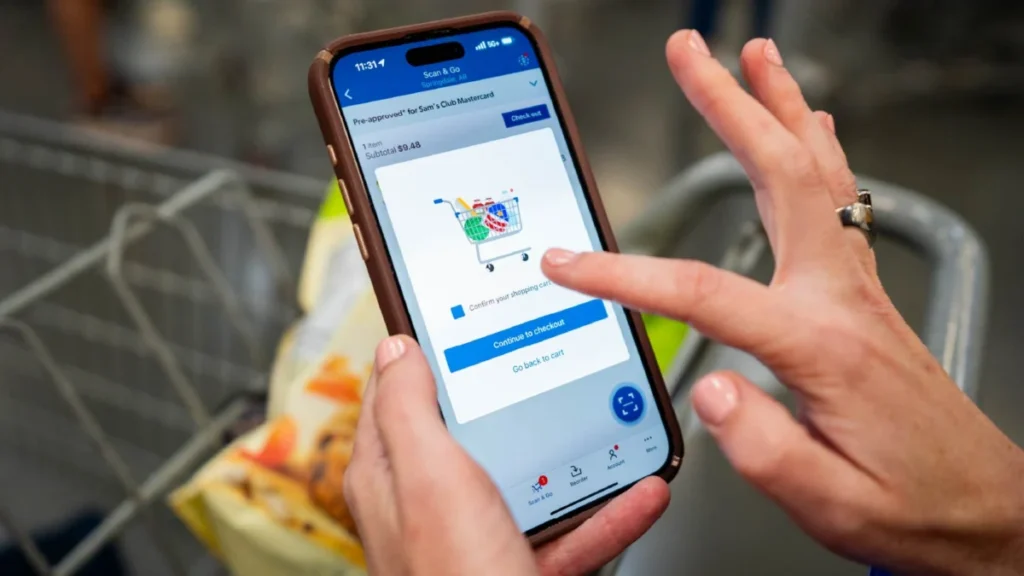
- Mid-2010s (Scan & Go Pilot and Rollout): The development and gradual rollout of the Scan & Go feature marked a significant leap. Introduced to enhance convenience, this app feature allows members to scan items with their smartphones and pay directly, bypassing traditional checkout lines. Initially viewed by some as a potential job reducer, Sam’s Club strategically reframed its purpose, focusing on reallocating labor rather than reducing it.
- Late 2010s (Operational AI for Efficiency and Quality): Following the success and learning from Scan & Go, the company began to explore AI applications for internal operations. This included the development of tools like the store-standards application, designed to leverage computer vision and data analytics to ensure product display consistency and quality control.
- Early 2020s (Workforce Development and Retention AI): Recognizing the critical role of human capital, Sam’s Club expanded its AI focus to associate development and retention. This phase saw the introduction of the AI-powered interview coach within the Live Better You program and predictive analytics tools for managers to identify and address turnover risks. This period also coincided with a global labor shortage and increased focus on employee well-being and career growth, making such tools particularly timely.
This chronological progression demonstrates a strategic evolution from consumer-facing convenience to internal operational efficiency, culminating in a strong emphasis on empowering and developing its workforce—all while maintaining the core principle of enhancing human interaction.
Redeploying Human Capital: The Scan & Go Paradigm
A prime illustration of Sam’s Club’s AI strategy in action is its widely adopted Scan & Go technology. This app feature empowers members to scan and pay for their chosen items directly on their smartphones, enabling them to bypass traditional checkout queues and proceed through an exit gate without the need for a manual receipt verification. While such innovations often spark concerns about job displacement, particularly from roles like exit greeters, MacIntyre robustly countered this apprehension. "What we have is more people in other areas of the club," she explained, clarifying that the associates previously tasked with labor-intensive, item-by-item receipt checks are now redeployed into roles that facilitate more meaningful member engagement.
Instead of meticulously verifying purchases, these associates now stand at the exit to warmly thank members, inquire about their shopping experience, and offer assistance. This shift transforms a transactional interaction into a relationship-building moment. Furthermore, the efficiency gains from Scan & Go free up other associates to actively roam the sales floor, proactively assisting members who might need help locating products, understanding features, or making purchasing decisions. This strategic reallocation aligns with industry trends indicating that enhanced customer service can significantly boost satisfaction and loyalty. Data from the retail sector suggests that stores with higher levels of visible and helpful staff often report stronger sales performance and positive customer feedback. By leveraging AI to automate routine tasks, Sam’s Club effectively reorients its workforce towards value-added interactions that technology cannot replicate. This not only optimizes operational flow but also creates a more responsive and helpful shopping environment.
Enhancing Operational Excellence Through Collaborative AI
Beyond the member-facing experience, Sam’s Club has ingeniously applied its human-centric AI logic to internal operational processes, notably through a store-standards tool utilized by associates on handheld devices. This tool enables associates to photograph various displays, such as a bakery case or a produce section, and then employs AI to instantly assess whether the products meet predefined company standards for presentation, freshness, and arrangement. While the immediate value might seem to lie in automated compliance checks, MacIntyre emphasized that the true benefit resides in the "human-to-human exchange" it precipitates.
The AI’s role is not to simply pass judgment, but to act as a data-driven conversation starter. When the tool flags a deviation from standards, it triggers a dialogue between an associate and their manager. This conversation moves beyond a mere directive to correct an error; it delves into why the standard might have been missed, explores solutions, and facilitates knowledge sharing. This approach fosters a culture of continuous improvement and collaborative problem-solving, rather than one of punitive enforcement. Industry analysis often highlights that such AI-augmented workflows can lead to significant improvements in consistency, reduced waste, and enhanced product quality across a large retail footprint. By transforming a potentially dry compliance check into a coaching opportunity, Sam’s Club harnesses AI to elevate both product standards and internal team dynamics.
Cultivating Skills Without Judgment: The AI Interview Coach
Sam’s Club’s commitment to its "people-led" philosophy extends profoundly into its workforce development initiatives. The company has integrated an AI-powered interview coach into its Live Better You program, a pioneering tuition-free degree and certification program designed for its frontline workers. This innovative tool offers associates a safe and confidential environment to practice mock interviews, receiving instant, objective feedback on crucial aspects such as interview structure, pacing, and delivery.
MacIntyre highlighted the tool’s distinct advantage over human coaches in this specific context: its absolute neutrality. "This coach is assessing. There’s zero judgment," she stated. "Nobody sees it. Nobody’s giving you a grade on it. But you get the rich, rich feedback in a safe environment that you can then take on to do the next thing." This absence of human bias or subjective opinion creates a psychologically safe space where associates can experiment, make mistakes, and learn without fear of professional repercussions or personal embarrassment. This is particularly valuable for frontline workers who may be seeking to advance into management roles or transition into different career paths, and who might lack prior experience with formal interview processes.
The benefits of such a tool are manifold. It democratizes access to high-quality interview coaching, which might otherwise be expensive or inaccessible. It allows for unlimited practice, tailoring feedback to individual needs. From a broader perspective, AI-powered training tools are gaining traction across industries as a scalable and personalized solution for upskilling and reskilling workforces to meet evolving job market demands. For Sam’s Club, investing in such tools through programs like Live Better You directly addresses the growing skills gap in the economy and reinforces its commitment to employee growth and mobility, thereby fostering loyalty and a more skilled workforce.
Proactive Leadership: AI for Managerial Support and Retention
In a further demonstration of its commitment to empowering its people, Sam’s Club has deployed AI to support its club managers, a critical cohort for employee retention and performance. This involves integrating prompts onto leadership devices that leverage predictive analytics to flag when a new hire is approaching a potential turnover risk point. Crucially, the AI doesn’t just identify the risk; it suggests specific, actionable conversations managers can have with these associates to proactively address potential issues and reinforce engagement.
MacIntyre shared a compelling anecdote about a club manager who initially expressed resistance to these AI-driven prompts. "When you rolled this out, I hated it," the manager reportedly told her. However, the manager later admitted that the tool had become something he "in fact needed but hadn’t been getting on his own." This illustrates a common initial human resistance to new technologies, particularly those that suggest altering established behaviors. Yet, it also highlights the profound impact AI can have when designed to augment human capabilities rather than replace them.
Industry research consistently shows that high employee turnover, especially among new hires, is a significant cost center for businesses, impacting recruitment, training, and overall productivity. The estimated cost of replacing an employee can range from tens to hundreds of percent of their annual salary, depending on the role. By equipping managers with AI-driven insights and conversation prompts, Sam’s Club is making a proactive investment in employee retention. This not only reduces direct financial costs but also contributes to a more stable, experienced, and engaged workforce, which in turn positively impacts customer service and overall club performance. The AI acts as an intelligent assistant, offering timely, data-backed guidance that helps managers become more effective leaders and mentors, ultimately fostering a more supportive and stable work environment.
Broader Implications and Industry Impact
Sam’s Club’s deliberate and human-centric approach to AI offers a compelling blueprint for the future of work in the retail sector and beyond. In an era where fears of widespread job displacement due to automation are prevalent, Sam’s Club demonstrates a viable model for "augmented intelligence," where technology serves to enhance human roles rather than eradicate them. This strategy positions the company not just as a retail innovator but as a thought leader in responsible AI deployment.
- Elevated Employee Engagement and Retention: By focusing on redeployment, skill development, and proactive managerial support, Sam’s Club is actively fostering a more engaged and loyal workforce. In a competitive labor market, this can be a significant differentiator, leading to lower turnover rates and a more experienced, productive team. This also contributes to a stronger employer brand, attracting talent who value growth and meaningful work.
- Enhanced Customer Experience: Freeing up associates from routine tasks allows for more genuine, high-quality interactions with members. This directly contributes to a superior customer experience, which is increasingly vital in a retail landscape where convenience and personalization are paramount. Satisfied members are more likely to be repeat customers and advocates for the brand.
- Ethical AI Deployment: Sam’s Club’s approach implicitly addresses several ethical considerations often associated with AI. By emphasizing human oversight, non-judgmental feedback, and support for career growth, it counters concerns about algorithmic bias, surveillance, and dehumanization. This commitment to ethical AI practices builds trust among employees and members alike.
- Competitive Advantage: While many retailers are adopting AI for efficiency, Sam’s Club’s distinctive focus on enhancing human interaction provides a unique competitive edge. It differentiates the company as one that values its people and its members above mere transactional automation. This strategic foresight could set a new standard for how AI is integrated into customer-facing industries.
Conclusion: A Blueprint for the Future of Work
Sam’s Club’s AI strategy, as articulated by Claire MacIntyre, represents a forward-thinking and ethically sound model for leveraging advanced technology. By steadfastly adhering to its "people-led, tech-powered" philosophy, the company is proving that AI doesn’t have to be a zero-sum game between efficiency and human value. Instead, it can be a powerful catalyst for creating richer, more meaningful interactions for both members and associates. Through strategic redeployment, non-judgmental skill development, and proactive leadership support, Sam’s Club is not just adopting AI; it is thoughtfully integrating it to cultivate a more engaged workforce, deliver an elevated customer experience, and ultimately build a more resilient and human-centric business for the future. This approach serves as a compelling case study for organizations globally grappling with the transformative power of artificial intelligence.








