In today’s dynamic business landscape, where talent acquisition and retention are paramount, the conventional wisdom that "recognition is just good manners" has evolved into a strategic truth: it is unequivocally good business. When employees across vast, complex organizations feel genuinely seen, valued, and appreciated, the tangible benefits ripple through every facet of the enterprise, manifesting in heightened engagement, improved performance metrics, and significantly lower attrition rates. This understanding is precisely why an increasing number of enterprise leaders are strategically investing in sophisticated employee recognition software, acknowledging that the foundational need for appreciation does not diminish, but rather intensifies, once a company scales beyond a few hundred, or even tens of thousands, of employees.
The Shifting Landscape of Employee Appreciation at Scale

The challenge of scaling appreciation across a workforce numbering in the thousands or even hundreds of thousands is formidable. Geographic dispersion, diverse departmental cultures, varying technological infrastructures, and multiple time zones can conspire to render even the most sincere intentions for recognition ineffective. Manual processes or fragmented, ad-hoc initiatives invariably fall short, leading to inconsistent experiences and a diluted sense of value. This is where purpose-built recognition software emerges as an indispensable tool, acting as a connective tissue that bridges geographical divides, surfaces commendable work in real-time, and ensures that no significant contribution, regardless of its origin within the organizational hierarchy or location, goes unnoticed.
The evolution of employee recognition has mirrored the broader advancements in human resources technology. Historically, recognition might have been limited to annual reviews, service awards, or informal praise. While these still hold a place, they are insufficient for fostering a continuously appreciative culture. The digital revolution ushered in platforms that allowed for more frequent, peer-to-peer interactions, moving beyond top-down mandates to a more democratic, inclusive model. Today, the leading platforms leverage behavioral science, data analytics, and seamless integration to transform recognition from a reactive gesture into a proactive driver of organizational culture and business outcomes. This shift is not merely technological; it reflects a deeper understanding of human psychology and the critical role of intrinsic motivation in the modern workplace.
The Business Imperative: Why Recognition Matters for Large Companies
For large, often global, organizations, recognition is not merely a morale booster; it is the fundamental adhesive that binds culture, reinforces core values, and aligns a sprawling workforce around a shared strategic purpose. Its importance intensifies with scale due to several critical factors:
- Elevated Employee Engagement: A workforce that feels valued is a workforce that is engaged. Engaged employees are more productive, innovative, and committed to organizational success. Studies by organizations like Gallup consistently show that highly engaged teams experience significantly higher profitability and lower absenteeism. For an enterprise, even a small percentage increase in engagement across tens of thousands of employees can translate into substantial financial gains and operational efficiencies.
- Enhanced Retention and Reduced Turnover: In competitive global markets, retaining top talent is a constant battle. The cost of employee turnover, encompassing recruitment, onboarding, and lost productivity, can be astronomical for large companies. Effective recognition programs significantly improve job satisfaction and loyalty, making employees less likely to seek opportunities elsewhere. When individuals feel appreciated for their contributions, they develop a stronger emotional connection to their employer.
- Cultivating a Positive Organizational Culture: Recognition serves as a powerful instrument for shaping and reinforcing desired cultural norms. By publicly acknowledging behaviors aligned with company values—such as innovation, collaboration, or customer-centricity—organizations can embed these principles into their daily operations. This creates a virtuous cycle where positive actions are celebrated, encouraging others to emulate them, thereby strengthening the overall cultural fabric.
- Boosting Productivity and Performance: Employees who receive regular, meaningful recognition are more motivated to excel. This motivation translates directly into higher individual and team performance. When individuals understand that their hard work will be acknowledged, they are more inclined to go above and beyond, contributing to overall organizational productivity.
- Improved Communication and Collaboration: Recognition platforms often double as internal communication channels, allowing employees to see who is doing what, celebrate team successes, and foster cross-functional collaboration. In large, siloed organizations, this visibility can break down barriers and create a more cohesive, connected environment.
- Strengthening Employer Brand and Talent Attraction: A company renowned for its culture of appreciation becomes a more attractive prospect for potential hires. In an era where Glassdoor reviews and social media presence heavily influence career choices, a robust recognition program can significantly enhance an organization’s employer brand, making it easier to attract and recruit high-caliber talent.
Best Practices for Enterprise-Scale Recognition Programs
To build a recognition program that genuinely works at scale, going beyond good intentions requires a structured, consistent, and strategically informed approach. Enterprise organizations must focus on:
- Frequency and Accessibility: Recognition should be a continuous process, not confined to annual reviews. Real-time, accessible platforms enable employees to acknowledge colleagues instantly, reinforcing desired behaviors and maintaining high engagement levels throughout the year.
- Alignment with Values and Goals: Every recognition moment should be deliberately tied to the organization’s core values and strategic objectives. This ensures that appreciation drives behaviors that directly contribute to stronger performance and a healthier culture, making recognition a strategic lever rather than a random act of kindness.
- Empowering Peer-to-Peer Recognition: In large organizations, managers alone cannot possibly scale recognition effectively. Empowering every employee to recognize their peers dramatically increases the reach, participation, and authenticity of the program. Peer recognition often captures nuanced contributions that might otherwise go unnoticed.
- Blended Recognition (Social & Rewards-Based): A robust program combines public, social recognition (e.g., shout-outs on a company feed) with meaningful, rewards-based recognition (e.g., points redeemable for gift cards or experiences). Public recognition builds community and visibility, while tangible rewards reinforce impact and motivation.
- Data-Driven Insights and Continuous Improvement: Effective programs are never static. Leveraging data on participation rates, frequency, sentiment, and outcomes allows organizations to understand what resonates, identify gaps, and continuously optimize the program. This data-driven approach links recognition directly to engagement, retention, and ultimately, business ROI.
- Integration into the Workflow: Recognition should feel like a natural extension of daily work, not an additional chore. Integrating recognition platforms with existing HRIS, communication tools (like Slack or Microsoft Teams), and productivity suites makes the process seamless and increases adoption.
What to Look for in Enterprise Employee Recognition Software
When selecting an employee recognition software for a large organization, the stakes are high. Even minor usability issues or support gaps can have magnified consequences across a global workforce. The ideal platform must facilitate effortless recognition for everyone, everywhere. Key considerations include:
- Scalability: The software must effortlessly handle thousands, if not hundreds of thousands, of users across multiple regions, languages, and business units. This includes global reward fulfillment, multilingual support, and a consistent user experience regardless of location.
- Ease of Use: If a platform is complicated, it simply won’t be adopted. It must integrate intuitively into existing workflows, feeling like an organic part of the workday rather than a cumbersome extra step. A low barrier to entry for all employees, from frontline staff to senior leadership, is crucial.
- Frequency and Visibility: Top-tier recognition happens in real-time and is highly visible. The system should make appreciation public, immediate, and frequent, allowing employees to clearly see how their individual and team efforts contribute to broader company goals.
- Integration Capabilities: A truly connected tech stack is non-negotiable. The best platforms offer robust integrations with existing HRIS, communication, and productivity tools, ensuring recognition can occur where employees already spend their time, reducing friction and increasing engagement.
- Robust Reporting and Analytics: Beyond simply feeling good, recognition generates invaluable data. The software must provide comprehensive reporting that tracks participation, engagement levels, sentiment, and, crucially, allows for the calculation of ROI, directly linking appreciation to measurable performance outcomes and business impact.
- Dedicated Support and Partnership: Large-scale deployments require strong vendor partnerships. Look for providers that offer more than just initial setup; prioritize those with dedicated customer success teams, hands-on implementation support, and ongoing guidance to help the recognition culture evolve and grow alongside the company.
Leading Solutions in Enterprise Recognition Software
The market for employee recognition software is robust, with several platforms offering unique strengths tailored to different organizational needs. For large enterprises, the depth of features, scalability, and analytics capabilities become paramount.
1. Achievers:
G2 Rating: 4.7/5
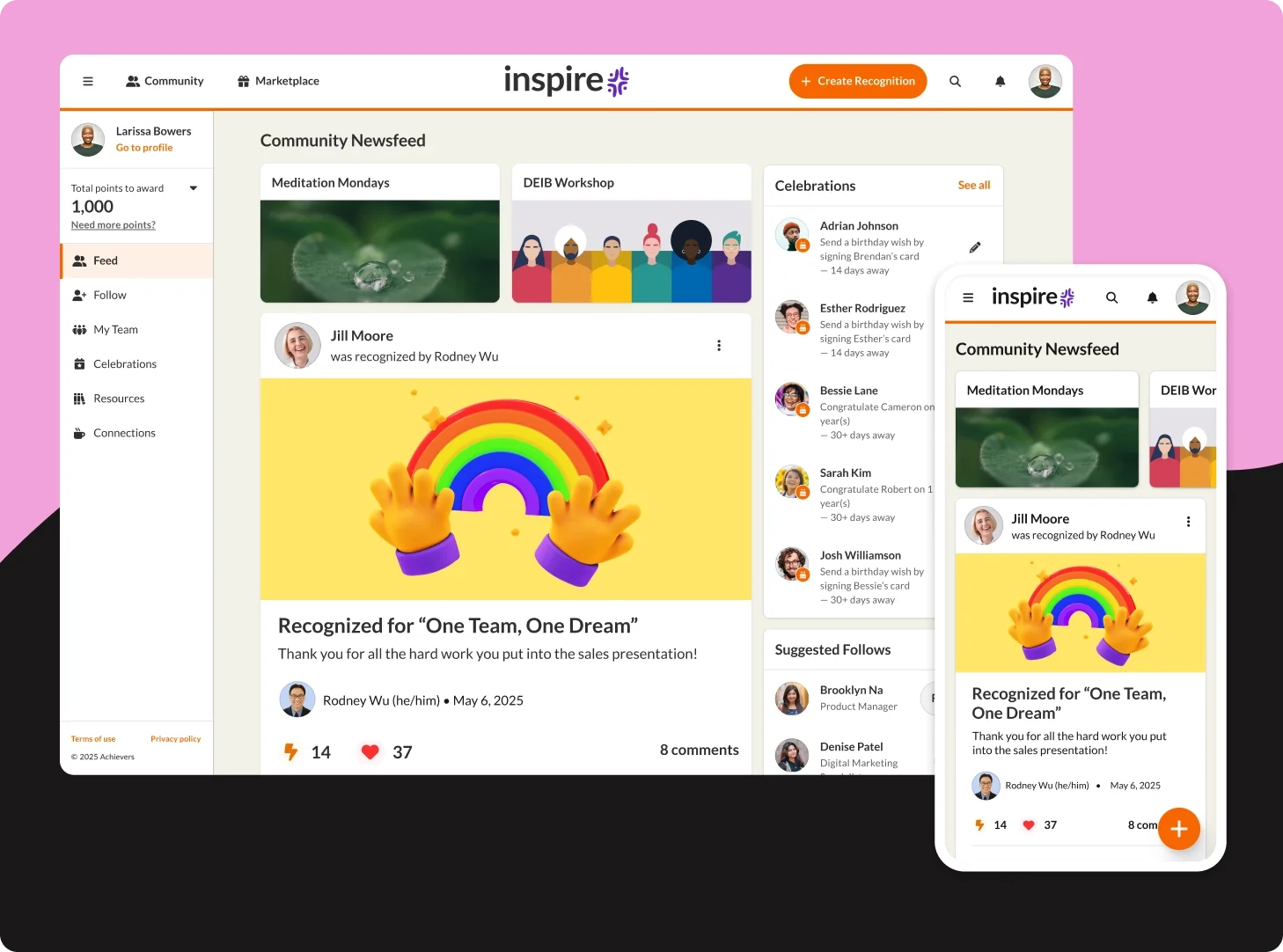
Achievers is widely recognized as a market leader, particularly for large organizations seeking to transform recognition into a core business driver. With millions of global users and high adoption rates, it facilitates seamless peer-to-peer and manager recognition across diverse locations. Its distinguishing factor lies in grounding every interaction in behavioral science from the Achievers Workforce Institute, enabling leaders to intentionally shape habits that boost engagement, retention, and performance. Offering flexible global rewards in 190 countries, AI-driven insights, and 24/7 multilingual support, Achievers provides a comprehensive toolkit for consistent, inclusive, and measurable recognition in complex workforces. Its advanced analytics and configuration are specifically designed for enterprise scale, which might be more than smaller businesses require.
Gary M., QA Specialist, via G2, noted: "Our company has been using this reward software for several months, and it has truly transformed the way we recognize and motivate our team. The platform is user-friendly, making it easy for everyone—from new hires to seasoned employees—to send and receive recognition. The variety of reward options ensures that everyone finds something meaningful… Highly recommended for any organization looking to enhance motivation and retention!"
2. Motivosity:
G2 Rating: 4.7/5
Motivosity focuses on fostering connection and appreciation through peer and manager recognition, milestone celebrations, and spot bonuses. It includes communication tools and employee profiles, suitable for organizations prioritizing social and engagement features. While strong for mid-sized teams, larger enterprises might seek deeper insights and more extensive customization options.
Tom, Manager, via Capterra, commented: "Ease of use and a wide variety of giving options make the process simple, inclusive, and accessible for everyone, encouraging more meaningful engagement and sustained participation."
3. Guusto:
G2 Rating: 4.9/5
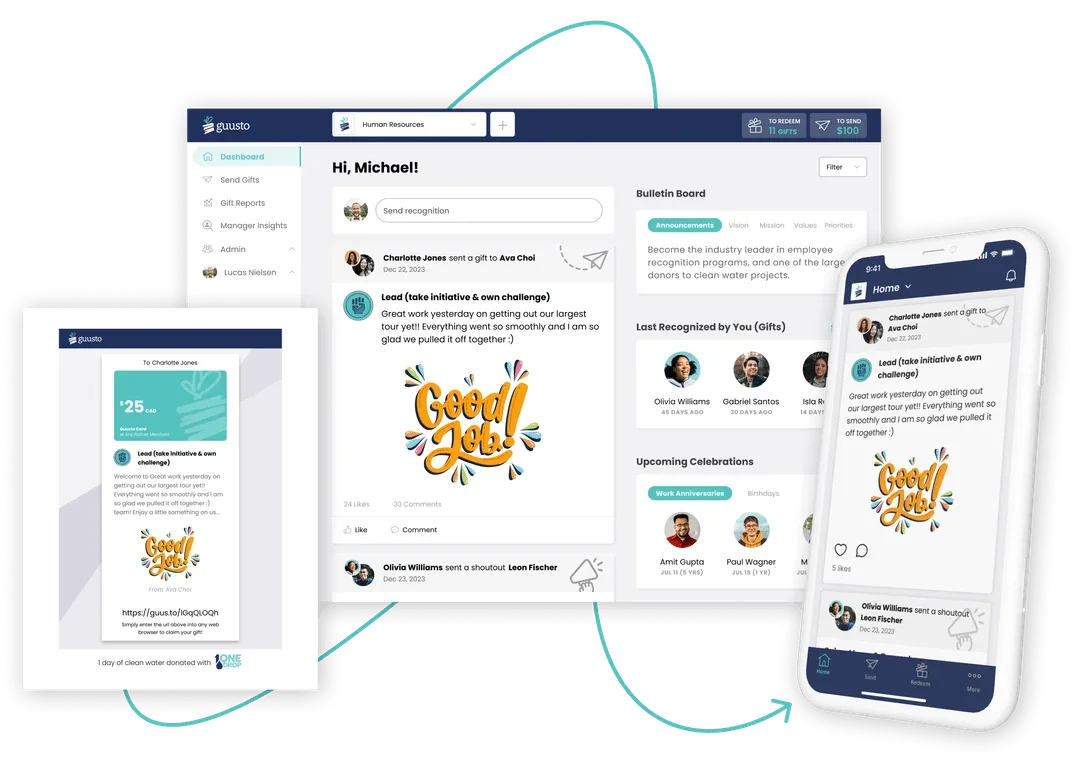
Guusto excels in engaging both office and frontline workers with digital and printable rewards, automated milestones, and budget management. Its support for non-monetary recognition makes it versatile. Its simplified setup and reporting may, however, limit its suitability for global enterprises requiring deeper analytics and integrations.
4. Mo:
G2 Rating: 4.6/5
Mo prioritizes making culture visible through everyday appreciation, with automated prompts and integrations for consistent recognition. It’s ideal for companies valuing ease of use and consistent daily recognition over intricate reporting.
5. Terryberry:
G2 Rating: 4.6/5
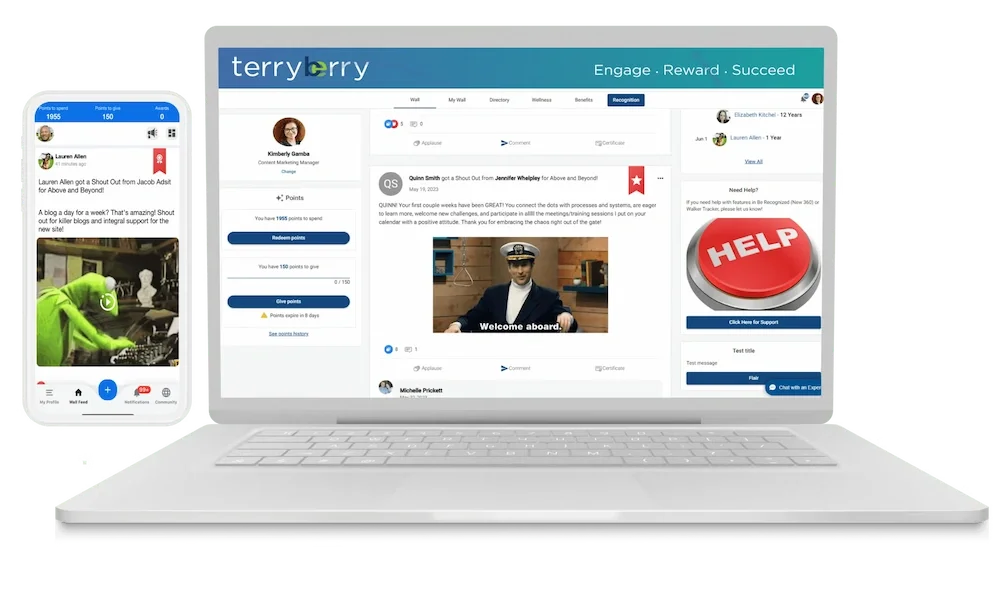
Terryberry offers a unified platform combining recognition, wellness, and surveys, emphasizing measurable cultural and engagement outcomes. It supports global fulfillment but might offer less flexibility for companies solely focused on recognition and advanced analytics.
Bree M., Director of Marketing and Community Relations, via G2, highlighted a common user challenge: "The interface can be a bit clunky and unintuitive… A cleaner, more streamlined user experience would make managing the platform much easier."
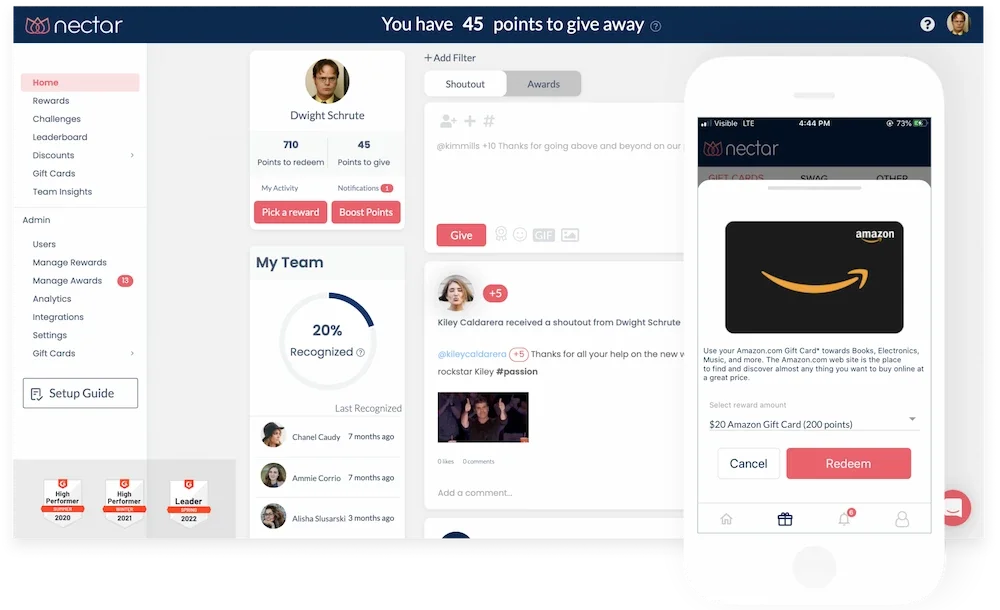
6. Nectar:
G2 Rating: 4.7/5
Nectar provides a straightforward platform for celebrating achievements and managing rewards with an emphasis on automation and ease of use. Its simplicity, however, may mean it lacks the advanced analytics or global reward options needed by larger enterprises.
Brittany K., Shipping Clerk, via G2, pointed out a potential drawback: "The only thing that I really dislike about Nectar is that each month your points are lost if you don’t give them away."
7. Kudos:
G2 Rating: 4.8/5
Kudos focuses on reinforcing company values through peer-to-peer and top-down recognition, linking messages to impact levels. It offers milestone automation and a broad global rewards catalog, but provides lighter data insights compared to some enterprise platforms.
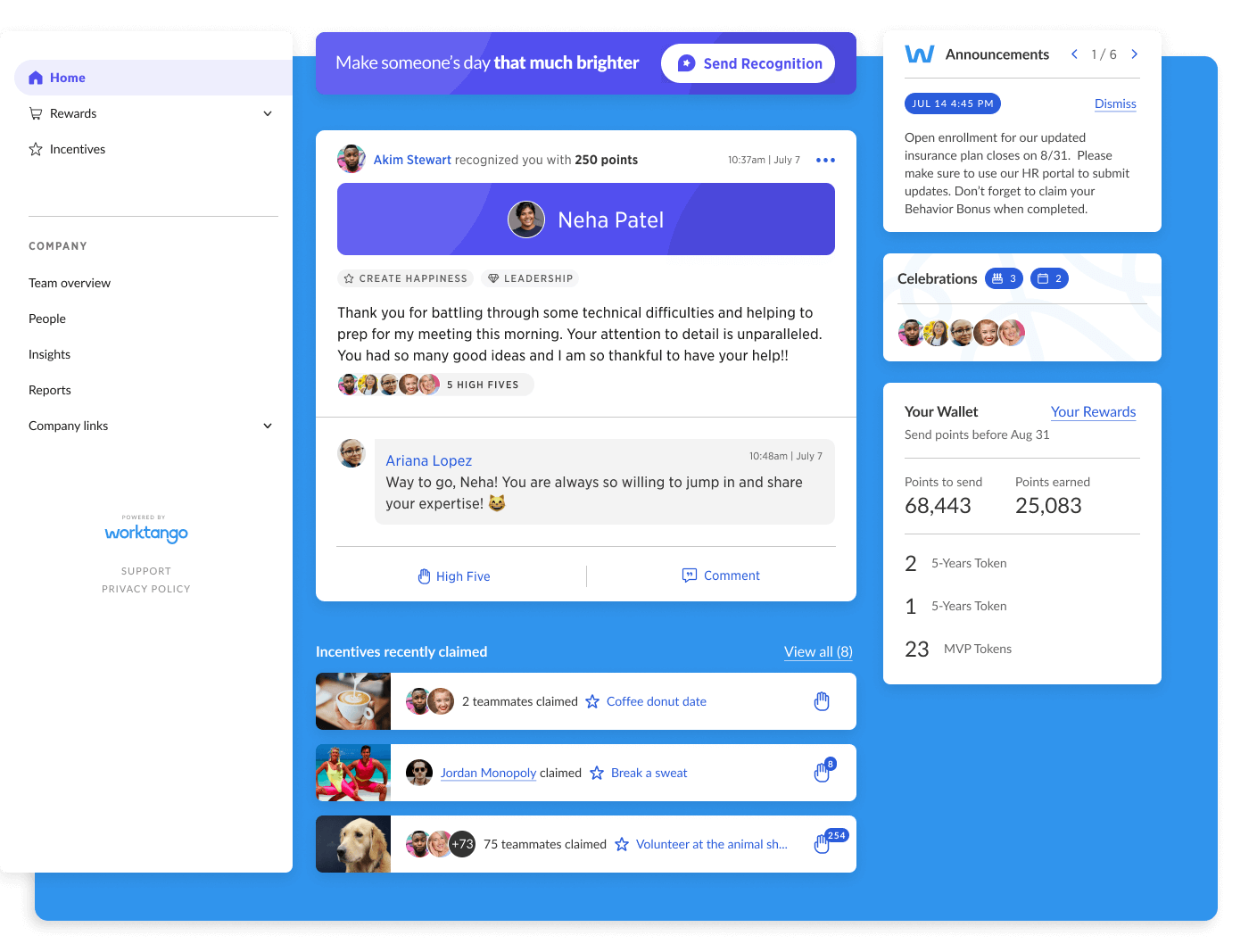
8. WorkTango:
G2 Rating: 4.7/5
WorkTango integrates recognition, rewards, surveys, and insights into one platform, helping measure engagement and reinforce behaviors. Its comprehensive nature means recognition features might be less specialized than dedicated platforms.
Sandeep K., Staff Accountant, via G2, observed: "Customizing surveys, setting up dashboards, and configuring recognition programs may require training or support. Mobile experience is not as polished as the desktop version."
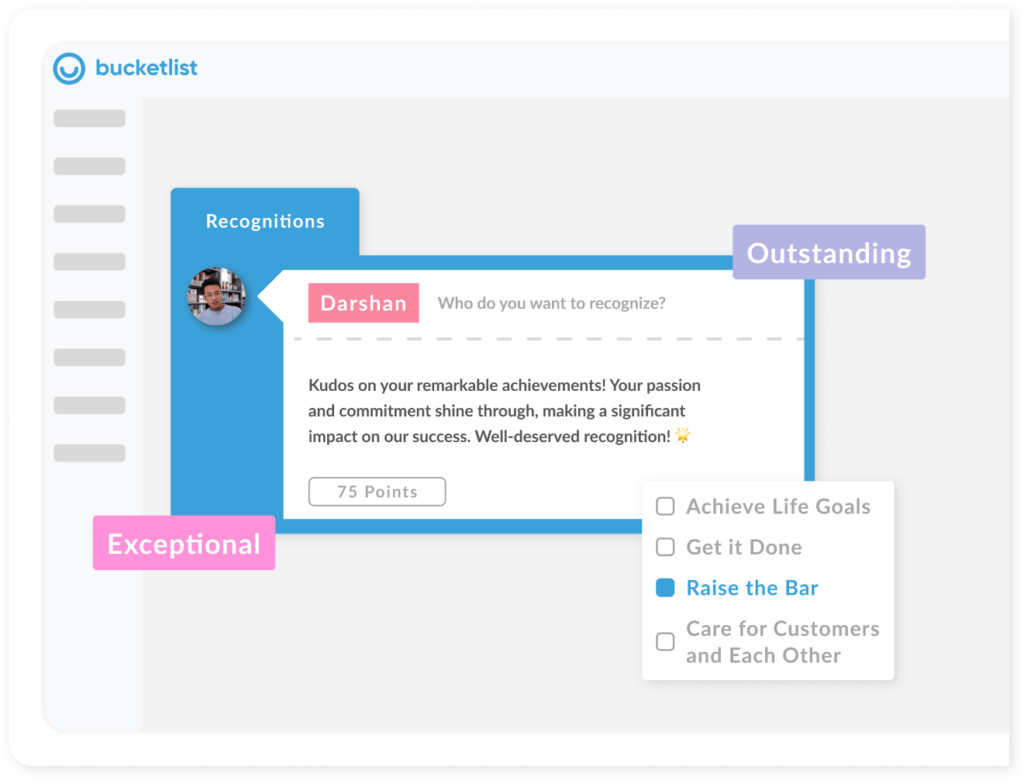
9. Bucketlist:
G2 Rating: 4.8/5
Bucketlist emphasizes automation, accessibility, and real-time engagement with social feeds and mobile apps, integrating with major HRIS and communication systems. It is best for everyday engagement over deep analytics.
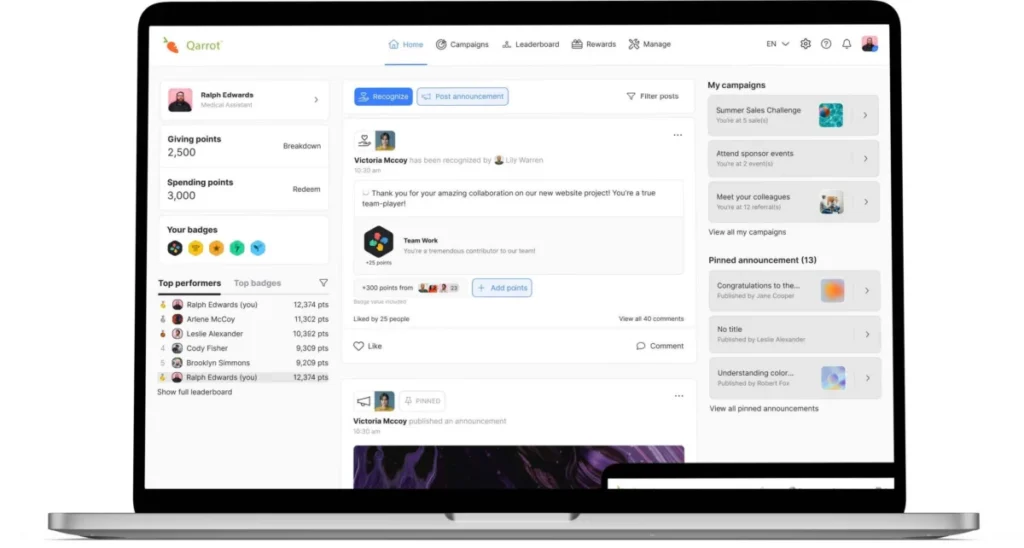
10. Qarrot:
G2 Rating: 4.6/5
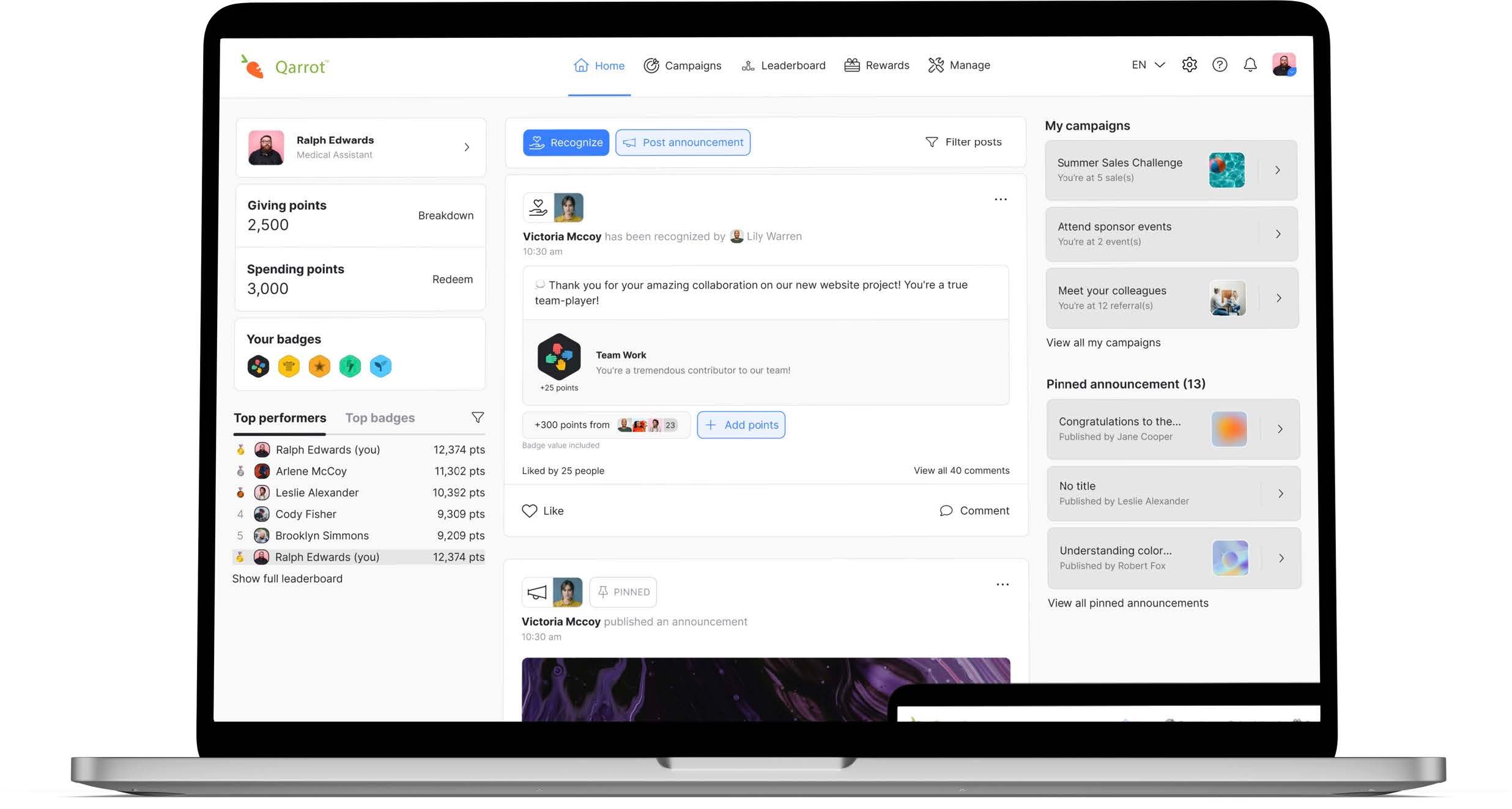
Qarrot offers peer recognition, custom value-aligned badges, and gamified challenges. It’s an easy-to-manage solution for small to mid-sized teams, but may lack the analytics depth for larger organizations.
11. Workvivo:
G2 Rating: 4.8/5
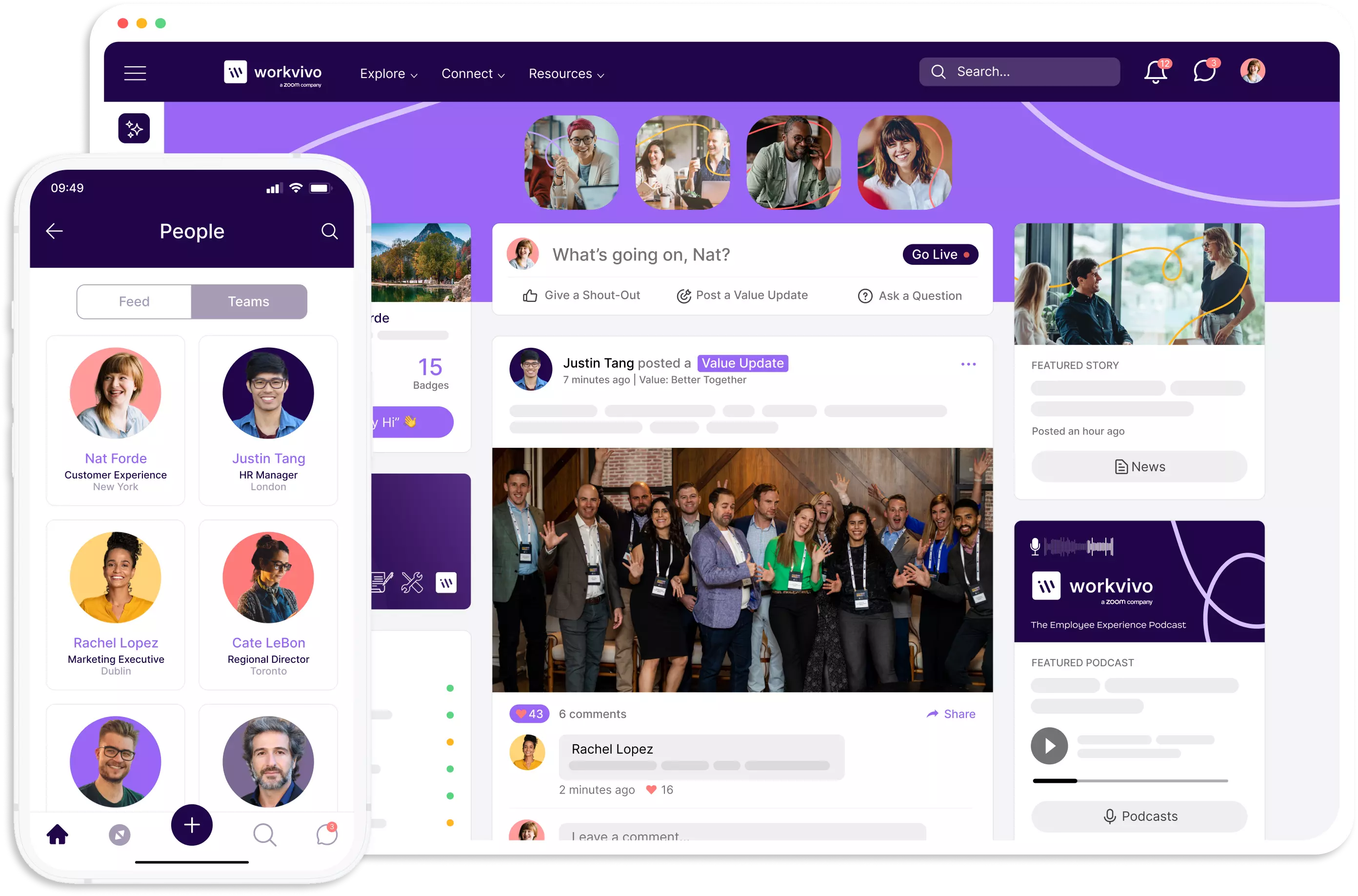
Workvivo is a mobile-first employee experience platform combining communications, engagement, recognition, and intranet tools. Its strength lies in connecting dispersed teams, though its recognition tools are part of a broader communication focus.
12. Empuls (by Xoxoday):
G2 Rating: 4.6/5
Empuls integrates recognition, rewards, surveys, and communication, offering a structured approach to appreciation and feedback. It provides broad features but its reporting might be more functional than strategic for deeper behavioral insights.
13. Matter:
G2 Rating: 4.7/5
Matter is designed for direct integration with Slack or Microsoft Teams, enabling peer kudos and simple surveys. It prioritizes simplicity, potentially lacking the advanced analytics or customization of larger platforms.
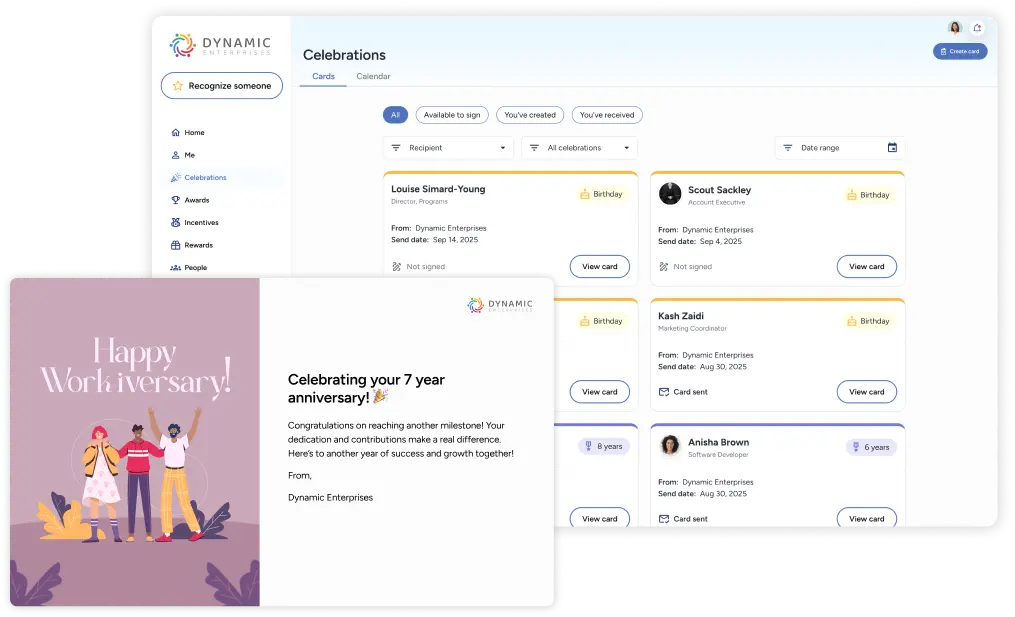
14. Assembly:
G2 Rating: 4.9/5
Assembly aims to make appreciation a regular part of work through peer shoutouts, automated celebrations, and built-in rewards. It’s suitable for boosting engagement without extensive reporting needs.
15. Profit.co:
G2 Rating: 4.7/5
Profit.co unifies OKRs, performance management, and engagement, linking business performance with employee engagement. Its primary focus on OKRs means its recognition capabilities may be less specialized than dedicated platforms.
Expert Perspectives on the Future of Enterprise Recognition
"The modern workforce, particularly within large global enterprises, demands more than just a paycheck," states Dr. Evelyn Reed, a prominent HR technology analyst. "They crave meaning, connection, and a tangible acknowledgment of their impact. Recognition software isn’t just an HR tool anymore; it’s a critical component of talent strategy, influencing everything from recruitment pipelines to innovation rates. The platforms that succeed are those that can not only scale technically but also adapt culturally, understanding that what motivates an engineer in Berlin might be different from a sales associate in São Paulo, yet the core human need for appreciation remains universal."
Echoing this sentiment, Maria Rodriguez, Chief People Officer at a multinational technology firm, recently remarked, "In an organization of our size, maintaining a ‘small company feel’ of community and personal connection is incredibly challenging. Our recognition platform has become instrumental in democratizing appreciation. It empowers every employee to be an ambassador of our values, fostering a bottom-up culture of gratitude that complements our strategic, top-down initiatives. The data we gather from these platforms is no longer just anecdotal; it’s informing our talent development, retention strategies, and even our leadership training."
The Broader Impact and Implications for Enterprise Growth
The implications of effective enterprise-scale recognition extend far beyond individual employee satisfaction. It directly influences a company’s agility, resilience, and capacity for innovation. In an era of rapid technological change and intense global competition, organizations that foster a highly engaged and appreciated workforce are better positioned to adapt, attract new talent, and outperform their rivals. The investment in robust recognition software is, therefore, not merely an operational expense but a strategic investment in human capital, yielding significant returns in productivity, reduced costs, and sustainable growth.
The future of work for large companies is increasingly distributed, hybrid, and fluid. In this environment, the "water cooler moments" that once fostered informal recognition are less common. Digital recognition platforms fill this void, ensuring that spontaneous praise, milestone celebrations, and value-aligned acknowledgments remain integral to the employee experience, regardless of physical proximity. This capability is crucial for maintaining a cohesive culture and preventing the erosion of team spirit that can occur in dispersed teams.
Finding the Software that Fits Your Workforce
In the complex tapestry of large, often global, corporations, the challenge of maintaining a personal connection and a vibrant culture grows exponentially with scale. Yet, this is precisely where the transformative power of employee recognition shines brightest. It serves as a vital bridge, spanning geographical distances and departmental silos, strengthening connections, and consistently reminding every employee that their contributions are meaningful, that their work matters, and that they are an integral part of something far greater than themselves.
The right employee recognition software makes this essential connection effortless and impactful. It ensures that appreciation is visible, measurable, and woven into the very fabric of the organization, making it impossible to ignore. This is the fundamental promise that leading platforms like Achievers strive to deliver: empowering large organizations to remain human, deeply connected, and perpetually inspired, irrespective of their immense scale or operational complexity. By choosing a platform that aligns with their unique cultural aspirations and strategic objectives, enterprises can unlock the full potential of their human capital, transforming recognition from a mere gesture into a powerful engine for sustained success.