
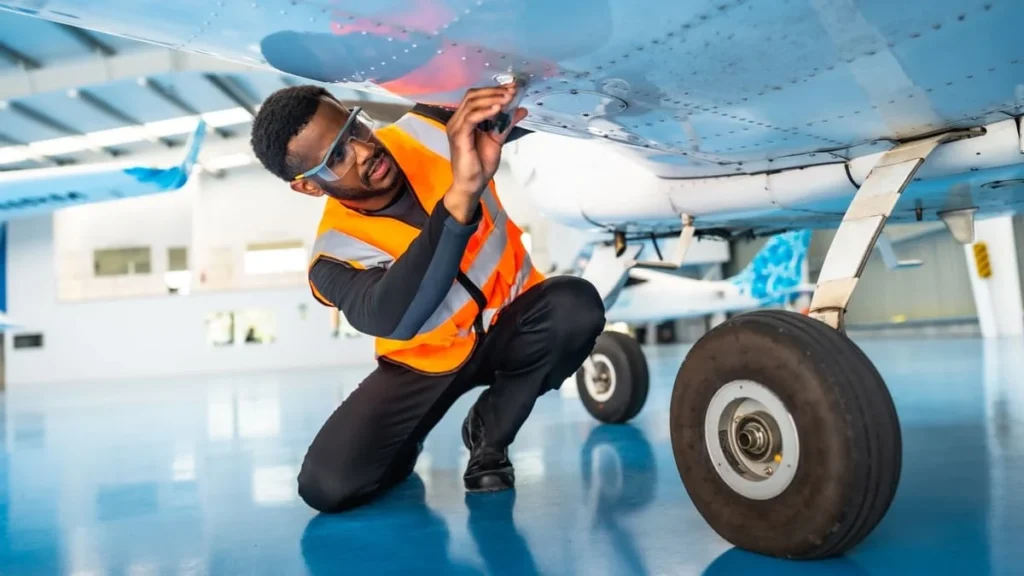
The United Kingdom’s vital aerospace industry has embarked on an ambitious nationwide recruitment campaign, "There’s Aerospace For You," following new data revealing that a staggering two-thirds of employers are grappling with persistent skills shortages that are demonstrably impeding sectoral growth and innovation. This concerted effort by key industry players and the government seeks to not only fill an estimated 10,000 technical vacancies annually but also to fundamentally reshape public perceptions of careers within the high-tech sector.
The Genesis of a Crisis: Unpacking the Skills Gap
The recruitment drive, spearheaded by trade body ADS in collaboration with global aerospace giants such as Airbus, GKN Aerospace, Lockheed Martin, Rolls-Royce, and Safran, comes at a critical juncture. The aerospace sector, a cornerstone of the UK economy renowned for its advanced manufacturing, research, and development capabilities, finds itself in an escalating battle for talent. ADS research indicates that 66% of aerospace employers are experiencing chronic workforce deficits. When broadened to include the wider aerospace, defence, security, and space sectors, this figure translates into approximately 10,000 unfilled technical roles each year—a significant drain on productivity and a clear barrier to achieving the industry’s full growth potential.
This crisis is not merely a recent phenomenon but the culmination of several long-term trends exacerbated by recent global events. The UK aerospace sector, employing over 110,000 people directly and supporting hundreds of thousands more indirectly, contributes significantly to national GDP and is a major exporter of high-value goods and services. However, an aging workforce, coupled with a perceived decline in interest in STEM (Science, Technology, Engineering, and Mathematics) subjects among younger generations, has been creating a pipeline problem for years. The impact of the COVID-19 pandemic, which led to temporary layoffs and a halt in recruitment, further disrupted the talent pipeline, creating a significant "catch-up" challenge as the industry recovered. Brexit has also played a role, limiting the ease of access to skilled labour from the European Union, which traditionally complemented the domestic workforce.
Challenging Perceptions: A Core Campaign Objective
A key finding from ADS research underscores a fundamental disconnect: a lack of public awareness is a major contributor to recruitment difficulties. Polling revealed that 59% of the public had never received information about careers in aerospace, with half remaining largely unfamiliar with the sector as a viable career path. This informational vacuum fosters outdated stereotypes that actively deter potential candidates. For instance, ADS highlights that 60% of young people currently wouldn’t consider a career in manufacturing due to what are described as outdated assumptions about factory environments and remuneration.
This perception gap is particularly stark when contrasted with the reality of the industry. Far from being dimly lit, manual labour-intensive environments, modern aerospace manufacturing facilities are often at the cutting edge of automation, digital integration, and advanced materials science. Moreover, the financial rewards are substantial: average aerospace salaries in the UK reach an impressive £52,600 per year, approximately one-third higher than the national average. By directly confronting these misconceptions, the "There’s Aerospace For You" campaign aims to paint a more accurate and appealing picture of a dynamic, technologically advanced industry offering rewarding careers.
The "There’s Aerospace For You" Campaign: A Multi-faceted Approach
The campaign itself is designed to be highly engaging and informative, utilising a multi-channel strategy to reach a broad audience. Central to its outreach are compelling testimonials from employees across the industry, showcasing the diverse roles and career paths available. These include individuals like Immanuel Oyetunde, a wing structures design engineer at Airbus, and Kritigya Sherchan, a customer services apprentice at Safran, whose stories aim to inspire and demystify the sector.
A dedicated new careers website, aerospaceforyou.org.uk, serves as an online hub for job seekers, career changers, and graduates to explore vacancies, training opportunities, and detailed career information. Perhaps the most innovative element of the campaign is a touring recruitment pod, ingeniously constructed from the upcycled fuselage of an A318 aircraft. This unique, immersive experience offers a tangible connection to the industry, allowing visitors to visualise their place within the aerospace ecosystem. The pod’s tour, which includes high-profile events like the Farnborough International Airshow before visiting major UK cities such as Manchester and Glasgow, maximises visibility and direct interaction with potential recruits.
Industry and Government Unite for Future Talent

The gravity of the skills challenge has fostered a strong collaborative spirit between industry leaders and government. Industry Minister Chris McDonald underscored the breadth of opportunities within the sector, stating, "To keep our world-class aerospace sector at the forefront of innovation, we need to secure its next generation of talent. Whether your background is in manufacturing, construction, sustainability or digital technologies, this sector has a position ready for you." This statement highlights the evolving nature of aerospace, which increasingly requires interdisciplinary skills beyond traditional engineering.
Kevin Craven, Chief Executive of ADS, articulated the necessity for a united front, acknowledging that "Securing the future workforce of the UK aerospace industry is not a challenge that any single manufacturer can solve in isolation." He further emphasised the economic imperative, warning that the industry is "holding back our own growth potential by leaving 10,000 vacancies unfilled each year." This collective approach acknowledges the systemic nature of the problem and the shared responsibility in addressing it. The campaign seeks to leverage the combined reach and influence of its partners to create a more impactful and sustainable solution.
Broader Aviation Context: A Global Scramble for Talent
The challenges faced by the UK aerospace manufacturing sector are mirrored, and in some areas intensified, across the broader global aviation industry. The International Air Transport Association (IATA) projects a monumental demand for aviation professionals over the next decade, estimating the sector will need 300,000 pilots, 416,000 maintenance technicians, 678,000 cabin crew, and 71,000 air traffic controllers worldwide. These figures underscore a global talent crunch, making competition for skilled workers fierce.
Research from aviation recruitment agency Aerviva further corroborates this trend, indicating historically high demand. Major US airlines alone are projected to recruit over 7,600 pilots in 2026, showcasing the intensity of the demand in key markets. Europe, in particular, faces distinct recruitment hurdles. Low-cost carriers, regional airlines, cargo operators, and business aviation companies often struggle more to attract staff compared to legacy airlines that benefit from established cadet programmes. Aerviva points to high training costs, limited financial support, and the necessity of self-funded type ratings as significant barriers to entry for aspiring pilots and technicians. Further complicating matters, a decision by the International Civil Aviation Organization (ICAO), a UN agency, last October not to raise the pilot retirement age beyond 65 has added additional pressure to recruitment pipelines by limiting the outflow of experienced personnel and thus creating fewer immediate vacancies.
The Evolving Skill Landscape: Beyond Traditional Roles
Aerviva’s analysis also highlights a profound transformation in the types of skills the industry requires. The agency estimates that the industry will need approximately 1.5 billion aviation professionals to meet future demand, a figure that goes far beyond traditional roles. Rapid technological advancements mean airlines are no longer just seeking pilots and engineers; they are now fiercely competing for talent in emerging fields such as Artificial Intelligence (AI), data science, sustainability, and modern airline retailing.
This "dual demand" for both traditional operational roles and cutting-edge digital and green skillsets is stretching aviation HR and recruitment strategies to their limits. Aerviva accurately summarises the situation: "Recruiting in aviation is becoming more complex, more competitive, and more time-sensitive than ever before." This shift necessitates a re-evaluation of educational pathways, training programmes, and employer branding to attract individuals with diverse backgrounds and adaptable skill sets capable of navigating an increasingly digital and environmentally conscious industry. The UK aerospace sector, with its strong research and development focus, is particularly sensitive to this evolution, needing not just manufacturing expertise but also a robust pool of software engineers, data analysts, and materials scientists.
Economic Implications and Future Outlook
The implications of these persistent skill shortages extend far beyond individual companies, posing a significant threat to the UK’s economic competitiveness and its standing as a global leader in aerospace innovation. Unfilled vacancies translate directly into lost productivity, delayed projects, and a reduced capacity for expansion. In an industry where technological leadership is paramount, a deficit of skilled personnel can stifle research and development, potentially causing the UK to fall behind international rivals.
Addressing this challenge requires sustained, multi-pronged efforts. Beyond the immediate recruitment campaign, there is a clear need for long-term investment in STEM education from primary school through to university level, fostering a sustained interest in engineering and technology. Government policies supporting apprenticeships, vocational training, and reskilling initiatives will be crucial. Furthermore, industry must continue to champion diversity and inclusion, actively seeking talent from underrepresented groups and challenging systemic barriers to entry. The "There’s Aerospace For You" campaign represents a critical step in this ongoing endeavour, aiming to not only fill immediate vacancies but also to inspire a new generation to envision a future within the dynamic and indispensable world of aerospace. The success of this initiative will be vital for safeguarding the UK’s position at the forefront of global aviation for decades to come.








