
The contemporary business landscape presents Human Resources leaders with a complex web of competing demands. The relentless pursuit of organizational speed and efficiency often clashes with employees’ fundamental needs for clarity, meaningful growth, and recognition. This inherent tension, rather than a lack of effort, is the primary driver behind stalled strategies and the feeling of being "stuck" within many organizations. The prevailing challenge for HR is not to resolve these opposing forces, but to cultivate an environment where both business objectives and employee well-being can not only coexist but actively foster mutual success.
This article delves into the core tensions HR leaders face, drawing on insights into what constitutes a thriving team and offering a framework for understanding and addressing these critical organizational dynamics. It proposes a shift from problem-solving to condition-building, emphasizing a proactive approach that empowers both the business and its workforce.

The Core Tension: Business Imperatives vs. Employee Expectations
At its heart, the struggle lies in the seemingly divergent needs of the organization and its people. Businesses require agility and rapid execution to remain competitive in a dynamic market. They need talent that is not only skilled today but also adaptable and prepared for the future, capable of delivering sustained high performance. Conversely, employees seek transparency in their roles and career trajectories. They desire growth opportunities that are not merely performative but genuinely enriching and contribute to their personal and professional development. Crucially, employees want to feel that their contributions are recognized and have a tangible impact on the organization’s success.
HR departments find themselves positioned at the nexus of these opposing pressures. The common instinct is to optimize for one set of needs at the expense of the other, a strategy that inevitably leads to strategic stagnation. The more effective approach, experts suggest, is to ask a different question: "What if we stopped trying to resolve these tensions and started building the conditions where both sides become possible?" This question fundamentally reframes the role of HR, transforming it from a reactive problem-solver to a strategic architect of organizational health.
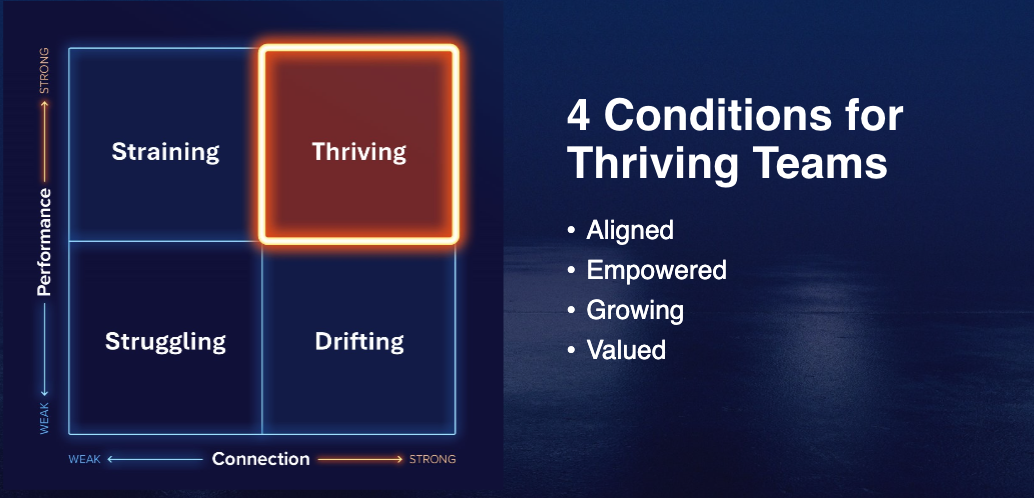
Defining a Thriving Team: The Dual Pillars of Performance and Connection
A truly thriving team is characterized by a harmonious balance between strong performance and deep connection. Organizations that achieve high performance without fostering connection risk burnout and employee disengagement, a situation often described as "straining." Conversely, teams that excel in connection but falter in performance may be "drifting," lacking the drive and focus necessary for sustained success. Neither scenario is sustainable in the long term.
Quantum Workplace, a leader in employee engagement and performance solutions, outlines a framework for cultivating thriving teams across four critical conditions: Aligned, Empowered, Growing, and Valued. Each of these conditions directly addresses a pervasive tension that HR leaders are actively managing, offering diagnostic questions that, when answered honestly, can illuminate actionable pathways forward.
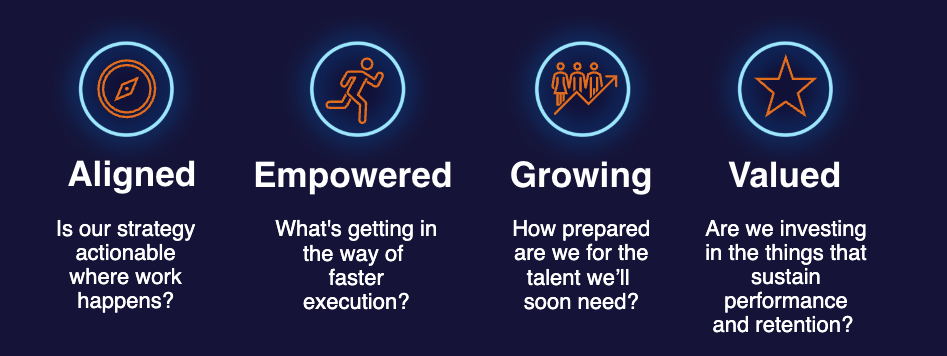
The Four Pillars of Thriving: Diagnostic Questions for HR Leaders
1. Aligned: Is Our Strategy Actionable Where Work Happens?
- The Tension: Organizations demand speed, while employees need clarity.
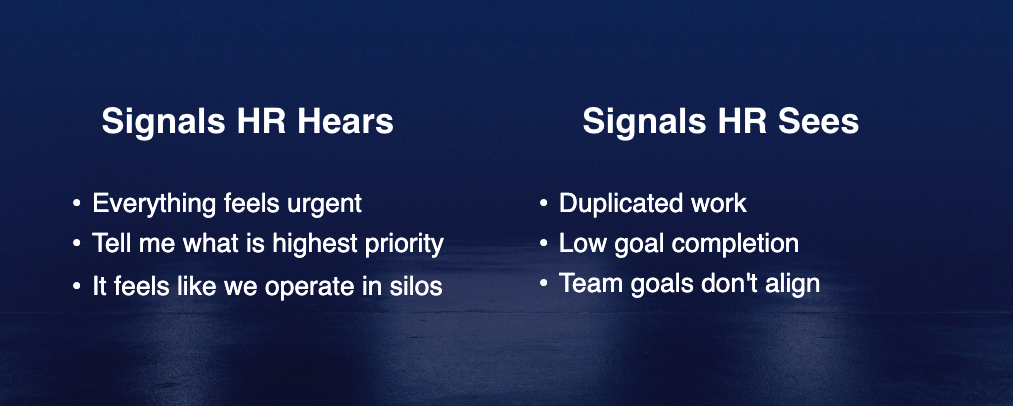
- Observable Symptoms: HR leaders frequently report a sense of urgency across departments, the prevalence of siloed operations, and a constant need to prioritize competing initiatives. Data often reveals duplicated efforts, low goal completion rates, and team objectives that lack clear connection to the overarching organizational strategy.
- The Diagnostic Question: Beyond simply knowing the strategy, the critical question is whether clarity varies by performance level. When solid performers lack clarity, it presents a clear coaching opportunity for managers to bridge the gap. However, if top performers are also unclear about the strategy, it signals a systemic, organization-wide problem that manager coaching alone cannot resolve.
- Deeper Inquiry: A more profound diagnostic question revolves around accountability: Do teams genuinely feel a sense of ownership for the strategy, or does it feel like an externally imposed directive? Survey responses can reveal subtle but crucial differences, indicating whether employees are truly aligned or have disengaged. These insights can then be segmented by other outcomes like engagement scores and turnover risk, providing a cost-benefit analysis of the identified gaps.
- Actionable Insights: Organizations must move beyond top-down communication of strategy and foster an environment where strategic goals are understood and embraced at the team level. This involves ensuring that departmental and individual objectives directly support the broader vision and that employees can articulate how their daily work contributes to organizational success. Transparent communication channels, regular strategy refreshers, and opportunities for employees to provide input on how strategic goals can be achieved within their teams are essential.
2. Empowered: What’s Hindering Faster Execution?
- The Tension: Organizations require accelerated execution, while employees need fewer obstacles.
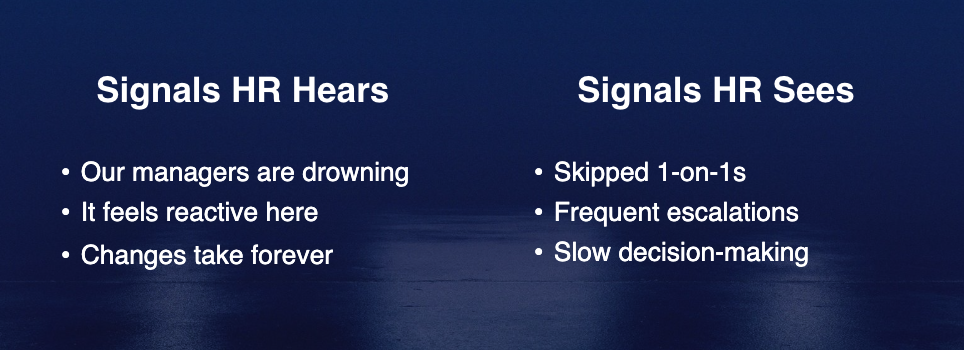
- Observable Symptoms: Consistent signals include managers feeling overwhelmed, a pervasive sense of reactivity within operations, and protracted decision-making processes. This can manifest as skipped one-on-one meetings, frequent escalations to higher management, and decisions that should take days stretching into weeks.
- The Data Connection: Linking business Key Performance Indicators (KPIs), such as on-time delivery rates, directly to employee feedback can reveal surprisingly clear insights into operational barriers. For instance, in one organization, the differentiator for on-time delivery wasn’t access to materials but rather the adoption of AI tools, a counterintuitive signal that emerged only when data from different systems was integrated.
-
The Manager Experience Gap: A critical, often overlooked factor is the employee experience of managers themselves. Data from one organization revealed a significant disparity:
- Managers reported only 57% understanding how their performance was measured, compared to 87% of non-managers.
- Only 50% of managers felt they knew how they fit into the organization’s future plans, versus 73% of non-managers.
- Crucially, 71% of managers indicated high retention likelihood, significantly lower than the 87% of non-managers.
This data highlights a structural deficit: managers are less likely to feel recognized, clear on performance metrics, or informed about future organizational plans, and are consequently less likely to be retained. This creates a feedback loop where managers who don’t feel empowered are less capable of empowering their teams, leading to systemic roadblocks to execution.
- Actionable Insights: Addressing this tension requires a dual approach. First, organizations must identify and remove systemic barriers to efficient execution, whether they are process-related, technological, or resource-based. Second, and perhaps more importantly, there must be a concerted effort to empower managers. This involves providing them with the clarity, resources, and support they need to lead effectively, ensuring they feel valued and have a clear understanding of their role in the organization’s future. Investing in manager development programs and creating feedback mechanisms specifically for the management layer are crucial steps.
3. Growing: How Prepared Are We for Future Talent Needs?
- The Tension: Organizations need a future-ready talent pipeline, while employees seek meaningful growth.
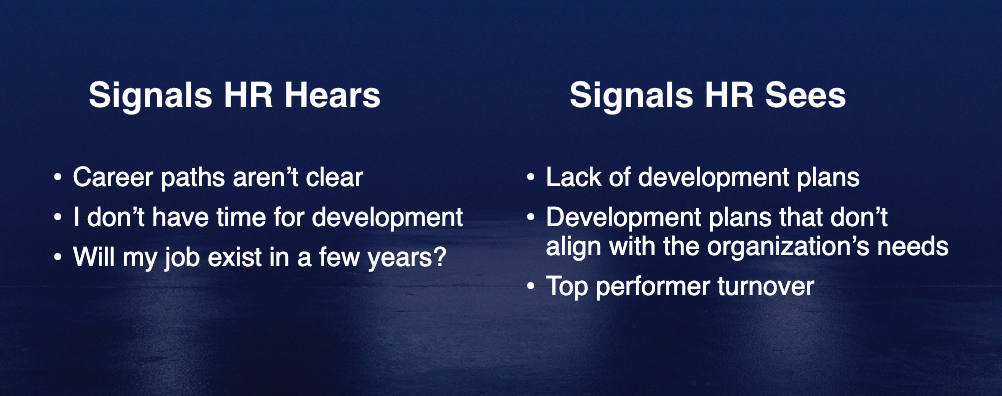
- Observable Symptoms: Employees often report unclear career paths and a lack of dedicated time for professional development. A growing concern among the workforce is the question of job security: "Will my role still exist in a few years?"
- The Diagnostic Question: The most impactful diagnostic question is not merely whether development plans exist, but whether they are active, integrated into daily work, and aligned with future business needs. A documented growth plan that is never reviewed or acted upon offers little value. Conversely, a stretch project that develops critical skills for the organization’s future is a far more effective growth vehicle.
- Strategic Succession Planning: Integrating succession planning data with employee feedback provides a powerful lens. By understanding candidate status alongside survey responses, organizations can ascertain if they are intentionally developing critical future talent or merely assuming it will happen. Conversely, feedback from a candidate’s team can offer insights into their actual leadership effectiveness.
- The Shift to Everyday Growth: The guiding principle here is to "shift growth from a periodic process to an everyday experience embedded in work—using projects, challenges, and real priorities as the primary vehicle." This means moving beyond annual performance reviews and formal training sessions to embedding development opportunities within the flow of work.
- Actionable Insights: Organizations must proactively map future talent requirements and align development initiatives accordingly. This involves creating transparent career frameworks, offering diverse learning opportunities that are accessible and relevant, and encouraging a culture of continuous learning. Mentorship programs, cross-functional project assignments, and opportunities for skill-building through real-world challenges are vital components of a robust growth strategy.
4. Valued: Are We Reinforcing What Matters Most?
- The Tension: Organizations require sustained performance, while employees want to feel valued.
- Observable Symptoms: Common sentiments include employees feeling overburdened without commensurate compensation increases, perceptions of inequitable recognition across roles, and a belief that leadership prioritizes profit over people. Data often reveals significant variations in recognition practices across teams and high turnover among key personnel.
- The ROI of Recognition: Reframing recognition as a financial imperative rather than solely a cultural initiative can be transformative. When retention risk is directly linked to feelings of being undervalued, the cost of inadequate recognition becomes quantifiable. This allows HR to demonstrate the tangible financial benefits of fostering a culture of appreciation.
- Beyond Top Performers: It is crucial to recognize that feeling valued extends beyond high achievers. Solid contributors, who often form the largest segment of the workforce, also need to feel that their impact is acknowledged. Recognition programs that exclusively target top performers miss a significant portion of the employee base.
- Data-Driven Recognition: Connecting talent reviews or performance ratings with employee feedback can reveal patterns in how different employee segments are feeling valued. This allows for the development of more inclusive and effective recognition strategies that resonate across the entire organization.
- Actionable Insights: Organizations must establish clear, consistent, and equitable recognition practices. This involves defining what behaviors and contributions are most valued, ensuring that recognition is timely and specific, and providing managers with the tools and training to deliver effective appreciation. Integrating recognition into performance management processes and celebrating both individual and team achievements are key to reinforcing desired behaviors and fostering a sense of value across the workforce.
Conclusion: Building Conditions for Mutual Success
The four tensions—Alignment, Empowerment, Growth, and Value—appear distinct on the surface, but they share a common structural element: the perceived opposition between business needs and employee desires, with HR often caught in the middle. The prevailing instinct to choose sides is ultimately counterproductive. The more strategic and sustainable approach is to proactively build the organizational conditions where both sets of needs can be met simultaneously.
Teams that are aligned, empowered, growing, and valued are not the result of compromise; they are the foundation of enduring business success. HR’s role is not to personally resolve every individual conflict but to equip the organization with the frameworks and insights necessary to ask and answer more intelligent questions about its people and its performance.
A robust talent platform, capable of connecting insights across engagement, performance, development, and recognition, provides leaders at all levels with the clarity and confidence to act on what truly matters. This integrated approach empowers not just HR professionals but every manager to foster environments where their teams can thrive. The data to address these critical questions already exists within most organizations; the challenge lies in connecting it and using it to drive meaningful change. By shifting from conflict resolution to condition building, organizations can unlock their full potential, creating a future where both business objectives and employee well-being flourish in tandem.