
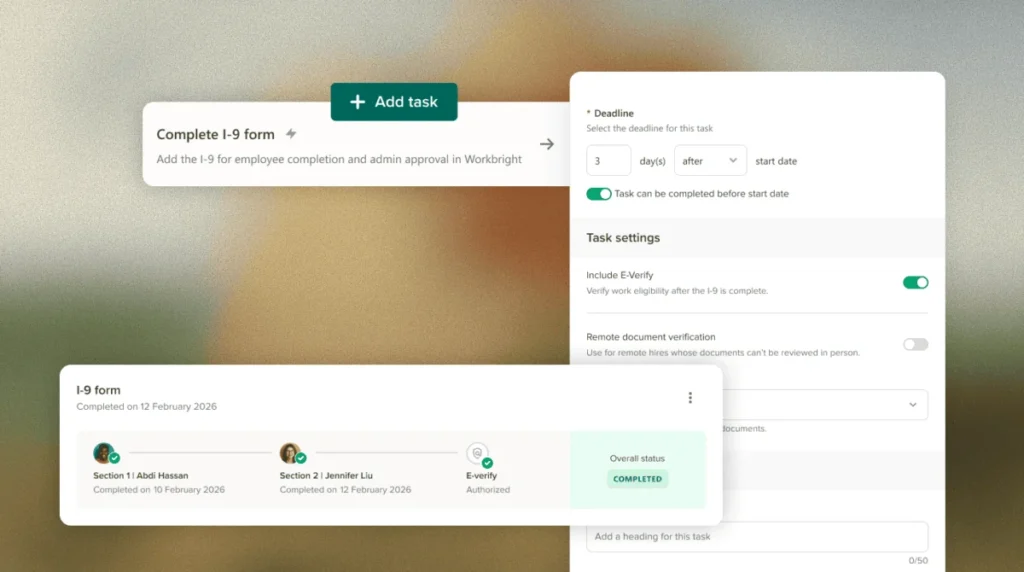
Workable, a prominent provider of recruiting software, has announced the launch of a new, fully integrated workflow designed to simplify and automate the U.S. employment eligibility verification process, encompassing both Form I-9 and the E-Verify system. This development aims to eliminate the traditional burdens associated with manual paperwork, duplicate data entry, and the need to navigate multiple disparate tools, offering U.S. organizations a compliant and efficient solution directly within the Workable platform. The new feature allows employees to complete Section 1 of the I-9 form digitally, while HR teams can review supporting documents and complete Section 2 seamlessly within Workable, with automated submission to E-Verify for those employers who have opted into the electronic verification program. This integration marks a significant step towards modernizing a critical, often complex, aspect of human resources and compliance.
The Intricacies of Employment Eligibility Verification in the U.S.
Understanding the significance of Workable’s new offering requires a deeper look into the regulatory landscape surrounding employment eligibility in the United States. At its core, the Immigration Reform and Control Act (IRCA) of 1986 established the requirement for U.S. employers to verify the identity and employment eligibility of all individuals hired after November 6, 1986. This mandate is primarily fulfilled through Form I-9, Employment Eligibility Verification, a document issued by U.S. Citizenship and Immigration Services (USCIS).
Form I-9 is divided into three sections. Section 1 must be completed by the employee on their first day of employment, attesting to their employment authorization. Section 2, completed by the employer (or an authorized representative), involves physically examining the employee’s original, unexpired documents from the federal List of Acceptable Documents to establish identity and employment authorization. This examination must occur within three business days of the employee’s first day of employment for pay. Section 3 is used for re-verification or rehires. The meticulous nature of this process, coupled with strict deadlines and precise documentation requirements, has historically presented significant administrative challenges for businesses of all sizes.
Beyond Form I-9, the E-Verify program, an internet-based system operated by USCIS in partnership with the Social Security Administration (SSA), allows enrolled employers to electronically confirm the eligibility of their employees to work in the United States. While E-Verify is voluntary for most employers, it is mandatory for federal contractors and subcontractors holding federal contracts that contain the Federal Acquisition Regulation (FAR) E-Verify clause. Additionally, a growing number of states have enacted laws mandating E-Verify participation for some or all employers within their jurisdiction. The dual requirements of I-9 and, in many cases, E-Verify, mean that employers often grapple with two distinct, yet interconnected, compliance processes.
The consequences of non-compliance with I-9 and E-Verify regulations can be severe. Employers face civil monetary penalties ranging from hundreds to thousands of dollars per violation for paperwork errors or substantive violations. Repeated violations can lead to higher penalties. In more egregious cases, such as knowingly hiring or continuing to employ unauthorized workers, employers can face criminal penalties, including fines and imprisonment. These potential repercussions underscore the critical need for robust, accurate, and streamlined compliance solutions.
Workable’s Digital Transformation: A Seamless Compliance Journey
Workable’s newly introduced I-9 and E-Verify workflow directly addresses these long-standing pain points. By integrating these critical functions into its existing talent acquisition and onboarding platform, Workable empowers U.S. teams to move away from fragmented, manual processes that are prone to errors and inefficiencies. The core of the change lies in bringing the entire verification lifecycle into a single, unified environment.
The workflow begins with the candidate experience. Upon receiving an offer and preparing for onboarding, the new employee can access and complete Section 1 of the I-9 form digitally through the Workable platform. This eliminates the need for downloading, printing, and manually filling out PDF forms, reducing initial friction and improving the new hire’s experience. The digital interface guides the employee through the required fields, potentially minimizing common errors that arise from misinterpretation or incomplete information.
For HR teams, the process is equally streamlined. Once Section 1 is completed by the employee, HR administrators can review the submitted information and, crucially, complete Section 2 of the I-9 form directly within Workable. This includes recording the details of the identity and employment authorization documents presented by the employee. The system is designed to facilitate the secure upload and storage of document copies, adhering to compliance standards for record-keeping. The elimination of duplicate data entry – where information from one system needs to be manually transferred to another – is a significant time-saver and error-reducer.
Furthermore, for Workable customers who have opted to utilize E-Verify, the system automatically submits the necessary information to the E-Verify program as part of the integrated workflow. This automation removes another layer of manual effort and ensures timely submission, a critical factor given E-Verify’s strict deadlines for query submission (typically within three federal government workdays after the employee’s first day of employment for pay). The automated submission helps maintain compliance, reduces the risk of missed deadlines, and provides immediate feedback on employment eligibility status.
The benefits promised by Workable are multi-faceted:
- Enhanced Compliance: By embedding the process within a structured digital workflow, the solution helps ensure all required fields are completed and deadlines are met, significantly reducing the risk of I-9 errors and E-Verify non-compliance.
- Operational Efficiency: Eliminating manual data entry, paper forms, and the need to switch between multiple tools frees up valuable HR time, allowing teams to focus on strategic initiatives rather than administrative tasks.
- Improved User Experience: Both employees and HR teams benefit from a more intuitive, guided, and less cumbersome process, contributing to a positive onboarding experience.
- Centralized Record-Keeping: All I-9 and E-Verify documentation and status updates are securely stored within the Workable platform, simplifying audits and data retrieval.
- Scalability: The digital solution is inherently more scalable than manual processes, accommodating growth in hiring volume without proportional increases in administrative overhead.
A Chronology of Compliance Evolution and the Drive for Digitalization
The journey towards digital I-9 and E-Verify solutions has been a gradual but persistent one, driven by evolving technology and the increasing complexity of regulatory compliance. The initial implementation of IRCA in 1986 introduced a paper-based Form I-9, a system that largely remained unchanged for decades. The E-Verify program, initially piloted in the mid-1990s as the Basic Pilot Program, began its expansion in the early 2000s, adding an electronic layer to the verification process but often requiring separate system access.
For many years, the primary method for I-9 completion involved physical presence: an employer or authorized agent physically examining documents. This requirement became a significant challenge with the rise of remote work, particularly exacerbated by the COVID-19 pandemic. In response, the Department of Homeland Security (DHS) introduced temporary flexibilities, allowing for remote document examination under certain conditions. These flexibilities, while crucial during the pandemic, highlighted the need for more permanent, technologically advanced solutions for remote verification.
In July 2023, DHS published a final rule authorizing an "alternative procedure" for employers to remotely examine I-9 documents for employees hired on or after August 1, 2023, provided they are E-Verify participants in good standing. This landmark rule officially paved the way for a truly digital and remote-friendly I-9 process, contingent on E-Verify enrollment. Workable’s announcement directly aligns with and capitalizes on this regulatory shift, providing a tool that meets the demands of the modern, often distributed, workforce while adhering to the latest compliance guidelines. The timing of Workable’s release positions it as a timely response to an evolving regulatory and operational landscape, offering employers a pathway to leverage these new flexibilities effectively.
Supporting Data and Market Context for HR Technology
The U.S. labor market is vast, with millions of new hires processed annually. Each new hire necessitates diligent I-9 verification, creating a monumental administrative task. Studies and industry reports consistently indicate that a significant percentage of I-9 forms contain errors, ranging from minor clerical mistakes to substantive violations. These errors often stem from the manual nature of the process, lack of comprehensive training, and the sheer volume of paperwork. For instance, some estimates suggest that over half of all I-9 forms contain at least one error, making businesses vulnerable to audits and penalties.
The demand for integrated HR technology solutions has been steadily climbing. The global HR software market, valued at billions of dollars, is driven by the imperative for companies to manage talent efficiently, ensure compliance, and leverage data for strategic decision-making. Within this market, specialized solutions for onboarding and compliance are particularly sought after, as they address critical operational and legal risks. Companies are increasingly seeking "single pane of glass" solutions that consolidate various HR functions, reducing vendor sprawl and improving data consistency. Workable’s move to integrate I-9 and E-Verify capabilities reflects this broader market trend towards comprehensive, all-in-one platforms that simplify the HR tech stack.
Furthermore, the growing complexity of federal and state labor laws, coupled with increased enforcement efforts by agencies like Immigration and Customs Enforcement (ICE), has heightened employers’ awareness of compliance risks. This heightened awareness fuels the demand for tools that can proactively mitigate these risks, providing audit trails and automated adherence to regulatory requirements.
Inferred Statements and Industry Reactions
While specific quotes from Workable leadership or customers were not provided in the original announcement, the launch of such a feature typically elicits predictable reactions from various stakeholders.
A Workable spokesperson would likely emphasize the company’s commitment to innovation and customer success, stating, "Our goal at Workable has always been to simplify the complex world of hiring and HR. This integrated I-9 and E-Verify solution is a direct response to our customers’ needs for a more compliant, efficient, and user-friendly way to manage employment eligibility. We believe this will significantly reduce the administrative burden on HR teams, allowing them to focus on attracting and retaining top talent."
HR professionals, who frequently cite compliance management as a major pain point, would likely welcome the development. An HR Director at a mid-sized U.S. firm might comment, "Navigating I-9 and E-Verify has always been a source of anxiety, especially with remote hiring becoming more prevalent. The idea of having this fully integrated within our existing Workable platform is incredibly appealing. It promises to save us countless hours, reduce errors, and give us greater peace of mind during audits." Industry experts and analysts specializing in HR technology would likely praise Workable for enhancing its platform’s capabilities, recognizing the strategic importance of integrated compliance tools in today’s market. They might note that such integrations are becoming table stakes for leading HR tech providers.
Compliance experts would also likely commend the move, emphasizing the importance of digital tools in maintaining accuracy and mitigating legal exposure. "The shift towards digital I-9 verification, particularly for E-Verify participants, is a positive development for both employers and regulatory bodies," a legal expert specializing in immigration law might state. "Solutions like Workable’s, which build compliance directly into the workflow, are crucial for ensuring employers meet their obligations in an increasingly complex regulatory environment."
Broader Impact and Implications for U.S. Organizations
The introduction of Workable’s integrated I-9 and E-Verify workflow carries significant implications for businesses operating in the U.S., the broader HR technology landscape, and the employee experience.
For Businesses:
- Reduced Administrative Burden and Operational Costs: The most immediate impact will be felt in the reduction of manual tasks. HR teams will spend less time on paperwork, tracking deadlines, and correcting errors. This efficiency translates into tangible cost savings associated with labor hours, printing, storage, and potential legal fees from non-compliance.
- Mitigation of Compliance Risks: By automating key steps and embedding compliance checks, the system inherently reduces the likelihood of I-9 paperwork errors, missed E-Verify deadlines, and other common pitfalls that can lead to hefty fines and reputational damage. The centralized, digital record-keeping also provides a clear audit trail.
- Improved Accuracy and Data Integrity: Digital forms with guided inputs and automated data transfers minimize human error, leading to more accurate and complete records. This is vital for maintaining compliance and responding effectively to audits.
- Enhanced Employee Onboarding Experience: A streamlined, digital onboarding process creates a more positive first impression for new hires. It reduces their initial administrative burden, allowing them to focus on integrating into their new role rather than grappling with complex paperwork.
- Facilitation of Remote Hiring and Onboarding: In an era where remote and hybrid work models are increasingly common, a digital I-9 and E-Verify solution is indispensable. It allows companies to hire talent regardless of geographical location, without the logistical challenges of in-person document examination, especially for E-Verify participants leveraging the alternative procedure.
For the HR Technology Landscape:
- Setting a Benchmark for Integration: Workable’s move demonstrates the increasing expectation for HR platforms to offer comprehensive, end-to-end solutions. This will likely push other HR tech providers to enhance their own compliance features, driving innovation across the sector.
- Validation of All-in-One Platforms: The success of integrated solutions like this reinforces the value proposition of holistic HR platforms over fragmented, best-of-breed systems. Companies prefer fewer vendors and more unified data.
- Focus on Compliance Automation: This release highlights the growing importance of compliance automation as a core feature, rather than an add-on, in HR software. As regulations continue to evolve, automated compliance will become a critical differentiator.
For Employees:
- Simplified and Faster Onboarding: Employees will experience a less daunting and more efficient start to their new job, with digital forms replacing cumbersome paper processes.
- Clearer Guidance: The digital interface can provide clearer instructions and prompts, reducing confusion about what information or documents are required.
Implementation and Accessibility
Workable has designed the I-9 + E-Verify experience to be seamlessly integrated into existing onboarding setups for its U.S. customers. This means that organizations already utilizing Workable for their recruitment and onboarding processes can activate and leverage this new functionality without significant disruption or a steep learning curve. The company encourages interested customers to contact their account manager for details on activation and usage. For prospective clients, Workable offers demonstrations of the new feature, allowing them to see the workflow in action and understand its benefits firsthand. This direct approach ensures that businesses can quickly adopt the solution and begin realizing its compliance and efficiency advantages.
In conclusion, Workable’s launch of an integrated I-9 and E-Verify workflow represents a timely and strategic enhancement to its platform. By digitizing and streamlining a historically complex and error-prone process, the company provides a robust solution that addresses critical compliance challenges, improves operational efficiency for HR teams, and enhances the onboarding experience for new employees. This move not only strengthens Workable’s position in the competitive HR technology market but also contributes to the broader trend of digital transformation within human resources, enabling U.S. organizations to navigate regulatory requirements with greater ease and confidence in an increasingly complex and remote-friendly work environment.






