A comprehensive analysis of job titles within the communications and public relations sectors reveals critical insights for both employers seeking top talent and professionals charting their career paths. The field, a vibrant and expanding domain, is projected by the Bureau of Labor Statistics to experience approximately 27,600 annual openings through 2034, underscoring its strategic importance and sustained growth. This report, building upon extensive research into candidate search behavior on Google and employer requests for job descriptions, offers a definitive guide to the most impactful and sought-after communications and PR titles.
Market Dynamics and Growth in the Communications Sector
The demand for skilled communications and public relations professionals is not merely steady but is undergoing significant expansion and diversification. The BLS projects a 5% growth in employment for PR specialists from 2024 to 2034, a rate faster than the average for all occupations. This surge is largely driven by the increasing need for organizations to meticulously manage their public image and reputation across a complex tapestry of digital, social, and traditional media channels. The modern communications landscape necessitates a nuanced approach to public engagement, brand storytelling, and crisis management, tasks that fall squarely within the purview of these specialists.
Beyond traditional corporate and agency settings, the communications profession is experiencing a notable fragmentation and integration into sectors not historically known for dedicated communications functions. Industries such as healthcare systems, fintech companies, government agencies, and non-profits are increasingly establishing robust internal communications departments. This shift means that the talent pool for communications roles is broader and more diverse than ever, with potential candidates holding varied titles like "Earned Media Strategist" or "Corporate Affairs Associate," rather than the more conventional "Public Relations Specialist." For employers, this implies a need for flexible and inclusive hiring strategies that look beyond exact title matches to assess relevant skills and experience.
The Nuance of Naming: Communications vs. Public Relations
While often used interchangeably, the terms "Communications" and "Public Relations" carry subtle but significant distinctions that influence job titling and organizational structure. Historically, public relations focused predominantly on external stakeholders – managing media relations, shaping public perception, and handling external crises. "Communications," on the other hand, typically encompassed a broader scope, addressing both external audiences and crucial internal stakeholders, such as employees, investors, and partners.
Large enterprises frequently delineate these functions, employing titles like "PR Director" (sometimes specified as "External Communications Director") and "Internal Communications Director" to reflect specialized responsibilities. This structural separation allows for targeted strategies tailored to distinct audience needs. Conversely, small to medium-sized businesses may opt for "PR" in their job titles, often because internal communications responsibilities are more readily absorbed by senior leadership or the CEO, making a separate "Internal Communications" role less critical. The specific context of an organization’s size, industry, and strategic priorities heavily influences whether "Communications" or "Public Relations" is the preferred descriptor in job titles, with many roles now requiring a blend of both external and internal expertise.
Integrating with Marketing: A Strategic Divide
Another critical consideration in titling communications roles is their relationship with the marketing department. Many organizations, particularly those with smaller structures, combine communications and public relations functions under a broader marketing umbrella. However, for large, public-facing corporations, a clear strategic separation often exists, with distinct C-level positions such as a Chief Communications Officer (CCO) overseeing communications and PR, and a Chief Marketing Officer (CMO) leading marketing initiatives.
This separation reflects a growing recognition of the unique strategic mandates of communications leadership. Clipbook’s 2026 enterprise playbook for Chief Communications Officers highlights a clear shift towards broader titles and expanded mandates for communications leaders, including the emergence of Chief Corporate Affairs Officer roles. These leaders are increasingly expected to oversee analytics, operations, and even AI transformation efforts within their organizations, signaling a move beyond purely functional roles to strategic business leadership. This evolution emphasizes the distinct value proposition of communications in shaping corporate reputation, managing stakeholder relationships, and navigating complex societal issues, often in parallel with, but separate from, direct sales and product marketing efforts.
Navigating the Career Ladder: A Hierarchy of Communications Roles
Understanding the typical organizational hierarchy within communications teams is crucial for both career progression and effective talent acquisition. While structures can vary, a common framework includes six major levels, from entry-level positions to executive leadership.
Communications Job Titles for Leaders
At the apex, the head of Communications often reports directly to the CEO, particularly in organizations where communications is viewed as a core strategic function rather than a subset of marketing. Clipbook’s 2026 insights underscore that effective CCOs are strategic leaders who align multiple functions, prompting CEOs to seek business acumen alongside functional expertise.
- Chief Communications Officer (CCO)
- Chief Corporate Affairs Officer
- Senior Vice President, Global Communications
- Executive Vice President, Communications & Public Affairs
- Global Head of Communications
- Head of Corporate Communications
- Head of External Communications
- Head of Internal Communications
- Vice President, Communications (various specializations)
- Vice President, Public Relations
Director of Communications Job Titles
Directors typically manage specific communications functions or teams, translating strategic vision into actionable plans.
- Director of Communications
- Director of Public Relations
- Director of Media Relations
- Director of Internal Communications
- Director of Corporate Communications
- Director of Public Affairs
- Director of Crisis Communications
- Director of Digital Communications
- Director of Stakeholder Engagement
- Director of Brand Communications
Managers of Communications Job Titles
Manager-level roles involve day-to-day oversight of projects, campaigns, and junior staff, ensuring the execution of communications strategies.
- Communications Manager
- Public Relations Manager
- Internal Communications Manager
- External Communications Manager
- Media Relations Manager
- Social Media Manager (with a communications focus)
- Content Communications Manager
- Employee Communications Manager
- Brand Communications Manager
- Crisis Communications Manager
Individual Contributor PR or Communications Job Titles
These roles are critical for content creation, relationship building, and executing communications tactics without direct reports.
- Communications Specialist
- Public Relations Specialist
- Media Relations Specialist
- Content Specialist (Communications)
- Internal Communications Specialist
- Public Affairs Specialist
- Corporate Communications Specialist
- Digital Communications Specialist
- Spokesperson
- Publicist
Entry-Level Communications Job Titles
Entry-level positions provide foundational experience, often involving administrative support, content drafting, and research.
- Communications Assistant
- Public Relations Assistant
- Communications Coordinator
- Public Information Assistant
- Junior Communications Specialist
- PR Trainee
- Social Media Coordinator (Communications)
- Editorial Assistant (Communications)
Candidate Search Trends: What Job Seekers Look For
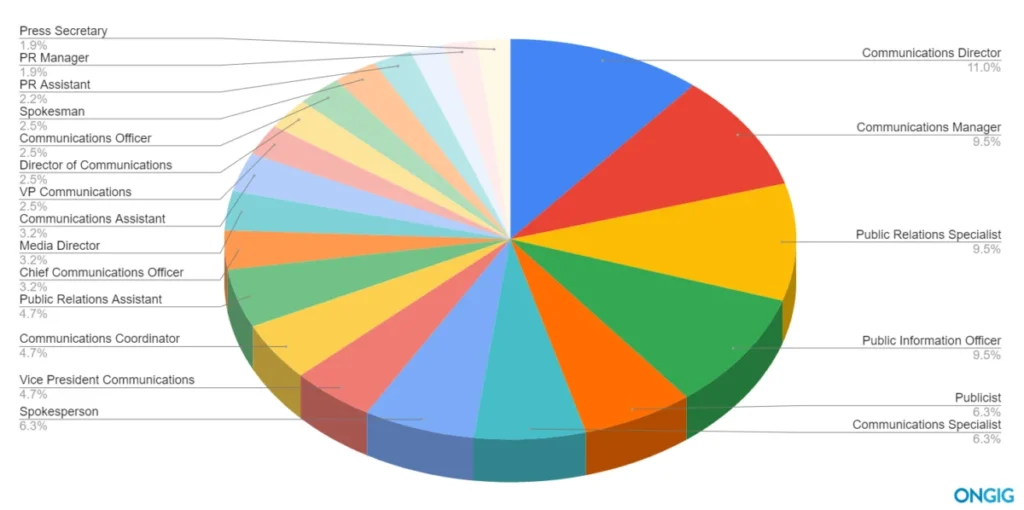
Understanding how candidates search for jobs is paramount for employers crafting appealing job descriptions. Ongig’s internal research, reflecting the relative share of candidate search interest, highlights a concentration around certain key titles. While the exact top 20 list is dynamic, titles like "Communications Manager," "Public Relations Specialist," "Communications Coordinator," and "Public Information Officer" consistently rank high. This suggests that job seekers often start with broad, well-understood terms before refining their search. Employers should leverage these popular keywords in their job titles and descriptions to maximize visibility and attract a wider pool of qualified applicants.
Employer Demand and Role Definitions
Correspondingly, employers frequently request job descriptions for a set of core communications and PR roles, each with distinct responsibilities crucial to organizational success.
- Communications Coordinator: This role is pivotal in promoting an organization or product, drafting press releases, coordinating with journalists, and distributing informational materials. They are the operational backbone, ensuring consistent messaging.
- Communications Manager: Responsible for shaping the brand’s image through internal and external strategies, they oversee content development, manage communication channels, and coordinate crisis responses. Their role is increasingly strategic, engaging diverse stakeholders.
- Public Information Officer (PIO): Common in government and public sector organizations, PIOs act as conduits of information between agencies and the public. They manage media inquiries, craft awareness campaigns, and provide critical updates during emergencies.
- Chief Communications Officer (CCO): As a C-level executive, the CCO directs all internal and external communications, reporting directly to the CEO. They are instrumental in shaping brand, reputation, and overall communication strategy, often leading crisis management and executive messaging.
- Media Director: Tasked with leading the flow of communication between a company and the media, Media Directors build key relationships with external partners and implement strategic communication plans. They are critical for proactive and reactive media engagement.
- Public Relations Specialist: These specialists create media releases, develop social media plans, and maintain an organization’s public image. Their daily tasks include responding to media requests, drafting speeches, and arranging interviews to project a positive identity.
- Publicist: Managing publicity for companies, public figures, or films, a Publicist ensures a brand’s message reaches its target audience through strategic outreach, media placement, and event coordination.
- Marketing Communications Manager (MarCom Manager): This role bridges marketing and communications, leading market research, developing pricing and budget strategies, and coordinating an organization’s message across various marketing and communication collateral.
- PR Manager: Leading a public relations department or firm, a PR Manager coordinates the PR team, oversees external communications planning, and acts as a liaison between the team and media or external marketing firms.
- Public Relations Director: Responsible for leading and directing strategic PR initiatives, this role oversees media interviews, may serve as a lead spokesperson, and manages teams creating press releases, media kits, and talking points.
- Communications Officer: Often found in government, this role handles event planning, media relations, public affairs, and internal communications. They track communication effectiveness and recommend improvements to senior management.
- Communications Specialist: Supporting the PR department, they write internal and external communications, including newsletters and press releases, often under the direction of a PR leader, and coordinate press events.
- Spokesperson: This individual speaks on behalf of an organization, public figure, or government entity, managing critical messages, conducting interviews, and crafting PR campaigns to shape favorable public perception.
- Vice President of Communications: Managing all brand reputation messages, VPs of Communications give public speeches, organize events, determine messaging for various platforms, and develop comprehensive PR and marketing strategies.
- Public Affairs Specialist: Serving as an advisor to senior management, this role communicates an organization’s identity and goals in a positive light, often collaborating with PR teams on external communications to media and government agencies.
- Public Relations Assistant: Performing clerical and administrative duties, PR Assistants help create marketing materials, manage social media, arrange media kits, and assist in organizing press conferences and product launches.
- Press Secretary: Communicating with the public on behalf of an employer, typically a government official, a Press Secretary provides strategic communication advice, writes press releases and speeches, and coordinates media events to maintain a positive image.
- Director of Communications: This role manages all aspects of an organization’s communications, publicity, and marketing, developing and implementing strategies to build relationships, manage public relations, and ensure messaging aligns with brand identity and goals.
The Rise of Remote and Hybrid Communications: Adapting to New Work Models
The landscape of work has been profoundly reshaped by the proliferation of remote and hybrid models, significantly impacting how communications teams are structured and how talent is recruited. Data from the FlexJobs Remote Work Index for Q1 2026 indicates a substantial expansion of marketing and communications remote roles, increasing by 30% or more, even as other functions faced growing pressure for a return to office. Communications stands out as a field that has largely retained its flexibility, a fact well recognized by job candidates.
For employers, this paradigm shift has several practical implications:
- Expanded Talent Pool: Remote and hybrid options allow organizations to tap into a wider geographic talent pool, no longer restricted by physical location. This can be particularly beneficial for finding niche skills or diverse perspectives.
- Competitive Advantage: Offering flexible work arrangements can serve as a significant draw for top-tier talent, positioning employers favorably in a competitive market.
- Clarity in Job Descriptions: When crafting job titles and descriptions for remote or hybrid roles, specificity is paramount. A general title like "Communications Specialist" can be ambiguous; clarifying whether the role involves managing executive communications across a distributed team versus supporting a local PR agency is crucial for setting expectations and attracting the right fit.
- Technology and Infrastructure: Employers must invest in robust communication technologies and infrastructure to support seamless collaboration and productivity among distributed teams.
For job seekers, the flexibility offers increased opportunities and improved work-life balance, but also necessitates a clear understanding of remote work best practices and the ability to articulate their effectiveness in a virtual environment.
Strategic Implications for Employers and Job Seekers
The dynamic nature of communications job titles presents both challenges and opportunities. For employers, optimizing job titles and descriptions is not merely an administrative task; it’s a strategic imperative for attracting, engaging, and retaining the best talent. This means:
- Researching Candidate Search Behavior: Aligning internal titles with what candidates actively search for increases visibility.
- Clarity and Specificity: Vague titles lead to mismatched applications. Detailed descriptions of responsibilities and required skills are essential.
- Highlighting Growth and Impact: Emphasizing career progression opportunities and the strategic importance of the role can attract ambitious professionals.
- Adapting to Industry Shifts: Recognizing the fragmentation of roles and the growing demand across diverse sectors requires a flexible approach to talent acquisition.
For job seekers, navigating this landscape requires:
- Broadening Search Terms: Looking beyond traditional titles to identify roles that align with their skills, even if the title differs.
- Showcasing Diverse Skill Sets: Emphasizing capabilities in digital media, analytics, crisis management, and internal communications, reflecting the evolving demands of the profession.
- Understanding Organizational Context: Researching a company’s structure to understand how communications functions are integrated (e.g., standalone vs. part of marketing) to tailor applications effectively.
- Embracing Flexibility: Being prepared for remote or hybrid work models and articulating how they can thrive in such environments.
Frequently Asked Questions (FAQs) about Communications Job Titles
1. What is the highest communications job title?
The Chief Communications Officer (CCO) typically represents the highest position in most communications organizational charts. In 2026, CCOs are increasingly seen as strategic business leaders who align multiple functions, reflecting a shift in expectations from purely functional expertise.
2. What is the difference between a Communications Manager and a PR Manager?
A Communications Manager generally oversees both internal and external messaging, encompassing a broader range of stakeholder engagement. A PR Manager, conversely, focuses more narrowly on media relations and public image management. However, in contemporary practice, these lines have significantly blurred, with many organizations expecting communications professionals to handle a comprehensive suite of responsibilities including earned media, social channels, and crisis response.
3. What are the best entry-level communications job titles?
Effective entry-level titles include Communications Assistant, PR Assistant, Public Relations Trainee, and Public Information Assistant. Most of these roles typically require a bachelor’s degree in public relations, communications, journalism, or a closely related field.
4. Are communications and PR jobs growing?
Yes, the sector is experiencing robust growth. The BLS projects a 5% increase in employment for PR specialists from 2024 to 2034, which is faster than the average for all occupations. This demand is expanding across various industries, including healthcare, fintech, and non-profits, indicating a broadening need for dedicated communications functions beyond traditional sectors.
This research, conducted by the Ongig team, aims to provide valuable insights for optimizing communications job titles, aligning with their mission to transform job descriptions and improve the hiring process for all.
July 1, 2026 by Rob Kelly in Job Titles