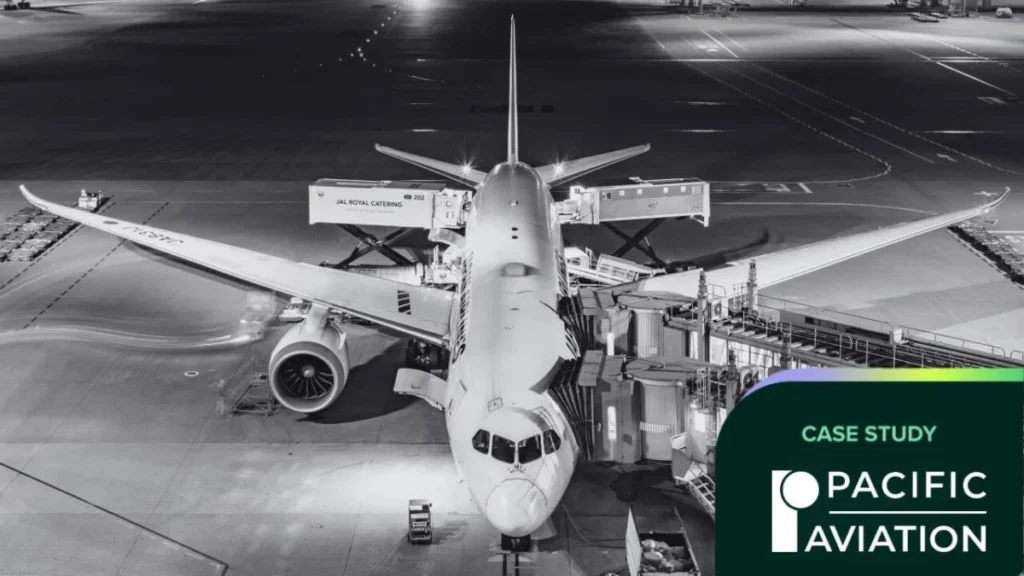
Pacific Aviation, a stalwart contract aviation company celebrating its thirtieth year in business, has significantly streamlined and enhanced its recruitment processes through a comprehensive integration and optimization of the Workable Applicant Tracking System (ATS). This strategic shift has allowed the company to meet the demanding staffing requirements of its international air carrier partners with unparalleled precision, speed, and consistency, managing a workforce of approximately 1,300 employees spread across a vast geographical footprint.
A Legacy of Service: Pacific Aviation’s Role in Global Aviation
For three decades, Pacific Aviation has served as a critical, trusted staffing partner for some of the world’s most prominent international airlines. Its operations span the United States, providing essential personnel from the bustling hubs of the West Coast, including Los Angeles, San Francisco, Seattle, and San Jose, to key gateways on the East Coast such as Boston, Raleigh-Durham, Myrtle Beach, Wilmington, Norfolk, and Syracuse. The company’s diverse workforce includes customer service agents, cabin cleaners, wheelchair attendants, dispatchers, and various ground personnel—roles that are fundamental to the seamless operation, safety, and passenger experience of modern air travel. These front-line and support staff are often the first and last points of contact for travelers, embodying the brand image and service standards of global airlines. The quality of this workforce directly impacts an airline’s reputation, operational efficiency, and, ultimately, its profitability.
The Imperative for Transformation: Addressing Recruitment Complexities
Before the systematic refinement of its hiring practices, Pacific Aviation faced a common challenge prevalent in high-volume, specialized industries: how to consistently identify, attract, and onboard top-tier talent at scale. Representing world-class airlines necessitates candidates who are not only highly skilled but also possess a polished, professional demeanor, ready to serve as the direct interface for a global brand. Building a hiring process capable of consistently delivering such caliber of candidates, especially for an organization supporting 1,300 employees across multiple markets with varying requirements, was a significant undertaking.
The turning point for Pacific Aviation’s recruitment strategy began approximately two years ago with a broader organizational restructuring. This initiative saw the arrival of a new Vice President of Human Resources and the subsequent hiring of Senior Recruitment Consultant Doug Hoffman. Hoffman was tasked with spearheading the transformation of the company’s recruitment infrastructure. Prior to this, the recruitment landscape, while functional, lacked the structured precision and efficiency required to meet the escalating demands of a dynamic aviation sector recovering from global disruptions and experiencing renewed growth. The existing system, as is common in many evolving organizations, likely relied on more manual processes, disparate tools, and less standardized evaluation methods, leading to potential inconsistencies in candidate quality and prolonged time-to-hire.
Strategic Overhaul: Workable as the Central Pillar
Upon his arrival, Doug Hoffman quickly recognized the potential within the company’s existing Applicant Tracking System, Workable. Rather than seeking an entirely new solution, Hoffman focused on maximizing the capabilities of the platform already in place. His strategy centered on unlocking Workable’s full potential to build a sharper, more structured, and ultimately more effective recruitment process. This involved a multi-faceted approach, starting with the foundational elements of candidate attraction and screening.
One of Hoffman’s initial key initiatives was to refine job descriptions. These were tightened and made more precise, ensuring they accurately reflected the specific needs and expectations of each airline partner. Crucially, he introduced detailed, account-specific "knockout questions" into every job posting. These questions served as an immediate, automated filter, ensuring that only candidates who met fundamental, non-negotiable criteria—such as specific language skills required for international routes (e.g., Mandarin or Cantonese fluency), a minimum amount of customer service experience, or a particular professional polish—progressed in the hiring funnel. This precision screening mechanism marked a significant departure from broader, less targeted postings, dramatically improving the quality of the initial applicant pool.
Leveraging Technology for Enhanced Sourcing and Engagement
Workable’s integrated features played a pivotal role in strengthening Pacific Aviation’s candidate sourcing efforts. The platform’s built-in career site provided a professional, branded interface for potential applicants, enhancing the company’s employer brand. Simultaneously, Workable’s robust job board distribution capabilities ensured that postings reached a wide and relevant audience across various online channels. This combination consistently generated a strong and steady stream of applicants, providing Hoffman with a deep pool of talent from which to draw, even for highly specialized roles. The efficiency of this automated distribution meant less manual effort for the recruitment team and broader reach for critical roles.
Beyond initial sourcing, Workable significantly streamlined candidate engagement and progression. The system’s self-scheduling feature, directly synced with Hoffman’s Outlook calendar, revolutionized the interview scheduling process. This allowed him to send video interview invitations to large cohorts of candidates—often fifty, seventy-five, or even one hundred individuals—simultaneously. The impact was immediate and profound: "Combining it with the self-scheduling piece, I can sort candidates into buckets and go through several recs in a day. I can set my week up in a matter of half a day," Hoffman observed. This automation eliminated the time-consuming back-and-forth typically associated with scheduling, enabling a full week’s worth of initial interviews to be arranged in mere hours. By the next morning, his calendar would be populated with candidates ready for live video interviews, each typically running fifteen to twenty minutes, depending on the specific role.
Standardization and Accelerated Decision-Making
The adoption of Workable extended beyond initial screening and scheduling to encompass the entire interview process. Hiring managers across Pacific Aviation’s diverse markets received comprehensive training on how to effectively review candidates and provide feedback directly within the Workable platform. This standardized approach ensured consistency in evaluation and feedback, regardless of the location.
To further enhance efficiency and fairness, Hoffman and his team developed structured interview guides. These guides provided hiring managers with a clear, repeatable framework for evaluating every candidate. This structure facilitated quick, confident decision-making, allowing managers to move swiftly from a screened candidate to a definitive yes-or-no decision. This streamlined process was instrumental in maintaining momentum, ensuring that promising talent did not "slip away to another opportunity," a critical concern in a competitive labor market. When a candidate stood out, Hoffman could facilitate a move to a hiring manager interview within an impressive twenty-four to thirty-six hours, drastically reducing the typical hiring cycle.
This structured approach also played a vital role in standardizing Pacific Aviation’s hiring methodology across its varied markets. Even with regional differences in pay scales and specific role requirements, the core evaluation process remained consistent, ensuring equity and compliance.
Scalability and Business Agility
One of the most significant business impacts of the Workable implementation has been Pacific Aviation’s enhanced ability to scale its operations rapidly and efficiently. The aviation industry is characterized by fluctuating demands and the frequent establishment of new routes or accounts. The refined recruitment process now allows Pacific Aviation to respond to these needs with remarkable agility.
A notable example of this scalability occurred when Pacific Aviation needed to staff a new account in Seattle, supporting a critical Hong Kong to Seattle route for an international carrier. The team successfully hired twenty-eight agents along with a full support staff in a rapid deployment. This kind of large-scale, time-sensitive hiring push has become a regular capability for Pacific Aviation, enabling the company to grow seamlessly alongside its airline partners and seize new business opportunities without being hampered by recruitment bottlenecks. This operational agility is a direct competitive advantage in the fast-paced aviation support sector.
Broader Implications and Industry Context
Pacific Aviation’s success story with Workable resonates within the broader context of the aviation industry’s recovery and evolution. Post-pandemic, air travel demand has surged, creating a substantial need for skilled personnel across all aviation sectors. This demand, coupled with existing labor shortages in certain specialized roles, has intensified the competition for talent. Companies that can recruit efficiently, maintain high standards, and offer a positive candidate experience are best positioned to thrive.
The adoption of advanced ATS platforms like Workable is not merely a trend but a necessity for modern recruitment. These systems offer numerous advantages, including:
- Reduced Time-to-Hire: Automated screening and scheduling significantly cut down the duration of the hiring cycle.
- Improved Candidate Quality: Precision screening tools ensure a higher caliber of candidates entering the interview stages.
- Enhanced Compliance: Standardized processes and documentation aid in regulatory compliance, particularly critical in highly regulated industries like aviation.
- Cost Savings: By optimizing recruiter time and reducing turnover through better-fit hires, ATS platforms offer substantial cost efficiencies.
- Better Candidate Experience: A streamlined, professional application and interview process contributes to a positive candidate experience, strengthening the employer brand.
Doug Hoffman’s enthusiastic endorsement underscores the tangible benefits: "I think it’s a very great system. I would definitely recommend it. I like that I can go in and set it up and have control of setting up the knockout questions and making sure we are compliant and consistent." He further emphasized the economic advantages, stating, "It’s a great tool, and it does save us a lot of time. It’s definitely cost-effective."
Conclusion: A Model for Future Growth
Pacific Aviation’s strategic embrace of Workable has transformed its recruitment function from a challenge into a core competitive advantage. By enabling precision screening, rapid scheduling, and consistent evaluation, the company has solidified its position as a reliable and efficient staffing partner for the international aviation community. This capability is paramount for a company built on representing some of the world’s most recognizable airlines, where speed, structure, and consistency are non-negotiable.
The ability to quickly source, vet, and onboard high-quality candidates means Pacific Aviation is not only meeting current demands but is also strategically poised for future growth and expansion. As the aviation industry continues to evolve, Pacific Aviation’s proactive and technologically advanced recruitment strategy serves as a compelling model for operational excellence and sustained success in a highly demanding global market.