In the current corporate landscape, Human Resources leaders are grappling with a complex set of interconnected challenges. Far from a lack of effort or intention, organizations often find themselves at an impasse, experiencing a structural pull where the demands of business success appear to be at odds with the needs of their workforce. This creates a significant hurdle, as the business prioritizes speed and future-ready talent, while employees seek clarity, meaningful growth, and recognition for their contributions. The critical question for HR is no longer how to resolve these tensions, but rather how to foster an environment where both business objectives and employee well-being can simultaneously flourish. This represents a fundamental shift in the role of HR, demanding a proactive approach that builds the necessary conditions for dual success.
The contemporary workplace is characterized by a persistent dichotomy: the business requires rapid adaptation and agility, while employees increasingly demand clarity and a sense of purpose. This tension is evident across several key areas. Businesses need to cultivate a workforce equipped for the future, necessitating continuous skill development and adaptability. Simultaneously, employees are looking for growth opportunities that are not merely transactional but deeply meaningful, contributing to their personal and professional development. Furthermore, organizations are driven by the need for sustained high performance, a goal that hinges on consistent productivity and innovation. Yet, employees desire to see their individual contributions acknowledged and valued, ensuring their efforts register within the broader organizational context.
HR departments are positioned at the nexus of these competing priorities. The historical tendency has been to optimize for one side, often leading to stalled strategies and underperforming initiatives. This reactive approach can manifest as prioritizing business targets at the expense of employee morale or focusing on employee engagement without a clear link to tangible business outcomes. Such strategies often fail to achieve sustainable success because they do not address the root cause of the misalignment.

Defining a Thriving Team: The Synergy of Performance and Connection
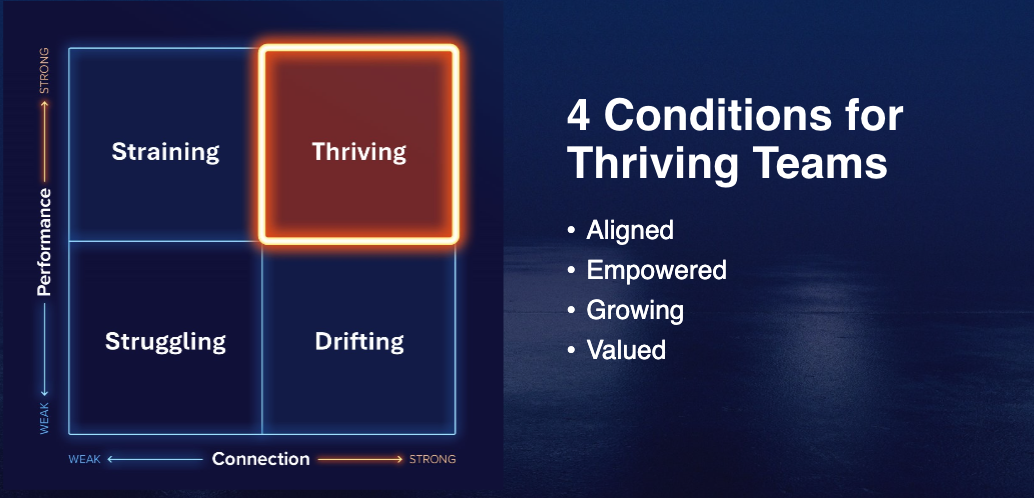
A truly thriving team is defined not by an either/or scenario, but by the harmonious integration of strong performance and robust connection. Teams that achieve high performance without a sense of connection are likely to experience burnout and strain, as employees may feel like cogs in a machine. Conversely, teams that prioritize connection without a focus on performance risk drifting, lacking the direction and output necessary for organizational success. Neither of these scenarios is sustainable in the long term.
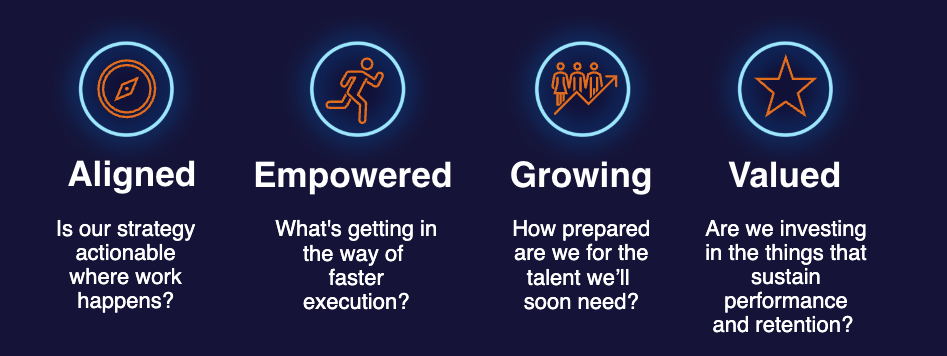
Quantum Workplace, a firm specializing in employee experience, proposes a framework for understanding team thriving through four essential conditions: Aligned, Empowered, Growing, and Valued. Each of these conditions directly addresses a critical tension that HR leaders are actively managing. By honestly assessing these areas, organizations can unlock more effective strategies and drive meaningful change.
The Four Pillars of Organizational Health: Key Diagnostic Questions for HR
1. Aligned: Is our strategy actionable where work happens?
The Tension: Organizations require speed and strategic direction, while employees need clarity and understanding of their role in achieving those objectives.
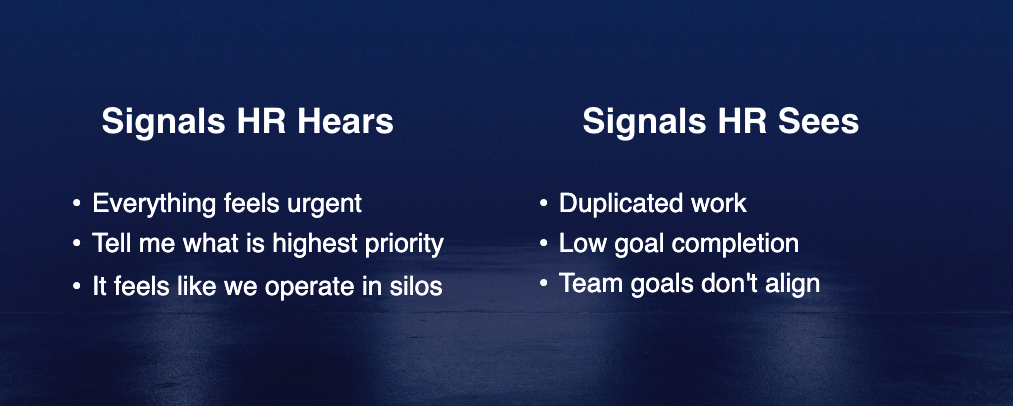
In discussions with HR leaders, a common sentiment emerges: "Everything feels urgent," "We operate in silos," and "Tell me what’s the highest priority." This sentiment is often mirrored in organizational data, which may reveal duplicated efforts, low goal completion rates, and team objectives that lack clear linkage to overarching business strategies.
A crucial diagnostic question for HR leaders is not simply whether employees are aware of the company strategy, but rather if that clarity differs significantly across performance levels. When high-performing employees lack clarity, it often points to a coaching opportunity for managers to bridge that gap. However, if top performers are also unclear, it indicates a systemic issue that transcends individual management efforts.
A deeper layer of inquiry involves understanding whether teams genuinely feel accountable for the strategy or perceive it as a directive imposed upon them. This distinction is vital. Survey responses can be segmented to reveal where employees are truly aligned versus where they may have disengaged. These same insights can then be correlated with other critical outcomes such as engagement scores and turnover risk, moving beyond simply identifying a problem to quantifying its impact.
What Action Looks Like:
- Translating Strategy into Actionable Goals: Ensuring that high-level organizational strategies are broken down into clear, measurable, and achievable goals at the team and individual levels. This involves active communication and collaboration between leadership and front-line employees.
- Fostering Cross-Functional Collaboration: Implementing initiatives that encourage communication and shared understanding across different departments, breaking down silos and promoting a unified approach to strategic objectives.
- Empowering Managers as Strategic Connectors: Equipping managers with the tools and training to effectively communicate strategic priorities and link individual contributions to the broader organizational mission.
- Utilizing Data to Identify Alignment Gaps: Regularly assessing employee sentiment and performance data to pinpoint areas where strategic clarity is lacking and implementing targeted interventions.
2. Empowered: What’s hindering faster execution?
The Tension: Businesses need to accelerate execution and decision-making, while employees require the removal of barriers and the autonomy to perform their roles effectively.
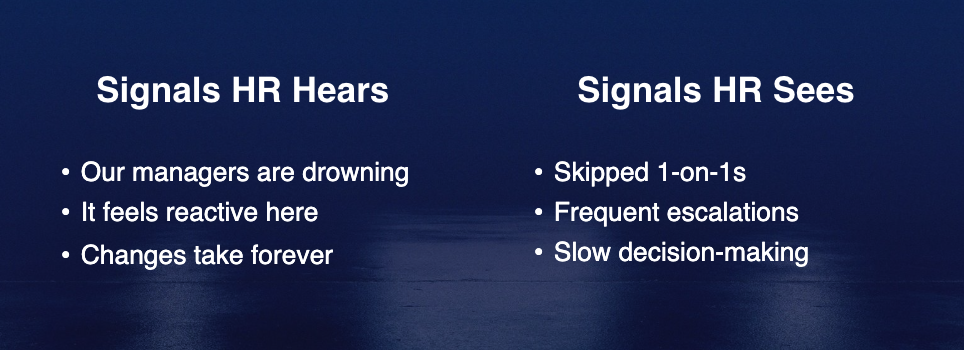
Consistent signals of this tension include managers feeling overwhelmed, a pervasive sense of reactivity, and prolonged decision-making processes. This can manifest as skipped one-on-one meetings, frequent escalations, and decisions that take days or weeks to finalize, impacting overall productivity and agility.
Analysis of organizational data reveals that barriers to execution are not always immediately obvious. For instance, one organization found that the primary determinant of on-time delivery was not the availability of materials or equipment, but rather the adoption rate of Artificial Intelligence (AI) tools. This counterintuitive insight highlights the value of connecting disparate data sets—linking business KPIs with employee feedback—to uncover hidden obstacles.
A significant, and often overlooked, aspect of this tension is the "manager experience gap." Data from one organization starkly illustrates this disparity: managers consistently scored lower than non-managers on key metrics related to recognition, performance clarity, and understanding their place in the organization’s future. They reported significantly less confidence in knowing how their performance is measured, fewer opportunities for skill development, and a weaker sense of commitment to the organization. This data underscores a critical point: managers cannot effectively empower their teams if they do not feel empowered themselves. This is not a matter of individual disposition but a structural issue within the organization’s support systems for its leadership.
What Action Looks Like:
- Streamlining Decision-Making Processes: Identifying and removing bureaucratic hurdles that slow down decision-making, empowering individuals and teams to make decisions at the appropriate level.
- Investing in Manager Development: Providing managers with comprehensive training and resources focused on effective delegation, feedback, performance management, and fostering autonomy within their teams.
- Addressing Managerial Support Gaps: Implementing targeted programs and policies to ensure managers feel recognized, clear about their performance expectations, and connected to the organization’s future, thereby enabling them to better support their teams.
- Leveraging Technology for Efficiency: Utilizing technology and automation to reduce manual tasks and administrative burdens, freeing up employee time for higher-value activities.
3. Growing: How prepared are we for the talent we will soon need?
The Tension: Organizations need to build a future-ready talent pipeline, while employees seek meaningful career development and assurance about their long-term employability.
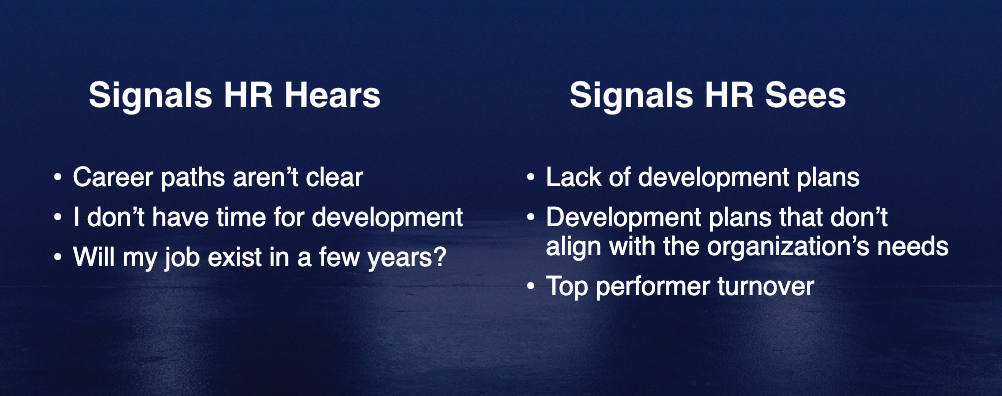
The signals here are clear: career paths are often ill-defined, development opportunities are scarce, and employees are increasingly voicing concerns about job security in the face of rapid technological and market shifts. The question, "Will my job even exist in a few years?" is becoming a common refrain, posing a significant challenge for HR.
The most effective diagnostic question in this area shifts the focus from simply having development plans to ensuring these plans are active, relevant, and integrated into an employee’s daily work experience. A documented growth plan that is rarely referenced offers little benefit. Conversely, a challenging project that builds critical skills needed for the organization’s future represents a powerful vehicle for development.
Succession planning data, when integrated with employee feedback, provides a more nuanced view of talent readiness. By connecting candidate status with survey insights, organizations can ascertain whether they are intentionally developing critical future talent or merely assuming it is occurring. Furthermore, feedback from a candidate’s team can offer valuable insights into their actual leadership effectiveness.
The imperative is to shift growth from a periodic, formalized process to an everyday experience, embedding development within actual work through projects, challenges, and real business priorities.
What Action Looks Like:
- Creating Clear Career Pathways: Defining transparent career progression routes, outlining the skills, experiences, and competencies required for advancement within the organization.
- Integrating Development into Daily Work: Designing projects, stretch assignments, and cross-functional opportunities that allow employees to acquire new skills and gain valuable experience in a practical, hands-on manner.
- Proactive Succession Planning: Identifying critical roles and high-potential employees, and developing targeted plans to ensure a ready pipeline of qualified internal candidates for future leadership positions.
- Skills-Based Development: Focusing development initiatives on the skills that will be most in-demand for the organization’s future, aligning employee growth with strategic business needs.
4. Valued: Are we reinforcing what matters most?
The Tension: Organizations need sustained performance driven by motivated employees, while employees want to feel that their contributions are recognized and that they are genuinely valued.
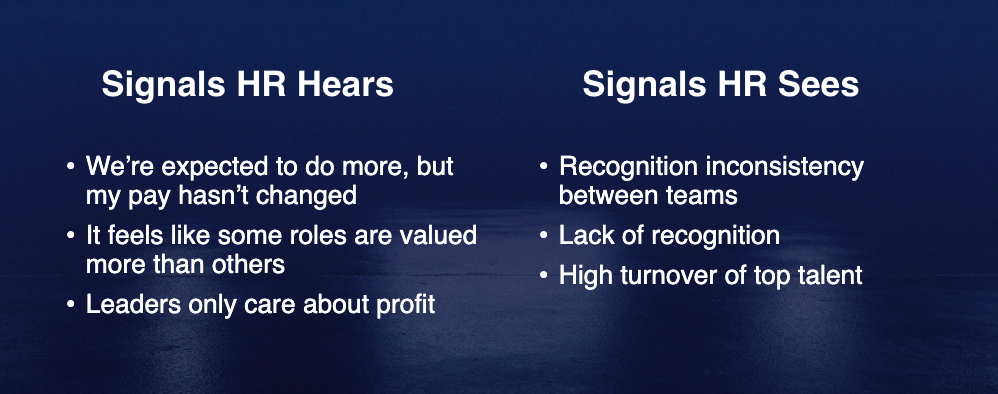
Common sentiments expressed by employees include: "We’re expected to do more, but my pay hasn’t changed," "It feels like some roles matter more than others," and "Leaders only care about profit." These concerns are often reflected in data showing significant variations in recognition across teams and high turnover among valuable employees.
A reframing of this tension can be achieved by focusing on the return on investment (ROI) of recognition. When employee turnover is driven by a lack of feeling valued, recognition becomes a critical financial consideration, not merely a cultural initiative. By directly linking retention risk to recognition data, organizations can quantify the financial cost of employees feeling undervalued.
It is crucial to remember that feeling valued extends beyond top performers. Solid contributors, who often form the largest segment of the workforce, also need to feel that their impact is significant. Recognition programs that exclusively target star performers miss a substantial portion of the employee base. Connecting talent reviews and performance ratings with employee feedback can illuminate these patterns.
What Action Looks Like:
- Implementing Comprehensive Recognition Programs: Developing a range of recognition strategies that acknowledge both significant achievements and consistent contributions, catering to diverse employee needs and preferences.
- Ensuring Fair and Transparent Compensation and Rewards: Regularly reviewing compensation structures to ensure they reflect market rates and the value of employee contributions, addressing pay equity concerns.
- Fostering a Culture of Appreciation: Encouraging regular, informal expressions of gratitude and acknowledgment from managers and peers, creating an environment where appreciation is a daily practice.
- Connecting Performance to Value: Clearly articulating how individual and team performance contributes to organizational success and ensuring that contributions are recognized and rewarded accordingly.
The Strategic Advantage: Building Conditions for Dual Success
While the four tensions—Aligned, Empowered, Growing, and Valued—may appear distinct on the surface, they share a common structural characteristic: the perceived conflict between business needs and employee needs, with HR often caught in the middle. The instinctive response is to prioritize one over the other. However, a more effective and sustainable approach is to actively build the conditions that enable both business success and employee thriving to coexist.
Organizations that achieve alignment, empowerment, growth, and value are not making compromises; they are creating the foundation for sustained business performance. HR’s role is not to personally resolve every conflict but to guide the organization in asking and answering more insightful questions.
The development and implementation of the right talent platform can facilitate this shift. By integrating insights from engagement, performance, development, and recognition into a unified view, organizations can empower every leader, from HR executives to frontline managers, with the clarity and confidence needed to act on what truly matters. This holistic approach ensures that not just HR, but every individual within the organization, is equipped to foster a thriving work environment. The data to address these critical questions already exists within most organizations; the challenge lies in connecting it and acting upon the insights it reveals.