
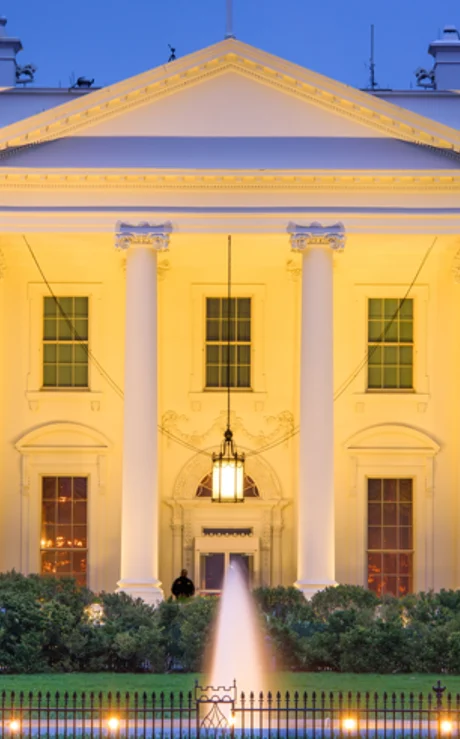
On April 23, 2025, President Donald J. Trump signed a landmark Executive Order titled Restoring Equality of Opportunity and Meritocracy, signaling a fundamental shift in the United States government’s approach to civil rights enforcement and employment law. The Order establishes a sweeping new federal policy aimed at eliminating the use of disparate-impact liability—a legal theory that has underpinned American anti-discrimination efforts for over half a century—to the maximum extent permitted by law. By directing federal agencies to deprioritize the investigation and litigation of claims based on statistical disparities rather than intentional bias, the administration seeks to realign the federal bureaucracy with a philosophy of strict meritocracy and colorblind constitutionalism.
The Executive Order directs all federal agencies, including the Equal Employment Opportunity Commission (EEOC) and the Department of Justice (DOJ), to immediately reassess their enforcement priorities. Agency heads are instructed to identify and potentially repeal or amend any existing regulations, guidance, or rules that impose disparate-impact liability. This includes a mandate to evaluate existing consent judgments and permanent injunctions, potentially leading to the dismissal of ongoing litigation or the modification of long-standing court-monitored settlements. Beyond the immediate impact on government-led enforcement, the Order creates a complex new environment for private employers, artificial intelligence (AI) developers, and state legislatures, as it challenges the foundational principles of systemic discrimination law.
Historical Context and the Evolution of Disparate Impact
To understand the magnitude of the April 23 Order, it is necessary to examine the history of the legal theory it seeks to dismantle. Disparate impact liability refers to the legal principle that an employer’s practices can be considered discriminatory if they have an adverse effect on a protected group, even if the practices are neutral on their face and the employer had no intent to discriminate.
The theory was first validated by the U.S. Supreme Court in the 1971 case Griggs v. Duke Power Co. In that unanimous decision, the Court held that Title VII of the Civil Rights Act of 1964 proscribes not only overt discrimination but also practices that are "fair in form, but discriminatory in operation." The Court famously noted that "the touchstone is business necessity," meaning that if an employment practice (such as a high school diploma requirement) disproportionately excluded Black applicants and could not be shown to be significantly related to job performance, it was prohibited.
In 1991, following several Supreme Court decisions that had begun to narrow the scope of the theory, Congress passed the Civil Rights Act of 1991. This legislation codified disparate impact into statutory law under Section 703(k) of Title VII. This codification established a clear framework: a plaintiff demonstrates a disparate impact; the employer must then prove that the challenged practice is "job related for the position in question and consistent with business necessity"; and if the employer succeeds, the plaintiff can still prevail by showing that a less discriminatory alternative exists that the employer refused to adopt.
The Administration’s Stance on Constitutional Principles
The 2025 Executive Order and its accompanying White House fact sheet present a sharp ideological break from this 54-year legal tradition. The administration characterizes disparate-impact theory as fundamentally at odds with the Constitution’s guarantee of equal protection. According to the Order, the theory "imperils the effectiveness of civil rights laws by mandating, rather than proscribing, discrimination."
The administration argues that the threat of disparate-impact lawsuits forces businesses and government entities to adopt race-conscious policies to ensure "balanced" outcomes, which the administration views as a form of unconstitutional racial engineering. By focusing on outcomes rather than intent, the White House asserts that the federal government has inadvertently pressured employers to move away from merit-based hiring and toward quota-like systems to avoid litigation. Section 2 of the Order explicitly states that "it is the policy of the United States to eliminate the use of disparate-impact liability in all contexts to the maximum degree possible."
Key Provisions and Agency Directives
The Executive Order is structured to trigger a rapid and comprehensive review of the federal government’s internal and external operations. The following sections outline the primary mandates:
Revocation of Prior Approvals and Guidance
Section 3 of the Order revokes previous presidential approvals of regulations related to Title VI of the Civil Rights Act, which prohibits discrimination in programs receiving federal financial assistance. This move targets the broad application of disparate-impact theories in areas such as environmental justice, housing, and education funding.
Deprioritization of Enforcement
Section 4 instructs federal agencies to "deprioritize enforcement of all statutes and regulations to the extent they include disparate-impact liability." This directive specifically mentions Title VII (employment) and Title VI (federal programs). For the EEOC and the DOJ, this means a shift in resources away from "systemic" investigations that rely on statistical modeling to prove bias, focusing instead on "disparate treatment" cases where evidence of intentional prejudice is present.
Review of Ongoing Litigation and Consent Decrees
Section 6 carries significant weight for employers currently involved in legal disputes with the government. It requires the Attorney General and the EEOC Chair to assess all pending investigations and civil suits that rely on a disparate-impact theory. Furthermore, agencies must evaluate existing consent judgments—legal agreements often lasting years or decades—to determine if they should be modified or terminated in light of the new policy. This could result in the federal government withdrawing from active cases or declining to enforce previous settlement terms.
The Challenge to State Laws and Preemption
Section 7 directs the Attorney General to investigate whether federal authorities can preempt state laws that impose disparate-impact liability. This is a highly contentious provision, as many states (such as California, New York, and Illinois) have their own civil rights statutes that explicitly recognize disparate impact. The Order signals a potential legal battle between the federal government and states over the right to define and prosecute discriminatory practices.
Implications for Artificial Intelligence and Algorithmic Hiring
One of the most significant areas affected by the Order is the regulation of artificial intelligence in the workplace. Under the previous administration, the EEOC had made the oversight of AI tools a top priority. In May 2023, the commission issued technical assistance warning employers that using algorithmic decision-making tools could lead to disparate-impact liability if those tools screened out protected groups at higher rates.
The April 23 Order effectively reverses this stance. By signaling that the federal government will not allocate resources to investigate disparate outcomes produced by algorithms, the administration provides a more permissive environment for AI developers and employers. For businesses, this may reduce the immediate fear of federal "AI audits" or systemic investigations into their hiring software. However, legal experts warn that this does not grant a total "free pass," as private plaintiffs and state regulators may still use these theories to challenge AI-driven bias.
Chronology of the Shift in Civil Rights Policy
The issuance of the Executive Order is the culmination of a rapid series of policy shifts following the 2024 election:
- January – March 2025: New leadership is installed at the DOJ and the EEOC. Preliminary memos begin circulating regarding the "costs and constitutional risks" of disparate-impact enforcement.
- April 10, 2025: The administration hints at a "Merit-First" initiative during a White House briefing on economic competitiveness.
- April 23, 2025: President Trump signs the Executive Order "Restoring Equality of Opportunity and Meritocracy."
- May 2025 (Projected): Agencies are expected to release their first 30-day reports identifying specific regulations for repeal.
- Summer 2025: Anticipated legal challenges from civil rights organizations and state Attorneys General seeking to block the implementation of the Order.
Reactions from Legal and Business Communities
The Order has sparked a polarized response across the legal and political landscape. Supporters of the move, including several prominent business advocacy groups, argue that it provides much-needed clarity and protects employers from "frivolous" lawsuits based on complex statistics that may not reflect actual bias. They contend that the shift will allow companies to focus on finding the best talent without the administrative burden of constant disparate-impact monitoring.
Conversely, civil rights advocates and labor organizations have condemned the Order as a "roll-back of decades of progress." Critics argue that disparate-impact liability is essential for uncovering "hidden" barriers to entry that disproportionately affect minority communities, such as unnecessary testing requirements or biased algorithms. They maintain that without the threat of disparate-impact enforcement, systemic inequalities in the American workforce will widen.
Analysis of the Legal Landscape for Employers
Despite the executive branch’s clear intent, the legal landscape remains fraught with complexity for employers. The Executive Order changes federal enforcement priorities, but it cannot unilaterally rewrite statutes passed by Congress. Because Section 703(k) of the Civil Rights Act of 1991 remains on the books, private individuals still have the right to file lawsuits alleging disparate impact.
Key considerations for the private sector include:
- Private Right of Action: The "private plaintiffs’ bar" may become more aggressive in filling the void left by the EEOC. While the government may stop bringing these cases, individual employees and class-action attorneys can still utilize the 1991 Act to sue in federal court.
- State and Local Compliance: As noted in the Order, states like Colorado, New Jersey, and New York have robust anti-discrimination laws. Employers operating in multiple jurisdictions must continue to comply with local standards, which may still strictly prohibit practices with a disparate impact.
- The Preemption Battle: The administration’s attempt to preempt state laws will likely face intense scrutiny in the courts. Until a definitive Supreme Court ruling is issued, employers face a "patchwork" of conflicting federal and state expectations.
- DEI Programs: The Order aligns with the administration’s broader skepticism of Diversity, Equity, and Inclusion (DEI) initiatives. Employers are being encouraged to pivot toward "merit-based" frameworks, but must balance this with the need to avoid intentional discrimination (disparate treatment), which remains illegal and a focus of federal enforcement.
Conclusion
The April 23, 2025, Executive Order represents a transformative moment in American jurisprudence. By attempting to decouple federal policy from the disparate-impact theory, the Trump administration is seeking to redefine the meaning of equality in the 21st-century workplace. While the Order provides a temporary reprieve for some businesses from federal systemic investigations, the enduring nature of statutory law and the persistence of state-level protections ensure that the debate over merit, outcomes, and equity will remain a central fixture of the American legal system for years to come. Employers are advised to maintain rigorous documentation of their hiring and testing procedures, ensuring that all selection criteria are demonstrably job-related, even as the federal government’s enforcement lens shifts toward intentionality.








