
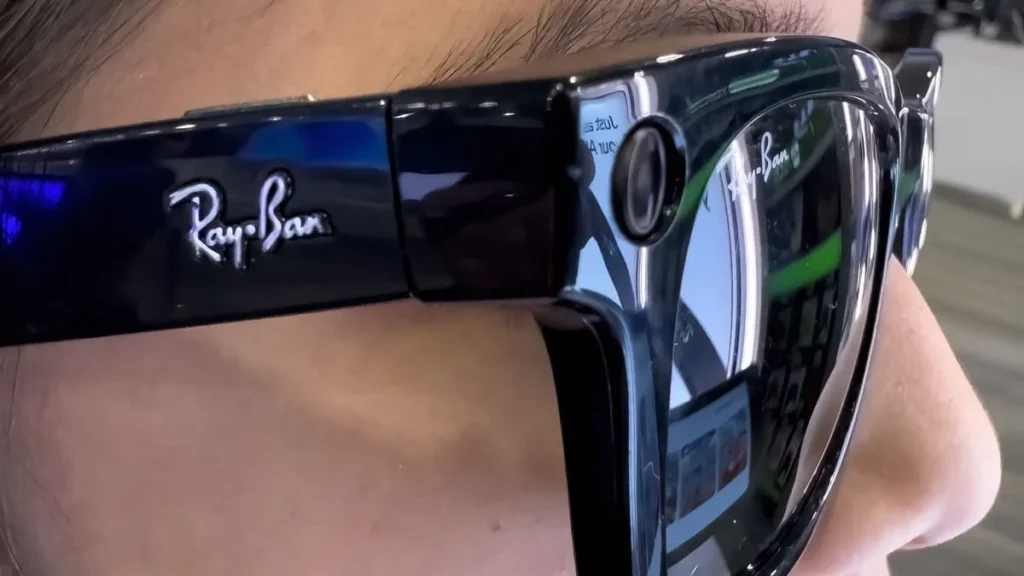
The rapid advancement and increasing discreetness of wearable technology, particularly smart glasses like the Ray-Ban Meta series, are compelling employers across the United Kingdom to urgently review and revise their workplace policies. Legal experts warn that these devices, which combine integrated cameras with sophisticated AI capabilities, introduce a complex web of new legal risks spanning data protection, confidentiality, employee privacy, and the burgeoning issue of workplace harassment. The ease with which these hands-free gadgets can facilitate covert recordings without drawing attention presents an unprecedented challenge to established workplace norms and legal frameworks.
The Proliferation of Discreet Surveillance in the Modern Workplace
The evolution of smart glasses from clunky prototypes like Google Glass to the sleek, aesthetically integrated designs of today marks a significant shift in personal technology. Modern smart glasses are designed to blend seamlessly with conventional eyewear, making their recording capabilities far less conspicuous than those of a mobile phone. This subtlety, combined with hands-free operation and AI-powered features, dramatically lowers the barrier for individuals to capture sensitive audio, video, or even data displayed on screens, often without the knowledge or consent of those being recorded.
Oliver Milton, a solicitor at employment law firm TWM Solicitors, has underscored the gravity of this development, stating that "Smart glasses are becoming increasingly difficult to detect, making covert recording much easier than using a mobile phone. That creates obvious risks for confidential information, but it also raises wider issues around trust, privacy and workplace culture." The inherent difficulty in identifying when a device is actively recording exacerbates the potential for misuse, creating an environment where employees may feel constantly under potential surveillance, even if unfounded.
A Web of Legal Risks: Data Protection, Confidentiality, and Privacy
The implications of covert recording extend across several critical legal domains, posing significant liabilities for employers who fail to adapt.
Confidentiality Breaches: The hands-free nature of smart glasses means that individuals can effortlessly record commercially sensitive information during client meetings, strategic negotiations, or while viewing confidential documents and computer screens. This presents a direct threat to intellectual property, trade secrets, and competitive advantage. The instantaneous nature of digital sharing further compounds this risk, as captured information could be uploaded to external platforms or shared with competitors almost immediately. The damage from such breaches, once information is disseminated, can be irreparable.
Data Protection and UK GDPR Compliance: The recording of colleagues, customers, or even information displayed on a screen that contains personal data, directly triggers obligations under the UK General Data Protection Regulation (UK GDPR) and the Data Protection Act 2018. Such recordings constitute the processing of personal data, which requires a lawful basis, transparency, and adherence to principles of data minimisation and purpose limitation. Without explicit consent or a legitimate interest that outweighs individual rights – both of which are highly contentious in covert recording scenarios – employers face significant compliance risks, including potential fines from the Information Commissioner’s Office (ICO) and reputational damage. The lack of awareness from individuals being recorded means their data subject rights, such as the right to be informed, are fundamentally undermined.
Erosion of Privacy and Trust: Beyond the legal strictures, the pervasive threat of covert recording erodes the fundamental right to privacy in the workplace. Employees have a reasonable expectation of privacy in their daily interactions, and the knowledge that conversations, gestures, or even personal moments could be secretly captured can foster an environment of distrust and anxiety. This psychological impact can significantly damage morale, reduce open communication, and ultimately undermine the essential trust and confidence between employers and employees, which is a cornerstone of healthy workplace culture.
Navigating the Minefield of Misconduct and Admissibility of Evidence
The existence of covert recordings fundamentally challenges the employer-employee relationship. TWM Solicitors points out that "The existence of covert recording can undermine the trust and confidence of the employer and may amount to misconduct, potentially gross misconduct, particularly where there has been an attempt to undermine confidentiality or capture private deliberations." Employers are accustomed to dealing with overt recordings, but the discreet nature of smart glasses makes detection and intervention far more difficult.
However, the legal landscape surrounding covert recordings in employment disputes is nuanced. Even where a recording clearly breaches internal workplace rules and policies, employment tribunals may, depending on the circumstances, still admit it as evidence. This creates a difficult situation for employers, who might find themselves defending against evidence obtained through means that violate their own policies, potentially legitimising the illicitly obtained material in a legal context. This judicial flexibility underscores the need for robust and explicit policies that clearly define the boundaries of acceptable behaviour regarding recording devices.
Real-World Precedents: Courts, Retail, and Public Figures
The potential for misuse of smart glasses is not merely theoretical; several high-profile incidents have already highlighted the tangible risks.
A Chronology of Emerging Challenges:

- Early 2024: His Majesty’s Courts and Tribunals Service (HMCTS) issued a definitive stance, confirming that AI-powered smart glasses would be confiscated at the door of judicial buildings. This proactive measure by a governmental body underscores the serious concerns regarding the integrity of legal proceedings and the potential for technological interference.
- March 2024 (High Court Incident): A claimant, Laimonas Jakštys, was accused by a judge of wearing smart glasses in the High Court and allegedly being "coached" through them while giving evidence during a case concerning the directorship of a property company. Raquel Agnello KC, sitting as judge, explicitly stated that Jakštys had been "assisted or coached in his replies to questions put to him during cross examination." While Jakštys denied using the smart glasses to receive answers or that they were connected to his phone, the incident brought to the forefront the potential for real-time external influence in sensitive legal settings, sparking widespread debate about the integrity of testimony in the age of AI.
- June 2024 (USDAW Warning & Michael Barrymore Incident): The union USDAW (Union of Shop, Distributive and Allied Workers) issued a stark warning regarding the increasing risks faced by retail workers from members of the public using smart glasses for secret recordings. This concern was dramatically illustrated when a sales assistant discovered he had been filmed without his knowledge or consent and featured in a video posted to TikTok and YouTube by former television presenter Michael Barrymore. Barrymore, known for regularly recording his daily activities with smart glasses equipped with a hidden camera, shared the footage with thousands of online followers. This incident highlighted the dual threat: not only from internal employee misuse but also from external individuals recording staff, creating significant privacy concerns and potential for harassment in customer-facing roles.
These incidents, occurring within a short timeframe, collectively illustrate the multifaceted challenges posed by smart glasses, ranging from undermining the sanctity of legal proceedings to infringing upon the privacy and safety of frontline workers.
The Emerging Threat of Third-Party Harassment
Beyond internal confidentiality and data protection concerns, smart glasses complicate the employer’s new duty to prevent third-party harassment, which is due to come into force in October. This legislation places a greater onus on businesses to take "reasonable steps" to protect employees from harassment by third parties, including customers, clients, or visitors.
Sectors such as hospitality, retail, and leisure are particularly vulnerable, as employees in these roles frequently interact with the public. The Michael Barrymore incident serves as a poignant example: a retail worker’s privacy was violated by a customer’s covert recording, leading to unwanted public exposure. Employers in these sectors will need to carefully consider whether restricting the photographing or recording of staff by third parties should form a mandatory part of their harassment prevention strategies. Some airlines have already implemented policies that explicitly refer to the recording of staff, particularly before take-off, signalling a growing awareness of this specific risk. This new duty necessitates a proactive approach to policy formulation that anticipates and mitigates risks arising from public-facing interactions facilitated by discreet recording technology.
The Crucial Role of Assistive Technology: A Call for Nuance
Despite the significant risks, TWM Solicitors wisely cautions employers against implementing blanket bans on smart glasses. Such a sweeping prohibition could inadvertently lead to discrimination risks, particularly for disabled employees who may rely on these devices as crucial assistive technology.
Smart glasses possess features that can be profoundly beneficial as reasonable adjustments under the Equality Act 2010. For individuals with visual or hearing impairments, or those with neurodivergent conditions, these devices can provide invaluable support through:
- Real-time captions: Transcribing spoken words into text, assisting those with hearing difficulties.
- Audio assistance: Narrating visual information or providing prompts for individuals with visual impairments.
- Visual prompts: Offering cues or reminders, beneficial for certain neurodivergent conditions.
- Hands-free access to information: Allowing users to access data or instructions without needing to manipulate a separate device, crucial for many physical disabilities.
Milton stresses this point: "Some disabled employees will benefit greatly from technological advancements such as smart glasses. A blanket ban, without considering individual circumstances, could create discrimination risks." This highlights the complex balancing act employers face: safeguarding confidentiality and privacy while upholding their obligations to provide reasonable adjustments for disabled employees. A nuanced approach that considers individual circumstances and implements tailored solutions, rather than broad prohibitions, is therefore essential.
Recommendations for Employers: Proactive Policy Evolution
Given the evolving technological landscape and the intricate legal implications, TWM Solicitors strongly recommends that employers undertake a comprehensive review of their existing workplace policies. This review should encompass:
- Disciplinary and Grievance Procedures: Updating these to explicitly address the misuse of wearable recording technology, including defining what constitutes misconduct or gross misconduct in this context.
- Data Protection Policies: Ensuring that policies clearly articulate expectations regarding the processing of personal data, the need for consent, and the implications of covert recording under UK GDPR.
- Confidentiality Agreements: Reinforcing clauses related to the protection of trade secrets and sensitive information, specifically mentioning digital and covert recording methods.
- IT and Communications Policies: Expanding these to cover the use of personal wearable devices, connectivity to company networks, and data transmission.
- Social Media Policies: Addressing the inappropriate sharing of workplace recordings or content derived from covert surveillance.
Beyond policy revisions, TWM advises organisations to:
- Clarify Permitted Recording: Establish clear guidelines on when workplace recording is permitted, such as for training purposes or official meetings, and under what conditions.
- Require Consent: Emphasise the necessity of obtaining explicit consent from all parties before any recording takes place.
- Set Disciplinary Consequences: Clearly outline the disciplinary actions that will be taken in cases of misuse, from warnings to termination.
- Train Managers: Equip managers with the knowledge and skills to identify potential issues involving wearable technology and to address them effectively and sensitively.
As Milton concludes, "Wearable technology is evolving rapidly and workplace policies need to evolve with it. Employers who review their policies now are far more likely to avoid disputes later." Proactive engagement with these challenges is not merely a legal imperative but a strategic necessity for maintaining a productive, trusting, and legally compliant workplace.
Broader Implications for Workplace Culture and Trust
The rise of discreet smart glasses fundamentally alters the fabric of workplace interaction. In an environment where every conversation, meeting, or even casual interaction could potentially be recorded, employees may become more guarded, less spontaneous, and more reluctant to engage in open dialogue. This shift can stifle creativity, collaboration, and the free exchange of ideas, which are vital for innovation and problem-solving.
Furthermore, the very concept of "psychological safety"—where employees feel safe to express themselves without fear of negative consequences—can be undermined. If trust erodes, it can lead to increased stress, disengagement, and a sense of being constantly observed. Employers must consider not just the legal ramifications but also the profound cultural impact of this technology and strive to foster an environment of transparency, respect, and clear communication regarding technology use. This includes establishing ethical guidelines for technology use and ensuring that any monitoring or recording is proportionate, justified, and transparently communicated.
In essence, the era of discreet smart glasses demands a holistic and forward-thinking approach from employers. It is a moment for introspection, policy reform, and a renewed commitment to balancing technological advancement with fundamental human rights to privacy and dignity in the workplace. The challenges are complex, but the opportunity to define responsible technology use in the workplace of tomorrow is immediate.







