
The contemporary human resources landscape is defined by a complex web of competing priorities, leaving many HR leaders feeling perpetually caught between the urgent needs of the business and the evolving expectations of employees. This inherent tension, characterized by a structural pull where organizational success can appear to come at the expense of individual well-being, and vice versa, is hindering strategic progress. Organizations often find themselves "stuck" not due to a lack of effort or intention, but because they are attempting to optimize one aspect at the detriment of the other, leading to stalled initiatives and diminished effectiveness.
This article delves into the core challenges HR leaders face, exploring the fundamental disconnects between business objectives and employee desires. It posits that the path forward lies not in resolving these tensions through compromise, but in fostering an environment where both business imperatives and employee needs can simultaneously flourish. This requires a fundamental redefinition of HR’s role, shifting from problem-solving individual conflicts to creating systemic conditions for mutual success.
The Evolving Demands: A Tale of Two Perspectives
The core of the challenge can be distilled into a series of opposing yet interconnected demands:
- Business Needs Speed, Employees Need Clarity: In an era of rapid market shifts and constant innovation, businesses require agility and swift decision-making. Simultaneously, employees seek clear understanding of their roles, responsibilities, and the strategic direction of the organization to feel secure and effective.
- Business Needs Future-Ready Talent, Employees Want Meaningful Growth: Organizations are increasingly focused on acquiring and developing a workforce capable of navigating future challenges and technological advancements. Employees, however, desire growth opportunities that are not just about skill acquisition but also about personal fulfillment and a sense of purpose.
- Business Needs Sustained Performance, Employees Want Their Contributions to Matter: The relentless pursuit of productivity and results drives business objectives. Employees, in turn, need to feel that their efforts are recognized, that their contributions have a tangible impact, and that they are integral to the organization’s success.
HR departments are situated at the nexus of these dual demands. The conventional approach often leads to prioritizing one over the other, creating a zero-sum dynamic that ultimately undermines both business performance and employee engagement. This creates a critical juncture where the question shifts from "how do we resolve these tensions?" to "how do we build the conditions where both become possible?" This reframing represents not a minor adjustment but a fundamental redefinition of the HR function.

Defining a Thriving Team: The Fusion of Performance and Connection
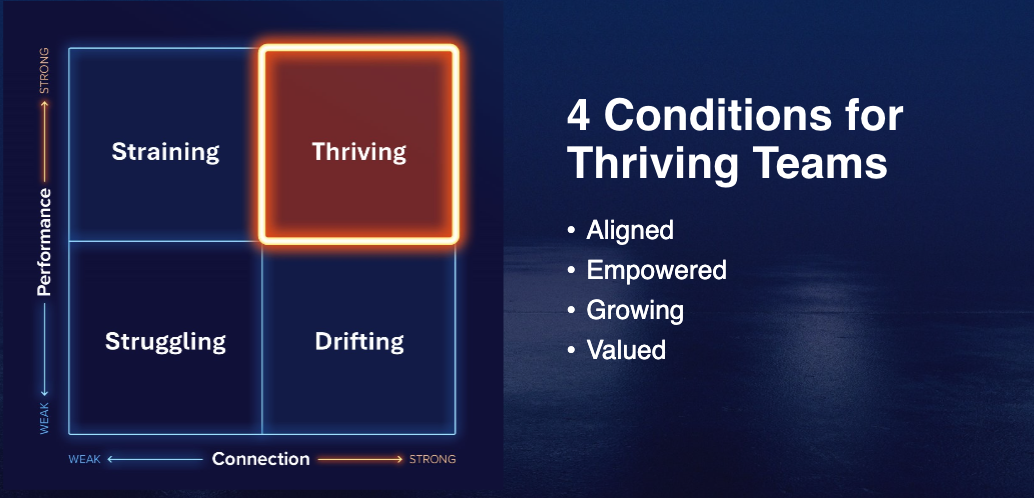
At the heart of this paradigm shift is the concept of a "thriving team." This is not a team that excels in one area while neglecting another, but one that achieves a harmonious integration of strong performance and deep connection.
- Teams that perform without connection are straining: While capable of achieving short-term goals, these teams often suffer from burnout, high turnover, and a lack of intrinsic motivation. The absence of interpersonal bonds and a shared sense of purpose can lead to a brittle form of success.
- Teams that connect without performing are drifting: These teams may foster a positive and supportive atmosphere, but they lack the drive and focus to achieve significant business outcomes. Without clear objectives and accountability, camaraderie can devolve into complacency.
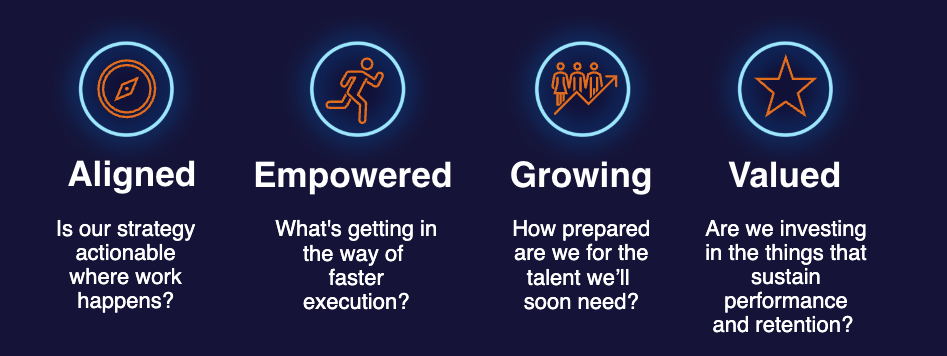
Quantum Workplace, a leading provider of employee engagement solutions, conceptualizes thriving teams through four interconnected conditions: Aligned, Empowered, Growing, and Valued. Each of these conditions directly addresses a critical tension HR leaders are currently navigating, and for each, a diagnostic question exists that, when answered honestly, can catalyze transformative action.
The Four Pillars of a Thriving Organization: Diagnostic Questions for HR Leaders
To foster environments where both business and employee needs are met, HR must move beyond superficial solutions and address the underlying structural issues. This involves asking critical questions and leveraging data to understand the true state of the organization.
1. Aligned: Is Our Strategy Actionable Where Work Happens?
The Tension: Organizations need speed; employees need clarity.
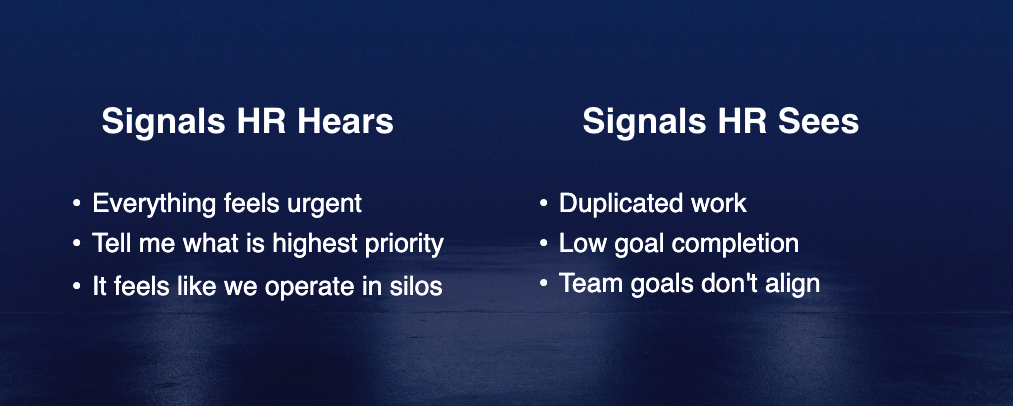
The challenge of alignment is a pervasive one, with HR leaders frequently reporting issues such as a sense of urgency pervading all tasks, operational silos, and a constant need to prioritize. Data often reflects duplicated efforts, low goal completion rates, and a disconnect between individual and team objectives.
The crucial diagnostic question is not simply whether employees understand the strategy, but whether clarity differs based on performance levels. When solid performers lack clarity, it presents a coaching opportunity for managers to bridge the gap. However, when top performers are also unclear, it signals an organization-wide problem that manager intervention alone cannot resolve.
A deeper inquiry involves understanding whether teams feel genuinely accountable for the strategy or if it feels like an externally imposed directive. Survey responses, when analyzed strategically, can reveal genuine alignment versus passive disengagement. Furthermore, these responses can be segmented by other critical outcomes like engagement scores and turnover risk, providing a comprehensive understanding of the cost associated with misalignment.
What Action Looks Like:
- Translating Strategy into Actionable Goals: Ensuring that high-level business objectives are clearly articulated and cascaded into specific, measurable, achievable, relevant, and time-bound (SMART) goals at the team and individual levels. This requires a robust goal-setting framework that is consistently applied and reviewed.
- Fostering Transparent Communication Channels: Implementing regular and transparent communication mechanisms, such as town halls, departmental updates, and cross-functional meetings, to ensure that employees are informed about strategic priorities and their role in achieving them.
- Empowering Team-Level Ownership: Encouraging teams to define their own pathways to achieving strategic objectives, fostering a sense of ownership and buy-in. This involves providing teams with the autonomy to make decisions and adapt their approaches as needed.
- Measuring Alignment Impact: Utilizing data analytics to track goal completion rates, identify areas of duplicated effort, and measure the perceived clarity of strategic objectives across different performance levels. This data can then inform targeted interventions.
2. Empowered: What’s Getting in the Way of Faster Execution?
The Tension: Organizations need faster execution; employees need fewer barriers.
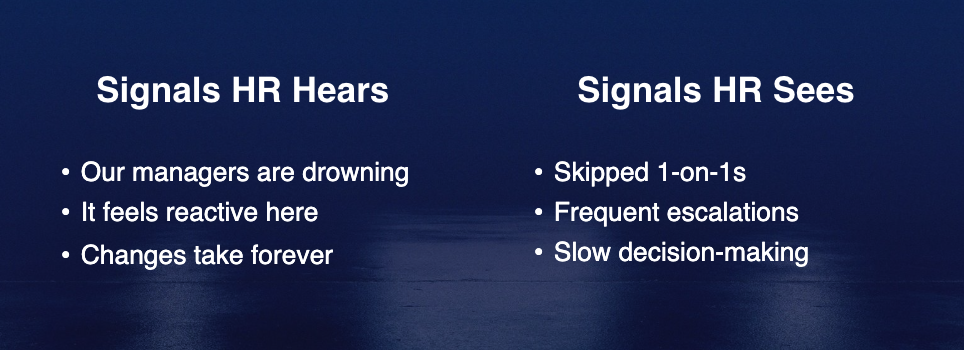
Signs of disempowerment often manifest as overburdened managers, a reactive work environment, and protracted decision-making processes. This can translate into missed one-on-one meetings, frequent escalations, and decisions that take significantly longer than necessary.
Data analysis can reveal surprising insights when business KPIs, such as on-time delivery, are correlated with employee feedback. For instance, a lack of necessary materials or equipment might not be the primary barrier to timely delivery; instead, it could be the slow adoption of new technologies or processes. This highlights the need to connect data across disparate systems to uncover these counterintuitive signals.
A critical, and often overlooked, aspect of empowerment is the "manager experience gap." Data from various organizations consistently shows that managers often score significantly lower than non-managers on key metrics such as recognition, clarity of performance measurement, understanding their role in future plans, and opportunities for skill development. This disparity underscores a structural issue: managers cannot effectively empower their teams if they themselves do not feel empowered.
What Action Looks Like:
- Streamlining Decision-Making Processes: Identifying and eliminating unnecessary bureaucratic hurdles and empowering individuals and teams with the authority to make decisions within defined parameters. This might involve delegating more responsibility and providing clear guidelines.
- Investing in Manager Development: Providing managers with the training, resources, and support they need to effectively lead their teams, including developing their coaching skills, delegation abilities, and understanding of performance management.
- Addressing Managerial Bottlenecks: Proactively identifying and addressing systemic issues that hinder managerial effectiveness, such as excessive reporting requirements, lack of access to critical information, or unclear lines of authority.
- Utilizing Feedback Loops for Improvement: Regularly soliciting feedback from both managers and employees on barriers to execution and using this information to implement targeted process improvements and policy adjustments.
- Quantifying the Cost of Disempowerment: Connecting employee feedback on empowerment to key business metrics like project completion times, efficiency, and employee retention to demonstrate the financial impact of systemic disempowerment.
3. Growing: How Prepared Are We for the Talent We’ll Soon Need?
The Tension: Organizations need future-ready talent; employees want meaningful growth.
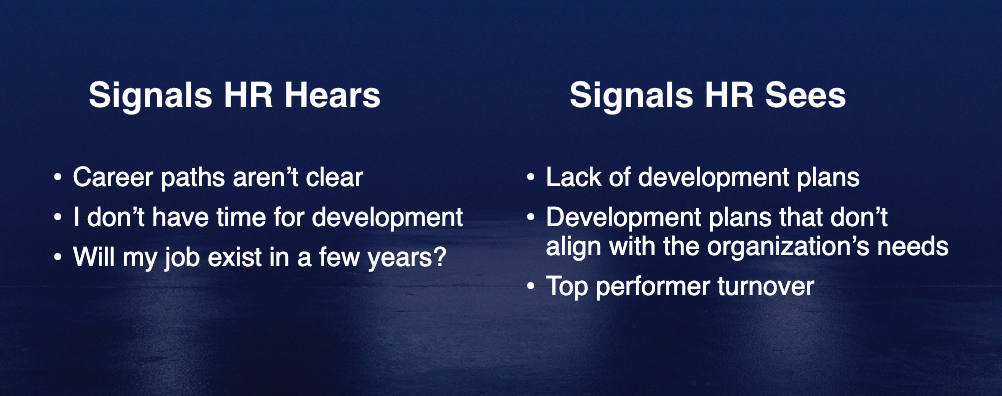
The contemporary workforce is increasingly concerned about career path clarity, the availability of development opportunities, and the long-term viability of their roles. Employees are asking critical questions like, "Will my job even exist in a few years?"
The most effective diagnostic question in this area moves beyond simply asking if development plans exist. Instead, it probes whether these plans are active and genuinely integrated into employees’ day-to-day experiences. A documented growth plan that remains unreferenced provides little benefit. Conversely, a stretch project that develops skills critical for the organization’s future is a powerful engine for growth.
Leveraging succession planning data alongside employee feedback offers another crucial layer. By connecting candidate status with survey feedback, organizations can ascertain whether they are intentionally developing the talent most critical for their future or merely assuming it will happen. Conversely, feedback from a candidate’s team can offer insights into their actual leadership effectiveness.
The principle here is to shift growth from a periodic, formal process to an everyday experience, embedded within the fabric of work itself. Projects, challenges, and real organizational priorities should serve as the primary vehicles for development.
What Action Looks Like:
- Integrating Development into Daily Work: Designing roles and projects that offer opportunities for skill development and learning, aligning individual growth with organizational needs. This includes providing challenging assignments and cross-functional exposure.
- Establishing Clear Career Pathways: Developing transparent and accessible career frameworks that outline potential growth trajectories within the organization, enabling employees to visualize their future and the steps required to achieve it.
- Promoting Continuous Learning Culture: Fostering an environment where learning is encouraged and supported, providing access to relevant training, workshops, and mentorship programs. This also includes encouraging knowledge sharing and peer-to-peer learning.
- Strategic Talent Planning: Utilizing data from performance reviews, succession planning, and employee feedback to identify future talent needs and proactively develop internal candidates to fill those roles, ensuring a pipeline of skilled individuals.
- Measuring the Impact of Development: Tracking the progress of development plans, assessing the acquisition of new skills, and evaluating how these skills contribute to both individual career progression and organizational success.
4. Valued: Are We Reinforcing What Matters Most?
The Tension: Organizations need sustained performance; employees want to feel valued.
Common sentiments expressed by employees include performing increased duties without commensurate compensation, a perceived disparity in the importance of different roles, and a focus on profit over people. Data often reveals significant variability in recognition practices across teams and a high turnover rate among valued employees.
The most impactful diagnostic question in this domain reframes recognition as a financial imperative rather than solely a cultural initiative. When employee turnover is driven by a lack of perceived value, recognition becomes a key lever for ROI. Connecting retention risk directly to recognition data can clearly articulate the financial cost of employees feeling undervalued.
It’s crucial to recognize that feeling valued is not exclusively a concern for top performers. Solid contributors, who often constitute the largest segment of the workforce, also need to feel that their impact is acknowledged. Recognition programs that exclusively target high achievers overlook a significant portion of the employee base. Integrating talent reviews and performance ratings with employee feedback can illuminate these patterns.
What Action Looks Like:
- Implementing Robust Recognition Programs: Establishing comprehensive recognition programs that acknowledge and reward contributions at all levels, ensuring fairness and equity. This can include both formal programs and informal, spontaneous appreciation.
- Fair and Transparent Compensation Practices: Ensuring that compensation structures are competitive, transparent, and aligned with market rates and individual contributions. Regularly reviewing compensation policies to address any perceived inequities.
- Fostering a Culture of Appreciation: Encouraging managers and colleagues to regularly express appreciation for each other’s efforts, creating a positive and supportive work environment where contributions are consistently acknowledged.
- Linking Value to Impact: Clearly communicating how individual and team contributions align with and support broader organizational goals, helping employees understand the tangible impact of their work.
- Measuring Recognition and Value: Utilizing employee feedback and data on recognition frequency and effectiveness to assess employee sentiment regarding their value within the organization. This data can then inform improvements to recognition strategies and compensation practices.
Redefining HR’s Role: From Arbiter to Architect
The recurring theme across these four conditions is that the needs of the business and the needs of employees are not inherently opposed. While they may appear to be in conflict, this is often a symptom of systemic design rather than an irreconcilable divide. The conventional instinct for HR is to mediate these conflicts, often by making compromises that satisfy neither party fully.
The more strategic and effective approach, championed by experts in organizational development, is to build the conditions where both the business’s objectives and employees’ aspirations can be simultaneously realized. Thriving teams—those that are aligned, empowered, growing, and valued—are not a compromise; they represent the bedrock of sustainable business performance.
HR’s fundamental role is not to personally resolve every individual tension. Instead, it is to guide the organization in asking and answering more intelligent questions, leveraging data and strategic insight to foster environments of mutual success. This shift requires a move from reactive problem-solving to proactive architecture of organizational systems.
A comprehensive talent platform, such as that offered by Quantum Workplace, can facilitate this transformation. By integrating insights from engagement, performance, development, and recognition into a unified, connected view, these platforms equip every leader, from HR professionals to frontline managers, with the clarity and confidence needed to act on what truly matters. This empowers not just HR departments, but every manager at every level, fostering a cohesive and high-performing organization.
The questions outlined above serve as a crucial starting point. The data required to answer them already resides within most organizations. The challenge, and the opportunity, lies in connecting this data, interpreting its meaning, and implementing strategies that foster environments where both the business and its people can not only survive but truly thrive.