For three decades, the field of Human Resources has been a recurring subject of debate, often characterized as either redundant or on the cusp of obsolescence. This perception stems, in part, from the common managerial belief that HR functions are intuitively understood and easily managed by any leader. However, recent data and analyses suggest a dramatically different trajectory for the HR profession, indicating not only its continued relevance but also its expanding importance and demand.
The notion that HR is "useless" or a "waste of time" has been a persistent narrative. This perspective often overlooks the complex strategic and operational roles HR plays in organizational success. The underlying assumption that managers are inherently equipped to handle all aspects of workforce management—from talent acquisition and development to employee relations and organizational design—is a significant factor contributing to this misconception. This belief often leads to a dismissal of HR as merely an administrative function, rather than a strategic partner.
This long-standing skepticism was recently amplified by a widely reported statement at a SHRM (Society for Human Resource Management) conference. According to a Bloomberg report, a CEO declared that "the field of HR faces extinction," urging HR professionals to adapt to a rapidly changing landscape. This pronouncement, while attention-grabbing, appears to run counter to emerging empirical evidence regarding the state and future of HR roles.
Countering the Extinction Narrative: Data-Driven Insights
Contrary to the bleak outlook presented at the SHRM conference, comprehensive research, including findings from the "HR 2030" initiative and analyses of job market data, paints a picture of a profession that is not only surviving but thriving. Far from becoming obsolete, HR is evolving and, in many areas, experiencing a significant surge in demand. This evolution is intrinsically linked to the integration of new technologies, particularly Artificial Intelligence (AI), which is reshaping rather than eliminating HR functions.

Job Market Data Reveals Robust Growth
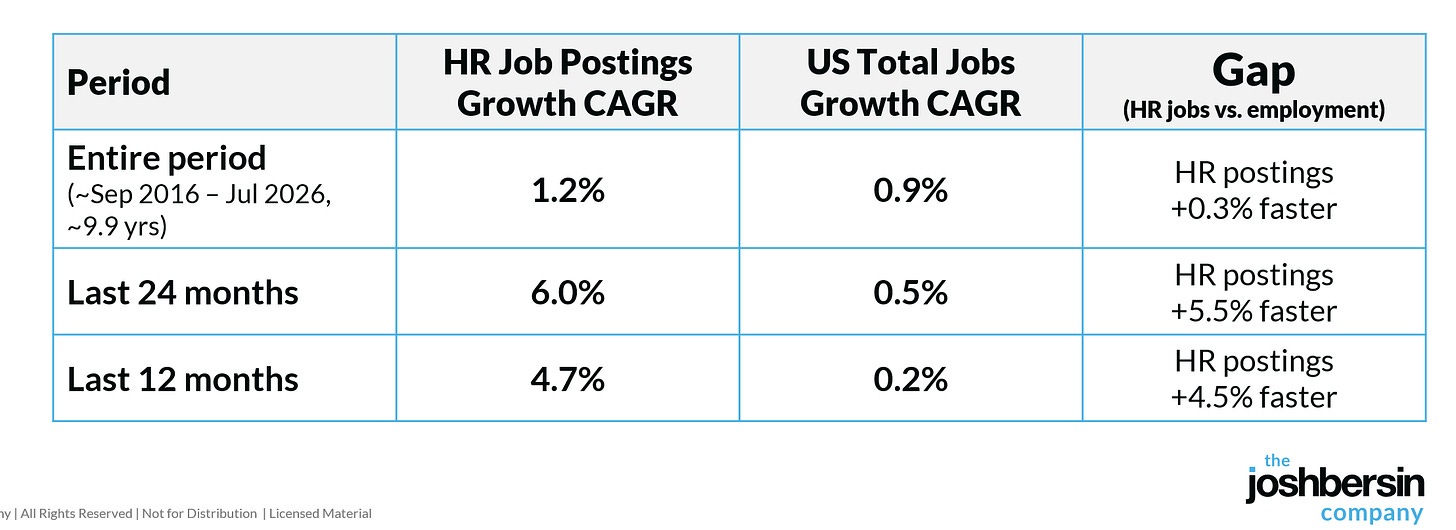
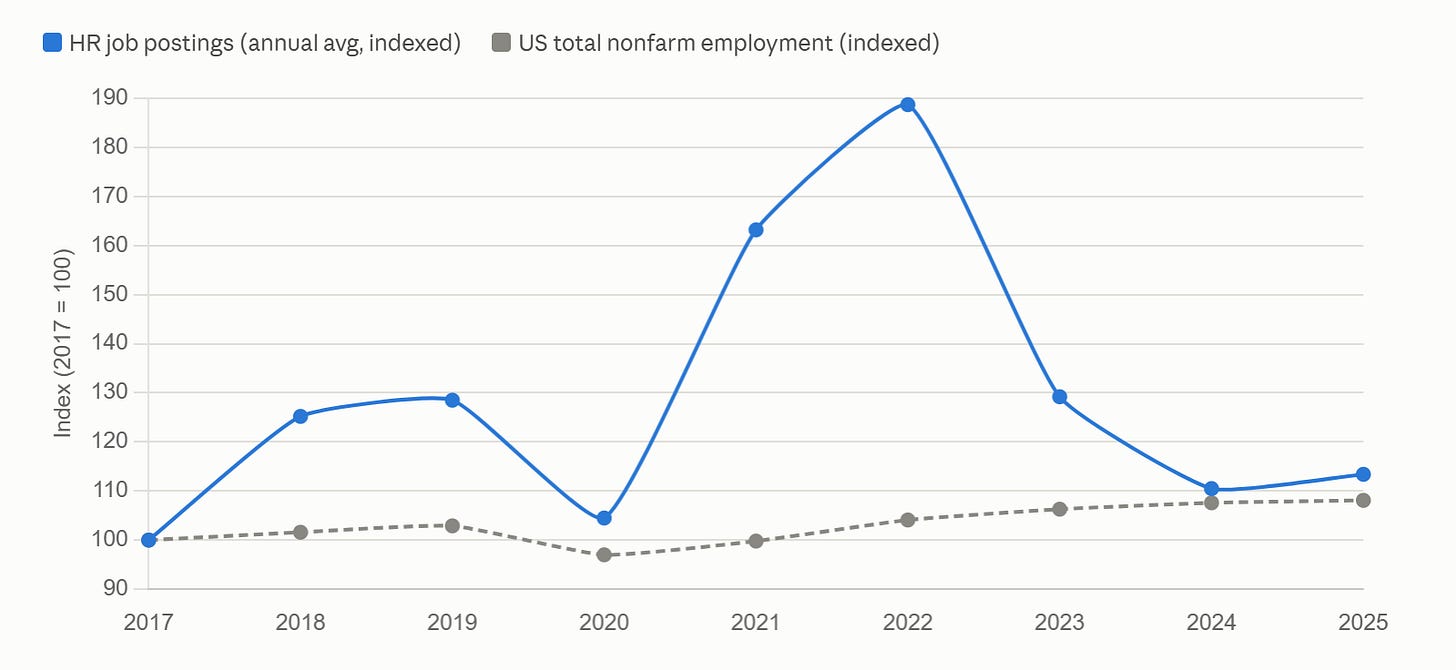
Analysis of job posting data, meticulously compiled by Lightcast, offers a compelling quantitative counterpoint to the narrative of HR’s decline. When examining all HR-related roles—encompassing recruiters, training and development specialists, HR technology professionals, and general HR practitioners—a consistent trend of growth emerges over a twenty-year period. This data indicates a compound annual growth rate (CAGR) of approximately 1.2% for HR job postings.
More significantly, recent data, particularly from the last 24 months—a period marked by rapid advancements and adoption of AI in the workplace—reveals an accelerated growth rate. During this time, HR job postings have seen an impressive increase of 6%. This surge suggests that the integration of AI is not diminishing the need for HR professionals but rather creating new opportunities and increasing the demand for their expertise.
Comparing HR Growth to Overall Employment
To contextualize the 6% growth in HR jobs, it is crucial to compare it against the growth of the overall U.S. workforce. The data unequivocally shows that HR jobs are expanding at a faster pace than total employment. This divergence is a critical indicator of the increasing strategic importance of HR functions within organizations. As companies navigate complex workforce challenges, including talent shortages, employee engagement, and the ethical integration of new technologies, the demand for skilled HR professionals is escalating.
Visualizing the Trend
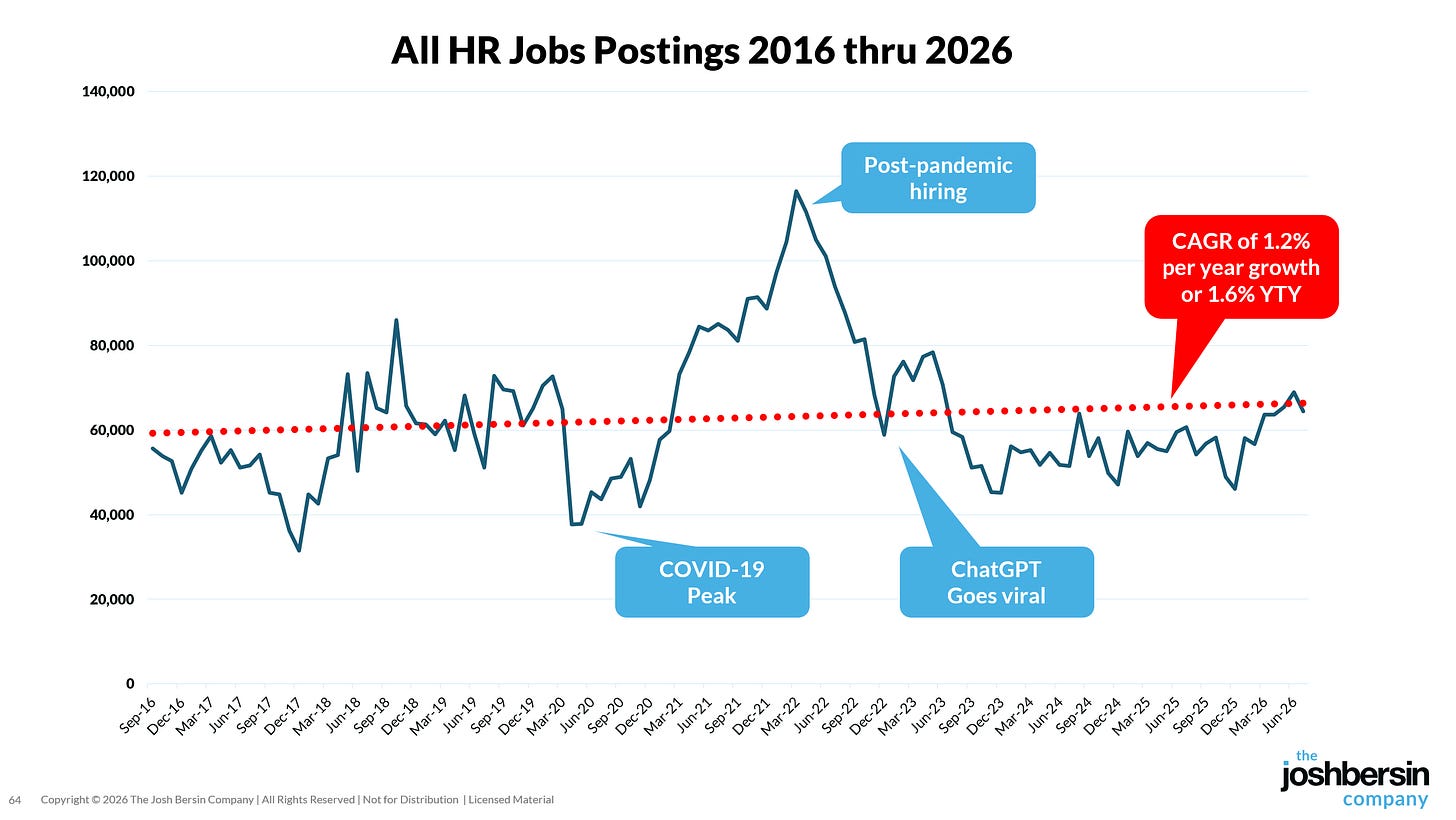
The visual representation of this data further underscores the upward trajectory of HR employment. Charts illustrating job posting trends over the past two decades demonstrate a steady and, more recently, accelerating demand for HR professionals. This visual evidence provides a clear and accessible understanding of the market dynamics at play, dispelling any lingering doubts about the profession’s vitality.
The Paradox of Automation and Expansion
The apparent contradiction between the widespread belief in HR’s automation and the reality of its growth can be attributed to a fundamental misunderstanding of how AI is impacting the HR landscape. The narrative of AI replacing HR jobs often focuses on the automation of administrative tasks, overlooking the simultaneous creation of new, more strategic roles.
The Transformation of HR Roles
The key to understanding this growth lies in the transformation of HR roles themselves. Positions that were once heavily administrative and process-oriented are indeed being automated or augmented by technology. These include roles such as HR administrators, HR assistants, recruiting coordinators, and training administrators. These "industrial age" positions, focused on the day-to-day execution of hiring, payroll, training, and support processes, historically constituted a significant portion of the HR workforce, estimated to be between 30-40% according to in-depth analyses.
However, the displacement of these administrative tasks is not leading to a net reduction in HR jobs. Instead, it is freeing up HR professionals to engage in higher-value activities. The roles that are experiencing growth are those that require strategic thinking, complex problem-solving, and deep human understanding—areas where AI currently complements rather than replaces human capability.
Emergence of Strategic and "Superpowered" Roles
HR professionals are increasingly moving "into the business," collaborating more closely with operational leaders to address complex challenges. For instance, HR service center agents and HR business partners are now tackling more intricate issues, dedicating in-depth time to critical areas such as employee performance management, personalized support for employee needs, and strategic workforce planning.
Similarly, Learning and Development (L&D) managers and instructional designers are evolving into "Superworkers." Instead of solely authoring lengthy courses, they are now focused on creating dynamic simulations, real-time support tools, and concise, impactful video content. Companies like Travelers and Polestar are leveraging these professionals to rapidly generate usable resources for sales, support, and engineering teams, enhancing agility and immediate applicability.
Talent acquisition is also undergoing a significant transformation. Recruiting coordinators and schedulers are being upskilled into more strategic roles focused on real-time interviewing, data analysis to identify top candidates, and enhancing the overall candidate experience. The demand for recruiting jobs remains high, with many organizations shifting towards more in-person interviews to combat candidate fraud and ensure higher quality hires, a move where AI interviewers have not met initial expectations.
Internal analytics, compensation analysis, and employee engagement teams are also witnessing a shift. Professionals in these areas are spending less time on manual survey design or benchmark analysis and more time leveraging real-time internal data to understand and address issues like employee disengagement and turnover.
HR Business Partners, in companies like Panasonic and Accenture, are being elevated to senior consultant roles. Tools like Galileo are being deployed to provide leaders, managers, and employees with immediate access to HR policies and advice, automating support for common inquiries and allowing HR professionals to focus on more complex strategic initiatives.
The overarching theme is that AI is not eliminating jobs; it is augmenting human capabilities, enabling professionals to perform more complex and impactful work. As stated by experts in the field, AI is "empowering people to do more," and HR, with its inherent expertise in change management, employee development, and organizational redesign, is exceptionally positioned to lead this transformation.
Increased Demand and Compensation Growth
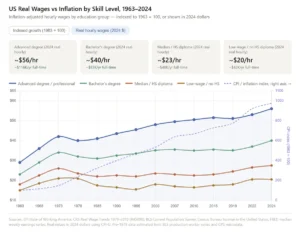
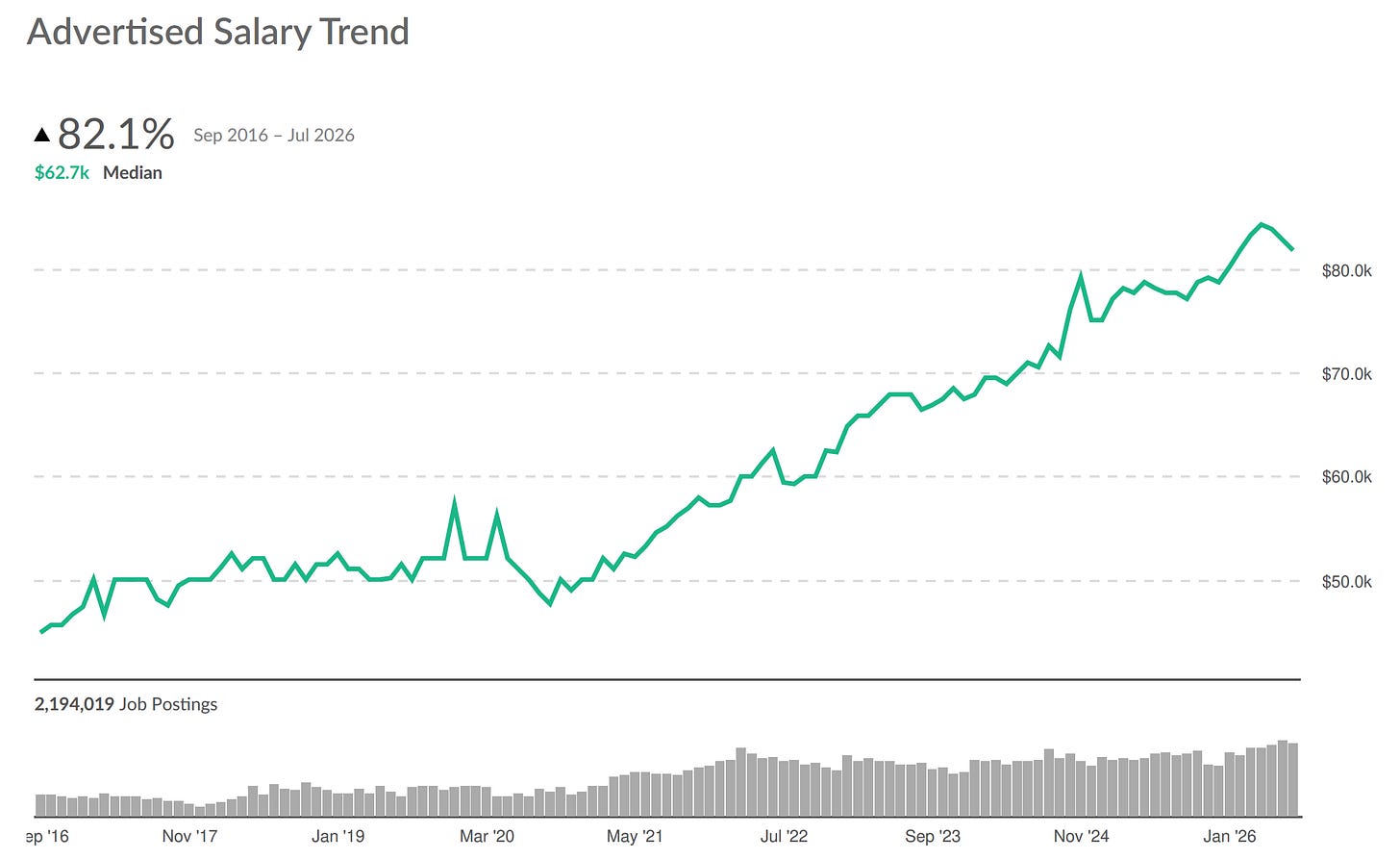
The growing demand for HR professionals is also reflected in compensation trends. Data indicates a significant increase in HR salaries, outpacing inflation. Salaries have risen by approximately 82% over a period where U.S. inflation stood at 66%. This translates to a compound annual growth rate of 3.1% for HR salaries, compared to 2.1% for inflation. This suggests that HR roles are not only increasing in number but are also becoming more financially rewarding, signifying a higher valuation of the profession by employers.
Context of the SHRM Conference and Industry Reactions
The SHRM conference, a major gathering for HR professionals, serves as a barometer for industry sentiment and future trends. While the "extinction" statement from a CEO garnered significant attention, it is important to consider this within the broader context of the conference and the ongoing dialogue about AI’s impact. Many HR leaders and practitioners at the conference, while acknowledging the need for adaptation, emphasized the enduring strategic value of HR.
The Bloomberg report itself highlighted the need for HR professionals to adapt, implying a shift in skill sets rather than a wholesale elimination of the profession. This aligns with the research indicating a transformation of roles, requiring professionals to embrace new technologies and develop more strategic competencies.
Broader Implications and Future Outlook
The data-driven insights presented here have significant implications for the future of work and the HR profession. The findings suggest that organizations that strategically invest in their HR functions, embracing the evolution of roles and equipping their professionals with the necessary skills to leverage new technologies, will be better positioned to navigate the complexities of the modern workplace.
The increasing demand for HR professionals, coupled with rising compensation, underscores the profession’s growing strategic importance. As companies continue to grapple with talent acquisition, retention, employee well-being, and the ethical implementation of AI, the role of HR will become even more critical. The ability of HR to foster a productive, engaged, and adaptable workforce will be a key differentiator for organizational success in the coming years.
The narrative of HR facing extinction is being replaced by one of evolution and empowerment. The data clearly indicates that HR is not disappearing but is rather transforming into a more strategic, data-driven, and impactful function, essential for the future success of businesses worldwide. The profession’s inherent expertise in managing human capital and driving organizational change positions it to be a central player in shaping the future of work.
Further research and upcoming publications, such as the book "Superpowered," aim to delve deeper into these evolving HR roles and the strategies for professionals to thrive in this new era. The Josh Bersin Institute’s Global HR Excellence Certification further signifies the ongoing commitment to developing and recognizing expertise within the HR field.
In conclusion, while the discourse surrounding AI’s impact on jobs can sometimes lean towards alarmism, the empirical evidence for the Human Resources profession tells a different story. The data points towards a profession that is adapting, growing, and becoming more indispensable than ever before, driven by the very technological advancements that some predicted would be its undoing. The future of HR is not one of extinction, but of strategic evolution and amplified impact.