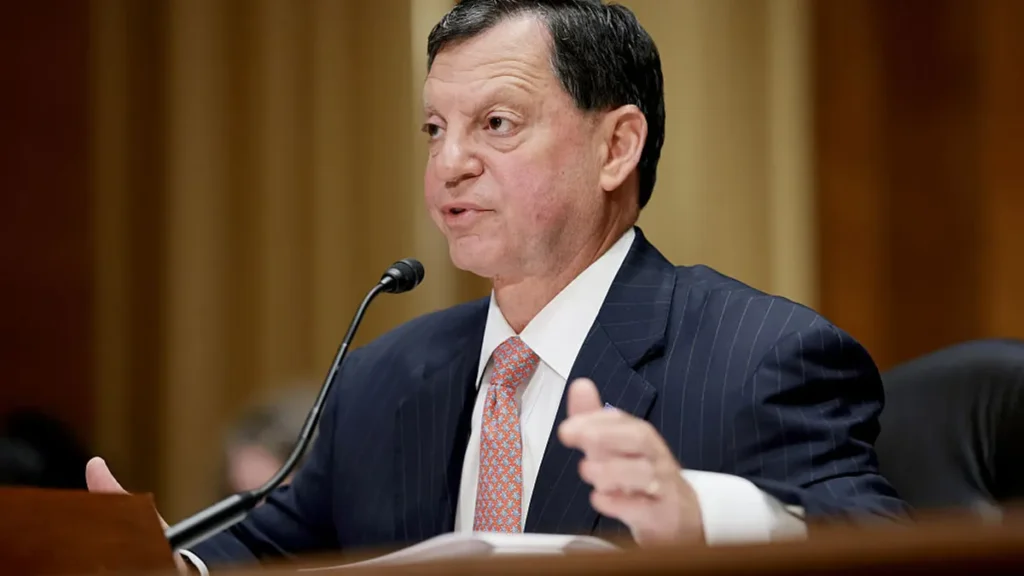
The Internal Revenue Service (IRS) and the U.S. Department of the Treasury today announced the issuance of proposed regulations for "Trump Accounts," a new financial initiative designed to provide a foundational savings vehicle for eligible American children. IRS CEO Frank Bisignano stated that these accounts are poised to enable future generations to "enjoy years of compound earnings for their future college, retirement, and other needs," marking a significant step in the federal government’s efforts to foster long-term financial security from an early age. The regulations, published on August 20, 2026, are intended to offer crucial clarity to both trustees and beneficiaries, thereby encouraging widespread participation in the program.
The Genesis of Trump Accounts: A Vision for Early Investment
The concept of "Trump Accounts," officially designated as 530A accounts, was first introduced during the previous administration as a bold federal pilot program aimed at addressing growing concerns about financial literacy, retirement insecurity, and the escalating costs of higher education. Signed into law as part of the "Future Prosperity Act of 2024," the initiative stipulates that U.S. citizen children born on or after January 1, 2025, and before January 1, 2029, will receive a one-time federal contribution of $1,000 into a specially designated account. The primary objective is to leverage the power of compound interest, allowing this initial seed money to grow tax-deferred, potentially over an individual’s entire lifetime.
The legislative journey for the Future Prosperity Act was marked by considerable debate, reflecting diverse economic philosophies within Congress. Proponents argued that a universal, early-stage investment could significantly mitigate future financial burdens, particularly for lower-income families who often lack access to sophisticated investment tools or sufficient disposable income to initiate substantial savings. They highlighted research, such as a hypothetical study from the Center for American Financial Progress (2023), which suggested that a $1,000 investment at birth, growing at an average annual rate of 7%, could accumulate to over $15,000 by age 30 and potentially over $100,000 by traditional retirement age, without any further contributions. This projection underscored the profound impact of starting early, regardless of the initial sum.
Critics, however, raised questions about the program’s cost, administrative complexity, and the relatively small initial contribution, arguing that $1,000 might be insufficient to make a meaningful difference without ongoing contributions from families, which might not be feasible for all. Some also expressed concerns about the equity implications of a program with a narrow birth-year window, potentially creating an uneven playing field for children born just outside the eligibility period. Despite these reservations, the bill garnered enough support, emphasizing its nature as a pilot program designed to test the efficacy of early government-seeded investment.
Regulatory Framework and Implementation Details
The proposed regulations are a critical step in operationalizing these accounts. According to IRS CEO Bisignano, "These proposed regulations will provide clarity for trustees and beneficiaries of Trump Accounts, thus encouraging eligible participants to invest in low-fee mutual funds and ETFs that will grow on a tax-deferred basis potentially over their entire lives." This emphasis on low-fee investment vehicles is crucial, as high fees can significantly erode returns over decades, diminishing the long-term benefits of compound interest. The IRS and Treasury Department aim to ensure that the accounts are managed transparently and efficiently, with clear guidelines for financial institutions acting as trustees.
Key aspects of the proposed regulations include:
- Trustee Responsibilities: Detailed requirements for financial institutions to act as trustees, including reporting obligations, investment options, and fee structures. The regulations are expected to encourage a competitive market among financial providers to offer compliant, low-cost investment products.
- Beneficiary Protections: Provisions to safeguard the interests of the child beneficiaries, including rules for withdrawals for qualified expenses (e.g., higher education, first-time home purchase, or retirement) and mechanisms for transferring account management upon reaching adulthood.
- Investment Guidelines: Specific recommendations or requirements for investment choices, likely favoring broadly diversified, low-cost index funds or exchange-traded funds (ETFs) to maximize growth potential and minimize risk over a long horizon. This approach aligns with modern investment principles that prioritize diversification and cost efficiency.
- Tax Implications: Clarification on the tax-deferred growth status, as well as rules regarding distributions, ensuring that beneficiaries understand the tax treatment of their accumulated funds.
The IRS anticipates a period of public comment on these proposed regulations, allowing stakeholders, financial institutions, and the public to provide feedback before the final rules are enacted. This process is vital to refining the framework and ensuring its practical and effective implementation.
A Look at the Broader Financial Landscape: Why Trump Accounts Are Needed
The introduction of Trump Accounts comes at a time when many Americans, particularly the current working generations, are grappling with significant financial anxieties. The economic landscape, characterized by rising costs of living, persistent inflation, and fluctuating market conditions, has made long-term financial planning an increasingly daunting task.
The Retirement Challenge: A recent Zety report from August 2026 paints a stark picture of the retirement outlook for Gen X. The survey revealed that 19% of Gen Xers do not expect to fully retire, and another 19% plan to work past the traditional retirement age of 68. The primary concern cited was the rising cost of living, which has outpaced wage growth for many, making it difficult to save adequately. This generation, sandwiched between the Baby Boomers and Millennials, faces unique challenges, including often supporting both aging parents and adult children, alongside their own retirement planning.
To counter these pressures, Gen Xers are actively adjusting their financial behaviors: 34% reported increasing their savings or contributions to existing retirement accounts, while 16% are strategically adjusting their investment portfolios. However, these efforts often come later in life, missing out on decades of potential compound growth that starting earlier could provide.
Financial Stress Among Employees: Beyond retirement, broader financial stress is a pervasive issue across the workforce. PwC’s 2026 Employee Financial Wellness Survey highlighted that 59% of respondents were stressed about their finances, a figure that has remained stubbornly high for several years. Alarmingly, 52% of respondents admitted they don’t feel capable of planning for long-term financial goals, indicating a significant gap in financial literacy and confidence. This stress has tangible impacts on the workplace, contributing to decreased productivity, higher absenteeism, and reduced employee engagement.
PwC’s report offers a crucial piece of advice: "Create secure, judgment-free entry points into financial education and wellness." The survey also found that employees struggling with financial stress are more likely to feel embarrassed asking for guidance and are increasingly open to using AI tools for financial planning, suggesting a need for accessible, unbiased resources. The Trump Accounts, by establishing an early savings mechanism, could serve as a foundational "entry point" not just for investment, but also for future financial education initiatives.
The Power of Compound Earnings: The core principle behind the Trump Accounts, as emphasized by CEO Bisignano, is the remarkable power of compound interest. By starting with even a modest $1,000 at birth and allowing it to grow tax-deferred for decades, the account has the potential to accumulate a substantial sum, providing a meaningful financial cushion for future generations. This early start sidesteps many of the behavioral hurdles adults face in initiating savings and investments, such as procrastination, competing financial demands, or a lack of understanding of market dynamics. It fundamentally shifts the paradigm from reactive saving to proactive, long-term wealth building.
Employer Engagement and ERISA Considerations

While the Trump Accounts represent a federal initiative, the potential for employer involvement remains a key area of discussion. Currently, employer interest in Trump Accounts "isn’t widespread," according to a legal and financial advisor who spoke to HR Dive, noting that these accounts "likely won’t be covered by the Employee Retirement Income Security Act (ERISA)."
The lack of ERISA coverage means that employers sponsoring such accounts would not be subject to the stringent fiduciary responsibilities and reporting requirements that govern traditional retirement plans like 401(k)s. While this might reduce administrative burdens, it also means employers have less incentive to adopt or promote them as part of their benefits packages. Most employer-sponsored financial wellness programs focus on immediate financial health, retirement planning for current employees, or debt management, rather than long-term savings for children born in a specific window.
However, as the program matures, there could be opportunities for employers to integrate awareness of Trump Accounts into broader financial wellness offerings. Companies might consider providing information or educational resources about these accounts to eligible employees, especially those with young children. Some forward-thinking companies might even explore voluntary programs to match or supplement federal contributions for their employees’ eligible children, potentially positioning themselves as leaders in supporting intergenerational financial health. Such initiatives, however, would likely require clear guidance from the IRS regarding their tax treatment and interaction with existing benefits structures.
Perspectives and Reactions to the Proposed Accounts
The proposed regulations for Trump Accounts have elicited a range of reactions from various stakeholders.
Proponents view the initiative as a crucial step towards fostering greater financial equity and security. Senator Maria Rodriguez (D-NY), a co-sponsor of the Future Prosperity Act, stated, "Every child deserves a fighting chance at financial stability. These accounts, though modest in their initial contribution, plant a seed that can grow into a tree of opportunity, reducing the burden of student debt and ensuring a more secure retirement for the next generation." Financial literacy advocates, like Dr. Elaine Chen from the National Financial Education Council, also lauded the program, suggesting it creates a tangible starting point for parents to engage in financial discussions with their children. "It’s not just about the money; it’s about the conversation it starts in homes across America," Dr. Chen commented in a recent interview.
Critics and Skeptics, while generally supportive of promoting savings, have raised questions about the program’s long-term effectiveness and potential for broader impact. Dr. David Miller, an economist at the Heritage Foundation, remarked, "While well-intentioned, a $1,000 contribution is a drop in the bucket for many families facing multi-generational poverty. The focus should be on systemic economic reforms that empower families to save more on their own, rather than relying on one-off government contributions." Concerns also persist regarding the administrative costs associated with managing millions of small accounts and ensuring equitable access to financial education across diverse socio-economic groups.
Financial Advisors generally welcome the clarity provided by the proposed regulations. Sarah Jenkins, a certified financial planner with WealthWise Group, noted, "Having clear guidelines is essential for us to properly advise clients. These accounts offer a unique planning opportunity, especially for younger parents. Our role will be to educate families on how to maximize these accounts, perhaps by pairing them with 529 plans or other long-term savings vehicles, and understanding the nuances of tax-deferred growth."
Potential Impact and Future Outlook

The long-term impact of Trump Accounts is multifaceted and holds the promise of significant individual, societal, and economic benefits.
Individual Impact: For the eligible generation, these accounts could represent a substantial head start. The financial security provided by a growing nest egg could alleviate stress, foster greater educational attainment by reducing reliance on loans, and enable earlier retirement or entrepreneurship. It could also instill a lifelong habit of saving and investing, crucial for sustained financial health.
Societal Impact: On a broader scale, Trump Accounts could contribute to narrowing wealth disparities over time. By providing a universal, federally seeded account, it offers a baseline of financial capital to all eligible children, irrespective of their family’s current economic standing. This could help foster a more financially resilient citizenry and potentially reduce reliance on public assistance in later life.
Economic Impact: The collective investment of millions of these accounts could channel significant capital into the broader economy, stimulating growth and innovation. The emphasis on low-fee mutual funds and ETFs suggests a boost for the investment industry, while potentially promoting greater financial market participation among a new demographic.
As a pilot program, the Trump Accounts will be subject to ongoing evaluation. Future legislative decisions may depend on the success metrics established by the Treasury and IRS, which could include participation rates, average account growth, and demonstrated impact on beneficiaries’ financial well-being. The initial window of eligibility (children born between Jan. 1, 2025, and Jan. 1, 2029) implies that the government intends to monitor the program’s efficacy closely before considering expansion or modification. Challenges will undoubtedly arise, including ensuring robust financial education accompanies these accounts, making them easily accessible to all eligible families, and protecting them from fraud or predatory practices.
In conclusion, the proposed regulations for Trump Accounts mark a pivotal moment in federal financial policy, aiming to equip a new generation with the tools for long-term financial prosperity. By combining a federal seed contribution with the power of compound interest and clear regulatory guidance, the IRS and Treasury are laying the groundwork for what they hope will be a transformative initiative, potentially reshaping the financial trajectories of millions of American children for decades to come.