
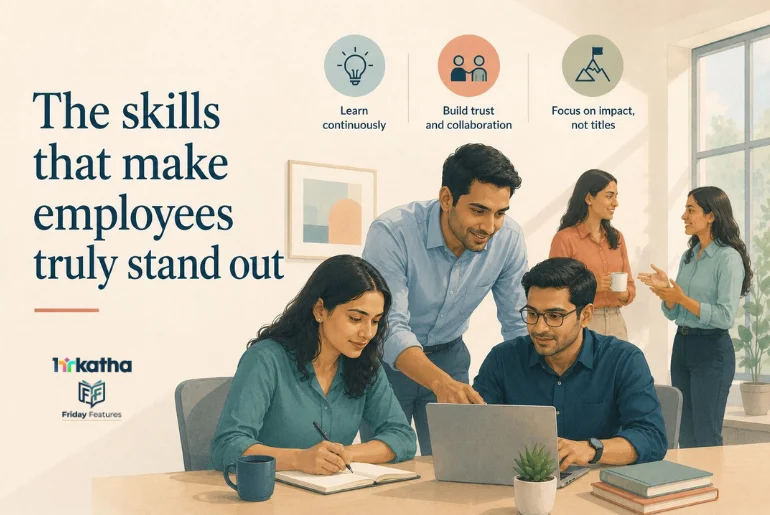
The conventional framework for defining professional roles, primarily through job descriptions, often prioritizes a familiar set of attributes: specific years of experience, demonstrable technical expertise, requisite qualifications, and perhaps a certification or two. These quantifiable markers undoubtedly play a crucial role in initial hiring decisions and provide a baseline for competency. However, a growing consensus among human resources leaders and talent development specialists suggests that the true differentiators in a long and impactful career lie beyond these readily listed criteria. Professionals often discover that the qualities that truly set them apart, foster growth, and ensure enduring value are those that emerge in their approach to the unfamiliar, their ability to galvanize others, and their unwavering commitment to values when conventional markers of success begin to compete for attention.
This evolving understanding of professional excellence is particularly pertinent in an era characterized by unprecedented technological advancement, rapid market shifts, and a dynamic global workforce. Three distinguished HR leaders—Ravi Mishra, Head HR at BITS Pilani; Nihar Ghosh, a Senior HR Leader; and Nitin Khindria, Group CHRO at Omega Group—have offered profound reflections on these elusive yet critical qualities. Their insights, drawn from decades of observing and nurturing talent, underscore a paradigm shift in what constitutes genuine career success and resilience.
The Evolving Landscape of Professional Competence
The traditional emphasis on hard skills, while foundational, has been challenged by the accelerating pace of change across industries. Automation, artificial intelligence, and the increasing complexity of global business operations mean that technical skills can become outdated far more quickly than in previous generations. The World Economic Forum’s "Future of Jobs Report" consistently highlights a rising demand for "soft skills" such as critical thinking, creativity, problem-solving, and emotional intelligence, often ranking them above purely technical proficiencies. LinkedIn’s annual "Workplace Learning Report" similarly points to adaptability, collaboration, and leadership as top priorities for employers, recognizing that these human-centric attributes are less susceptible to technological obsolescence and are, in fact, essential for leveraging new technologies effectively.
This shift in focus necessitates a re-evaluation of how talent is identified, developed, and retained. Organizations are increasingly recognizing that an employee’s potential to navigate ambiguity, influence stakeholders, and maintain a long-term perspective on their contribution is paramount. The journey from an entry-level position to a senior leadership role is not merely a ladder of increasing technical responsibility but a complex ascent demanding a broader repertoire of interpersonal and adaptive capabilities.
Pillar One: The Confidence to Navigate Ambiguity and Embrace Learning
Ravi Mishra, Head HR, BITS Pilani
Ravi Mishra’s personal journey provides a compelling narrative for the power of self-belief rooted in curiosity and a willingness to learn. His decision to pursue a path different from his peers who gravitated towards prestigious engineering institutions, despite initial skepticism, speaks volumes about an intrinsic confidence not tied to conventional benchmarks. This confidence, he reflects, stemmed from an innate curiosity. His teenage foray into an All India Radio station, driven solely by a desire to understand the mechanics of sound transmission, exemplifies a proactive learning orientation that transcends formal instruction. This early instinct to explore and understand the unknown became a defining characteristic of his career.
In his professional life, Mishra encountered assignments requiring technical knowledge he had not formally acquired. Rather than faltering, he leveraged his curiosity and learning agility to quickly master new domains. This aptitude was so pronounced that his organization offered to sponsor his IT education, an offer that recognized not just his newfound skills, but more importantly, his willingness to venture into unfamiliar territory and independently find solutions.
Mishra’s conclusion resonates deeply with contemporary HR thinking: technical skill, while an essential enabler, yields a larger advantage when coupled with a foundational attitude of learning, problem-solving, and comfort with not knowing everything upfront. In a dynamic workplace where tools, technologies, and roles are in constant flux, the employee who can articulate, "I don’t know this yet, but I am capable of learning it," possesses a significant edge. This individual outperforms those whose confidence is entirely predicated on their existing knowledge base, which can quickly become obsolete. This "growth mindset," a concept popularized by psychologist Carol Dweck, is increasingly viewed as a cornerstone of resilience and innovation, allowing individuals and organizations to adapt and thrive in an unpredictable future.
Chronology of Learning Agility’s Rise:
- Early 20th Century: Focus predominantly on specialized technical skills for industrial efficiency.
- Mid-20th Century: Introduction of "lifelong learning" concepts, but still largely formal education.
- Late 20th Century: Emergence of rapid technological change (personal computing, internet), increasing the need for continuous skill upgrades.
- 21st Century (Present Day): Exponential tech growth (AI, Big Data, IoT) makes static skill sets unsustainable. Learning agility, defined as the ability to quickly learn from experience and apply that learning to new situations, becomes a top-tier competency. Organizations like Google, Amazon, and Microsoft actively screen for this quality.
Pillar Two: When Expertise Is No Longer Sufficient – The Power of Interpersonal Effectiveness
Nihar Ghosh, Senior HR Leader
Nihar Ghosh, with decades of experience observing the trajectories of professionals ascending to higher leadership roles, offers a consistent observation: while technical expertise may secure an individual a position, their ability to effectively work with people is the primary determinant of how far they will progress within that role and organization. This insight underscores the critical transition from being an individual contributor to becoming a leader who guides and inspires teams.
Ghosh recounts instances of highly accomplished leaders struggling after transitioning into new environments. Their difficulties were rarely rooted in a lack of knowledge or experience, but rather in their inability to establish trust with a new team, communicate clearly across diverse perspectives, or foster sufficient alignment to move people collectively towards a common objective. Intelligence and a strong track record, he emphasizes, do not automatically translate or "travel well" from one context to another without the lubricant of strong interpersonal skills.
What proves more portable and universally valuable is the capacity to connect with people. This encompasses active listening to genuinely understand diverse viewpoints, empathizing with colleagues’ needs and concerns, and communicating in a manner that inspires willing participation rather than mere compliance. These crucial attributes are not suddenly acquired upon receiving a leadership title. They are meticulously built much earlier, through the cumulative impact of daily interactions: how an individual handles disagreement, responds to a colleague’s concern during a crisis, or maintains composure and empathy when under significant pressure.
Over time, these seemingly ordinary moments coalesce into a professional reputation. The employee who consistently handles these interactions with grace, integrity, and effectiveness becomes someone others instinctively trust and genuinely want to collaborate with. Long before the next designation or promotion officially arrives, this hard-earned reputation often unlocks opportunities and opens doors that qualifications alone simply cannot. This concept aligns with research from the Carnegie Institute of Technology, which suggests that 85% of job success comes from having well-developed soft and interpersonal skills, and only 15% from technical skills. Google’s Project Aristotle, a multi-year study into team effectiveness, famously concluded that psychological safety, mutual respect, and clear communication were far more critical to high-performing teams than individual members’ technical prowess.
Supporting Data on Interpersonal Skills:
- A recent study by the Society for Human Resource Management (SHRM) found that communication, collaboration, and critical thinking are among the most difficult skills to find in job candidates, despite their critical importance.
- The economic cost of poor communication in the workplace is estimated to be billions annually, affecting productivity, project success, and employee morale.
- Leadership effectiveness often correlates directly with emotional intelligence (EQ), with studies indicating that leaders with high EQ are more effective at motivating teams, managing conflict, and driving organizational change.
Pillar Three: A Career Is Bigger Than Its Titles – Prioritizing Contribution Over Status
Nitin Khindria, Group CHRO, Omega Group
Nitin Khindria identifies a prevalent pitfall that ensnares many professionals, often without their full admission: defining career progress almost exclusively through the lens of designation and hierarchical titles. Titles offer a visibly reassuring and easily quantifiable measure of success. They are straightforward to compare, simple to communicate, and incredibly tempting to pursue. Consequently, it is easy for professionals to spend years measuring their career trajectory by the words printed on a business card, rather than by the substantive impact and meaning of the work performed.
Khindria’s compelling argument posits that titles, by their very nature, largely describe what has already transpired. They reflect decisions made by others regarding an individual’s responsibilities or standing within an organizational structure. However, they reveal considerably less about what that person is actively learning, building, or contributing in the present moment. In a rapidly evolving professional landscape where roles and responsibilities can change with surprising speed, professionals who anchor too much of their identity and self-worth in a specific designation can find themselves surprisingly vulnerable and exposed when that designation inevitably shifts or disappears.
The professionals who consistently stand out and maintain their relevance, Khindria observes, are those who manage to keep their attention fixed on a larger, more enduring purpose. They are driven by questions such as "Which problems are truly worth solving?" or "What meaningful impact can I create?" rather than solely focusing on "Which title should come next?" They strategically invest in building a robust professional reputation through the quality and utility of their work, treating the next position not as the ultimate measure of progress, but as a potential platform for greater contribution. While titles are transient and roles are subject to continuous evolution, a reputation meticulously built through consistently useful, purposeful, and high-quality work possesses a far longer and more resilient shelf life. This enduring reputation becomes a currency that transcends organizational structures and economic cycles.
Analysis of Implications for Individual and Organizational Health:
- For Individuals: Over-reliance on titles can lead to a fixed mindset, fear of taking risks (which might not lead to an immediate promotion), and a sense of loss when titles change. Conversely, focusing on contribution fosters intrinsic motivation, greater job satisfaction, and a stronger sense of purpose. It also builds a more resilient career, as one’s value is not tied to an external label but to demonstrable impact.
- For Organizations: A workforce obsessed with titles over impact can foster internal competition, siloed work, and a reluctance to collaborate. It can also lead to "title inflation" where roles are created purely for prestige, rather than strategic need. Organizations that cultivate a culture valuing contribution, innovation, and problem-solving, irrespective of hierarchical level, tend to have higher employee engagement, better retention, and a more agile response to market demands. Data from Gallup consistently shows that employees who feel their work is meaningful and contributes to a larger purpose are significantly more engaged and productive.
What the Job Description Leaves Out: Cultivating the Unwritten Qualities
A job description serves as a foundational document, outlining the immediate tasks and expected competencies for which an individual is hired. Yet, it remains remarkably silent about the kind of professional that individual has the potential to become. The inherent confidence to learn and adapt while navigating uncharted territory, the sophisticated ability to effectively bring diverse groups of people along on a shared journey, and the disciplined commitment to prioritizing meaningful contribution over transient status are all qualities that are inherently challenging, if not impossible, to adequately capture within a standardized list of eligibility criteria.
Nevertheless, these are precisely the qualities that frequently determine who is entrusted with high-stakes, unfamiliar assignments; who possesses the rare capability to forge a new team into a cohesive and high-performing unit; and who maintains their intrinsic value and relevance even when the specific technical skills or prestigious titles that once defined their career begin to inevitably change or diminish in importance.
Technical expertise, while a critical entry point, may successfully open the door to an opportunity. However, what unfolds beyond that initial entry point – the sustained growth, the impactful leadership, the enduring legacy – depends considerably more on these nuanced, human-centric qualities that no traditional job description has yet quite mastered how to specify or measure.
Broader Impact and Implications for the Future of Work
The insights from these HR leaders collectively paint a picture of a future workforce where human attributes – adaptability, emotional intelligence, and a sense of purpose – are not merely "nice-to-haves" but fundamental requirements for both individual and organizational success.
- For Talent Acquisition: Recruiters and hiring managers must evolve beyond checklist-based assessments. This means incorporating more behavioral interviews, situational judgment tests, and assessment centers designed to uncover a candidate’s learning agility, collaborative instincts, and intrinsic motivation. Case studies and simulations can provide richer insights into how individuals approach ambiguity and interpersonal challenges.
- For Learning and Development: Organizations need to invest heavily in programs that foster these unwritten qualities. This includes leadership development focused on empathy and communication, workshops on design thinking and problem-solving, and robust mentorship programs that encourage growth mindsets and cross-functional collaboration. The emphasis should shift from merely imparting technical skills to cultivating holistic professional development.
- For Performance Management: Evaluation systems must move beyond task completion to assess how individuals contribute to team dynamics, embrace new challenges, and demonstrate resilience. Feedback mechanisms should be geared towards nurturing these qualitative attributes, providing constructive guidance on areas like influence, adaptability, and proactive learning.
- For Organizational Culture: Leaders at all levels must champion a culture that values curiosity, psychological safety, collaboration, and meaningful contribution. This involves rewarding innovative thinking, acknowledging efforts to learn from failures, and celebrating team achievements over individual heroics. A culture that actively encourages these "unwritten" qualities will naturally attract and retain the talent best equipped for the future.
In conclusion, the modern professional landscape demands more than just a well-crafted resume filled with qualifications. It calls for individuals who possess a deep-seated confidence to learn and adapt, an innate ability to connect with and inspire others, and a steadfast commitment to purposeful contribution over the fleeting allure of titles. These unwritten qualities are the bedrock upon which resilient careers and truly successful organizations are built, offering a roadmap for navigating the complexities and opportunities of the 21st-century workplace. The conversation around talent is shifting, and those who recognize and cultivate these essential human attributes will undoubtedly lead the way.








