
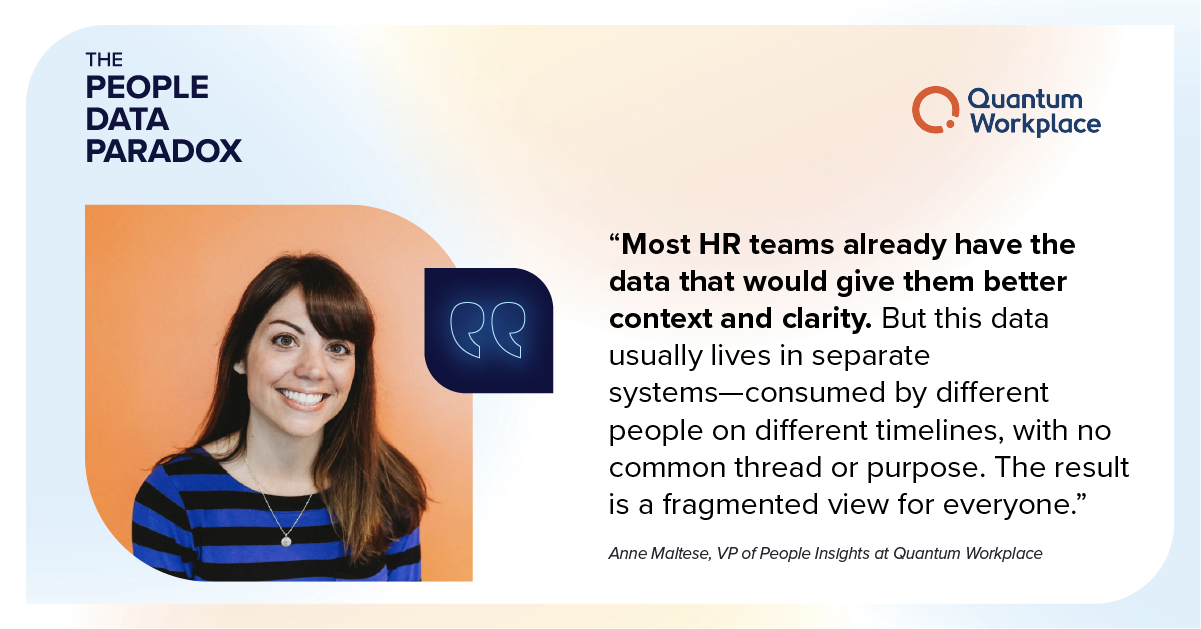
The modern HR technology landscape, while appearing robust on paper, often suffers from a critical flaw: fragmented data. Organizations invest in a suite of tools for engagement surveys, performance reviews, recognition programs, development plans, and a central HRIS. While each system functions independently, their inability to communicate creates blind spots, leading to significant, often hidden, costs in lost productivity, avoidable turnover, and unrealized talent potential. This pervasive issue, termed the "disconnected data problem," is not merely an IT concern but a strategic impediment to informed decision-making, proactive talent management, and ultimately, organizational success.
The Disconnected Data Dilemma: A Deeper Dive
At its core, disconnected people data refers to the situation where vital employee information—spanning engagement levels, performance metrics, recognition activities, development progress, and core HRIS records—resides in disparate systems that lack integration. These individual data silos offer only partial views, requiring HR professionals to manually stitch together information from multiple sources. This laborious process hinders the ability to form a holistic understanding of workforce dynamics, delaying crucial interventions and strategic responses.
This fragmentation is not a new phenomenon. Research consistently highlights the gap between the adoption of HR technology and its effective integration. A study by Quantum Workplace indicated that while HR leaders often utilize between two and four distinct HR solutions from various providers, a significant majority (only 39%) report that these systems are meaningfully integrated. This leaves a vast amount of valuable data accumulating without yielding the clear, actionable insights that could drive organizational improvement.
The Cascading Financial Impact of Fragmented People Data
The financial ramifications of disconnected people data are substantial and far-reaching. Organizations are estimated to lose millions annually due to a confluence of factors directly attributable to this data silo effect. For a mid-sized company with 2,500 employees, the estimated annual loss can approach $4 million, primarily stemming from underequipped managers and the failure to retain top performers.
The daily reality for many HR professionals involves the arduous task of compiling reports from multiple systems to answer a single executive query. This not only consumes valuable time and resources that could be allocated to strategic initiatives but also erodes confidence in the data’s completeness and timeliness. The underlying issue is not a lack of data, but rather its inaccessibility and inoperability in a unified, meaningful way.
Key Areas Where Fragmented Data Inflicts Damage

The impact of disconnected people data manifests most acutely in several critical areas of human capital management:
1. The Cost of Underequipped Managers
Managers serve as the primary conduit for employee engagement and performance. When managers are empowered and effective, their teams flourish. Conversely, when they are unsupported or lack necessary insights, this struggle permeates throughout their teams. The deficiency often lies not in the managers’ inherent capabilities but in the absence of readily accessible tools and information to guide their leadership.
The average manager is reportedly shouldering approximately 51% more responsibility than is realistically manageable. Compounding this, a significant portion (39%) have never received formal leadership training. This managerial burden translates directly into tangible business costs. Research indicates that managers within the top decile of leadership effectiveness generate double the net revenue of their less effective counterparts. The disparity between high-performing and struggling managers is therefore not merely a developmental concern but a present-day performance deficit impacting the organization’s bottom line.
2. The Cost of Overlooking High-Potential Talent
High-performing employees are not just valuable; they are disproportionately so, capable of generating between 400% and 800% more output than an average employee. Despite this significant impact, a concerning number of organizations (only 57%) have a formal process for identifying these individuals.
In the absence of integrated data, the identification of high-potential talent often relies on subjective factors like visibility and advocacy, rather than objective performance metrics. This means that employees delivering the most substantial contributions may not always be recognized or identified as high performers. The continued lack of formal recognition for their outsized contributions represents a missed opportunity for the organization to fully leverage their capabilities and foster their continued growth.
3. The Cost of Missing Retention Risk
The decision for a high performer to resign is typically not an impulsive one; it is often the culmination of months of developing dissatisfaction. The precursors to such departures—a decline in survey sentiment, a cessation of development discussions, or a reduction in recognition—are often present within an organization’s data. Individually, these signals may not trigger alarm bells, but when viewed in conjunction, they paint a clear narrative of escalating disengagement.
The financial implications of employee turnover are substantial. Replacing an employee can cost between 50% and 200% of their annual salary. Furthermore, research suggests that as many as one in three departing employees believe their exit could have been prevented. The critical warning signs are frequently embedded within existing data streams, but their isolation prevents timely intervention.
Quantifying the Aggregate Cost of Disconnected Data
To illustrate the tangible financial impact, consider an organization with 2,500 employees and 250 managers. If 50 of these managers are inadequately supported, and 10% of their direct reports subsequently experience disengagement, the annual loss in productivity could reach $1.7 million.
Adding the element of retention risk, if 10 high performers depart due to a lack of recognition or development, the cost of replacing them at double their salary could amount to an additional $2 million. Collectively, this scenario highlights nearly $4 million in financial drain directly attributable to disconnected data. This figure does not even account for the broader implications of teams operating without optimal conditions for success, such as misdirected effort, slow skill development, and unrealized potential.
The Transformative Power of Connected People Data
Historically, integrating fragmented data systems was a resource-intensive and time-consuming endeavor. However, advancements in technology, particularly artificial intelligence (AI), are revolutionizing this landscape. AI can now continuously analyze engagement, performance, development, and recognition data, cross-referencing it against benchmarks and identifying patterns that were previously invisible.
The paradigm shift is not about accumulating more data but about finally deciphering the insights that existing data has been attempting to convey. When these interconnected signals are brought to light, organizations can begin to address the most pressing questions facing HR and executive leadership:
- Proactive identification of flight risks: By analyzing trends in engagement, recognition, and development, organizations can identify employees showing early signs of disengagement and intervene before a resignation occurs.
- Targeted manager development: Understanding how manager effectiveness correlates with team engagement and performance allows for the precise identification of developmental needs and the provision of tailored support.
- Equitable talent identification and development: Connected data enables a more objective approach to identifying high-potential employees, moving beyond subjective nominations and ensuring that diverse talent pools are recognized and nurtured.
- Enhanced employee experience: By understanding the holistic employee journey, organizations can create more supportive and engaging work environments, leading to increased satisfaction and retention.
- Data-driven strategic workforce planning: Integrated people data provides a comprehensive view of workforce capabilities, allowing for more accurate forecasting of future talent needs and strategic development initiatives.
- Justification of HR investments: Demonstrating the direct correlation between HR initiatives and business outcomes becomes far more robust with connected, quantifiable data.
From Fragmented Information to Unified Talent Insights: The Quantum Workplace Solution
The ultimate value of data lies in its ability to inform action. Quantum Workplace offers a platform designed to bridge the gap between fragmented data and actionable insights. By consolidating engagement, performance, development, and recognition signals into a unified view, the platform empowers leaders to move beyond piecing together disparate information and gain a clear understanding of their teams’ realities.
AI-driven insights are employed to uncover patterns that were previously obscured by system silos. Crucially, each finding is accompanied by clear, prioritized next steps, contextualized by the organization’s specific priorities and benchmarks. These insights are delivered directly to leaders within their natural workflows, facilitating immediate and informed action.
The Quantum Workplace platform enables HR teams to:
- Uncover hidden trends: Identify correlations between engagement, performance, and retention that are invisible in siloed systems.
- Enable proactive interventions: Flag potential flight risks and disengagement early, allowing for timely and effective support.
- Empower managers with actionable insights: Provide managers with data-driven guidance to improve team performance and engagement.
- Drive equitable talent development: Objectively identify and nurture high-potential employees across the organization.
- Demonstrate the ROI of HR initiatives: Quantify the impact of engagement, recognition, and development programs on business outcomes.
- Foster a culture of continuous improvement: Create a data-informed environment where feedback and development are ongoing and integrated.
In an era where human capital is increasingly recognized as a primary driver of competitive advantage, the ability to understand and leverage people data is paramount. The pervasive challenge of disconnected HR technology represents a significant, yet addressable, obstacle. By embracing integrated data solutions, organizations can unlock the full potential of their workforce, mitigate costly risks, and build a more resilient, high-performing future.