
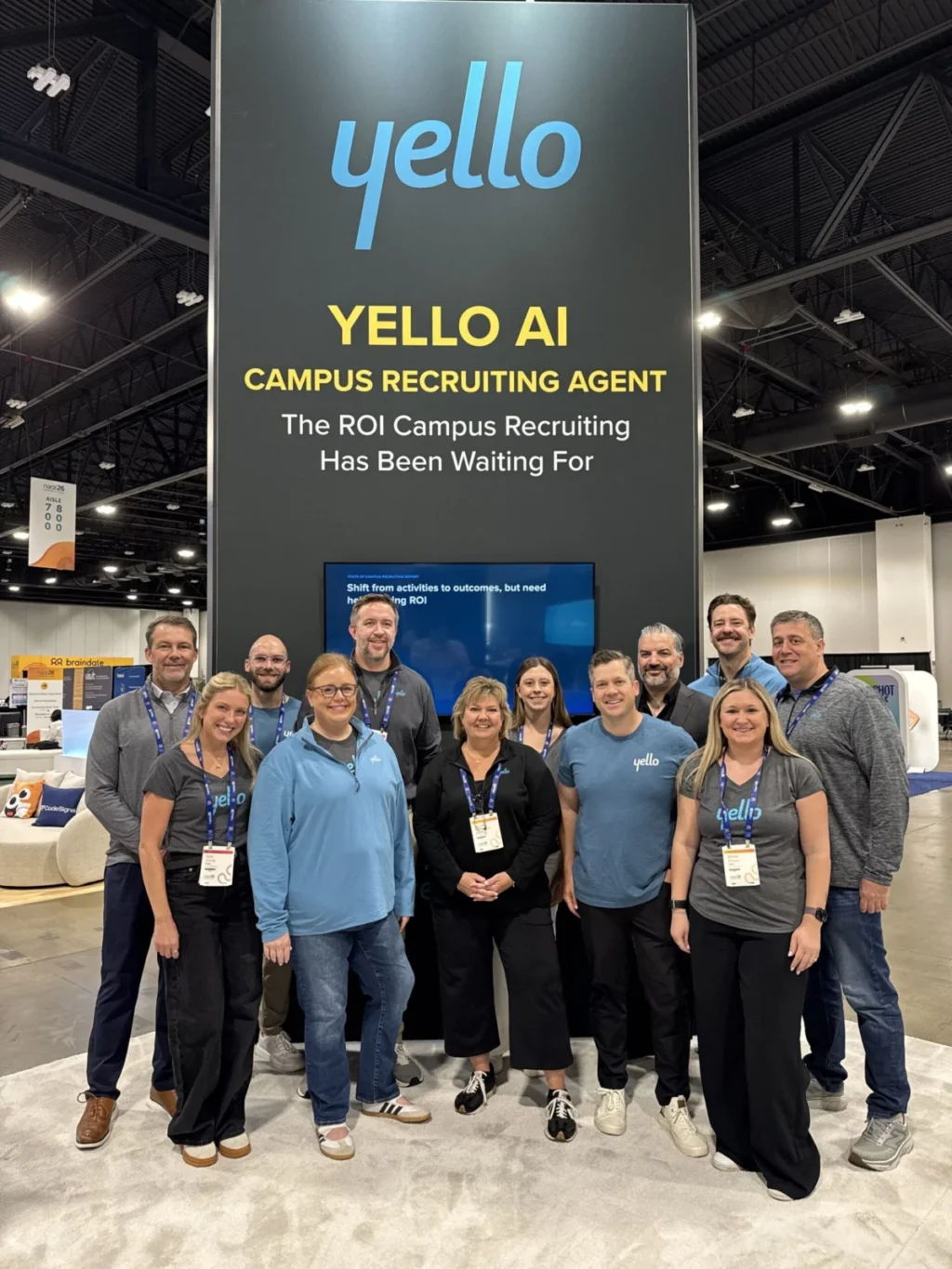
Denver, CO – The early talent acquisition landscape is undergoing a profound transformation, a shift clearly evident at the recent NACE26 conference, where industry leaders converged to discuss the future of campus recruiting. Yello, a prominent provider of early talent acquisition software, made a significant impact as a platinum sponsor, unveiling its groundbreaking AI Campus Recruiting Agent and announcing a strategic partnership with Symplicity. These developments, alongside key discussions on the evolving role of artificial intelligence, event strategies, and the persistent challenge of offer reneges, underscored a pivotal moment for recruiters seeking to optimize their engagement with the next generation of professionals.
NACE26: A Confluence of Early Talent Innovation
The National Association of Colleges and Employers (NACE) annual conference, NACE26, serves as the premier gathering for professionals dedicated to college career services and university relations. Held recently in Denver, the event brought together hundreds of campus recruiters, career services experts, and HR technology innovators to explore best practices, share insights, and address the pressing challenges facing the early talent ecosystem. The conference agenda was packed with sessions dissecting everything from technological advancements to strategic shifts in engagement, reflecting a dynamic environment where traditional methods are being redefined by data-driven approaches and sophisticated tools. For Yello, its platinum sponsorship was a testament to its commitment to leading these conversations, hosting speaking sessions, networking events, and maintaining a robust presence at its booth to engage directly with the community.
Yello’s Dual Announcements Reshape the Recruiting Horizon
Central to Yello’s presence at NACE26 were two major announcements poised to significantly impact how employers identify, attract, and hire early career talent.
The Debut of the AI Campus Recruiting Agent:
Yello introduced its innovative AI Campus Recruiting Agent, a solution designed to automate numerous manual tasks that traditionally consume recruiters’ valuable time. This new agent is engineered to streamline event building, candidate sourcing, campaign management, and interview scheduling, thereby freeing up recruiting teams to focus on more meaningful candidate engagement. The core philosophy behind the AI Campus Recruiting Agent represents a fundamental shift in campus recruiting strategy. Traditionally, recruiters would attend career fairs, hoping the right candidates would visit their booth. Yello’s new agent flips this model entirely. Instead of a reactive approach, the AI agent proactively identifies best-fit candidates and pre-schedules interviews even before an event commences. This predictive capability handles the heavy lifting of event logistics, candidate matching and prioritization, initial outreach, and intricate interview scheduling. The result is that recruiters arrive at an event armed with a pre-filled interview schedule, featuring candidates meticulously matched to their roles, transforming the often-unpredictable nature of career fairs into a highly efficient, targeted recruitment drive. This move signifies Yello’s commitment to delivering measurable ROI in campus recruiting, allowing teams to allocate resources more strategically and enhance the quality of hires.
Strategic Partnership with Symplicity:
Further expanding its capabilities, Yello announced a significant partnership with Symplicity, a leading global provider of student success and career services platforms. This collaboration grants Yello customers unparalleled access to Symplicity’s vast network of over 600,000 early talent candidates. This integration is a game-changer for sourcing. Employers utilizing the Yello Campus Recruiting Agent can now leverage this extensive database, augmenting their existing candidate pools from their own Applicant Tracking Systems (ATS), Yello’s proprietary database, WayUp, and more than 35 other diverse online sources. The partnership addresses a critical need for broader and more diverse candidate pools, enabling recruiters to cast a wider net while simultaneously refining their targeting through AI-driven matching. This strategic alliance not only enhances the volume of potential candidates but, more importantly, improves the quality of matches, reinforcing the shift towards data-informed and efficient early talent acquisition.
Key Themes and Insights from NACE26 Discussions
Beyond Yello’s specific announcements, the NACE26 conference provided a crucial forum for addressing broader industry trends and challenges. Three key takeaways resonated deeply throughout the event.
1. AI is Changing Recruiting, But How You Use It Matters:
The widespread adoption of AI in recruiting was a dominant theme, yet discussions revealed a nuanced understanding of its optimal application. Yello’s own "State of Campus Recruiting report" highlighted that while 26% of current AI usage is concentrated in sourcing and 25% in candidate communications—primarily top-of-funnel activities—a significant gap exists in areas where AI could deliver the greatest impact, such as data analysis and proving ROI. This discrepancy was a recurring point of concern in Denver. Recruiters expressed a clear preference for AI that handles administrative burdens and repetitive tasks, rather than making hiring decisions for them. The consensus was that AI should empower recruiters, freeing them to engage in higher-value interactions with candidates.
Yello’s session, "Can Campus Recruiting Be Autonomous? The Answer Is Complicated," directly addressed this dilemma. Panelists Tamara Welch from LPL Financial, NACE’s Matthew Brink, and Yello’s Dan Bartfield explored whether the ultimate goal is truly autonomous recruiting or simply equipping recruiters to focus on strategic work. The audience overwhelmingly favored the latter, emphasizing that for AI to be effective, it must be purpose-built for the unique demands of campus recruiting. By automating manual processes, AI allows recruiters to dedicate more time to critical aspects like personalized candidate engagement, fostering deeper connections that are crucial for successful early talent hires.
Matthew Brink further elaborated on the candidate perspective, noting a growing wariness among students regarding employers who lean too heavily on AI in their hiring processes, especially when its use is not transparently disclosed. An impersonal or opaque AI-driven process can inadvertently alienate qualified candidates and subtly erode an employer’s brand reputation, highlighting the ethical imperative for responsible AI implementation.
2. Employers Are Changing Their Approach to Events:
Another significant shift discussed at NACE26 was the evolving strategy for in-person recruiting events. In the session, "Purpose Over Presence: Rethinking Your Event Strategy for Better ROI," panelists Vincent Bond from Synchrony, Kristin Leek from Boeing, and Christopher Cantu from Marathon Petroleum highlighted a critical paradox: application volumes continue to climb, yet identifying truly qualified candidates has become increasingly difficult. A key factor identified was the proliferation of AI-assisted resume tools, which, as Vince Bond succinctly put it, results in "every resume looking the same now. AI is fighting AI." Candidates leverage AI to optimize their resumes, and employers use AI to screen them, creating a technological arms race that often obscures genuine talent.
In response, these leaders advocated for a more intentional, outcomes-based approach to events, emphasizing earlier investment in relationship building. The purpose of in-person events has fundamentally changed. Instead of attending numerous career fairs with the goal of high-volume candidate interaction in hopes of finding a few good fits, employers are now meticulously evaluating which events yield the best return on investment and ultimately lead to quality hires. Christopher Cantu likened career fairs to the "end zone"—the point where offers are closed, not where relationships begin. The crucial groundwork, he explained, occurs months, sometimes even years, in advance through targeted events and consistent touchpoints. This "relationship equity" is emerging as the competitive edge in campus recruiting, providing a vital countermeasure against soaring application volumes and the increasing challenge of candidate fraud.
3. Reneges Continue to Be a Challenge:
Building on the importance of relationship building, the issue of offer reneges was a particularly hot topic at NACE26. The sobering reality for many employers is that an accepted offer no longer guarantees a done deal. Teams that are most successful in mitigating reneges are those that treat the post-offer period as an active and critical recruiting phase. Consistent, personalized communication between the offer acceptance and the candidate’s start date is deemed a non-negotiable strategy for retaining top talent. Panelists also noted a direct correlation between robust relationship-building efforts initiated at events and lower renege rates, underscoring the long-term value of early and sustained engagement.
In a virtual session titled "Designing the Complete Journey: From Pre-Boarding to Off-Boarding," Yello’s Ahva Sadeghi introduced the KEEP framework, a strategic guide designed to help employers maintain candidate engagement throughout the entire journey. KEEP stands for Kick Off, Engage, Enable, and Perform—four pillars that systematically guide a candidate from offer acceptance through to their Day One experience. Sadeghi also shared insightful data on the common reasons candidates renege, the substantial true cost this incurs for employers, and showcased how Symba customers have achieved impressive reductions in renege rates, exceeding 55%, through structured engagement and support programs. The cost of reneges can be substantial, encompassing not only lost productivity and recruitment costs but also potential damage to employer brand and team morale. These discussions reinforced the idea that recruitment doesn’t end with an offer; it evolves into an active nurturing phase.
Broader Market Implications and Future Outlook
Yello’s announcements and the prevailing discussions at NACE26 collectively paint a clear picture of the future of early talent acquisition: one that is increasingly strategic, data-driven, and human-centric, even with the integration of advanced AI. The industry is moving away from volume-based, transactional recruiting towards quality-focused, relationship-driven engagement, powered by intelligent automation.
The AI Campus Recruiting Agent signals a significant leap in automating the logistical complexities of recruiting, enabling recruiters to act more as strategic advisors and relationship builders rather than administrative managers. This shift is critical as the talent market remains competitive, requiring employers to offer compelling, personalized experiences to attract and retain top candidates. The partnership with Symplicity further strengthens this position by providing expansive access to diverse talent pools, ensuring that efficiency gains from AI are matched by breadth of reach.
For universities, this means an evolving partnership with employers, moving towards more collaborative and integrated approaches to talent development and placement. For students, it implies a hiring process that, while leveraging technology for efficiency, must remain transparent, ethical, and ultimately, personal. The emphasis on relationship equity and proactive engagement from employers suggests that students who actively build connections and demonstrate genuine interest will have a distinct advantage.
As the early talent landscape continues to evolve, the innovations showcased at NACE26, particularly from companies like Yello, are not just about new tools; they represent a fundamental re-imagining of how organizations connect with the talent that will drive their future success. The focus on purpose-built AI, outcomes-driven event strategies, and proactive post-offer engagement sets a new standard for excellence in early talent acquisition, promising a more efficient, effective, and ultimately more human-centered recruiting experience for all stakeholders.






