
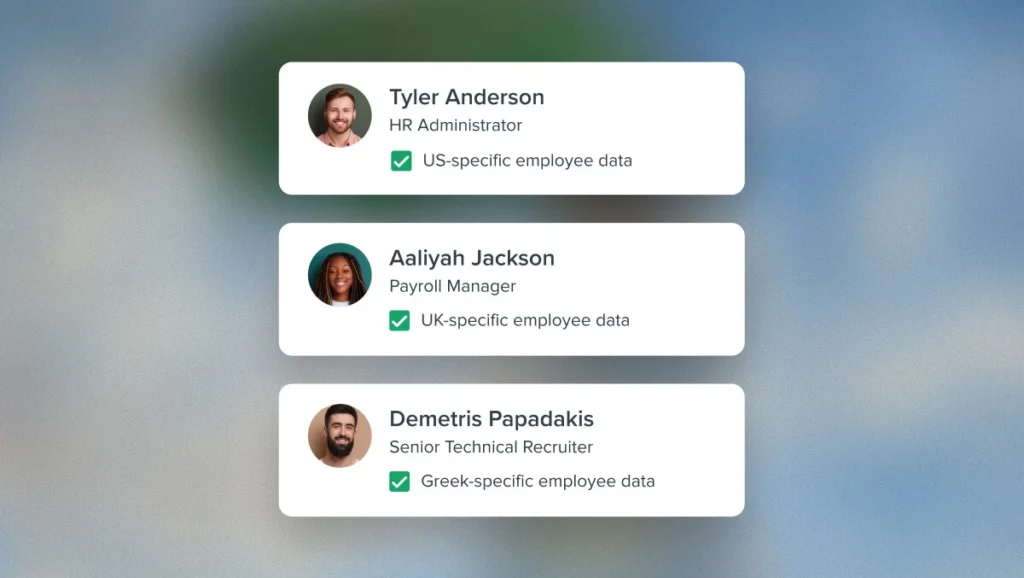
Workable, a leading global recruiting software, has announced a significant enhancement to its platform, introducing HRIS roles with defined scope, a pivotal development designed to address the complex access management challenges faced by multi-entity, multi-brand, and multi-country organizations. This new functionality empowers businesses to delegate HR responsibilities with precision, ensuring that sensitive employee data remains secure and compliant with diverse global regulations, while simultaneously streamlining administrative processes across distributed teams. The update is a direct response to the escalating need for more nuanced control over HR information systems, moving beyond the traditional "all or nothing" approach to data access.
The core problem tackled by this innovation is the historical dilemma confronting growing enterprises: either over-provision administrative access to HRIS platforms, thereby exposing sensitive data to individuals who do not require it, or centralize all HR administration through a small, overburdened team. Both scenarios present substantial drawbacks. Over-provisioning access carries significant privacy and compliance risks, potentially exposing salary data, personal documents, and confidential details to unauthorized eyes. This risk is amplified in an era of stringent data protection laws like GDPR, CCPA, and countless other regional regulations. Conversely, centralizing all HR functions, while seemingly safer, inevitably leads to bottlenecks, delays, and a severe reduction in operational efficiency, as local teams are forced to wait for a central HR unit to process routine requests they could otherwise handle themselves. Workable’s new scoped HRIS roles offer a third, more effective path, allowing organizations to maintain robust security protocols without sacrificing agility or responsiveness.
The Evolving Landscape of Global HR Management
The modern business environment is characterized by increasing globalization, complex corporate structures, and a heightened focus on data privacy. Companies frequently operate across multiple legal entities, diverse brands, and numerous international jurisdictions. In such settings, HR responsibilities are rarely confined to a single, monolithic central team. Instead, they are distributed, with local HR managers, people operations leads, and payroll administrators handling specific employee populations in different regions. For instance, an HR manager in Athens might oversee Greek employees and local compliance, while a people operations lead in Boston manages the US entity’s workforce, and a UK payroll manager needs specific access to bank details and pay rates for the London team. Until now, granting these local specialists the necessary administrative access within platforms often meant providing unfettered access to the entire organizational account—every employee record, every document, and every HR setting across the whole company. This broad access posed inherent risks and complexities, particularly concerning data segregation and compliance with disparate national laws.
The advent of remote and hybrid work models has further exacerbated these challenges. With employees distributed across various geographies, the need for local HR support has grown, making centralized HR administration even less tenable. Organizations are under constant pressure to balance the imperative of data security and regulatory compliance with the operational demands of a globally dispersed workforce. The cost of non-compliance, both in terms of financial penalties and reputational damage, has never been higher, pushing companies to seek out sophisticated solutions that can manage these intricate requirements effectively.
Workable’s Solution: Granular Access through Scoped HRIS Roles
Workable’s latest enhancement directly addresses this critical need by introducing the ability to assign HRIS roles with a defined scope. This means that when a new account member is invited, or an existing one’s permissions are edited, administrators can now choose their role (e.g., HR Admin, Payroll Manager) and precisely define the organizational segments to which it applies. This segmentation can be based on legal entities, departments, countries, or other pre-defined organizational structures within the Workable account.
For example, an HR administrator can be granted an "HR Admin" role specifically scoped to the company’s US entity. This individual will then have full administrative capabilities for US employees and the HR settings pertinent to that entity, but no access to data or settings related to the UK, Greek, or any other entity. Similarly, a payroll manager for the London office can be given access exclusively to the bank details and pay rates of employees within the UK entity, without visibility into the financial data of employees in other regions. This level of granularity ensures that access aligns perfectly with responsibility, minimizing the potential for unauthorized data exposure.
The implementation of scoped roles is designed for simplicity and efficiency, building upon the existing segmentation capabilities already present in Workable accounts. There are no complex, labyrinthine permission sets to design, configure, or maintain. Administrators can set the scope in a matter of seconds directly within the account member management interface. This intuitive design ensures that organizations can quickly adapt to evolving HR structures and compliance mandates without requiring extensive technical expertise or prolonged setup times.
Consider an organization operating three distinct legal entities across three different countries. With scoped roles, each local HR lead can be assigned an "HR Admin" role specifically limited to their respective entity. This empowers each local lead to independently manage onboarding processes, update employee profiles, handle essential documents, and adjust relevant HR settings for their specific employee population. Concurrently, a central HR team retains an account-wide overview, allowing for strategic oversight while offloading day-to-day administrative tasks to local teams. This separation of employee data between entities is not merely an operational convenience; it is a critical component for adhering to country-specific privacy laws and data residency requirements, which often dictate how and where personal data can be stored and accessed.
Chronology of Development and Strategic Context
While Workable’s announcement marks a specific point in time, the development of such a feature is typically the culmination of extensive market research, customer feedback, and strategic planning. The increasing complexity of global HR, coupled with the tightening regulatory environment, has been a growing concern for many years. Workable, as a leader in the HR tech space, has likely observed these trends and identified the limitations of existing access control models in accommodating the needs of its larger, more geographically dispersed client base.
The evolution of HRIS platforms has steadily moved towards greater flexibility and customization. Early HR systems often provided rudimentary access controls, largely based on broad roles. However, as businesses expanded globally and regulatory frameworks matured, the demand for more granular, context-aware permissions grew significantly. This new feature from Workable can be seen as a strategic response to this demand, positioning the platform as a robust solution for enterprises grappling with global HR complexities. The development likely involved iterative design, rigorous testing, and close collaboration with key clients to ensure the feature met real-world operational and compliance requirements. This enhancement underscores Workable’s commitment to continuous innovation, ensuring its platform remains at the forefront of HR technology and addresses the evolving needs of its diverse clientele.
Supporting Data and Industry Trends
The importance of granular access control in HRIS platforms is underscored by several key industry trends and data points. According to a 2023 report by Gartner, effective data governance and access management are among the top priorities for CIOs and HR leaders, with 70% of organizations reporting increased scrutiny over employee data access due to privacy regulations. The average cost of a data breach, as reported by IBM in 2023, reached an all-time high of $4.45 million, emphasizing the financial imperative of robust security measures. Unauthorized access by insiders, whether malicious or accidental, remains a significant vector for breaches, making precise access control a crucial preventative measure.
Furthermore, the global market for Human Capital Management (HCM) software, which includes HRIS, is projected to grow substantially, driven by the increasing need for integrated and intelligent HR solutions. Research from MarketsandMarkets predicts the HCM market to reach $38.9 billion by 2028, with a compound annual growth rate (CAGR) of 9.2%. A significant portion of this growth is attributed to the demand for solutions that can effectively manage distributed workforces and navigate complex regulatory landscapes. Workable’s investment in features like scoped HRIS roles aligns perfectly with this market trajectory, catering to the sophisticated needs of enterprise clients.
The regulatory landscape is another critical driver. The European Union’s General Data Protection Regulation (GDPR) has set a global benchmark for data privacy, mandating strict controls over personal data and imposing hefty fines for non-compliance. Similarly, the California Consumer Privacy Act (CCPA) in the United States, Brazil’s Lei Geral de Proteção de Dados (LGPD), and India’s Digital Personal Data Protection Act (DPDPA) represent a growing global trend towards stringent data protection. These regulations often require organizations to demonstrate that personal data is processed only by authorized personnel and for legitimate purposes, making granular access control an indispensable tool for compliance. Without such capabilities, companies risk regulatory penalties, legal challenges, and a severe erosion of trust among employees and customers.
Broader Impact and Implications
The introduction of scoped HRIS roles by Workable carries significant implications across several dimensions for organizations leveraging the platform:
1. Enhanced Data Privacy and Compliance: This is perhaps the most immediate and profound impact. By ensuring that employees only have access to the data strictly necessary for their roles, organizations drastically reduce the risk of unauthorized data exposure. This directly supports compliance with global privacy regulations, mitigating the risk of fines and legal challenges. It establishes a clearer audit trail, demonstrating due diligence in data protection practices.
2. Increased Operational Efficiency and Agility: Local HR teams are empowered to act autonomously within their defined scope. This eliminates the dependency on a central team for routine administrative tasks, drastically reducing response times for employee requests and HR processes. Onboarding, profile updates, document management, and local setting adjustments can all be handled swiftly by the teams closest to the employees, leading to a more responsive and efficient HR function overall.
3. Reduced Administrative Burden on Central HR: With local teams managing their specific populations, central HR can shift its focus from transactional administrative tasks to more strategic initiatives, such as workforce planning, talent development, and organizational culture. This allows central HR to become a strategic partner to the business rather than a bottleneck.
4. Strengthened Risk Mitigation: By tightly controlling access, organizations minimize the internal threat vectors associated with accidental data breaches or malicious insider activity. The principle of least privilege, a cornerstone of cybersecurity, is effectively implemented, safeguarding sensitive employee information.
5. Seamless Scalability: As organizations expand into new countries or acquire new entities, the HRIS platform can easily scale to accommodate these changes without compromising security or efficiency. New local HR teams can be onboarded with precisely defined access, allowing for rapid integration and operationalization.
6. Improved Employee Trust and Experience: Employees can have greater confidence that their personal data is being handled securely and ethically. A more efficient HR process also contributes to a better employee experience, as requests are handled promptly and accurately by local, knowledgeable teams.
7. Strategic IT and Administration Component: For organizations with complex IT infrastructures and stringent data separation policies, scoped roles become a crucial component in their overall IT and administrative architecture. It simplifies identity and access management (IAM) while ensuring that business rules and compliance mandates are consistently enforced.
Official Responses and Future Outlook
While specific direct quotes were not provided in the source material, the announcement implicitly reflects Workable’s strategic vision. A Workable spokesperson would likely emphasize the company’s unwavering commitment to empowering growing organizations with innovative, secure, and user-friendly HR solutions. They might state that "this new functionality is a direct response to the evolving needs of our enterprise clients, who require sophisticated tools to navigate the complexities of global HR management and data compliance. We believe that by enabling granular control over HRIS access, we are not only enhancing security and compliance but also significantly boosting operational efficiency and empowering local HR teams worldwide."
The release of scoped HRIS roles positions Workable as a more attractive option for large, multi-national corporations seeking robust and flexible HR technology. It demonstrates Workable’s understanding of enterprise-level challenges and its capability to deliver sophisticated solutions. The company is likely to continue iterating on these features, potentially introducing even more granular controls or integrating with broader identity management systems in the future, as the demands for secure and efficient HR operations continue to grow in a globally interconnected business landscape.
Getting Started with Scoped Roles
The new scoped HRIS roles functionality is immediately available to Workable clients on Premier and Enterprise plans. Existing users can begin configuring these roles by navigating to their account members settings within the Workable platform. For detailed, step-by-step instructions and best practices, Workable has provided a comprehensive guide in its help center, ensuring that administrators can seamlessly implement this powerful new feature and optimize their HR operations for enhanced security, compliance, and efficiency. This strategic upgrade solidifies Workable’s position as a forward-thinking HR tech provider, ready to meet the complex demands of the global workforce.






