
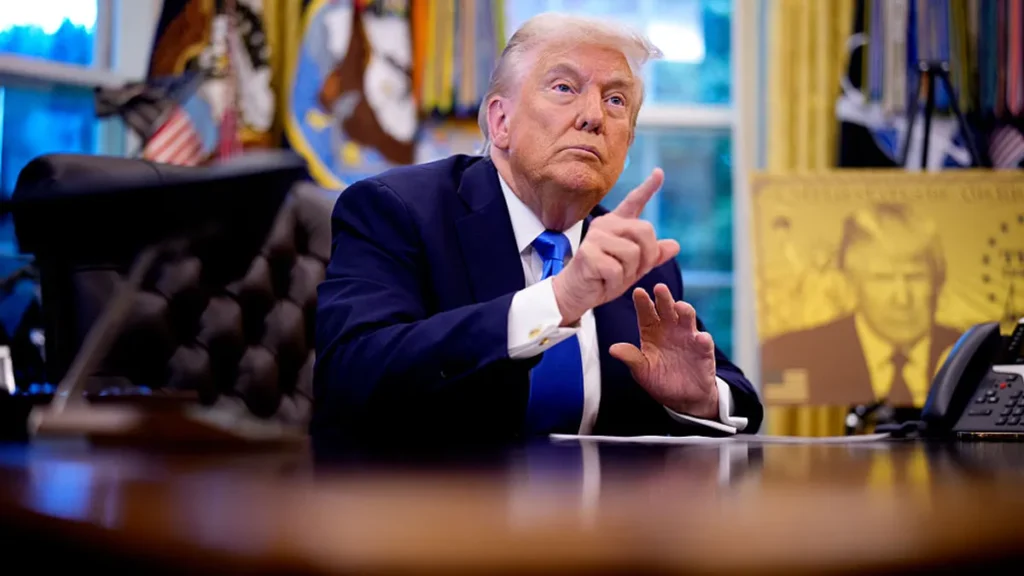
The Department of Homeland Security (DHS) is poised to propose a new fee of $103,265 on all cap-subject H-1B visa petitions, a move slated for publication on August 25, 2026, which experts predict will immediately trigger significant litigation from employer groups and immigration advocates. This announcement marks the latest and most substantial in a series of restrictive measures undertaken by the Trump administration to overhaul the H-1B temporary worker program, reinforcing a climate of uncertainty for U.S. businesses reliant on skilled foreign talent. The anticipated legal challenges are expected to mirror, and potentially intensify, the fierce courtroom battles that followed the administration’s prior attempt to levy a similar, albeit slightly lower, fee last year.
The H-1B visa program, established by the Immigration Act of 1990, permits U.S. employers to temporarily employ foreign workers in specialty occupations, defined as theoretical and practical application of a body of highly specialized knowledge, requiring a bachelor’s degree or higher in a specific specialty. These roles typically encompass fields such as information technology, engineering, medicine, science, and mathematics. The program is vital for many U.S. companies, particularly in the tech sector, to fill critical skill gaps and maintain global competitiveness. Each fiscal year, Congress sets an annual cap on the number of H-1B visas issued: 65,000 for the regular cap and an additional 20,000 for those with a U.S. master’s degree or higher. Demand consistently outstrips supply, leading to an annual lottery system where hundreds of thousands of applications compete for a limited number of slots.
A Pattern of Program Overhaul and Increased Scrutiny
The new fee proposal is not an isolated incident but rather the latest escalation in the Trump administration’s "Buy American, Hire American" policy agenda, which has consistently sought to tighten immigration rules perceived as impacting American jobs. President Donald Trump has frequently articulated concerns that the H-1B program is "deliberately exploited to replace, rather than supplement, American workers with lower-paid, lower-skilled labor," a claim that has been widely debated and often challenged by industry and economic data. Critics of the program argue it allows companies to depress wages by hiring foreign workers, while proponents assert it is crucial for innovation and economic growth, attracting top global talent to the U.S.
The administration’s efforts to reshape the H-1B landscape began in earnest in September 2025, when President Trump issued a proclamation establishing an initial $100,000 fee for H-1B visas. This previous fee was initially clarified by U.S. Citizenship and Immigration Services (USCIS) to apply only to certain new petitions filed on or after September 21, 2025. This initial proclamation immediately drew the ire of business groups and sparked a wave of legal challenges, setting a precedent for the expected opposition to the current proposal.
Navigating a Labyrinth of Legal Challenges
The legal journey of the previous $100,000 fee provides crucial context for understanding the landscape facing the new $103,265 proposal. Following the September 2025 proclamation, the U.S. Chamber of Commerce, a powerful advocacy group for American businesses, swiftly filed a lawsuit against the Department of Homeland Security in the U.S. District Court for the District of Columbia. The Chamber argued that the administration had exceeded its statutory authority in unilaterally imposing such a significant fee. In January 2026, the D.C. court delivered a ruling in favor of the administration, asserting that President Trump had not overstepped his executive powers in issuing the fee proclamation. This decision initially appeared to lend significant weight to the administration’s ability to implement such policies.
However, the legal saga was far from over. Months later, in a separate but equally significant lawsuit filed in a Massachusetts federal court, a different outcome emerged. The judge presiding over this case vacated the initial proclamation, declaring it unlawful. This conflicting ruling created considerable confusion and uncertainty within the immigration legal community and among employers. The administration subsequently appealed this decision to the 1st U.S. Circuit Court of Appeals, but the appellate court, just last month, declined to place a stay on the Massachusetts judge’s order. This meant that, at least within the jurisdiction of the 1st Circuit, the $100,000 fee remained unenforceable, highlighting the deeply contested nature of the administration’s H-1B policies and the split among federal courts.
Against this backdrop of ongoing legal contention, the new $103,265 fee proposal is set to enter the arena. Industry observers and legal analysts universally anticipate that this latest fee will face immediate and robust legal challenges. Attorneys specializing in immigration law, such as Sarah Tang, an expert quoted by HR Dive, suggest that potential litigation against the new rule could specifically target the proposed fee amount itself, arguing that it is "arbitrary and capricious." USCIS has stated that it calculated the $103,265 figure by assessing the "total interagency cost of maintaining the lawful immigration system." This broad justification, however, may not withstand judicial scrutiny, as courts often require a more granular and direct nexus between a fee and the specific service or cost it is intended to cover. Legal challenges are likely to demand transparency and detailed breakdowns of how this figure was derived and whether it disproportionately burdens H-1B petitioners compared to actual administrative costs.
Specifics of the New Fee and Its Scope
The proposed $103,265 fee would specifically target cap-subject H-1B visa petitions. This distinction is critical, as it means petitions filed by certain entities would remain exempt. These cap-exempt categories typically include U.S. institutions of higher education, non-profit organizations affiliated with or related to a higher education institution, and non-profit research organizations or governmental research organizations. This exemption aims to support academic and research endeavors, acknowledging their distinct role in the national interest. However, the vast majority of H-1B petitions, particularly those from the technology and consulting sectors, are cap-subject and would therefore be directly impacted by this substantial new cost.

The timeframe for interested parties to submit comments on this latest fee proposal is expected to be notably swift, signaling the administration’s intent to move quickly towards finalization. Such a compressed comment period can further fuel arguments that the rule-making process is rushed and does not allow for adequate public input or consideration of its wide-ranging impacts.
A Cascade of Cost Increases and Program Restrictions
The proposed H-1B fee is merely one component of a broader, concerted effort by the Trump administration to increase the cost and complexity of the program for employers. Other significant changes already implemented or proposed include:
- Increased Prevailing Wage Rates: In March, the U.S. Department of Labor (DOL) announced a proposed rule aimed at significantly increasing the prevailing wage rates for H-1B visa holders. This measure would require employers to pay H-1B workers at higher rates, ostensibly to ensure that foreign workers are not undercutting American wages. While designed to protect domestic workers, this also translates into a substantial increase in operational costs for companies employing H-1B talent.
- Revival of Wage-Based Selection Criteria: The DHS has revived wage-based selection criteria for H-1B petitions. Under this system, the agency would select petitions using a tiered format weighted heavily in favor of higher-paying offers. This policy, designed to prioritize "high-skilled, high-wage" workers, fundamentally alters the H-1B lottery system, making it more challenging for entry-level or mid-career professionals, who often fall into lower wage tiers, to secure visas.
- Potential Fees for Optional Practical Training (OPT): USCIS has reportedly considered instituting a fee on international students who participate in Optional Practical Training (OPT). OPT allows international students with F-1 visas to work in the U.S. for up to 12 months (or 36 months for STEM graduates) in a field related to their major area of study. A new fee here would add another layer of financial burden to foreign students seeking practical experience in the U.S. and potentially disincentivize them from pursuing higher education in American institutions.
- Elimination of 60-Day Grace Period: Earlier this month, DHS also announced its intention to propose a rule to eliminate the 60-day grace period for current H-1B visa holders whose employment expires prior to the expiration date of their visas. This grace period has historically provided a crucial window for H-1B workers to find new employment or make arrangements to depart the U.S. Its elimination would create immense pressure and instability for visa holders, potentially forcing them into immediate departure if their employment ends unexpectedly.
Broader Implications and Industry Reactions
The cumulative effect of these changes, particularly the staggering new fee, is widely expected to create a "chilling effect" for employers, as noted by legal experts like Tang. This phrase describes a situation where employers become increasingly reluctant to participate in the H-1B program due to the escalating costs, administrative complexities, and pervasive uncertainty.
For businesses, especially those in the technology, healthcare, and engineering sectors, the implications are profound:

- Talent Acquisition and Retention: The increased costs will make it significantly more expensive to attract and retain highly skilled foreign talent. Companies may struggle to compete with global rivals who do not face similar regulatory and financial burdens. This is particularly true for cap-subject H-1B visa holders, who tend to be earlier in their careers and whose initial salaries might not easily justify such a hefty upfront investment.
- Innovation and Competitiveness: Many U.S. industries rely on H-1B workers for their specialized skills and contributions to innovation. A reduction in the availability or an increase in the cost of this talent pool could hinder research and development, slow technological advancement, and ultimately diminish the U.S.’s global economic competitiveness.
- Talent Succession Planning: Faced with unpredictable and escalating costs, companies will be compelled to revisit their talent succession plans. This might involve greater investment in domestic talent pipelines, though often there aren’t enough qualified U.S. workers for all available roles, particularly in STEM fields. Some companies might also consider offshoring certain positions or expanding their operations in countries with more favorable immigration policies.
- Disproportionate Impact on Small and Medium Businesses: Larger corporations often have the resources to absorb increased fees and navigate complex legal challenges. However, small and medium-sized businesses (SMBs) and startups, which are often drivers of innovation and job creation, may find the new fee prohibitive. This could stifle growth and reduce their ability to compete for top talent, potentially concentrating skilled labor within larger, established firms.
- Economic Impact: The fee, along with other restrictions, could lead to a "brain drain" as highly skilled individuals opt to pursue opportunities in other countries that offer clearer and less costly immigration pathways. This loss of human capital could have long-term negative consequences for the U.S. economy, impacting tax revenues, consumer spending, and entrepreneurial activity.
Official responses from the administration are expected to frame these measures as necessary steps to protect American workers and ensure the integrity of the immigration system. A spokesperson for the Department of Homeland Security, while not yet publicly commenting on the specifics of the new fee, is likely to reiterate the administration’s commitment to prioritizing U.S. citizens and residents in the job market and ensuring that immigration programs serve national interests.
Conversely, employer advocacy groups, such as the U.S. Chamber of Commerce and various tech industry associations, are anticipated to issue strong condemnations, arguing that these policies undermine economic growth, stifle innovation, and harm American businesses. They will likely emphasize the critical role H-1B workers play in filling talent gaps and driving prosperity. Immigration advocacy organizations are also expected to vocally oppose the fee, characterizing it as punitive, discriminatory, and detrimental to both skilled immigrants and the overall health of the American economy. They may highlight the humanitarian implications of such restrictive policies, particularly the elimination of the grace period.
In contrast, certain labor unions and groups advocating for stricter immigration controls may voice support for the new fee, viewing it as a mechanism to discourage the perceived displacement of American workers and to encourage employers to invest more heavily in domestic talent development.
As the August 25, 2026, publication date approaches, the stage is set for a fresh round of legal and political contention. The new $103,265 H-1B visa fee, coupled with the existing web of restrictions and heightened scrutiny, represents a significant turning point for the U.S. immigration system and its impact on the nation’s workforce and economy. The outcome of the impending legal battles will undoubtedly shape the future landscape for skilled foreign workers and the businesses that rely on their expertise. The enduring tension between immigration policy objectives and the practical needs of a dynamic, globalized economy remains a defining feature of this ongoing debate.






