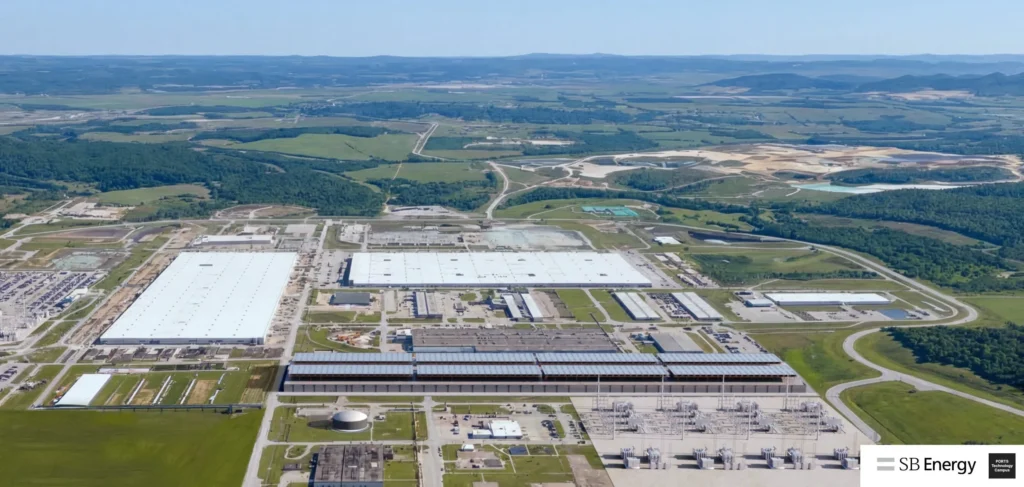
Southern Ohio is poised to become a global hub for artificial intelligence development with the announcement of a monumental data center project by OpenAI, the pioneering AI research and deployment company. The San Francisco-based organization has revealed plans to establish a hyperscale data center at the PORTS-Pike Technology Campus in Pike County, Ohio, approximately 100 miles east of Cincinnati. This ambitious undertaking, slated to be powered by an unprecedented 8 gigawatts of electrical power, has been hailed by U.S. Secretary of Energy Chris Wright as potentially the largest AI data center globally.
The strategic location in Pike County, a region with a complex industrial past, is undergoing a significant transformation. The PORTS-Pike Technology Campus, owned by the Japanese-based company SB Energy, is situated on the grounds of the former Portsmouth Gaseous Diffusion Plant. This site, a relic of the Cold War era used for uranium enrichment, is currently undergoing extensive environmental remediation to address radioactive and other contaminants. Despite its challenging history, the sheer scale and existing infrastructure of the former plant have rendered it an attractive prospect for large-scale industrial development, particularly for the immense power demands of cutting-edge AI operations.
This venture marks Ohio’s second foray into making data center history. The state is already home to Meta’s expanding Prometheus AI data center in New Albany, which, upon completion, will be the world’s first gigawatt-capable data center. The proliferation of hyperscale data centers, defined by Congress as facilities occupying at least 10,000 square feet and consuming over 100 megawatts of electricity – enough to power roughly 80,000 households – signifies a significant trend in the state’s technological landscape.
Nvidia, a leading force in AI hardware, is making a substantial investment of $1.5 billion into SB Energy, the owner of the PORTS-Pike Technology Campus. This investment underscores Nvidia’s commitment to the project, as the data center will exclusively house Nvidia’s advanced AI computing infrastructure.
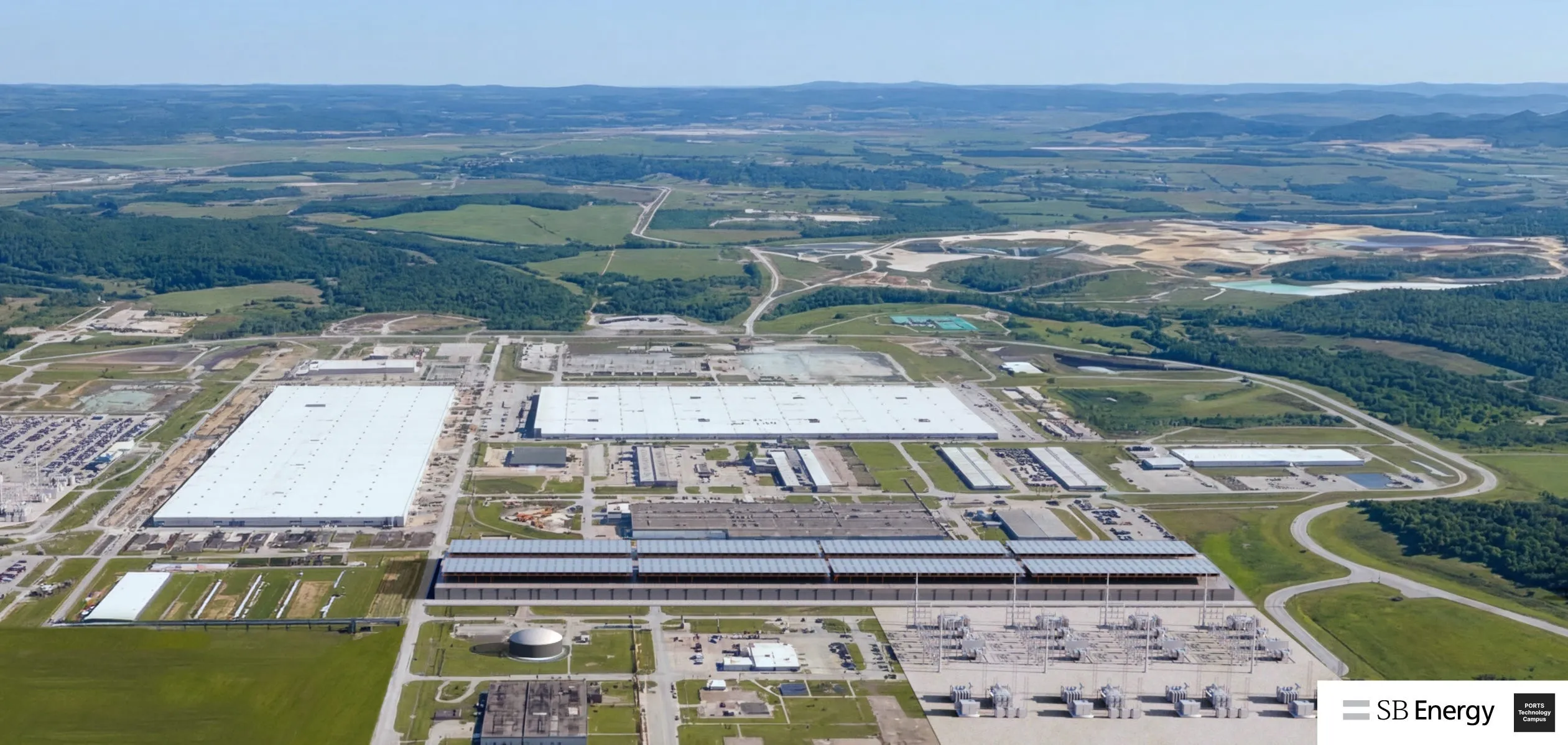
The scale of the planned OpenAI facility is staggering. The 8 gigawatts of computing capacity refers to the electrical power available to the servers and other equipment, not necessarily the continuous draw. However, when accounting for an additional 2 gigawatts required for essential operational systems like power conversion and cooling, the total power infrastructure for the site is projected to reach 10 gigawatts. To put this into perspective, 8 gigawatts is equivalent to the electricity needs of approximately 6.4 million homes, highlighting the immense energy requirements of next-generation AI.
The development is not an overnight endeavor. OpenAI acknowledges that realizing the full potential of the campus will be a multi-year process, necessitating extensive permitting, environmental reviews, financing arrangements, and a substantial workforce. The initial phase, aiming for an 800-megawatt capacity, is projected to cost between $30 billion and $40 billion, according to Ally Copple, a spokesperson for SB Energy. Nvidia’s $1.5 billion investment will provide crucial support for the land, power, and buildout for the first 4.25 gigawatts of the facility.
Construction is slated to commence this year, with the full buildout of the campus expected to continue through 2032. This extensive timeline promises a significant economic impact, with an estimated 35,000 construction jobs anticipated, prioritizing regional workers. Upon completion, the data center will employ approximately 2,500 individuals for its ongoing operation and maintenance.
A Legacy of Power and Transformation
The site chosen for this futuristic endeavor carries a profound historical weight. The Portsmouth Gaseous Diffusion Plant, operational from the 1950s through the early 2000s, was a critical component of the United States’ nuclear weapons program during the Cold War. Its extensive footprint and the availability of substantial electrical infrastructure, albeit requiring modernization, presented a unique opportunity for redevelopment.
"The PORTS-Pike Technology Campus represents a significant step forward in harnessing advanced technology to drive economic growth and innovation," stated a representative from SB Energy. "We are committed to developing a state-of-the-art facility that not only meets the immense demands of AI but also contributes positively to the local community and the broader technological ecosystem."

The remediation efforts at the former plant site are ongoing, focusing on removing hazardous materials and ensuring the land is safe for its new purpose. The sheer size of the site, combined with its strategic location and the potential for robust power supply, made it an ideal candidate for a project of this magnitude.
Understanding the Scale: Megawatts and Gigawatts
To grasp the immensity of the proposed data center, understanding the units of power is crucial. A megawatt (MW) is a unit of power equivalent to one million watts. It represents a substantial amount of electricity capable of powering hundreds of homes. For context, a standard incandescent light bulb might consume between 25 and 100 watts.
A gigawatt (GW) is significantly larger, equaling 1,000 megawatts. This unit is often used to describe the power consumption of an entire city. The 8 gigawatts of computing capacity planned for the OpenAI facility is a power level rarely seen in the context of a single data center, positioning it at the forefront of global AI infrastructure.
A Growing Trend and Local Concerns
The rise of hyperscale data centers in Ohio is part of a broader national and international trend, driven by the escalating demand for computing power to fuel artificial intelligence, cloud computing, and vast data storage needs. Ohio, with its strategic location, available land, and developing energy infrastructure, has become an attractive destination for these facilities. Data centers are the unseen engines powering much of the digital world, from websites and social media platforms to complex AI algorithms.
However, the rapid expansion of data centers has not been without its challenges and criticisms. Concerns have been raised by politicians and residents across Ohio regarding the significant energy consumption of these facilities and their potential strain on local resources, including power grids and water supplies. The substantial power draw of hyperscale data centers has led to public debate and, in some communities, organized opposition.

Groups in various Ohio towns, such as Trenton, have actively campaigned to ban or restrict the construction of new hyperscale data centers, citing potential environmental impacts and resource depletion. This local sentiment underscores the complex balance between technological advancement and community well-being.
Community Engagement and Investment
Recognizing the potential concerns of local residents, OpenAI and SB Energy have announced significant community investment initiatives. OpenAI has pledged $40 million to a resident-steered community grant fund, while SB Energy has also committed $40 million. These substantial contributions aim to foster goodwill and provide tangible benefits to the communities surrounding the data center site, including the nearby villages of Piketon and Waverly.
Furthermore, OpenAI plans to offer all Ohio college students access to ChatGPT, aiming to democratize access to its AI tools and foster educational opportunities within the state. These initiatives reflect a growing awareness among large technology companies of the importance of community engagement and corporate social responsibility in large-scale development projects.
A New Era for Southern Ohio
The development of OpenAI’s massive data center represents a pivotal moment for Southern Ohio. Once a region defined by its role in national defense industries, it is now poised to become a leader in the global AI revolution. The project promises not only technological advancement but also substantial economic development, job creation, and a transformation of the regional landscape.
While the challenges of environmental remediation and infrastructure development are significant, the potential rewards—economic prosperity, technological innovation, and a redefinition of the region’s industrial identity—are equally profound. The success of this ambitious undertaking will depend on continued collaboration between private industry, government entities, and the local communities, ensuring that this new era of technological advancement benefits all stakeholders. The world will be watching as Southern Ohio steps onto the global stage as a critical nexus for the future of artificial intelligence.