
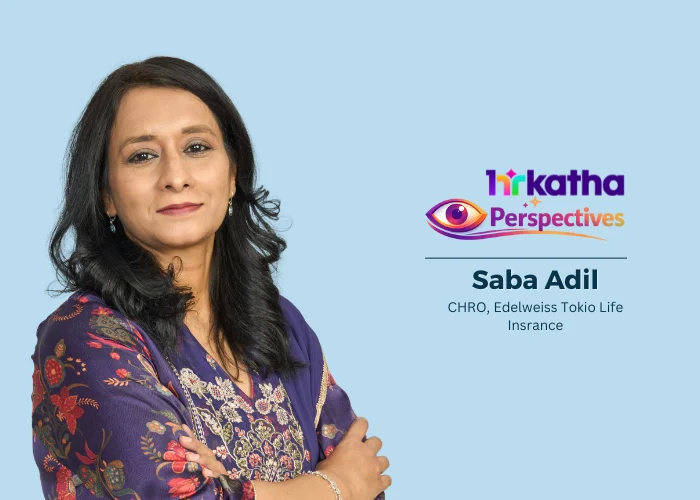
The competitive landscape within the insurance sector is undergoing a profound metamorphosis, shifting its foundational pillars from replicable products and scalable distribution networks to the irreplaceable capabilities of its human capital. As the industry increasingly leans into data-driven insights, technology-enabled operations, and a complex regulatory environment, the dexterity and foresight of an organization’s workforce become its most formidable strategic advantage. Edelweiss Life Insurance, a significant player in the Indian market, is at the forefront of this evolution, recalibrating its human resources strategy to not merely meet current demands but to proactively cultivate the skills essential for future resilience and growth.
Saba Adil, the Head of HR at Edelweiss Life Insurance, frames talent decisions through a rigorous lens: demonstrating tangible business impact. In her discourse, she articulates a deliberate philosophy of developing 70 percent of talent internally, viewing it not merely as a cost-saving measure but as a strategic imperative for continuity and cultural alignment. This internal growth mandate is complemented by an astute approach to leveraging people data, moving beyond isolated metrics to synthesize diverse signals into a comprehensive narrative. Adil also acknowledges a fascinating, yet unavoidable, "capability paradox": the more adept an organization becomes at nurturing talent, the more attractive that talent becomes to external competitors, creating a perpetual challenge in retention. This nuanced understanding underpins a comprehensive HR strategy designed to build, empower, and retain a future-ready workforce.
The Evolving Landscape of Insurance Talent: A Strategic Imperative
The Indian insurance sector, a cornerstone of financial stability and economic growth, has been experiencing robust expansion, projected to continue its upward trajectory driven by increasing awareness, digitalization, and a burgeoning middle class. Within this dynamic environment, the very definition of competitive advantage for insurers like Edelweiss Life is being rewritten. Historically, success was often predicated on product innovation, pricing, and the sheer breadth of distribution channels. However, these elements have become increasingly commoditized. What remains difficult to replicate is the unique blend of expertise, agility, and foresight embedded within an organization’s people – those who innovate products, optimize sales, and orchestrate transformations.
This paradigm shift necessitates a re-evaluation of the talent equation. Traditional insurance acumen – encompassing actuarial science, underwriting, claims management, and regulatory compliance – remains indispensable. Yet, it must now coexist with a rapidly expanding suite of competencies, including artificial intelligence (AI), cybersecurity, data privacy, and sophisticated customer experience design. A decade ago, these specialized areas were largely peripheral to the industry’s talent planning; today, they are central to its survival and prosperity. For HR leaders, the critical question has evolved from merely assessing headcount sufficiency to gauging the readiness of the organization’s collective capabilities for the challenges and opportunities that lie ahead.
Strategic Talent Development: Cultivating Capabilities from Within
Edelweiss Life Insurance categorizes its talent needs into three distinct yet interconnected buckets, each requiring a tailored approach to development and acquisition. The first comprises core insurance capabilities, which include actuarial science, underwriting, and other foundational functions critical to the industry’s operational integrity. These remain non-negotiable and form the bedrock of the company’s offerings. The second bucket encompasses shared services with an industry lens, such as finance, administration, human resources, and operations. Unlike generic corporate functions, these must operate within the stringent regulatory and risk environment specific to insurance, demanding specialized adaptation. The third, and perhaps most dynamic, bucket is emerging skills. While data and technology have been evolving for some time, the accelerating pace of advancements in AI, machine learning, and advanced analytics has significantly redefined these requirements. Concurrently, there is a burgeoning demand for roles focused on enhancing customer experience, fortifying cybersecurity defenses, ensuring robust data privacy in light of frameworks like India’s Digital Personal Data Protection (DPDP) Act, and navigating complex financial reporting standards such as IFRS.
Across these diverse capability sets, Edelweiss Life Insurance maintains a steadfast philosophy: "grow our own timber." This commitment translates into a strategic imperative to develop approximately 70 percent of its talent internally. This is achieved through meticulously structured programs, personalized coaching, dedicated mentoring initiatives, and exposure to cutting-edge methodologies such as design thinking. The benefits of this approach are multifaceted, fostering continuity as individuals transition into higher responsibilities across technical, functional, and leadership domains. It also cultivates a deeply embedded organizational culture and institutional knowledge that is difficult for external hires to replicate.
However, the "grow vs. buy" decision is not absolute. There are strategic junctures, particularly during periods of rapid transformation or when entirely novel expertise is required, where external talent acquisition becomes essential. This is often the case in highly specialized areas like advanced technology, complex data privacy frameworks, or specific IFRS implementation expertise, where the internal capability simply does not yet exist or cannot be built quickly enough. The overarching challenge for the HR function, therefore, becomes a continuous and granular talent-gap analysis: a precise understanding of the current state, a clear vision of future needs, identification of missing capabilities, and strategic investment decisions to bridge these gaps. This proactive approach ensures the organization remains agile and prepared for the next wave of industry evolution.
Data-Driven HR: Beyond Metrics to Meaningful Insights
In an era defined by ubiquitous data, HR departments now have access to an unprecedented volume of information, ranging from productivity metrics and talent retention rates to offer-to-joining ratios and a multitude of lead and lag indicators. Edelweiss Life Insurance emphasizes that the true value of this data lies not in its sheer volume or precise measurement, but in the ability to synthesize disparate variables to construct a coherent, actionable narrative. A single data point, however accurate, rarely provides sufficient insight for informed decision-making.
Consider employee engagement, a commonly tracked metric. While an improvement in engagement scores is generally positive, its significance is magnified when correlated with other critical business outcomes. If engagement rises without a corresponding decrease in attrition or an increase in productivity, the score might be presenting an incomplete or misleading picture. Edelweiss Life Insurance seeks these interdependencies, understanding that a holistic view is crucial. Similarly, in the realm of hiring, the focus extends beyond individual offer conversions to the strength of the entire recruitment funnel. By analyzing offer-to-joining ratios alongside turnaround times, the organization can pinpoint bottlenecks and strategize targeted interventions to optimize the hiring process.
Succession planning, a critical component of long-term organizational stability, also benefits immensely from this data-driven approach. Edelweiss tracks its leadership depth index, categorizing potential successors for critical roles as "ready now," "ready later," or "emergency successors." This is further enriched by 180-degree feedback mechanisms, allowing for a comparative assessment of middle leaders’ self-perception against how they are viewed by peers and direct reports on competence, value addition, and trustworthiness. This multi-dimensional data ensures a robust pipeline of future leaders. The ultimate objective for every HR initiative at Edelweiss is to demonstrably move a business metric. Whether it’s a leadership development program or a new engagement strategy, the impact is rigorously measured by establishing baseline metrics before intervention and reassessing afterward to quantify the shift. This commitment to measurable outcomes transforms people analytics from a descriptive exercise into a powerful, prescriptive tool.
Fostering a Culture of Continuous Learning and Innovation
A notable shift observed across industries, and particularly within Edelweiss Life Insurance, is the burgeoning curiosity among employees regarding the evolving world of work. The rapid technological advancements of the past decade, coupled with the increasing complexity of regulatory and market environments, have instilled a pervasive understanding among the workforce that continuous learning is no longer optional but imperative for career longevity and organizational relevance. This is particularly evident in the enthusiastic embrace of AI, where employees actively seek to understand its implications for their roles, often pursuing independent courses to bolster their data literacy or technical capabilities—a significant departure from a decade ago when HR often had to actively drive participation in learning programs.
Edelweiss Life Insurance capitalizes on this intrinsic motivation through various initiatives. "Lunch and Learn" and "brown-bag sessions" provide dedicated time during the workday for employees to explore subjects like AI, data analytics, or other pertinent topics. The voluntary nature of many of these sessions cultivates a greater sense of ownership and engagement compared to mandated training. However, the greater challenge lies in sustaining this momentum: transitioning individuals from introductory Level 1 workshops to advanced Level 2 and Level 3 proficiencies while they concurrently manage full-time responsibilities.
The solution, according to Edelweiss, is to integrate learning seamlessly into the fabric of daily work, moving it beyond the confines of traditional workshops. If an employee attends an AI workshop and expresses interest in experimenting with new tools or applications, the organization actively creates space for such experimentation. These initial experiments can evolve into formal projects, allowing for the celebration of quick wins and the sharing of outcomes across the organization. Even in instances where experiments do not yield immediate success, they are viewed as valuable learning opportunities. This approach transforms learning from a peripheral activity into an intrinsic component of work, continuously seeding relevant programs, investing in capability development, and providing employees with tangible avenues to apply and reinforce their newly acquired knowledge.
Leadership as a Cornerstone: The Manager-as-Coach Model
In a business characterized by extensive, geographically dispersed frontline teams, the role of the branch manager or team leader is profoundly impactful. For many employees, this manager effectively embodies the organization, with daily interactions shaping their perception and experience of the workplace. Recognizing this critical influence, Edelweiss Life Insurance places a significant emphasis on "people leadership" from the very initial stages of hiring. Assessment tools are designed to look beyond mere aptitude and functional capability, delving into behavioral dimensions and leadership potential. As individuals progress into more senior roles, the assessment methodology becomes increasingly sophisticated, but the fundamental principle remains constant: technical prowess, behavioral alignment, and leadership capabilities must be evaluated holistically.
The development of these leadership skills is viewed as a continuous journey throughout an employee’s tenure. Managers are provided with practical, bite-sized interventions designed to enhance their leadership effectiveness. These might include straightforward but impactful techniques such as recognizing employee contributions, understanding individual motivators, or fostering moments of genuine connection within the team. While seemingly small, these incremental improvements collectively contribute to a more personalized and supportive employee experience. The efficacy of mentor-mentee initiatives has also yielded tangible results, with cohorts participating in these programs demonstrating lower attrition rates and improved performance outcomes. This reinforces the notion that the "manager-as-coach" approach is not merely a philosophical ideal but a concrete retention mechanism with measurable business impact.
Ultimately, however, the effectiveness of any development program is predicated on the quality of initial selection. Getting the right individuals into management roles from the outset is as crucial as, if not more important than, developing them once they are in position. With the right foundational talent, organizations can effectively cultivate and align managerial behaviors with their overarching culture. Conversely, if the initial selection is flawed, even the most robust development programs can only compensate to a limited extent.
Driving Business Outcomes Through Diversity and Inclusion
Edelweiss Life Insurance’s commitment to diversity and inclusion is strategically aligned with its business objectives, particularly evident in its pioneering efforts in frontline sales. The rationale for this focus stems from the understanding that salespeople directly engage with customers, and therefore, the sales workforce should mirror the diversity of the customer population it serves. This approach has yielded significant results: women now constitute 39 percent of Edelweiss’s frontline sales workforce, a substantial representation in a function traditionally dominated by men. This achievement is the product of deliberate strong people practices and mature leadership that actively champions inclusion. The quantifiable outcomes underscore the business case for diversity, with these cohorts demonstrating demonstrably higher productivity and lower attrition rates compared to the broader workforce.
Beyond frontline sales, women’s representation across the entire organization stands at approximately 34.5 percent. The next strategic frontier for Edelweiss is to further increase representation in senior leadership roles, an area where active initiatives are underway. The company’s approach to diversity is multi-pronged, combining meritocratic, performance-oriented hiring with the cultivation of an inclusive culture where a multiplicity of perspectives, backgrounds, and experiences are genuinely welcomed and valued. Managerial maturity plays a pivotal role in this, as leaders are empowered and expected to create environments where every individual feels psychologically safe to contribute their best. Practical support mechanisms, such as flexible working arrangements (especially crucial during maternity), dedicated employee resource groups, and women’s circles, are also provided. The ultimate objective extends beyond merely attracting diverse talent; it is about creating the necessary conditions for these individuals to thrive, grow, and establish long-term careers within the organization.
The HR Impact on the C-Suite: Metrics and the Capability Paradox
When articulating HR’s contribution to the CEO and Board, Saba Adil prioritizes metrics that unequivocally link culture and people outcomes to tangible business performance. Foremost among these is business delivery, encompassing top-line and bottom-line performance, cost ratios, and critical customer metrics such as Net Promoter Score (NPS). These indicators serve as the ultimate arbiters of whether the internal culture and talent strategies are effectively serving the external customer base.
A particularly closely tracked connection is the relationship between people NPS (employee satisfaction and advocacy) and customer NPS. The underlying hypothesis, which Edelweiss rigorously tests, is that an improvement in customer NPS is often preceded by an uplift in people NPS. This underscores the conviction that employee experience, organizational culture, and business outcomes are not disparate conversations but successive stages of a singular, interconnected journey.
The third crucial measure is capability readiness: an assessment of whether the organization is proactively building the skills and competencies it will require two or three years into the future, rather than simply addressing immediate staffing needs. This holistic picture is informed by several contributing factors, including leadership depth, the penetration and effectiveness of learning initiatives, and the robustness of the internal talent pipeline.
However, it is in the realm of capability readiness that the hardest trade-off, dubbed the "capability paradox," becomes unavoidable. Organizations that invest significantly in their people, developing their skills and making them future-ready, inevitably make them highly attractive to the external market. In the fiercely competitive financial services sector, demand for high-capability talent is intense. Consequently, the very individuals who have been meticulously developed become most valuable internally at precisely the moment they become most coveted externally.
While this paradox is, in a sense, a "good problem to have" – signifying the successful cultivation of real talent – it presents a profound challenge for retention. Addressing this requires a multi-pronged approach: clear and compelling career pathways, continuous opportunities for capability development, and a deeply ingrained culture that fosters a sense of belonging. The aim is to create sufficient opportunities for growth and advancement within the organization, making internal progression more appealing than external overtures. There is no single retention lever; rather, a symphony of factors including mentorship, recognition, challenging assignments, and a supportive work environment must coalesce. The capability paradox serves as a constant reminder that while developing talent is paramount, the ensuing challenge of retaining it requires equal, if not greater, strategic focus and ongoing effort. Edelweiss Life Insurance’s holistic HR strategy, therefore, stands as a testament to the strategic imperative of human capital management in the rapidly evolving financial services landscape.








