Hybrid work represents a pivotal evolution in organizational structure, seamlessly blending the autonomy and flexibility of remote work with the intrinsic connection and collaborative spirit fostered by in-person interactions. This strategic approach acknowledges that diverse tasks and individual preferences thrive under varying conditions, allowing businesses to optimize performance and cultivate a robust company culture while empowering employees with greater control over their work-life balance. Its core premise involves employees judiciously dividing their time between designated on-site locations and remote working environments, recognizing that some endeavors benefit from face-to-face synergy, while others are best executed in a focused, distraction-free remote setting. By consciously integrating both modalities, organizations are better positioned to cater to employee preferences, enhance engagement, and sustain productivity in a dynamic global economy.
The Genesis of Hybrid Work: A Post-Pandemic Paradigm Shift
The trajectory towards hybrid work was dramatically accelerated by the unforeseen global events of 2020. Prior to this, the traditional office model, characterized by daily commutes and centralized workspaces, was the entrenched norm for many industries. While remote work existed, it was often niche or viewed with skepticism regarding productivity and team cohesion. The abrupt shift to mandatory remote operations during the pandemic served as an unprecedented, large-scale experiment. Companies quickly adapted to digital tools and virtual collaboration, proving that many roles could indeed be performed effectively outside the traditional office.
However, the prolonged absence from physical workspaces also brought challenges: digital fatigue, a sense of isolation for some, and the erosion of spontaneous, informal interactions crucial for innovation and culture building. As the world cautiously reopened, the overwhelming sentiment from employees was a desire to retain the newfound flexibility of remote work while simultaneously yearning for the social connection and collaborative energy of the office. This confluence of factors gave rise to hybrid work not merely as a compromise, but as a deliberate strategic choice aimed at harnessing the strengths of both models. The "Great Resignation" or "Great Reassessment" further underscored this shift, with countless employees prioritizing flexibility and well-being, making hybrid offerings a critical component of talent attraction and retention strategies for forward-thinking organizations.
Understanding the Hybrid Spectrum: Models and Approaches
The term "hybrid work" itself encompasses a spectrum of implementation models, each tailored to different organizational needs, industry demands, and cultural philosophies. Understanding these variations is crucial for designing a system that genuinely supports both business objectives and employee welfare.
-
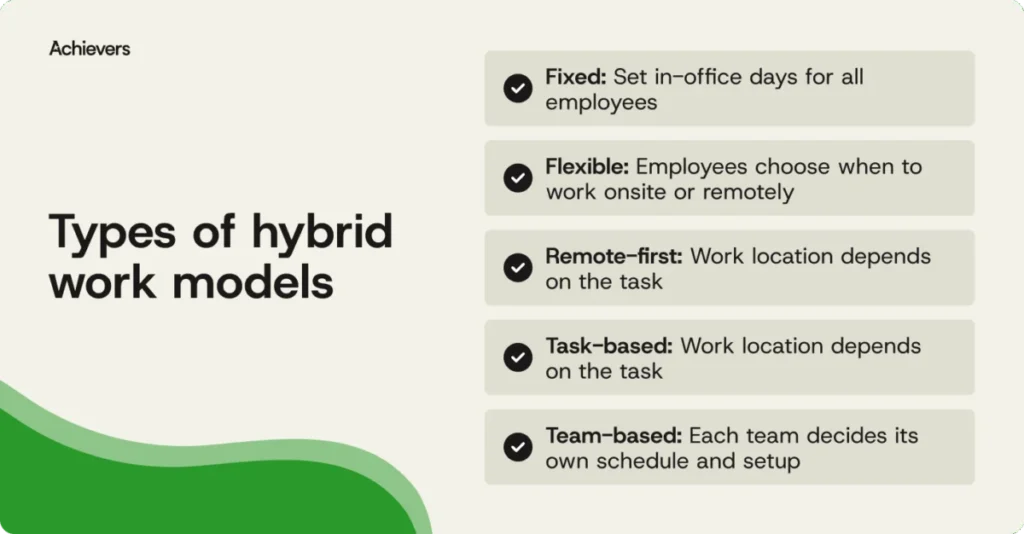
Fixed Hybrid Model: This structured approach dictates specific days or weeks for in-office and remote work for all employees or teams. For instance, a company might mandate Tuesdays and Thursdays in the office, with the remaining days remote. Its primary advantage lies in predictability, simplifying scheduling, resource allocation, and ensuring specific days for team-wide collaboration. However, its rigidity can limit individual flexibility, making it less appealing for those requiring more autonomy. This model often suits organizations with predictable workflows and a strong need for coordinated in-person time.
-
Flexible Hybrid Model: Offering the most autonomy, this model empowers employees to choose where and when they work, within broad guidelines set by the organization. Employees might decide to come into the office only for critical meetings, project sprints, or social events. This model is a significant driver of work-life balance and employee satisfaction, often leading to increased morale and reduced stress. Its challenge lies in coordinating team presence and ensuring equitable access to leadership and opportunities, potentially requiring robust communication tools and clear expectations to prevent disorganization.
-
Remote-First Model: In this setup, remote work is the default and primary mode of operation. The physical office transforms into an optional hub, used primarily for occasional team gatherings, strategic workshops, client meetings, or individual focused work away from home distractions. This model is particularly effective for geographically dispersed teams or companies prioritizing a global talent pool. Success hinges on a strong digital infrastructure, a culture that explicitly values asynchronous communication, and proactive efforts to maintain virtual connection and company culture, ensuring that remote employees feel just as valued and integrated as those who occasionally use the office.
-
Task-Based Hybrid Model: This pragmatic model centers on aligning the work environment with the specific nature of the task at hand. Employees make conscious decisions about their work location based on what will optimize their output. For instance, deep, focused work requiring concentration (e.g., coding, writing, data analysis) might be best done remotely, while collaborative activities like brainstorming, client presentations, or team building are reserved for in-office days. This model prioritizes efficiency and effectiveness, promoting a culture of intentional work. It demands a high degree of trust in employees and clear guidelines on when in-office presence is beneficial.
-
Team-Based Hybrid Model: Here, the decision-making power for hybrid schedules rests with individual team leaders or department heads. Recognizing that different teams have unique operational needs, workflows, and collaborative requirements, managers are empowered to define the optimal mix of remote and in-office time for their specific group. This model offers localized flexibility and adaptability, allowing teams to self-organize in the most effective way. It requires strong, capable leadership at the team level and clear communication to avoid inconsistencies or perceptions of unfairness between different departments.
Both hybrid and fully remote models heavily rely on digital communication and collaboration tools to maintain connectivity. However, hybrid work uniquely preserves a dedicated space for face-to-face interaction, critical for fostering deeper relationships, spontaneous innovation, and a collective sense of purpose that can be challenging to replicate entirely virtually. It’s not an either/or proposition but a strategic integration designed to maximize both individual flexibility and collective team efficacy.
Core Pillars of Hybrid Engagement: Connection, Recognition, and Belonging
For organizations, particularly mid-market firms undergoing rapid growth, effectively managing hybrid engagement is paramount. Research from institutions like the Achievers Workforce Institute (AWI) consistently identifies employee connection, recognition, and belonging as the most critical benchmarks. These indicators serve as vital barometers for HR leaders, revealing whether employees feel meaningfully integrated into the organization regardless of their physical location.
Mid-sized companies face a unique challenge: their growth trajectory can often outpace their cultural infrastructure, leading to potential communication breakdowns, inconsistent employee experiences, and a diluted sense of belonging. The AWI’s finding that only 26% of employees globally are engaged underscores a significant global opportunity for organizations to proactively strengthen these foundational elements.
For hybrid teams, connection emerges as a particularly crucial metric. AWI research highlights that employees in highly connected organizations consistently demonstrate higher levels of productivity, greater innovation, increased retention rates, and enhanced overall job satisfaction. When employees feel connected, they are more likely to invest themselves fully in their work, collaborate effectively, and remain committed to their employer.

Recognition serves as another indispensable benchmark. The psychological impact of feeling appreciated cannot be overstated. Studies consistently show that employees who receive regular, meaningful recognition are up to 12 times more likely to find their work meaningful and an astonishing 17 times more likely to envision a long-term career path with their current employer. Meaningful work and sustained career commitment are robust indicators of a healthy, vibrant, and sustainable hybrid culture. Recognition, therefore, is not merely a "nice-to-have" but a strategic imperative that reinforces positive behaviors, boosts morale, and solidifies loyalty.
Finally, belonging—the feeling of being an accepted and valued member of a group—is critical. In a hybrid environment where physical presence is intermittent, intentional efforts are needed to ensure no employee feels marginalized or isolated. Organizations with strong hybrid engagement typically see employees actively participating in both formal and informal team activities, demonstrating a clear understanding of company goals and values, feeling valued for their contributions, and being enthusiastic advocates for their workplace. These outcomes are not measured by office attendance but by the qualitative and quantitative impact on connection, belonging, recognition, and ultimately, performance. Frequent, meaningful recognition acts as a powerful catalyst, reinforcing all these elements and fostering a culture where every employee feels seen, valued, and motivated, irrespective of their workspace.
The Business Case for Hybrid: Beyond Employee Preference
The enduring popularity of hybrid work extends far beyond merely accommodating employee preferences; it presents a compelling business case rooted in enhanced performance, strategic advantage, and organizational resilience.
- Expanded Talent Pool: Hybrid models enable organizations to recruit talent from a wider geographical area, unconstrained by commute times or relocation requirements. This access to a diverse, global talent pool can significantly enhance innovation and bring new perspectives to the organization.
- Increased Employee Engagement and Retention: Offering flexibility is a powerful differentiator in the competitive labor market. Employees with greater autonomy over their work environment often report higher job satisfaction, reduced stress, and improved work-life balance, leading to lower turnover rates and a more stable workforce.
- Cost Efficiencies: While not the primary driver, hybrid work can lead to substantial cost savings. Companies can reduce their real estate footprint, lower utility bills, and decrease other operational expenses associated with maintaining a large, fully utilized office space.
- Enhanced Productivity and Focus: For many, working remotely allows for periods of deep, uninterrupted focus, leading to higher quality output. Conversely, the office provides an environment for collaborative tasks that thrive on face-to-face interaction. The ability to match the work environment to the task can optimize overall productivity.
- Improved Well-being: Reduced commute times, greater flexibility for personal appointments, and the comfort of working from a familiar environment can significantly boost employee mental and physical well-being, translating into fewer sick days and higher energy levels.
- Business Continuity and Resilience: Organizations with established hybrid models are inherently more resilient to disruptions. Whether facing natural disasters, public health crises, or other unforeseen events, they possess the infrastructure and cultural agility to pivot seamlessly to fully remote operations, ensuring business continuity.
Navigating the Complexities: Common Challenges in Hybrid Environments
While the benefits of hybrid work are substantial, its implementation is not without challenges. If left unaddressed, these can undermine the very advantages hybrid models promise, transforming flexibility into frustration. Proactive planning and the right tools are essential to mitigate these potential pitfalls.
- Communication Gaps and Information Silos: With employees distributed across various locations, ensuring consistent and equitable information flow becomes critical. Informal hallway conversations are lost, and asynchronous communication can lead to delays or misunderstandings if not managed effectively. This can create silos between in-office and remote workers, hindering collaboration and shared understanding.
- Maintaining Culture and Connection: Building and sustaining a cohesive company culture when employees are not consistently together requires intentional effort. The risk of remote employees feeling isolated, disengaged, or less connected to the organizational mission and their colleagues is significant. Spontaneous team bonding and mentorship can also be harder to facilitate.
- Ensuring Equity and Preventing Proximity Bias: A common challenge is the potential for unconscious bias towards those who are physically present in the office (proximity bias). This can affect career opportunities, access to leadership, and perceptions of commitment. Ensuring equitable treatment, visibility, and opportunities for both in-office and remote employees is a complex but vital task.
- Technology and Infrastructure Disparities: Reliable technology, secure networks, and adequate home office setups are prerequisites for effective hybrid work. Disparities in internet access, equipment, or technical support can create an uneven playing field and hinder productivity for some employees.
- Leadership Development for Hybrid Teams: Managing a hybrid team requires a distinct skill set. Leaders must transition from managing by observation to managing by outcomes, develop strong virtual communication and coaching skills, and be adept at fostering inclusivity across different work settings. Micromanagement, a poor leadership trait in any environment, is particularly detrimental in hybrid settings.
- Work-Life Boundary Blurring: While flexibility is a benefit, it can also lead to the blurring of lines between work and personal life. Employees may feel pressure to be "always on," leading to burnout if clear boundaries and expectations are not established and respected.
Crafting a Thriving Hybrid Culture: Strategic Interventions
A successful hybrid workplace is not an accidental outcome but the result of deliberate strategic planning, empathetic leadership, and the right technological infrastructure. Building a culture where employees feel valued, supported, and empowered to excel, regardless of their location, requires focused effort.
-
Make Recognition Everyone’s Business: In a hybrid environment, the spontaneous "thank you" or casual acknowledgment can easily be missed. Organizations must intentionally embed recognition into the daily fabric of work. Implementing a robust recognition platform that is integrated into existing communication tools, accessible to all, and offers desirable rewards encourages peer-to-peer appreciation and formal recognition. This ensures that achievements and efforts are consistently celebrated, reinforcing positive behaviors and fostering a culture of gratitude.
-
Give Employees a Real Voice: Effective hybrid models thrive on continuous feedback. Creating accessible, simple channels for employees to voice their insights, concerns, and suggestions is crucial. This can include regular pulse surveys, anonymous feedback tools, virtual suggestion boxes, and dedicated forums. Crucially, the feedback mechanism must be coupled with visible action, demonstrating that employee input is not only heard but genuinely valued and acted upon, building trust and engagement.
-
Build Flexible Policies That Work for People: The essence of hybrid work is flexibility, and organizational policies must reflect this. Beyond simply allowing remote work, companies should explore options such as compressed workweeks, flexible hours, core collaboration windows, and outcome-based performance metrics. Policies should be designed to accommodate diverse life circumstances and work styles, moving away from a one-size-fits-all approach that often alienates segments of the workforce.
-
Keep Training Fresh, Flexible, and Accessible: The shift to hybrid work necessitates new skills for both employees and managers. This includes proficiency with digital collaboration tools, effective asynchronous communication, self-management techniques, and empathetic leadership for distributed teams. Learning and development programs should be bite-sized, self-paced, easily accessible online, and continuously updated. Coaching for managers on how to lead effectively in a hybrid context is also paramount, moving them from oversight to empowerment.
-
Make Connection Part of the Routine: Intentional efforts are required to counteract the potential for isolation in hybrid settings. Organizations should foster both formal and informal opportunities for connection, mixing virtual social events, in-person team-building days, mentorship programs, and cross-functional collaboration projects. The key is to create engaging, voluntary activities that genuinely resonate with employees, moving beyond forced participation to cultivate authentic relationships and a strong sense of community.
-
Help Leaders Lead for Hybrid: The success of any hybrid model ultimately rests on the capabilities of its leaders. Managers must be equipped with the tools and training to lead effectively in a distributed environment. This involves a shift in mindset from presenteeism to performance outcomes, mastering virtual communication, developing strong coaching skills, and actively fostering an inclusive environment where all team members, regardless of location, feel valued and heard. Investing in leadership development for hybrid contexts is an investment in the entire organization’s future.
The Future of Work: Sustaining Hybrid Success
The journey towards a truly thriving hybrid workplace is an ongoing process of adaptation, learning, and refinement. It demands more than just flexible schedules; it requires a deep commitment to fostering genuine connection, consistent recognition, and active listening. Employees need to feel seen, heard, and appreciated, regardless of whether they log in from their home office, a co-working space, or the company headquarters.
Organizations that strategically embrace the nuances of hybrid work, supported by the right technological solutions, are better positioned to attract and retain top talent, enhance productivity, and cultivate a resilient, adaptable culture. By integrating comprehensive recognition platforms, empowering employee voice, crafting people-centric policies, investing in relevant training, prioritizing intentional connection, and developing modern hybrid leaders, businesses can build environments where culture doesn’t just survive in a distributed world—it flourishes, becoming a source of competitive advantage and sustained success. The future of work is undeniably hybrid, and its success hinges on building human-centric strategies that bridge physical distance with digital connection.