
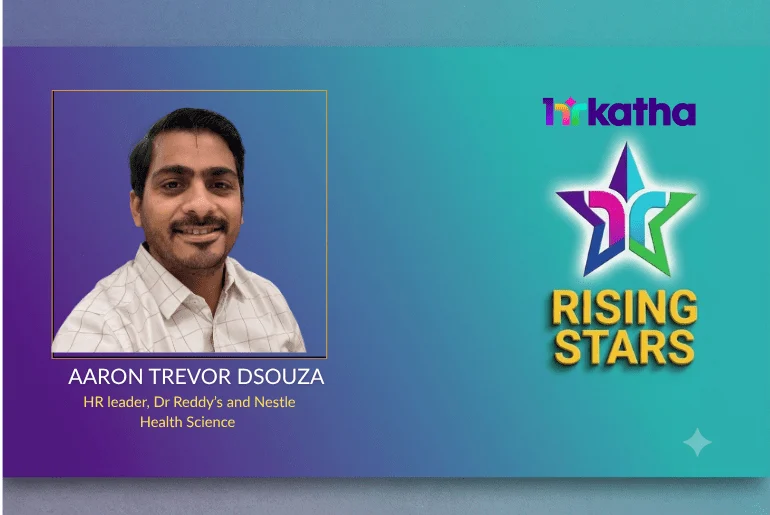
The HR landscape, increasingly recognized as a critical strategic pillar in modern enterprises, saw one of its most innovative leaders, Aaron Trevor Dsouza, bestowed with the prestigious Second Runner-Up title at the HRKatha Rising Star Leadership Award 2025. This accolade acknowledges Dsouza’s remarkable career trajectory, marked by a profound curiosity about human behavior in economic contexts and an unwavering commitment to redefining the role of Human Resources as a true business partner. His journey, characterized by a unique blend of strategic acumen and empathetic leadership, culminated in this significant recognition, highlighting his contributions across diverse HR domains, particularly in the complex realm of organizational integration and cultural architecture.
The Genesis of an HR Leader: Curiosity as a Compass
Long before assuming formal HR titles, Dsouza exhibited an innate curiosity that would ultimately shape his professional path. His early observations were not confined to the academic or corporate sphere but extended to the intricacies of everyday commerce. He meticulously noted the operational margins of a local chai tapri owner, the strategic planning inherent in a taxi driver’s daily routine, and the divergent fortunes of roadside dhabas – one flourishing, another faltering. What captivated him was not merely the financial mechanics but the underlying human judgment: how individuals allocated limited resources, made pivotal decisions, and engineered outcomes. This deep-seated interest in the interplay between people and business, rather than a rigidly predefined career blueprint, served as the magnetic force that drew him into the dynamic field of Human Resources. This foundational curiosity underscores a critical trait of effective HR leaders: the ability to understand the ‘why’ behind business operations and the ‘how’ of human contribution.
A Distinguished Career Trajectory: From Operations to Strategic HR
Dsouza’s professional journey is a testament to continuous growth and diverse experience. His initial foray into the corporate world began with back-end operations at Genpact, providing him with a robust understanding of process efficiency and large-scale organizational mechanics. This operational foundation proved invaluable, offering a pragmatic perspective often missing in purely theoretical HR approaches. He then pursued formal HR education at the esteemed XISS Ranchi, an institution renowned for nurturing socially conscious and business-savvy HR professionals, where he honed his theoretical knowledge and strategic thinking. A successful campus placement at Jubilant Life Sciences marked his official entry into the HR domain, laying the groundwork for his future contributions.
The defining chapter of his career commenced in 2011 with Dr. Reddy’s Laboratories, a global pharmaceutical powerhouse. Over more than a decade, Dsouza navigated a multifaceted HR career within the organization, gaining comprehensive exposure to various critical functions. His roles spanned Plant HR, where he grappled with ground-level industrial relations and employee welfare; Industrial Relations, a domain demanding acute negotiation skills and a deep understanding of labor laws; Learning and Development, where he focused on enhancing employee capabilities; Talent Management, involving strategic identification and nurturing of future leaders; and Organization Design, where he helped shape efficient and effective organizational structures. This extensive experience culminated in an international assignment in North America, broadening his global perspective and equipping him with cross-cultural leadership competencies, a critical asset in today’s interconnected business world.
The HRKatha Rising Star Leadership Award: A Beacon of Recognition
The HRKatha Rising Star Leadership Award, presented annually, stands as a significant benchmark within the Indian HR community. Organized by HRKatha, a leading platform dedicated to chronicling the evolving narrative of human resources, the awards celebrate emerging leaders who are not just managing HR functions but are actively shaping the future of the profession through their innovative thinking, impactful strategies, and demonstrable leadership. The selection process is rigorous, involving nominations, detailed evaluations of career achievements, leadership philosophy, and contributions to organizational success. For Dsouza to be named Second Runner-Up in the 2025 edition speaks volumes about his influence and the high regard in which his work is held by industry peers and experts. It signifies his position as a thought leader whose insights and practices are setting new standards for HR excellence.
Pioneering a "Third Identity" in the Nutrition Joint Venture
One of the most complex and defining assignments in Dsouza’s career has been his role as HR leader for the Nutrition Joint Venture (JV) between Dr. Reddy’s Laboratories and Nestlé Health Science. This endeavor presented a unique set of challenges, far exceeding those of managing an established HR function. The mandate was not merely to integrate existing systems but to architect an entirely new people framework for an organization drawing employees, practices, and expectations from two distinct corporate cultures, alongside external hires.
Dsouza recognized that a simplistic "pick-and-mix" approach—selecting the perceived "best" practices from each parent company—would be insufficient. The new entity required its own distinct "third identity," a unique employee experience, bespoke leadership practices, and harmonized ways of working, while judiciously retaining valuable elements from both foundational organizations. This intricate task was further complicated by the subsequent integration of an additional Trade Team, adding another layer of complexity to the cultural and operational amalgamation.
This experience offered Dsouza profound insights, less about the technical mechanics of HR design and more about the critical sequencing of change. He observed that while systems and processes can be implemented relatively quickly, genuine acceptance and cultural alignment require a more deliberate, phased approach. Consistent leadership messaging, transparent communication strategies, and robust change management initiatives had to run concurrently with structural decisions. This holistic approach ensured that employees not only understood what was changing but, more importantly, why these changes were necessary, fostering buy-in and mitigating resistance. The fundamental lesson gleaned was that a new organization can acquire systems almost overnight, but forging a shared identity is a protracted, deeply human process. His approach aligns with industry research suggesting that successful JV integrations are often driven by robust cultural alignment, which can contribute to a 20-30% higher success rate compared to those focused solely on operational or financial integration.
Leadership Grounded in Trust, Curiosity, and Empathy
Dsouza’s leadership philosophy is rooted in a compelling premise: while designation confers authority, it does not automatically command influence. He firmly believes that HR truly becomes an invaluable strategic partner to the business when leaders proactively seek its counsel as an advisor, rather than merely viewing it as a bureaucratic representative of processes. Achieving this level of influence, he contends, necessitates a deep, granular understanding of how the business truly operates. This understanding, in his view, is cultivated not solely through formal learning but equally through an active practice of asking insightful questions, engaging in collaborative discussions with seasoned colleagues, and keenly observing critical business decisions.
He emphasizes that this habit of curiosity must persist and even intensify as one ascends the leadership ladder. In environments where leaders are often presumed to possess all the answers, curiosity becomes an even more potent tool for continuous learning and fostering innovation. When this intellectual curiosity is combined with genuine empathy and consistent, fair judgment, credibility naturally follows. It is a quality earned through actions and demonstrated understanding, never merely claimed by virtue of one’s role or position. This perspective resonates with modern leadership theories that emphasize emotional intelligence and continuous learning as cornerstones of effective influence.
The Enduring Impact of Mentorship: Cultivating Future Leaders
When asked about his most professionally rewarding experiences, Dsouza often bypasses the high-profile joint venture, instead recalling his first large team: a group of six individuals in learning and development, many of whom were fresh graduates or possessed limited professional experience. This choice highlights his profound commitment to people development.
Dsouza dedicated significant effort to coaching and mentoring this team, striving to cultivate a relationship where his responsibility extended beyond mere task allocation. His objective was to genuinely empower them, equipping them with the skills and confidence to assume larger, more complex roles. The enduring impact of this investment is evident in the career trajectories of those team members, many of whom have since progressed into significant leadership positions, either within Dr. Reddy’s Laboratories or in other prominent organizations.
This formative experience profoundly shaped his perspective on employee expectations from a manager. He argues that employees who perceive their manager as genuinely invested in their professional growth are far more inclined to stretch their capabilities, embrace challenging assignments, and remain receptive to both constructive appreciation and difficult feedback. For Dsouza, the ultimate and most authentic evidence of leadership is not solely what a team accomplishes under a manager’s direct supervision, but rather the caliber of individuals its members evolve into long after that direct reporting relationship concludes. This philosophy aligns with the growing emphasis on servant leadership and transformational leadership in contemporary organizational development.
Navigating Ethical Dilemmas: Performance Versus Integrity
Dsouza’s career has also included instances where difficult decisions tested his leadership principles. One such challenging scenario involved a high-performing team member and a serious data-integrity issue. The individual’s strong performance, while a significant factor, paradoxically made the decision more arduous. However, Dsouza concluded that overlooking a breach of integrity, solely based on performance metrics, would establish a dangerous precedent, potentially leading to far greater and more pervasive organizational problems.
This episode solidified a core principle that has guided his leadership ever since: exceptional performance cannot indefinitely compensate for behavior that fundamentally undermines trust and ethical standards. While difficult decisions necessitate honesty, fairness, and empathy in their execution, empathy should never translate into an avoidance of the decision itself when core values are at stake. This unwavering commitment to ethical leadership, even in the face of uncomfortable choices, is a hallmark of truly impactful leaders and aligns with corporate governance principles that prioritize integrity above all else.
Redefining Performance Management: A Leadership Imperative
Among Dsouza’s more unconventional yet strategically sound views on HR is his assertion that performance management, fundamentally, does not belong to HR; it belongs to leaders. He posits that while Human Resources plays a crucial role in designing the overarching architecture, establishing streamlined processes, providing essential tools, and facilitating better conversational frameworks for managers, the ultimate responsibility for setting clear expectations, delivering timely feedback, developing employee capabilities, and addressing underperformance cannot be outsourced to the people function.
He argues that when performance management is perceived predominantly as an "HR process," managers often default to viewing goal-setting and development conversations as mere administrative obligations, detached from their core leadership responsibilities. Conversely, when it is firmly understood as a core leadership imperative, the quality and impact of these conversations become integral to how managers themselves are assessed and expected to lead. This principle extends equally to talent development: HR can meticulously craft the conditions and provide the resources for growth, but it is the managers who must actively engage in and facilitate that growth alongside their team members. This radical perspective challenges traditional HR paradigms, empowering managers and embedding accountability deeper within the operational leadership structure, fostering a culture of continuous improvement and ownership.
Strategic HR Measurement: Beyond Conventional Metrics
Dsouza applies a similarly business-centric lens to evaluating HR’s own performance. While metrics such as engagement scores, quality of hiring, and leadership-pipeline strength are undeniably important and provide valuable insights, he expresses a healthy wariness of treating these measures as ends in themselves. Their true value, he asserts, is ultimately determined by their efficacy in helping the organization achieve superior overall performance.
This pragmatic approach is particularly pertinent in the context of a new organization, such as the Nutrition Joint Venture, where HR has a unique opportunity to design systems from a clean slate, unencumbered by legacy practices. In such a scenario, the critical question is not merely what an established HR function typically measures, but rather what specific, actionable information will genuinely empower leaders to make more informed and effective decisions as the business navigates its growth trajectory. This perspective champions a data-driven HR function that is deeply integrated with business objectives, moving beyond transactional reporting to strategic foresight.
Quick Takes Reimagined: The Leader Behind the Award
Dsouza’s "Quick Takes" from the original profile offer deeper insights into his operational style and personal philosophy. His preference for "Tea" over coffee subtly hints at a measured, perhaps reflective, approach. The choice of "Storytelling, backed by data" over mere spreadsheets underscores his belief in connecting analytical insights with compelling narratives to drive understanding and action—a vital skill for influencing stakeholders. His self-description in three words—"Approachable. Honest. Solution-oriented"—encapsulates the essence of his leadership: fostering open communication, maintaining integrity, and driving tangible results. His stance on "Hybrid, with two to three remote days a month" acknowledges the importance of flexibility while firmly advocating for regular human interaction to nurture organizational culture, a crucial balance in the post-pandemic work era. These personal insights collectively paint a picture of a leader who is thoughtful, strategic, and deeply human-centric.
Why Aaron Trevor Dsouza is a True Rising Star
Aaron Trevor Dsouza’s recognition as a Rising Star is not merely for individual achievements but for his distinctive approach to HR leadership. His career consistently demonstrates a comfort and aptitude for situations where pre-existing structures are absent, demanding innovation and proactive construction. This was most vividly showcased in the Nutrition Joint Venture, where the challenge transcended establishing mere HR processes. It involved the profound task of unifying a workforce fragmented by divergent organizational histories, fostering a cohesive operational identity. His strategic response was to prioritize communication, ensure leadership consistency, and deliberately build a shared identity, recognizing these as equally, if not more, critical than the architectural design itself.
This inherent instinct to build and define, rather than simply administer, manifests in various scales throughout his career. With his inaugural large team, the mission was to cultivate relatively inexperienced professionals into capable contributors, rather than inheriting a fully formed talent pool. In the realm of performance management, he advocates for a significant shift, returning accountability to line managers instead of allowing established HR processes to obscure true ownership of performance. Crucially, when faced with the difficult intersection of integrity and performance, he steadfastly upheld the foundational principle of trust, understanding its long-term imperative over short-term gains.
The connecting thread across these diverse examples is not merely a willingness to construct new frameworks. It is a profound understanding that the essence of HR leadership is most profoundly revealed when there are no ready-made answers to simply implement. Processes and established protocols can guide an HR professional on the standard next steps. However, true leadership, as exemplified by Dsouza, is unequivocally tested and defined when an individual must envision and decide what should exist in the first place, charting a course for innovation and sustained organizational success.
Broader Implications and Future Outlook
Dsouza’s recognition by the HRKatha Rising Star Leadership Award 2025 sends a powerful message across the industry: the future of HR leadership lies in strategic agility, cultural stewardship, and an unwavering commitment to ethical principles. His work in integrating complex joint ventures serves as a case study for companies navigating mergers, acquisitions, and strategic alliances, highlighting the critical role of HR in ensuring cultural synergy and operational harmony. His philosophy on performance management and the business-led approach to HR metrics challenge conventional wisdom, pushing the profession towards greater accountability and direct business impact. As organizations continue to grapple with rapid technological advancements, evolving work models, and a dynamic global talent landscape, leaders like Dsouza, who can build, adapt, and inspire, will be indispensable in shaping resilient and high-performing workforces. His insights offer a blueprint for the next generation of HR professionals aiming to transcend administrative roles and become true architects of organizational success.








